









Japanese Floral Porcelain Charger
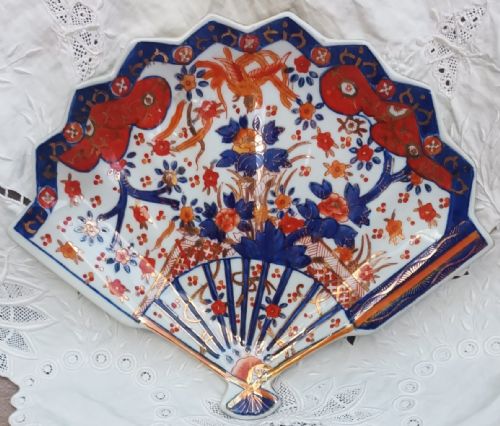
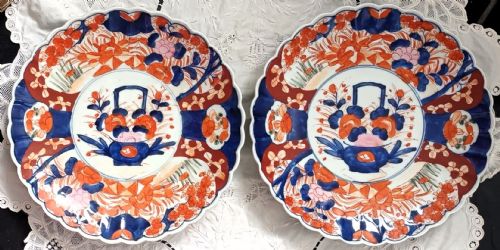
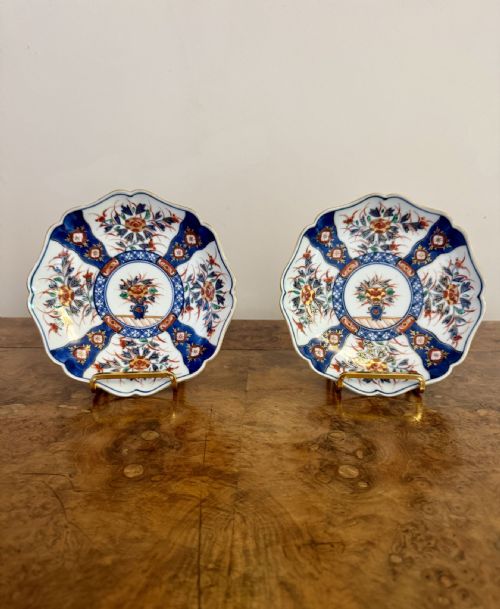
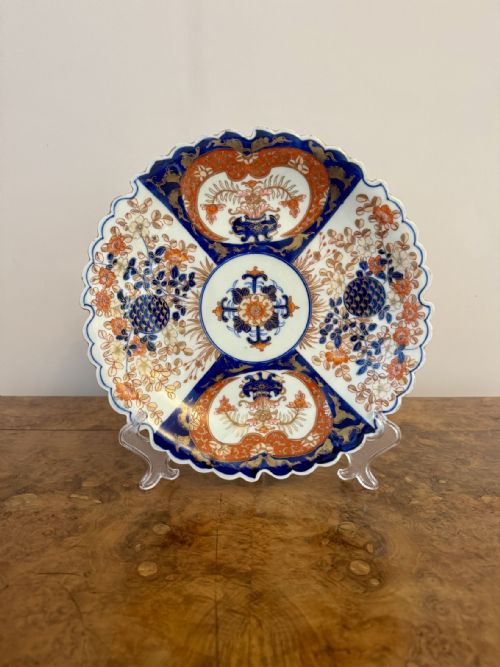
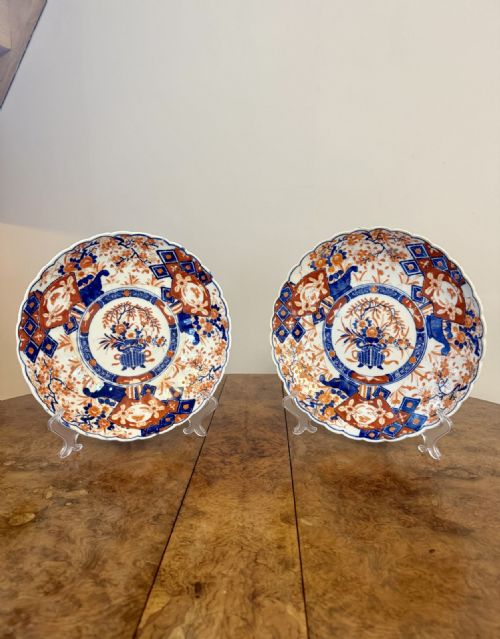
These Japanese floral porcelain chargers are large decorative plates brought from Japan, offering collectors rich painted cobalt and enamel palettes.
Japanese Floral Porcelain Charger
A Japanese floral porcelain charger is a broad decorative plate or deep dish intended for display rather than dining. The pieces seen here span the Victorian era, the Meiji period, and the late nineteenth century.
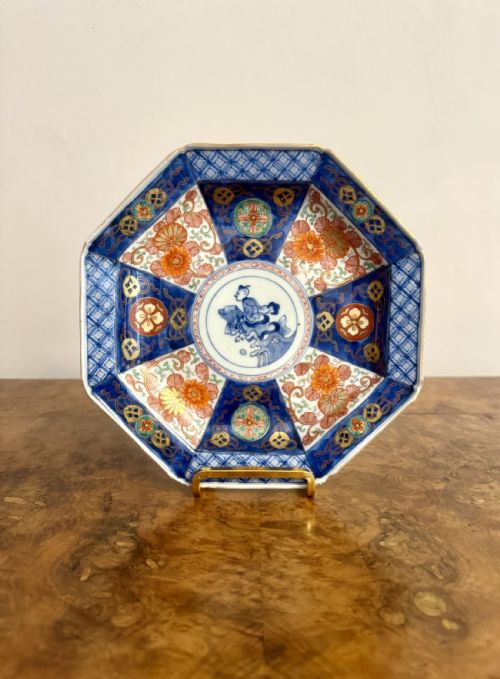
Most examples belong to the Imari or Arita traditions, featuring characteristic cobalt underglaze blue combined with iron red and gilt highlights. Forms range from simple circular chargers to scalloped, hexagonal, and square plates.
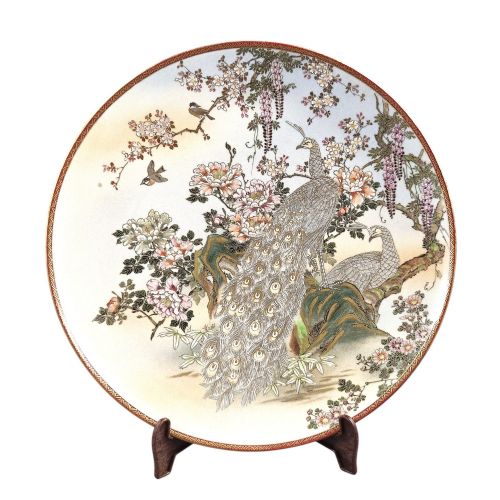
Makers utilised porcelain bodies decorated with hand-painted floral, bird, and peacock motifs. Surviving items demonstrate the output of late nineteenth-century kiln centres exported to Western markets.
How they were made
Potters shaped hard-paste porcelain on the wheel or pressed clay into moulds to create large circular and scalloped plates. Cobalt blue was painted onto the unfired body beneath a clear glaze, providing the dark foundational lines of the floral designs.
Enamel colours in iron red, green, and gold leaf were applied over the glaze in a secondary firing process. Gilt and gilding details caught the light, while moriage relief work added raised texture to peonies and wisteria.
Listings span the nineteenth century, Victorian era, and Meiji period, executed in porcelain, enamel, gold leaf, and cobalt underglaze.
What varies in quality
The precision of the hand-painted brushwork dictates the tier of the piece, separating rapid commercial output from masterwork decoration. Crisp cobalt underglaze lines combined with dense, well-preserved enamel and gold leaf define the superior examples.
Form complexity also alters the grade of the charger, with moulded hexagonal shapes, square plates, and deep scallop edges requiring greater skill from the potter. Balance in the floral composition and clarity in the glaze surface complete the distinction.
The Japanese Floral Porcelain Charger Glossary
- Imari
- A traditional style of Japanese porcelain featuring a palette of cobalt blue, iron red, and gold. This ware was produced in Arita and exported extensively through the port of Imari.
- Meiji Period
- The era of Japanese history lasting from 1868 to 1912, corresponding with significant export porcelain production. Pieces from this time often exhibit intricate hand-painted floral and bird designs.
- Arita
- The Japanese town and surrounding region where porcelain production originated. Arita kilns created the white clay bodies utilised for these decorative chargers.
- Moriage
- A ceramic technique involving raised slip decoration applied to the surface before firing. This method creates a textured, tactile effect on floral and avian motifs.
- Cobalt Underglaze
- A blue pigment applied to the raw porcelain body prior to glazing and high-temperature firing. The resulting colour fuses permanently beneath the glossy surface.
Japanese Floral Porcelain Charger: Frequently Asked Questions
How were Japanese chargers displayed?
These large dishes were traditionally set upon cabinet surfaces, held in specialised display stands, or mounted directly onto walls. Their broad diameters made them focal points in Victorian and Edwardian reception rooms.
Today, modern collectors place them on sturdy plate stands or hang them securely using padded wire fixings designed for heavy porcelain.
What is the difference between Imari and Arita?
Arita refers specifically to the geographical production centre in Japan where the porcelain clay was mined and fired. Imari is the trade name given to the finished wares shipped out through the port of Imari.
In practical terms, most Imari ware was manufactured in the Arita kilns using the distinct blue, red, and gold palette.
How do I date a porcelain charger?
Dating relies on examining the potting style, the brightness of the cobalt underglaze, and the wear on the overglaze enamels. Nineteenth-century and Meiji period pieces often show characteristic foot rings and hand-mixed mineral pigments.
Comparing the border patterns and floral motifs with documented archive examples helps narrow the production window.
Can these chargers be used for food?
These decorative plates are intended strictly for display and collection purposes rather than culinary use. Historic overglaze enamels and gold leaf can be sensitive to abrasion and acidic foods.
Gentle dusting with a dry cloth is sufficient for ongoing maintenance without risking the antique pigments.