


Japanese Floral Ceramic Vase
A Japanese floral ceramic vase brings rich patterns and traditional colour into a room, drawing the eye instantly with intricate botanical detailing.
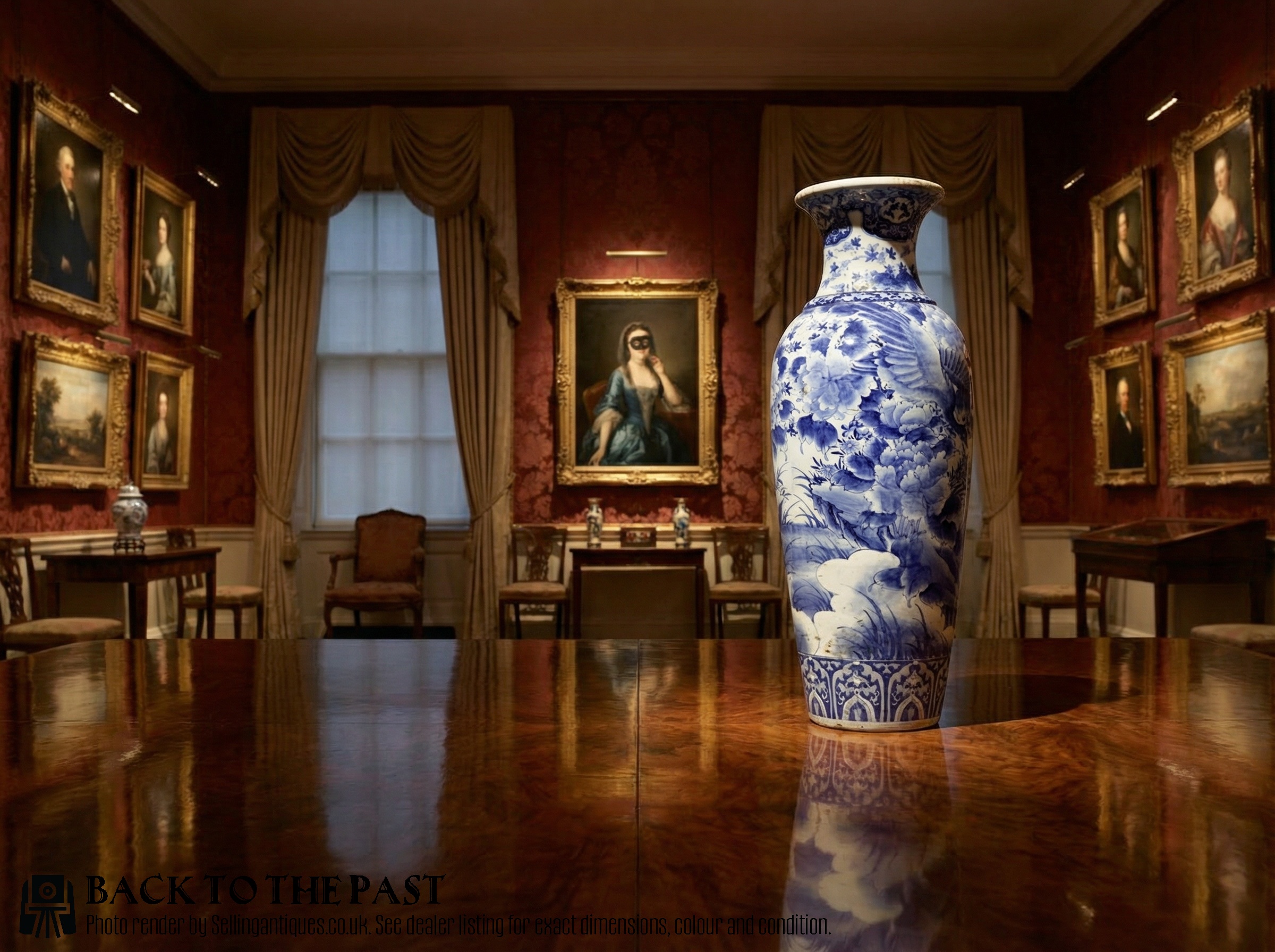
Japanese Floral Ceramic Vase
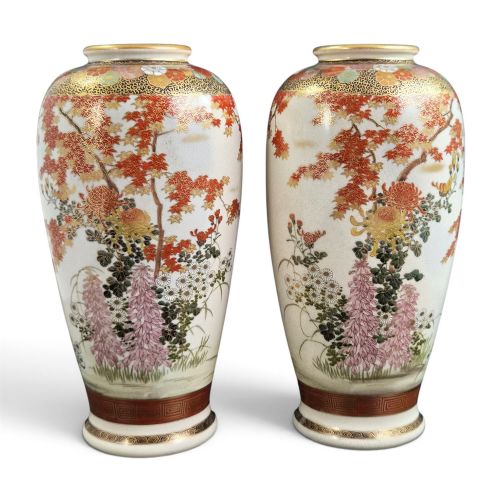
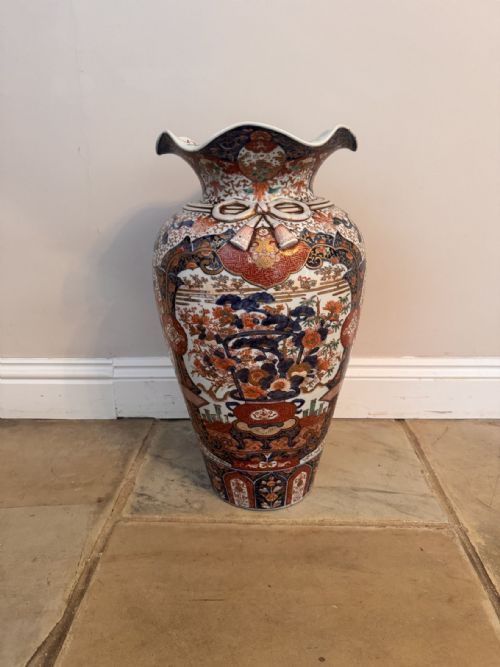
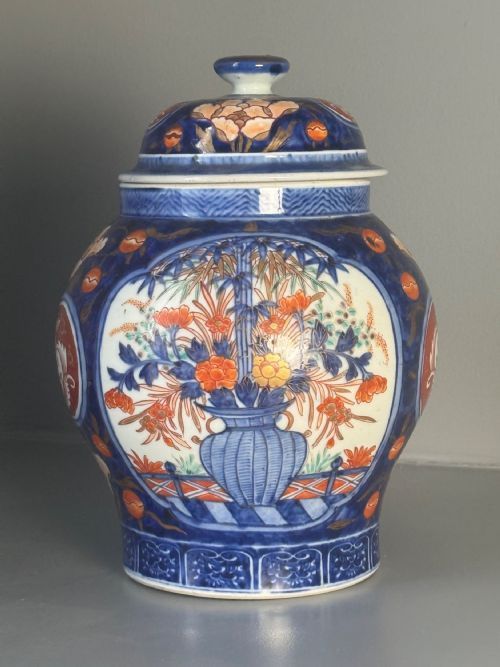
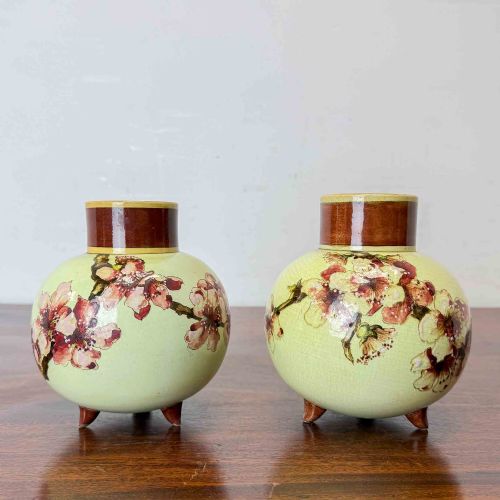
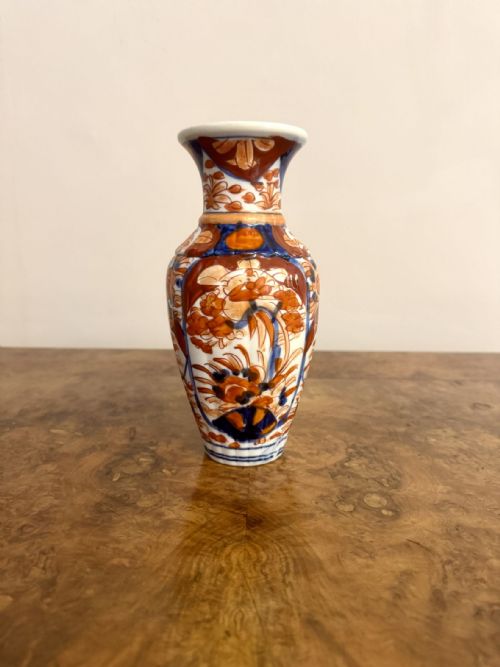
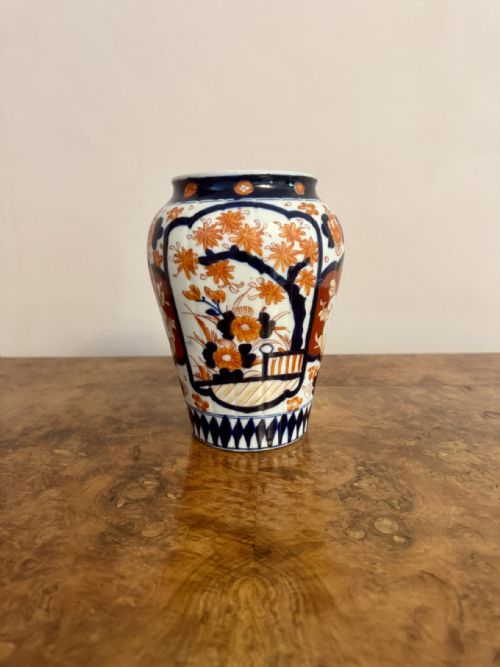
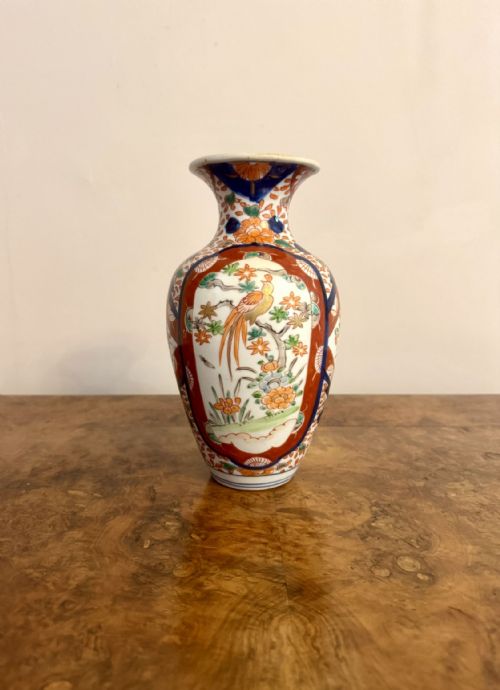
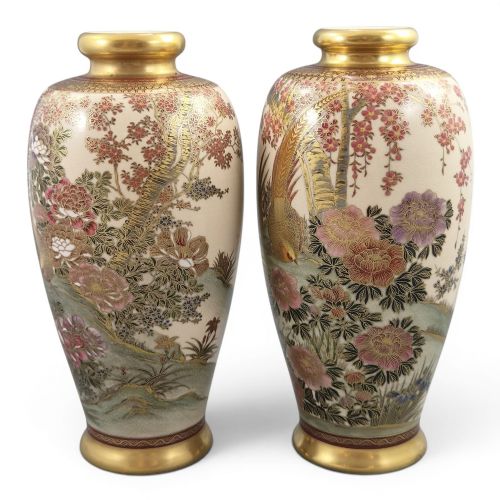
A japanese floral ceramic vase brings traditional form and botanical decoration together, with Imari and Satsuma styles appearing frequently across the selection. These pieces range from slender neck vessels and double gourds to large floor-standing urns and covered ginger jars.
Most examples originate from the nineteenth and early twentieth centuries, spanning the Meiji and Edwardian periods. Makers from regions such as Kobe, Kyoto, and Arita produced these ceramics for both export and domestic display.
How They Were Made
Potters shaped clay into earthenware and porcelain before applying detailed enamel and glaze. Artisans utilised cobalt pigments for deep blue tones alongside gold leaf and gilt highlights to enrich the botanical motifs.
Firing techniques varied depending on whether the workshop produced earthenware Satsuma or hard-paste porcelain Imari. Surface decoration often combined painted enamel with geometric panels and lacquer finishes.
Periods represented span from the seventeenth century through the Edwardian era and the Showa period.
What Varies In Quality
Quality rests upon the precision of the hand-painted floral motifs and the clarity of the glaze. Pieces designated for exhibition or bearing identifiable signatures from prominent workshops demonstrate superior brushwork and compositional balance.
The weight of the porcelain or earthenware and the crispness of the gilt detailing distinguish standard production items from exceptional garnitures and large floor-standing vessels.
Maruni Kobe·Manpei·Hakusan·Tagawa·Kinkozan·Hododa
The Japanese Floral Ceramic Vase Glossary
- Imari
- A style of Japanese porcelain decorated in underglaze blue and overglaze red, gold, and green. This palette creates a vibrant contrast across floral and geometric surfaces.
- Satsuma
- A type of earthenware with a characteristic ivory-coloured, crackle-glaze finish. It typically serves as a ground for heavily gilded and enamelled botanical scenes.
- Gourde
- A vessel shaped in a double-bulb or constricted profile resembling a squash. Potters utilised this organic silhouette for decorative balance.
- Ginger Jar
- A covered ceramic container originally used for spices but later adapted as an ornamental lidded vase. These pieces often feature shoulder panels filled with floral designs.
- Garniture
- A matched set of three or more vases or jars displayed together on a mantelpiece or sideboard. These suites share corresponding decorative schemes.
Japanese Floral Ceramic Vase: Frequently Asked Questions
How are antique Japanese vases cleaned?
Dust the surface gently with a soft, dry brush to protect the delicate enamel and gold leaf details.
Avoid using water or chemical cleaners, as moisture can damage older glazes and exposed earthenware.
What is the difference between Imari and Satsuma?
Imari pieces are made from porcelain with a bright palette of blue, red, and gold.
Satsuma items consist of cream-coloured earthenware featuring a fine crackle glaze and dense enamel painting.
Where should I display a large floor vase?
Position the vessel in a corner or entryway where it stands clear of foot traffic and accidental knocks.
Ensure the spot receives indirect light to highlight the painted botanical patterns without fading the pigments.
How do I identify the period of a vase?
Examine the base for artist signatures, kiln marks, and the general texture of the ceramic body.
Stylistic shifts between nineteenth-century export wares and later twentieth-century production provide further chronological clues.