


Japanese Ceramic Sculpture
Japanese ceramic sculpture brings together historical figures, temple deities and guardian animals shaped from porcelain, earthenware and glazed ceramic.
Japanese Ceramic Sculpture
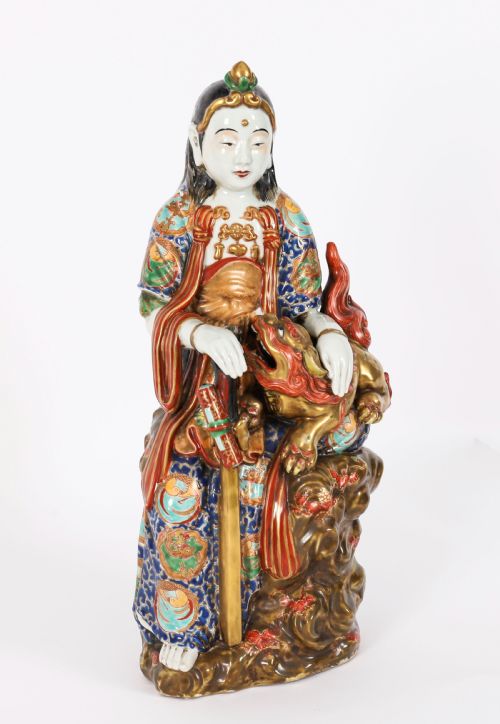
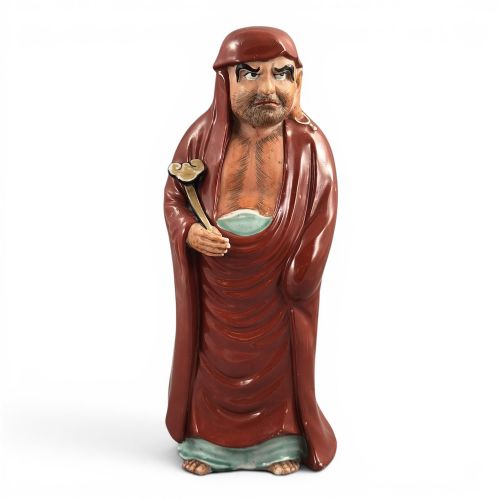
Japanese ceramic sculpture encompasses figurines, okimono, decorative figures and temple roof ornaments spanning from the eighteenth century through the Meiji, Taisho and Edwardian eras. When you examine this selection, you encounter subjects ranging from Buddhist deities such as Kannon and Guanyin to mythological figures like Daruma, Jurojin and Hotei.
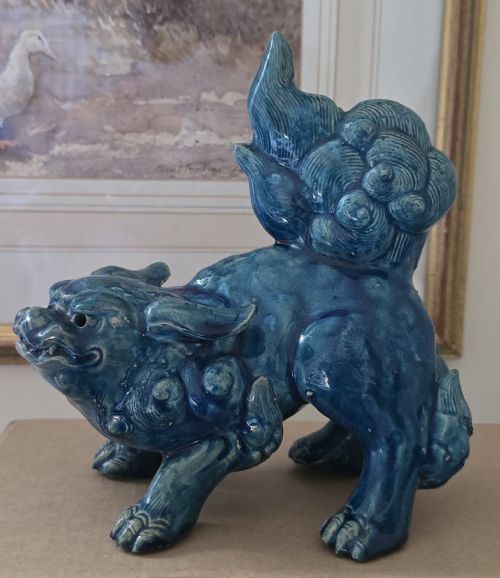
The objects most frequently met on this page belong to the Meiji period and late nineteenth century, executed in regional styles such as Kutani and Satsuma. Alongside human figures and deities, makers shaped animal subjects including Shishi guardian lion dogs, horses, elephants, mandarin ducks and puppies.
The geographical and stylistic origins draw directly upon traditional Japanese kilns and workshops, with pieces reflecting the distinctive decorative vocabularies of Kutani, Satsuma, Hirado and Bizen wares. These sculptures served various domestic and ceremonial roles, functioning as okimono for display or as architectural roof ornaments.
Assessing Quality
Quality in these sculptures rests upon the precision of the modelling and the control of the glaze or enamel work. Sculptures displaying crisp facial expressions, well-defined fingers and carefully articulated drapery separate themselves from simpler, mass-produced commercial figures.
The sophistication of the palette and the restraint or richness of the gilding and moriage define the upper tier of the range. Pieces bearing workshop signatures or attributed to known kilns and makers demonstrate a higher grade of artistic execution than unmarked examples.
A set of three Hirado porcelain puppies captures playful canine tumbling frozen forever in crisp white glaze.
Makuzu Kozan II·Kizan
The Japanese Ceramic Sculpture Glossary
- Okimono
- A Japanese term for a decorative object or sculpture intended for display in an alcove or on a shelf. These freestanding pieces often depict figures, deities, animals or scenes from folklore.
- Kutani
- A style of Japanese porcelain and pottery traditionally associated with Ishikawa Prefecture. It is known for vibrant coloured enamels and extensive use of gold.
- Satsuma
- A type of Japanese earthenware originating from Kagoshima Prefecture, typically characterised by a crackle-glazed ivory body decorated with polychrome enamels and gilt.
- Moriage
- A ceramic decorating technique where slip or enamel is piped onto the surface in dots or lines to create a raised, tactile pattern. This method adds significant texture to robes and decorative borders.
- Shishi
- A mythical guardian lion or lion dog originating from Chinese tradition and adopted into Japanese art. These creatures frequently appear seated with one paw raised, guarding temple entrances or domestic spaces.
Japanese Ceramic Sculpture: Frequently Asked Questions
What is an okimono sculpture?
An okimono is a decorative standalone sculpture designed for interior display rather than utilitarian use. These pieces often represent figures from history, folklore or the natural world.
In Japanese interiors, they were placed in traditional display alcoves or on low tables to be appreciated for their craftsmanship and symbolic meaning.
How do I identify Kutani ware?
Kutani porcelain is typically recognised by its bold palette of coloured enamels, often combining greens, blues, purples and reds with heavy gilding. Figures and vessels from this tradition display intricate surface patterns.
Many pieces from the Meiji period incorporate raised enamel work known as moriage, giving the figures a distinct, tactile quality.
What do Shishi figures represent?
Shishi figures depict mythical guardian lions or lion dogs that symbolise protection and the warding off of evil spirits. They frequently appear in pairs or guarding sacred spaces.
In sculpture, they are typically shown with powerful paws, curly manes and energetic expressions, serving as both religious guardians and decorative ornaments.
How should I display ceramic sculptures?
Ceramic sculptures require stable surfaces away from high traffic areas where accidental knocks might occur. Placing them on shelves or cabinets with adequate lighting highlights their glazes and fine details.
Keep pieces out of direct sunlight to protect enamel colours and gold leaf over extended periods.