
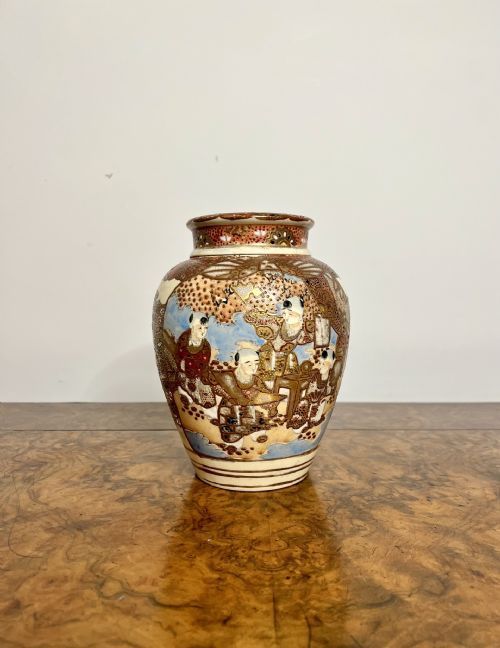


Japanese Ceramic Ginger Jar
A Japanese ceramic ginger jar brings centuries of kiln tradition and intricate hand-painted detail into a room.
Japanese Ceramic Ginger Jar
A Japanese ceramic ginger jar is a lidded vessel originally designed for spices or storage, taking the form of a baluster body with a fitted cover. When searching for a Japanese ceramic ginger jar, buyers encounter forms spanning the 17th century through the Edwardian era, with Victorian and Meiji period examples appearing most frequently.
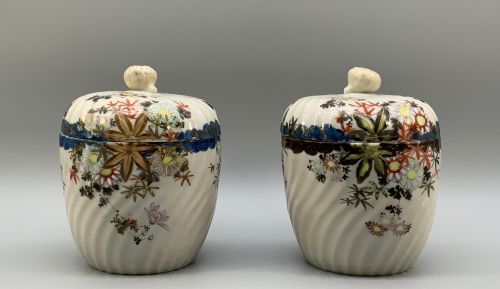
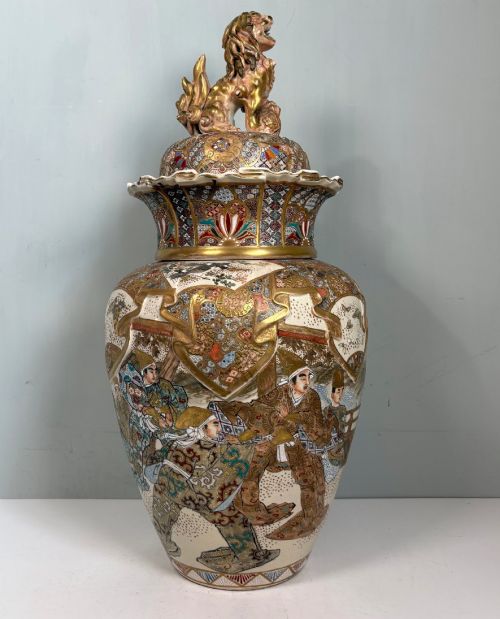
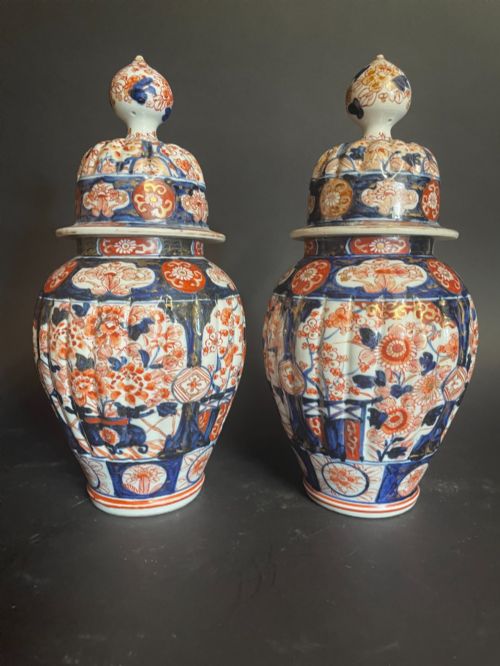
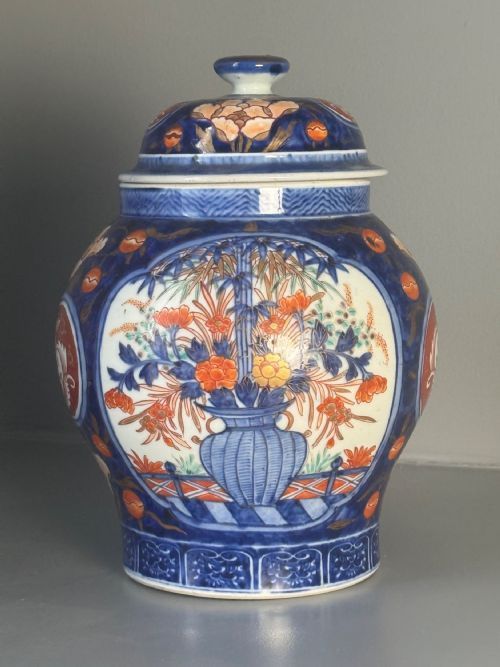
The selection ranges from robust Imari porcelain painted in iron red and cobalt blue to finely crackled Satsuma earthenware. Many pieces survive in matched pairs or single decorative lidded jars, occasionally adapted as table lamps.
Origins stretch from Arita kilns to Tokyo workshops, reflecting both traditional domestic export wares and pieces created for Western aesthetic tastes during the height of Japonisme.
Materials and construction
Potters shaped porcelain and earthenware on the wheel or in moulds before applying underglaze cobalt blue, overglaze enamel colours, and rich gilding. These pigments required multiple firings in wood or coal kilns to achieve the final depth of colour.
Gold leaf and raised enamel detailing frequently highlight landscape scenes, floral motifs, and figures. Lids were thrown to fit securely over the shoulders of the baluster body, completing the classic silhouette.
Some antique ginger jars survived centuries of domestic dusting only to find new life wired as living room table lamps.
Assessing craftsmanship and finish
Quality rests in the crispness of the underglaze painting and the precision of the enamel brushwork. Finer pieces display complex, tightly controlled geometric borders alongside carefully rendered pictorial panels without smudging or kiln distortion.
The weight of the porcelain and the application of heavy gold leaf or gilt distinguish standard export items from master-signed studio pieces. A well-balanced body and an intact original cover elevate the standing of any jar.
Yamashu·Tokyo Taizan·Fukagawa
The Japanese Ceramic Ginger Jar Glossary
- Imari
- A style of Japanese export porcelain decorated in cobalt blue, iron red, and gold. It originated in the Hizen province and shipped through the port of Imari.
- Satsuma
- A type of Japanese earthenware featuring a pale, ivory-coloured crackle glaze. It is typically decorated with elaborate polychrome enamels and gilding.
- Baluster
- A vase or jar shape that swells toward the bottom and tapers into a short neck. This form provides stability and generous space for painted decoration.
- Arita
- The Japanese town and surrounding region central to the production of porcelain since the early Edo period. Arita kilns supplied the bulk of export wares.
- Meiji
- The historical period spanning from 1868 to 1912, characterised by opening trade with the West and high levels of decorative arts production.
- Japonisme
- The influence of Japanese art on Western culture during the late 19th century. It inspired European makers to adopt Japanese motifs and forms.
Japanese Ceramic Ginger Jar: Frequently Asked Questions
What were ginger jars used for originally?
These lidded vessels served primarily to store and transport spices, salt, and oils in traditional households. Merchants relied on their sturdy baluster shape and tight covers to keep contents fresh.
Over time, Western collectors repurposed them purely as decorative objects for mantelpieces and display cabinets. Today, they remain valued as ornamental focal points rather than utilitarian containers.
How do I date a Japanese ceramic ginger jar?
Dating relies on stylistic clues, glaze types, and kiln marks found on the base of the vessel. Meiji period and late 19th-century pieces often feature bright overglaze enamels and distinct workshop signatures.
Earlier examples from the Edo or 17th century display heavier potting techniques and characteristic Arita blue and white pigments. Comparing the palette and clay body helps narrow the manufacturing era.
Are Imari and Satsuma ginger jars different?
Imari pieces are made of hard-paste porcelain decorated in deep cobalt blue, iron red, and gilt. They present a resonant sound when tapped and a smooth, vitreous glaze.
Satsuma pieces consist of buff earthenware covered in a characteristic fine crackle glaze that receives intricate enamel painting. They feel heavier and show a softer texture than porcelain.
How should I display ginger jars at home?
Place them on stable surfaces away from high-traffic areas to protect the delicate enamel and gilt details. Paired jars look striking balanced on either side of a mantelpiece or cabinet.
Keep them out of direct sunlight to prevent fading in the overglaze red and gold pigments over time. Dust gently with a dry, soft cloth.