





Japanese Ceramic Decor
Japanese ceramic decor brings together centuries of artisan skill, offering striking porcelain and earthenware to transform any interior.
Japanese Ceramic Decor
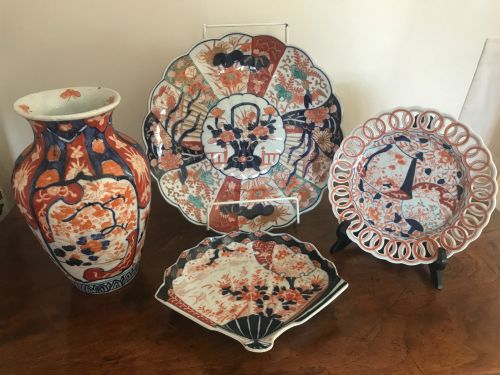
Japanese ceramic decor encompasses a diverse selection of historical objects, spanning plates, vases, bowls, and chargers designed for visual impact. When exploring Japanese ceramic decor, buyers regularly encounter pieces originating from the late nineteenth century and the Edwardian era.
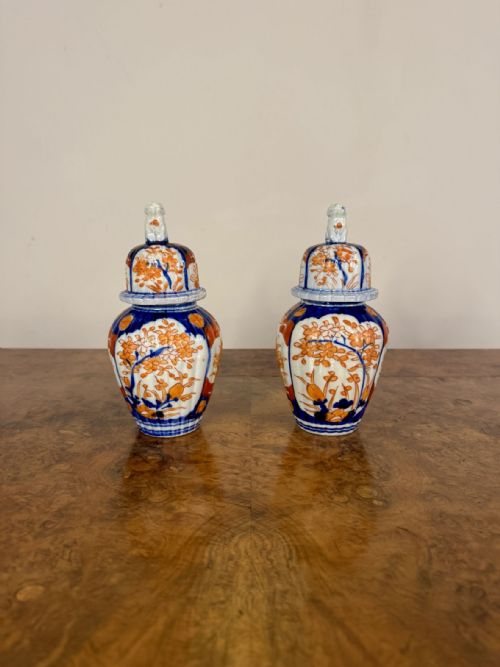
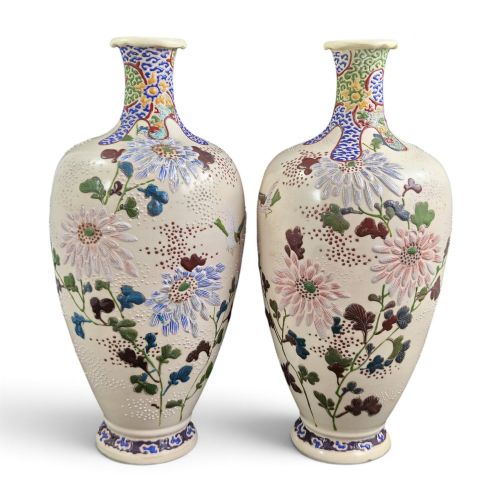
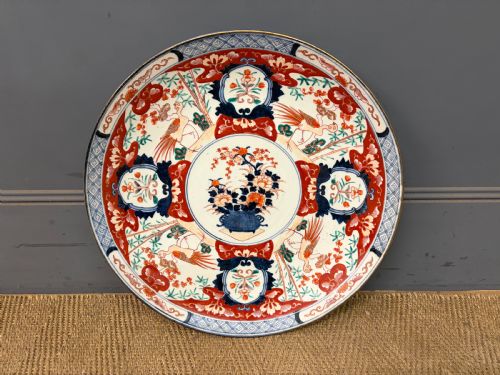
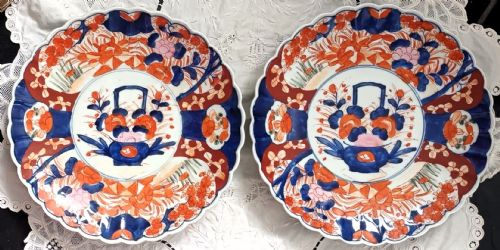
The inventory on this page ranges from large Imari chargers to delicate Satsuma and Kutani vases. Formats extend from cylindrical bottle vases to hexagonal bowls and shell-shaped dishes.
Vessels often depict traditional motifs, including exotic birds, dragons, and floral gardens. These items reflect the craftsmanship of Meiji period aesthetics alongside Victorian and Edwardian interpretations.
How these pieces were made
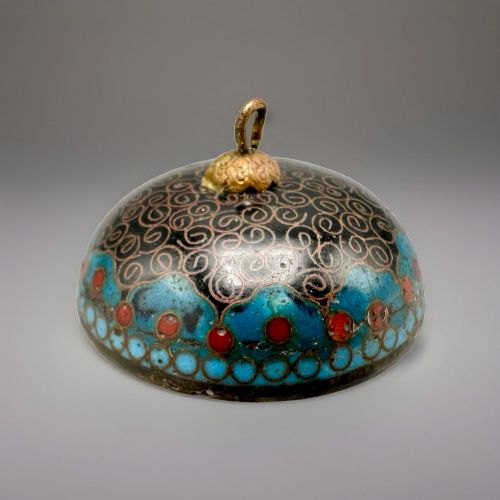
Potters shaped fine porcelain and earthenware by hand before applying intricate glaze and enamel decorations. Artisans incorporated gold leaf, gilt highlights, and cloisonne enamel to build rich surface textures.
Specific techniques involved layering lacquer over black paint or carving cinnabar lacquer in totai work. Kiln firing fixed the vibrant cobalt blues and rust reds characteristic of Imari wares, while Satsuma pieces utilised raised moriage details.
Japanese Ceramic Decor Retail Price Guide 2026
Typical asking prices for japanese ceramic decor among the pieces listed under this phrase on Sellingantiques today, from the lower quarter to the upper quarter. They describe what is for sale here now, not the wider market.
Listings feature materials such as porcelain, earthenware, bronze, enamel, and gold leaf across multiple periods.
What varies in quality
Quality rests upon the precision of the hand-painted detailing and the crispness of the enamel work. Superior examples demonstrate confident brushwork on complex motifs such as figures, birds, and floral arrangements.
The weight and balance of the porcelain body, alongside the controlled application of gilding and enamel, distinguish high-grade items. Pieces featuring signed details or specialist techniques like intricate moriage command greater attention.
Hakusan·Chikusai·Hododa·Mintons
The Japanese Ceramic Decor Glossary
- Imari
- A traditional style of Japanese porcelain featuring a distinct palette of underglaze blue, iron red, and gilt. The style originated in Arita and became widely exported during the Meiji period.
- Satsuma
- A type of Japanese earthenware characterised by a crackled ivory glaze and elaborate polychrome enamel decorations. These pieces frequently incorporate raised gilding known as moriage.
- Kutani
- A style of Japanese porcelain renowned for bold, colourful pictorial designs and rich enamel painting. Works often display striking greens, yellows, reds, purples, and blues.
- Charger
- A large ornamental decorative plate intended for display on a wall or table stand rather than dining use. These pieces offer expansive surfaces for narrative or botanical scenes.
- Cloisonne
- A decorative technique where metal wires are soldered to a base to form compartments that are filled with enamel paste. The object is then fired and polished to a smooth finish.
- Totai
- A method where enamel or lacquer is applied directly over a woven bamboo or metal core instead of ceramic. This technique creates lightweight vessels with intricate surface relief.
Japanese Ceramic Decor: Frequently Asked Questions
How do I display a large charger safely?
Large chargers require sturdy wall hangers specifically designed to distribute weight evenly across the rim. Alternatively, heavy iron display stands secure them safely on a sideboard or mantelpiece.
Ensure the mounting surface is stable and keep the piece away from direct foot traffic or swinging doors to prevent accidental knocks.
What is the difference between Satsuma and Imari?
Satsuma ware utilises a cream-coloured earthenware body with a fine crackle glaze, decorated with soft enamels and heavy gilding. Imari items are typically hard-paste porcelain featuring deep cobalt blue and rust red tones.
Satsuma pieces focus on figurative and textured floral scenes, whereas Imari relies on symmetrical geometric and botanical patterns.
How should I clean antique Japanese ceramics?
Dust these decorative pieces regularly using a soft, dry artist's brush to clear particles from crevices and painted surfaces. Avoid using water, detergents, or chemical cleaners, particularly on items with gilt or lacquer elements.
If deeper cleaning is necessary, consult a professional conservator to prevent damage to fragile enamels or crazed glazes.
Are these items suitable for everyday use?
Historical ceramics from the Meiji and Edwardian eras are primarily intended for decorative display rather than functional dining. The delicate enamels, gold leaf, and crackled glazes can wear away with regular handling and washing.
Enjoy these works as aesthetic focal points in your living space rather than practical tableware.