


Japanese Cast Bronze Vase
These heavy metal vessels bring distinct Eastern artistry into a room, capturing the sophisticated metalwork traditions found in a japanese cast bronze vase.
Japanese Cast Bronze Vase
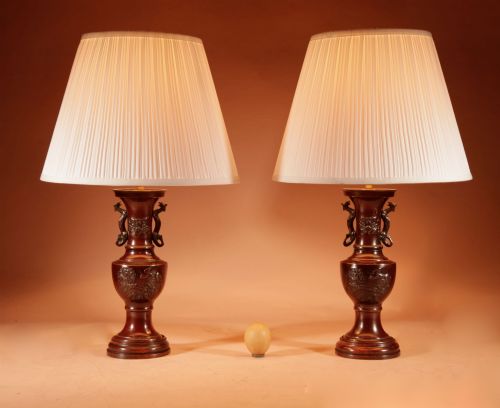
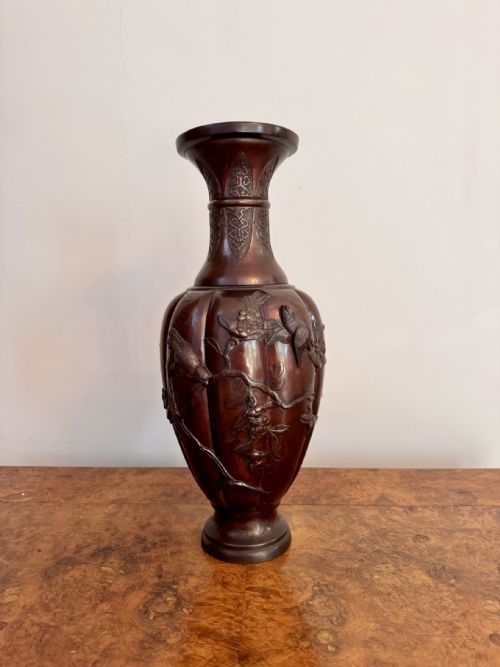
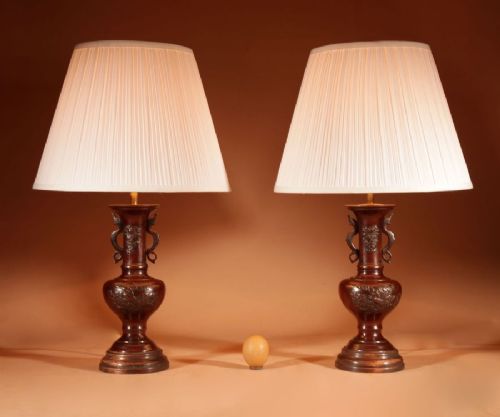
A japanese cast bronze vase often dates from the Meiji period or the nineteenth century, reflecting a rich heritage of metal craftsmanship. Collectors encounter various iterations on this page, ranging from standard decorative vessels to large garden urns, jardinières, and even table lamps.
The objects frequently appear in matched pairs or monumental sizes, demonstrating the versatility of nineteenth-century metalworking. Forms span traditional shapes like the Hu vase, Tsubo vase, and Mimikuchi vessels, each displaying distinct regional and historical influences.
Materials and construction
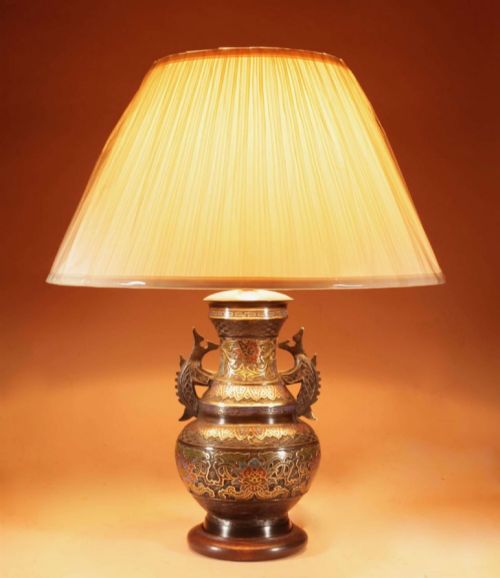
Artisans utilised durable bronze and patinated metal, often enhancing the surfaces with champlevé enamel or verdigris finishes. These materials provided a robust foundation for intricate casting techniques developed across Japanese workshops.
Makers applied specialised patination processes to achieve deep, original colour tones on the bronze. Decorative elements were integrated directly into the casting or inlaid with contrasting enamel to create textured, ornate surfaces.
Some heavy specimens tip the scales at eight kilograms, proving that nineteenth-century flower arranging was also an upper-body workout.
Assessing the craftsmanship
Superior examples demonstrate meticulous attention to surface detail and casting precision, particularly in the rendering of dragons, floral motifs, or archaistic patterns. Weight and proportion also separate standard production pieces from monumental, finely finished specimens.
The depth of the original patination and the crispness of champlevé enamel work indicate the skill involved in production. Well-preserved surfaces retain their intended texture without obscuring the underlying metalwork.
The Japanese Cast Bronze Vase Glossary
- Bronze
- A copper alloy primarily combined with tin, prized for its strength and suitability for intricate casting. It forms the solid body of these vessels.
- Meiji Period
- The historical Japanese era spanning from 1868 to 1912. Much of the metalwork from this time exhibits exceptional technical refinement.
- Champlevé
- An enamelling technique where troughs are carved into the metal surface and filled with vitreous enamel before firing. This adds colourful decorative contrast to the bronze body.
- Usubata
- A specific form of Japanese bronze vase traditionally utilised for flower arrangements. They often feature a wide basin top supported by a slender stem.
- Patinated Bronze
- Metal treated with chemicals or heat to produce a specific surface coloration and finish. This process protects the bronze while enhancing its visual depth.
Japanese Cast Bronze Vase: Frequently Asked Questions
How are these bronze vases dated?
Dating relies primarily on stylistic indicators, historical periods such as the Meiji era, and construction methods. Nineteenth-century pieces often display specific patination and casting characteristics common to that era.
Examinations of signatures or specific vessel forms, like archaistic Hu vases, help narrow the period of origin alongside traditional material use.
Were these pieces converted into lamps?
Several vessels feature later adaptations into table lamps, incorporating electrical fittings alongside the original bronze body. This conversion allowed traditional decorative urns to serve modern domestic lighting purposes.
Such modifications reflect the adaptability of these heavy metal objects within nineteenth and twentieth-century interiors.
What is a Tsubo vase?
A Tsubo is a traditional form of Japanese storage jar or vase characterised by a rounded body and a distinct neck. These vessels were frequently produced in bronze during the Meiji period.
Their robust proportions made them suitable for large-scale decorative display in both traditional and Victorian interiors.
How should I clean patinated bronze?
Maintenance requires gentle dusting with a soft, dry cloth to preserve the original surface patination. Avoid abrasive cleaners, polishes, or harsh chemicals that can strip the historic finish.
Keeping the bronze in a stable environment protects the metal and any integrated enamel work from unnecessary degradation.