


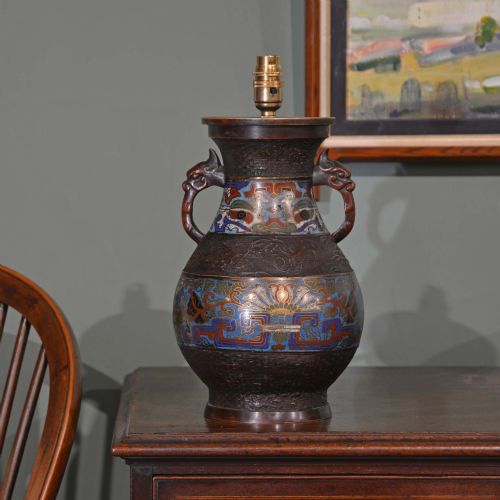


Vintage Japanese Bronze Vase
These vintage japanese bronze vase pieces bring remarkable depth and craftsmanship to a room.
Vintage Japanese Bronze Vase
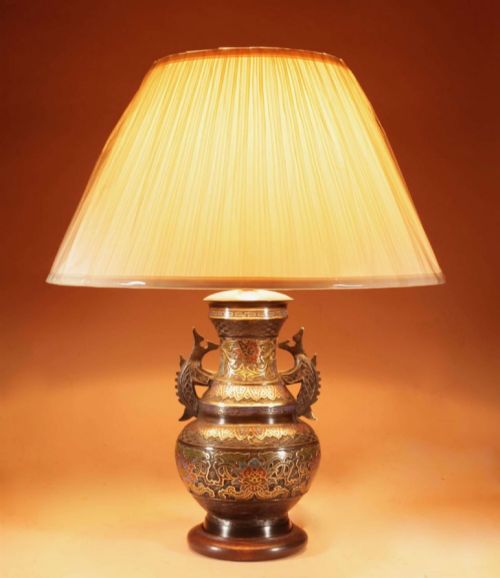
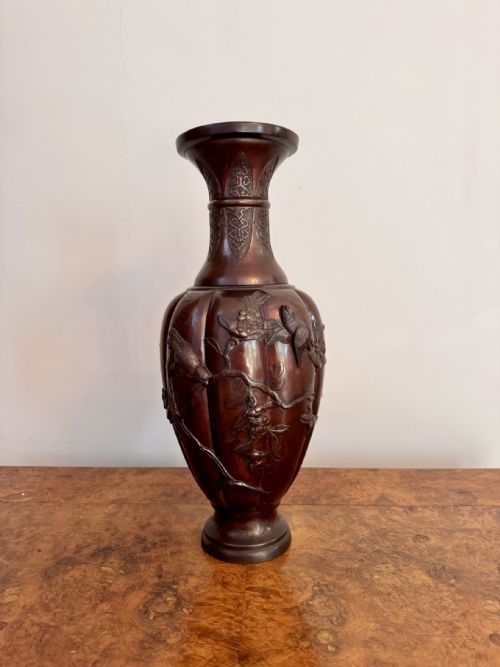
A vintage japanese bronze vase combines traditional metalwork techniques with forms that span the nineteenth century through the early twentieth century. Collectors encounter various interpretations, including champlevé enamel work and original patinated surfaces created during the Meiji period.
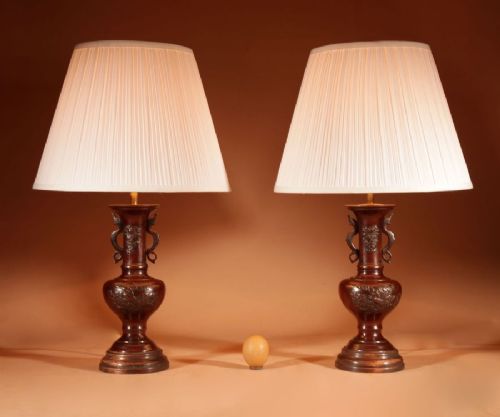
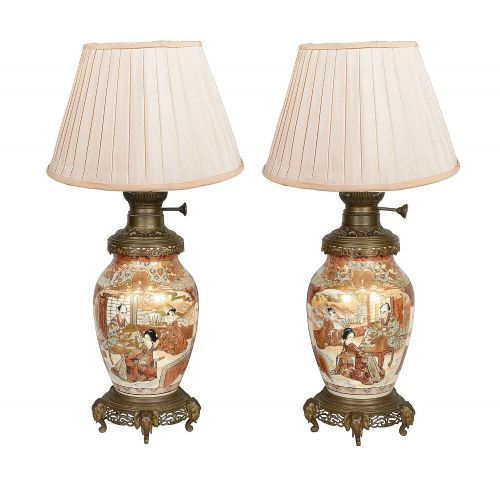
The inventory on this page ranges from decorative table lamps converted from vessels to miniature pairs and large display pieces. Alongside bronze, the selection encompasses related Asian antique forms such as Satsuma earthenware and cloisonné ginger jars.
How they were made
Artisans utilised cast bronze, brass, and copper as the foundational metals for these vessels, frequently applying rich patination or gilding. Many examples incorporate intricate champlevé or cloisonné enamel detailing across the body.
Some items feature ormolu mounts or have been adapted into table lamps during later periods while retaining their original nineteenth or early twentieth century metal bodies.
Several vases now moonlight as table lamps, proving that even heavy bronze vessels love a good career change.
What varies in quality
The sophistication of the surface patination and the precision of the enamel work determine the distinction between standard examples and finer pieces. Crisp execution in champlevé details and well-balanced proportions elevate the standing of a vessel.
Original integrity also influences the piece, noting whether mounts, patination, and enamel retain their authentic finish without heavy later intervention.
The Vintage Japanese Bronze Vase Glossary
- Meiji Period
- The era in Japanese history spanning from 1868 to 1912. Metalwork from this time is celebrated for technical mastery.
- Champlevé
- An enamelling technique where troughs are dug into the metal surface and filled with enamel powder before firing. This creates raised metal outlines around coloured designs.
- Cloisonné
- A method of decorating metalwork objects with coloured enamel separated by strips of wire. Artisans solder these thin metal wires to the bronze body to form compartments.
- Patina
- The surface sheen and colour developed on bronze through age and chemical treatment. Original patination shows authentic oxidation.
- Ormolu
- Gilded bronze mounts applied to decorative objects or converted vessels. French terminology often applied to nineteenth century decorative hardware.
Vintage Japanese Bronze Vase: Frequently Asked Questions
How do I date a bronze vase?
Dating relies on stylistic markers, manufacturing techniques, and material composition typical of specific periods like the nineteenth century or Meiji era.
Examining the depth of the patina and the precision of any enamel work helps confirm the likely era of production.
Were these vases used as lamps?
Many bronze vases and ginger jars were subsequently adapted into table lamps with electrical fittings during the late nineteenth or early twentieth century.
Some retain their original vessel form, while others were mounted specifically for domestic lighting.
What is the difference between cloisonné and champlevé?
Cloisonné uses soldered wire to create raised cells for enamel, whereas champlevé involves carving troughs directly into the bronze base metal.
Both techniques appear frequently on fine Japanese metalwork from this period.
How should I clean a bronze vase?
Bronze requires gentle dusting with a soft, dry cloth to protect the delicate original patination and enamel details.
Avoid chemical polishes or water, which can strip historic finishes and damage the metal surface.