


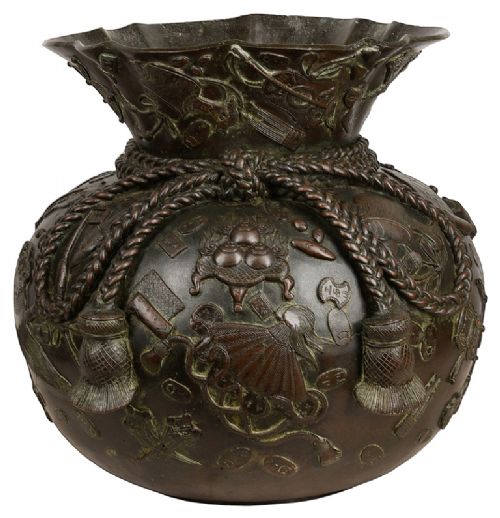


Japanese Bronze Plant Pot
These japanese bronze plant pot examples bring weight and craftsmanship to any room, offering heavy cast metal vessels built to hold greenery.
Japanese Bronze Plant Pot
A japanese bronze plant pot functions as a sturdy container for greenery, commonly referred to in listings as a jardiniere or planter bowl. These pieces provide a solid housing for indoor plants while serving as ornamental objects in their own right.
The versions most commonly found here date from the 19th century and the Meiji period, alongside Edo period examples. Buyers will frequently encounter round vessels and bowls designed specifically for tabletop or floor placement.
Originating from Japan or created in European styles inspired by Eastern design, these items span various decades including 1880, 1900, 1910, and 1920. They bridge the gap between functional gardening accessories and historical decorative art.
Materials and construction methods
Metalworking forms the core of these items, utilising cast bronze and occasional gilt bronze or brass to achieve heavy, durable walls. Some examples incorporate champleve enamel details to add colour and pattern directly onto the metal surface.
Manufacturing techniques rely on traditional casting methods capable of producing thick, robust vessels that can support damp soil and heavy plants. Selected pieces integrate porcelain elements, combining ceramic bodies with metal mounts.
Japanese Bronze Plant Pot Retail Price Guide 2026
Typical asking prices for japanese bronze plant pot among the pieces listed under this phrase on Sellingantiques today, from the lower quarter to the upper quarter. They describe what is for sale here now, not the wider market.
Some heavy specimens weigh over two kilos, proving that plant pots used to mean business.
Distinguishing characteristics of quality
Cast thickness and physical weight set the sturdier pieces apart from lighter alternatives, with heavier bowls demonstrating a more substantial presence. The precision of the casting and the crispness of surface decoration reveal the skill involved in production.
Surface finish and decorative complexity also differentiate the range, particularly where intricate enamel work or careful patination is applied. Pieces retaining clear historical signatures or refined textural details sit at the higher end of craftsmanship.
The Japanese Bronze Plant Pot Glossary
- Jardiniere
- A decorative pot or stand for holding plants or flowers. This term is used interchangeably with planter bowl in many historical listings.
- Meiji Period
- The era of Japanese history spanning from 1868 to 1912, noted in these records for detailed metalwork and export art.
- Edo Period
- The period in Japanese history lasting from 1603 to 1867, preceding the Meiji era and representing earlier traditional craftsmanship.
- Champleve Enamel
- An enamelling technique where troughs or cells are carved into the bronze surface and filled with vitreous enamel before firing.
- Japonisme
- A term describing the influence of Japanese arts and aesthetics on Western culture, particularly prominent during the late 19th century.
Japanese Bronze Plant Pot: Frequently Asked Questions
What is a japanese bronze plant pot?
A japanese bronze plant pot is a heavy cast metal container designed to hold plants, frequently styled as a jardiniere. These vessels were produced in various sizes for interior display.
They combine practical utility with decorative surface work, often featuring patinated finishes or enamel details characteristic of their period of origin.
How were these planters used historically?
Historically, these vessels held potted plants or served as standalone decorative bowls within domestic interiors. Their robust metal construction easily supported damp soil and large root systems.
Over time, many transitioned purely into decorative display items, valued for their material presence and historical artistry rather than gardening use.
How do I care for a bronze planter?
Care involves dusting gently with a soft cloth and avoiding harsh chemical cleaners that might strip the historical patina. If used for live plants, placing a waterproof liner inside protects the metal from moisture damage.
Maintaining a stable indoor environment prevents undue stress on the metal and any enamel or gilt components.
How can I tell the Meiji period from the Edo period?
Edo period pieces originate from an earlier era of traditional seclusion and domestic craft, while Meiji period items often reflect the opening of trade and increased export manufacturing. Stylistic markers and finishing techniques help distinguish the manufacturing epoch.
Listing details often provide specific period attributions based on the stylistic conventions present in the casting and decoration.