
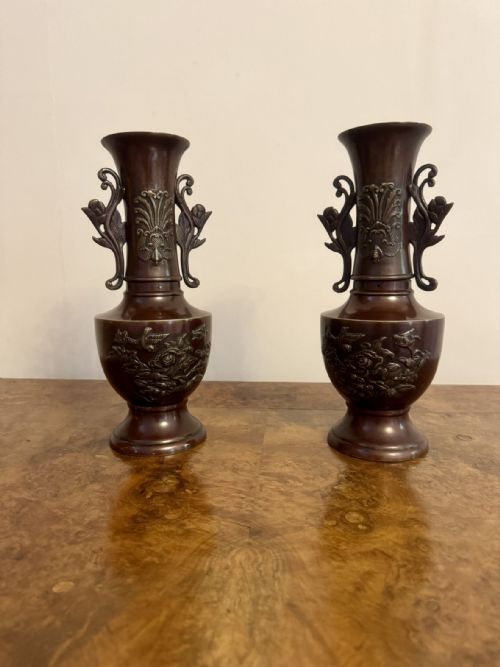


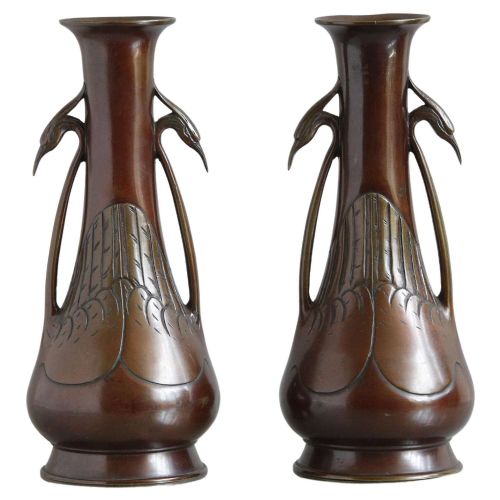

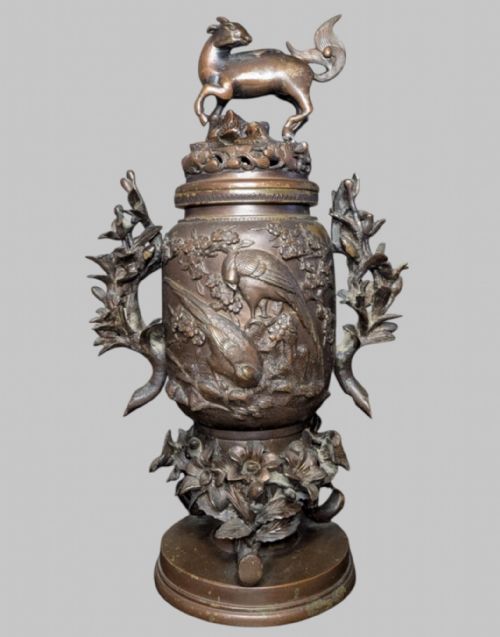

Meiji Bronze Urn Vessel
These meiji bronze urn vessel pieces bring Japanese metalwork into a room through patinated surfaces and intricate inlay.
Meiji Bronze Urn Vessel
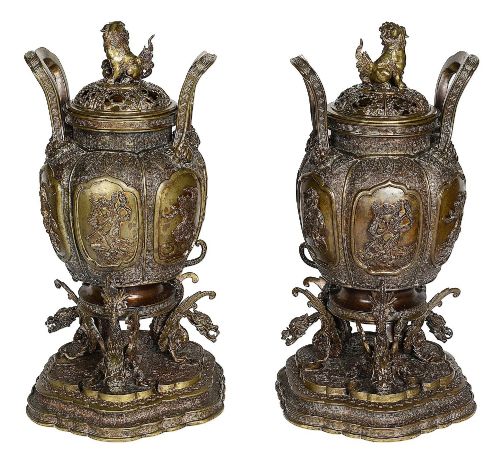
A meiji bronze urn vessel takes the form of baluster vases, lidded urns, incense burners, and large garden planters originating from the Meiji period.
The pieces on this page span the late nineteenth and early twentieth centuries, reflecting the output of Japanese metalworkers during that era.
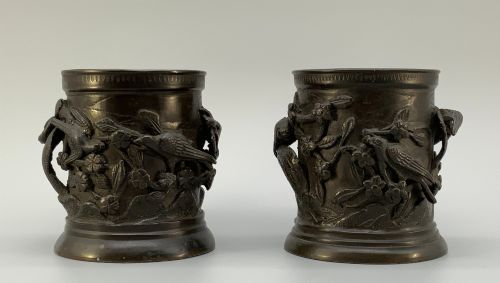
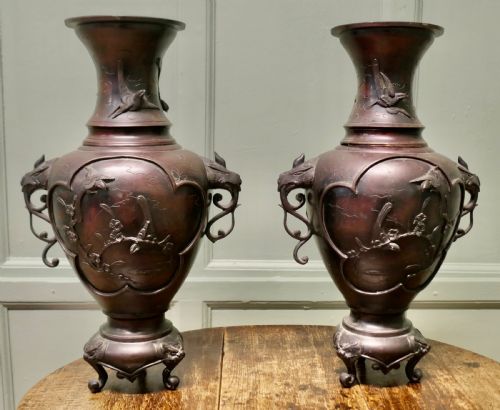
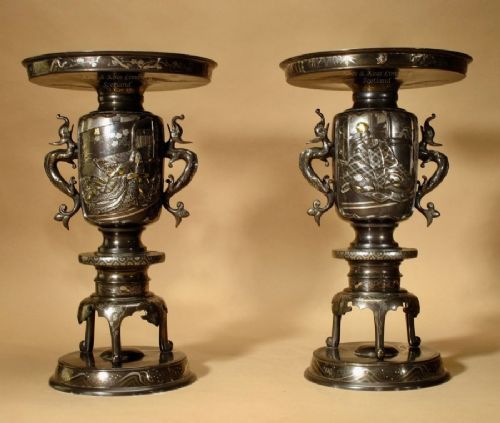
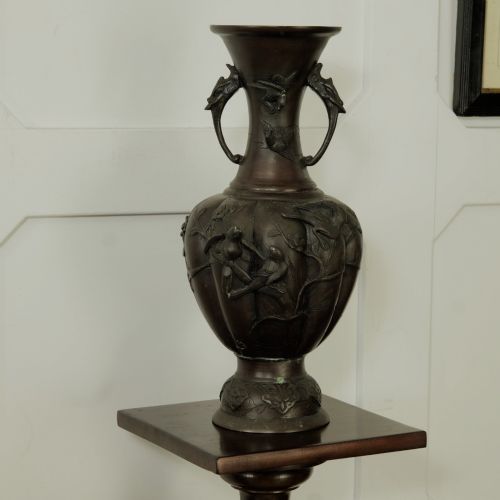
Buyers encounter twin-handled vessels, stemmed vases, and temple jars decorated with motifs of birds, blossoms, and figures.
Materials and Technique
Metalworkers cast these vessels in bronze, brass, and copper, often applying patination to achieve deep brown or dark green tones.
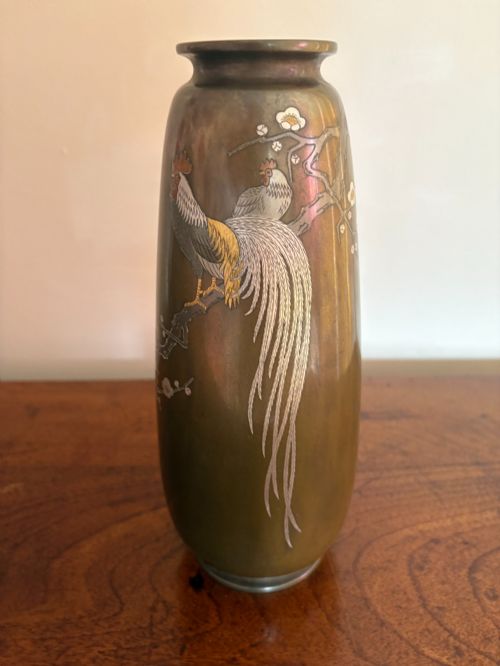
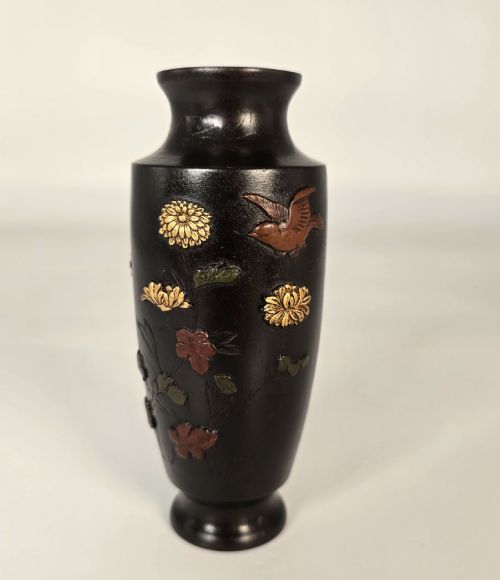
Makers added decorative detail through mixed metal inlays of gold and silver, alongside champlevé and cloisonné enamel work.
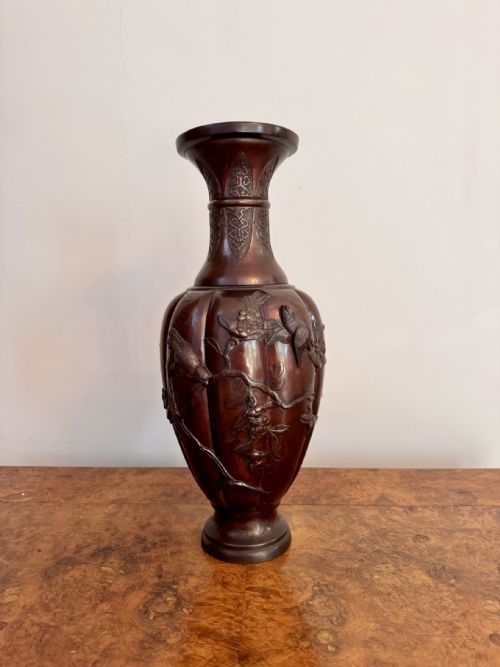
Relief decoration and raised floral or avian motifs are integrated directly into the body of the vessel during casting and finishing.
Listings feature bronze, brass, and copper vessels incorporating champlevé enamel and gold inlay from the nineteenth and early twentieth centuries.
Evaluating the Metalwork
Quality rests in the crispness of the casting and the precision of the mixed metal inlay work rather than the sheer weight of the bronze.
Skilled execution shows in the fine detail of birds, foliage, and handles, where edges remain sharp and ornamentation is deliberate.
The depth and consistency of the original patination contribute significantly to the visual success of the piece.
KANASAWA·Kizan
The Meiji Bronze Urn Vessel Glossary
- Meiji
- The period in Japanese history spanning from 1868 to 1912, known for the opening of trade and the export of decorative arts. This era produced the vast majority of bronze vessels found on the market today.
- Champlevé
- An enamelling technique where troughs or cells are hollowed out in the metal surface and filled with vitreous enamel before firing. It creates a colourful pattern flush with the bronze body.
- Patinated bronze
- Metal treated with chemical solutions to produce a controlled surface colour or aged finish. This process protects the bronze while enhancing its decorative appeal.
- Koro
- A traditional Japanese incense burner, often featuring a pierced lid and three legs or a pedestal base. These vessels frequently incorporate animal finials such as goats or dragons.
- Usubata
- A specific type of Japanese bronze vase designed for flower arrangement, featuring a broad flat rim above a columnar body. They are often substantial in scale and used in traditional display settings.
Meiji Bronze Urn Vessel: Frequently Asked Questions
What is a meiji bronze urn vessel?
A meiji bronze urn vessel is a decorative Japanese metalwork piece produced between 1868 and 1912. These objects encompass vases, censers, and lidded urns cast in bronze.
Maker methods included intricate patination, mixed metal inlay, and enamel decoration. They were created both for domestic use in Japan and for export to Western markets.
How were these bronze vessels used?
Many of these vessels served as display pieces in Japanese interiors or Western drawing rooms. Others, such as koro, functioned as incense burners for fragrance.
Larger forms like jardinieres and garden urns were intended for plants or floral arrangements. Their elaborate decoration made them centrepieces for rooms influenced by Japonisme.
How do I display a bronze urn?
Position a bronze urn on a sturdy surface where adequate lighting can catch the patinated finish and inlaid details. Avoid placing them in damp areas that might affect the metal.
Pairing a vase or jardiniere with simple surroundings allows the raised bronze motifs and mixed metal work to stand out. Large garden vessels suit open interior spaces or protected porches.
How can I tell the period?
Dating relies on stylistic markers associated with the Meiji era, such as specific casting techniques, signature styles, and the integration of mixed metals. Pieces often show traditional Japanese motifs combined with export-oriented scale.
Examining the base and interior can also reveal manufacturing clues typical of late nineteenth-century workshops. Reference materials help link specific signatures to known schools.