



Japanese Bronze Bird Vessel
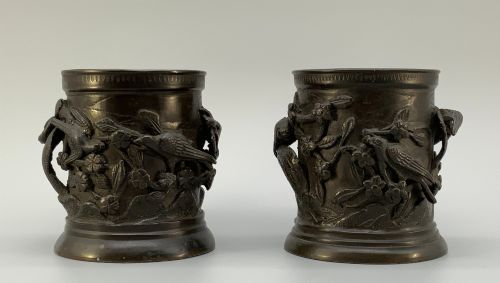
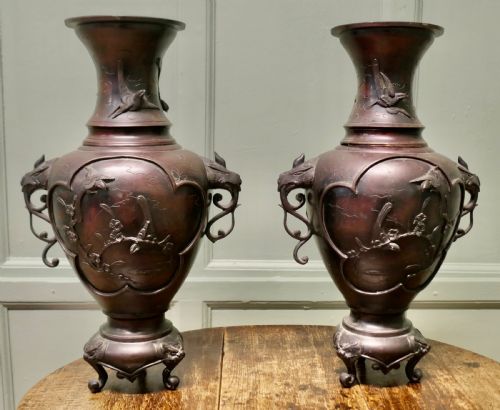
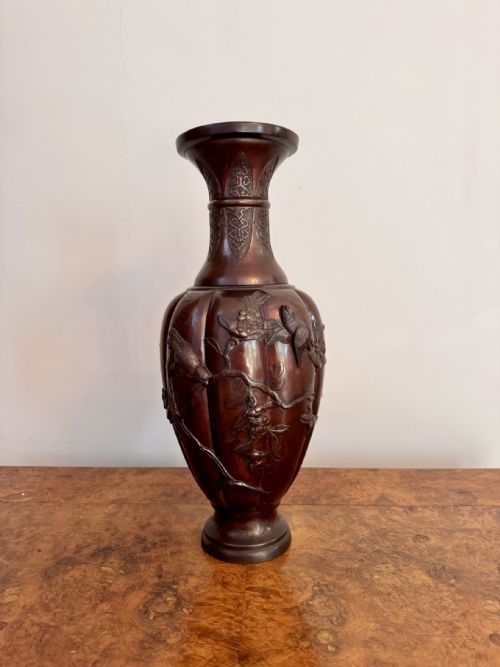
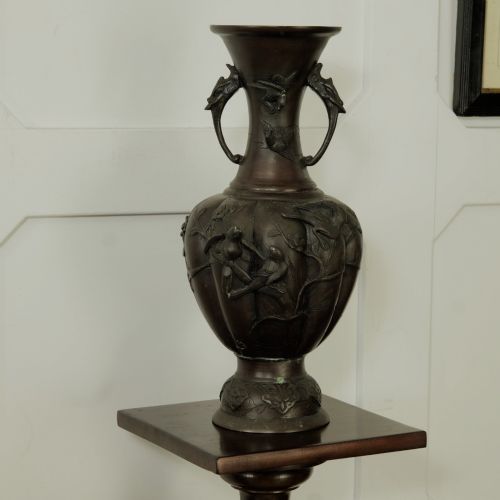
These japanese bronze bird vessel examples bring together centuries of metalwork skill and natural imagery into striking display forms.
Japanese Bronze Bird Vessel
A japanese bronze bird vessel comprises cast metal containers shaped as vases, urns, jardiniere planters, and incense burners. The items found here stem predominantly from the Meiji period and the nineteenth century, reflecting the metalworking output of that era.
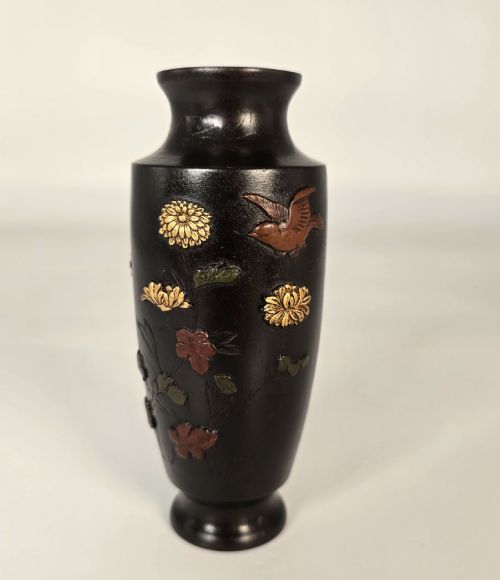
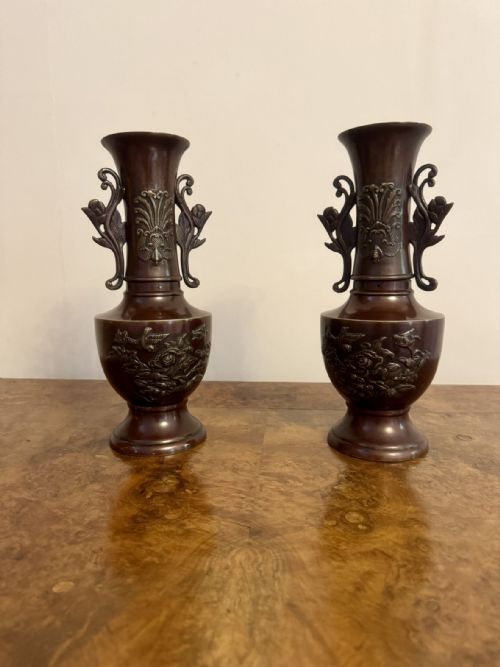
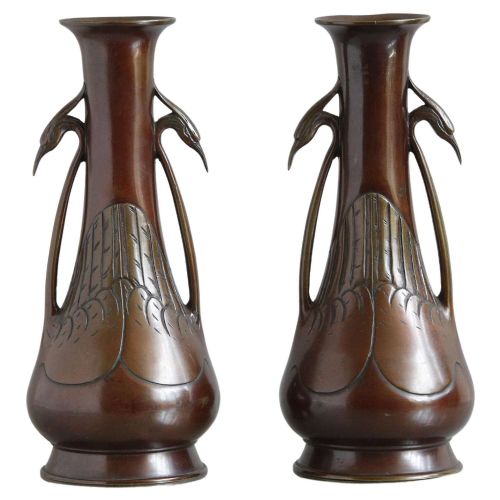
Buyers encounter matched pairs alongside individual decorative vases and hanging boat koro incense burners. Many examples incorporate specific avian motifs such as egret handles or raised relief bird and blossom decorations.
How They Were Made
Craftsmen utilised bronze, patinated bronze, and copper as the foundational metals for casting these forms. Artisans added surface enrichment through mixed metal elements, incorporating gold inlay, silver, and enamel details.
Certain items integrate cord bindings or gilt metal accents alongside raised metalwork to define the pictorial scenes of birds and floral arrangements.
Materials recorded across the listings include bronze, patinated bronze, copper, silver, gold inlay, and enamel.
What Varies in Quality
The sophistication of the surface decoration determines the distinction between standard production and superior examples. Pieces with intricate mixed metal inlay, detailed silver work, and finely sculpted handles demonstrate elevated artistic execution.
Scale and proportion also define the range, from modest stem vases up to very large presentation urns and heavy jardiniere planters.
The Japanese Bronze Bird Vessel Glossary
- Meiji Period
- The era in Japanese history spanning from 1868 to 1912, corresponding with much of the metalwork found in these listings. This period saw a surge in bronze production aimed at both domestic and international markets.
- Koro
- A traditional Japanese incense burner, often fitted with a pierced cover to allow scented smoke to escape. These vessels frequently take the form of small portable burners or hanging boat shapes.
- Jardiniere
- A large ornamental pot or planter designed to hold growing plants or floral displays. Bronze examples from this tradition often feature heavy cast handles and raised decorative bands.
- Patinated Bronze
- Metal treated with chemical solutions or heat to alter the surface colour and tone. This technique produces deep brown, black, or greenish hues that highlight cast details.
- Mixed Metal
- A decorative approach combining different metallic elements such as bronze, copper, silver, and gold upon a single surface. Craftsmen use this method to create contrasting colours within pictorial bird and floral scenes.
Japanese Bronze Bird Vessel: Frequently Asked Questions
What is a koro?
A koro is an incense burner used for burning aromatic materials. These vessels often include decorative covers.
They appear in various forms, including hanging boat designs and traditional tripod vessels.
How do I identify Meiji period bronzes?
Meiji period bronzes date from 1868 to 1912. They frequently display high levels of mixed metal detailing and naturalistic motifs.
Many pieces from this era incorporate themes of birds, blossoms, and traditional Japanese landscapes.
Were these vessels used outdoors?
Jardinieres and large planters served primarily to hold plants within interior spaces or sheltered courtyards. Smaller vases and urns functioned as decorative display items for rooms.
Their metal construction made them durable for holding floral arrangements.
What is mixed metal inlay?
Mixed metal inlay involves embedding contrasting metals like silver and gold into the bronze base. This technique creates multicolored pictorial details.
Artisans utilised this method to render feathers, flowers, and foliage with distinct visual contrast.