




Japanese Bird Handle Vase
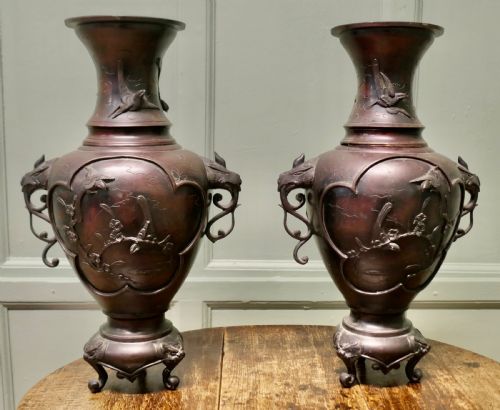
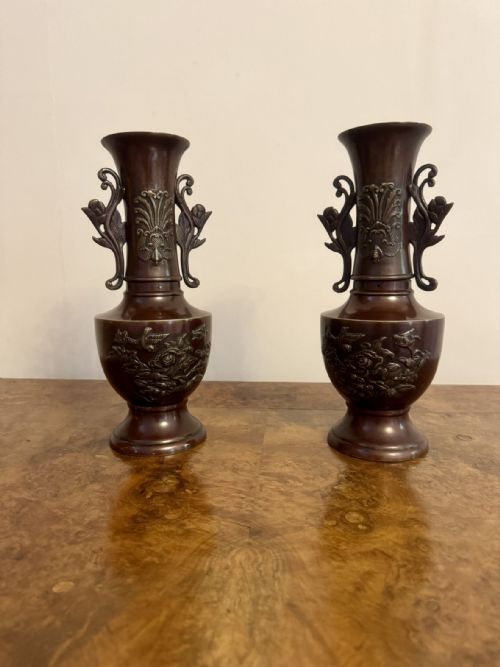
A Japanese bird handle vase brings distinct Meiji period artistry to a room, offering sculptural avian motifs cast in bronze.
Japanese Bird Handle Vase
When you search for a japanese bird handle vase, you encounter decorative vessels primarily cast in bronze during the late nineteenth and early twentieth centuries. These objects frequently emerge from the Meiji period, capturing the intricate metalwork of Japanese artisans from that era.
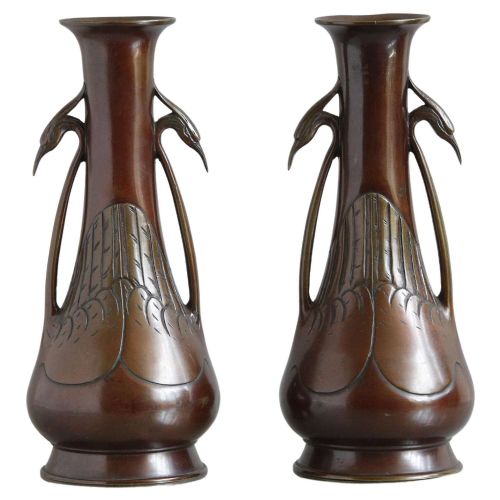
The inventory on this page largely consists of bronze vases and urns featuring sculptural bird decorations, such as egrets, integrated into the handles. Pairs and individual stem vases dominate the selection, often reflecting Victorian import tastes alongside traditional Japanese forms.
How they were made
The makers of these pieces relied on bronze casting techniques to shape substantial baluster urns and stem vases. Artisans sculpted intricate bird motifs directly into the handles, demonstrating precise metalworking skills during the Meiji period.
Beyond bronze, the listings occasionally incorporate ceramic and stoneware, alongside subtle enamel details. The primary method remains metal casting, producing heavy decorative vases designed for display.
Japanese Bird Handle Vase Retail Price Guide 2026
Typical asking prices for japanese bird handle vase among the pieces listed under this phrase on Sellingantiques today, from the lower quarter to the upper quarter. They describe what is for sale here now, not the wider market.
Egrets guarding the rim of a nineteenth-century vase keep a very quiet, metallic watch over the mantelpiece.
What varies in quality
The distinction between ordinary and superior examples lies in the crispness of the bronze casting and the naturalism of the bird handles. Finer pieces display sharply defined feather details and balanced proportions in the baluster form.
Scale and presence also differentiate the collection, with larger pairs and unusual studio pottery demonstrating greater ambition in design. The depth of the patination on the bronze surface further separates standard production from exceptional work.
Makuzu Kozan II
The Japanese Bird Handle Vase Glossary
- Meiji Period
- The era in Japanese history spanning from 1868 to 1912, known for opening trade with the West and producing sophisticated metalwork. Pieces from this time often feature detailed animal and plant motifs.
- Baluster
- A vase shape with a rounded body that tapers toward the neck, resembling a traditional architectural pillar. This form provides a stable base for heavy bronze handles.
- Patina
- The surface coloration and sheen that develops on bronze over time or through chemical treatment. A well-preserved patina enhances the visual depth of the metal.
- Edo Period
- The historical Japanese era preceding the Meiji period, lasting from 1603 to 1867. Objects originating from this time reflect distinct traditional aesthetics.
Japanese Bird Handle Vase: Frequently Asked Questions
Are these bronze vases waterproof?
Most antique bronze vases are designed primarily for decorative display rather than holding water. Using them with floral arrangements can risk damaging the interior patination.
For fresh flowers, place a small glass or plastic vessel inside the vase to protect the historic metal.
How do I date a Meiji bronze vase?
Dating relies on stylistic markers, casting quality, and the specific characteristics associated with the late nineteenth and early twentieth centuries. Victorian import context can also help narrow the timeframe.
Examining the base and the finish of the bronze provides further clues regarding the workshop era.
Why do some vases have bird handles?
Birds such as egrets held significant symbolic value in Japanese art, representing nature and longevity. Artisans incorporated these figures into the handles to add sculptural movement to the vessel.
This integration of fauna into utilitarian forms became a hallmark of Meiji period metalwork.
How should I clean antique bronze?
Bronze requires minimal intervention to preserve its historic surface and stable patination. Dusting with a soft, dry cloth is usually sufficient for regular maintenance.
Avoid using commercial metal polishes, as they can strip away the aged finish that collectors value.