



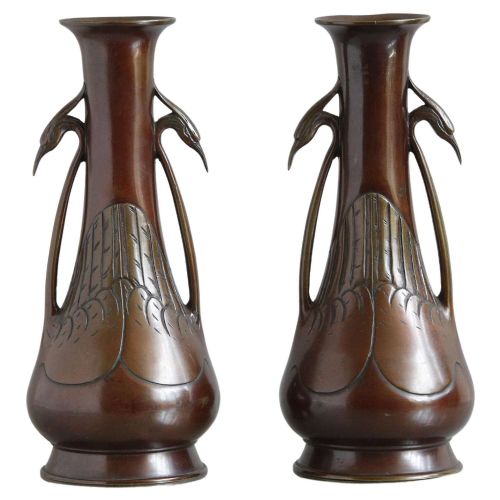


Patinated Bronze Oriental Vases
Patinated bronze oriental vases bring sculptural weight and dark, rich surfaces to a room, drawing the eye with intricate casting and traditional form.
Patinated Bronze Oriental Vases
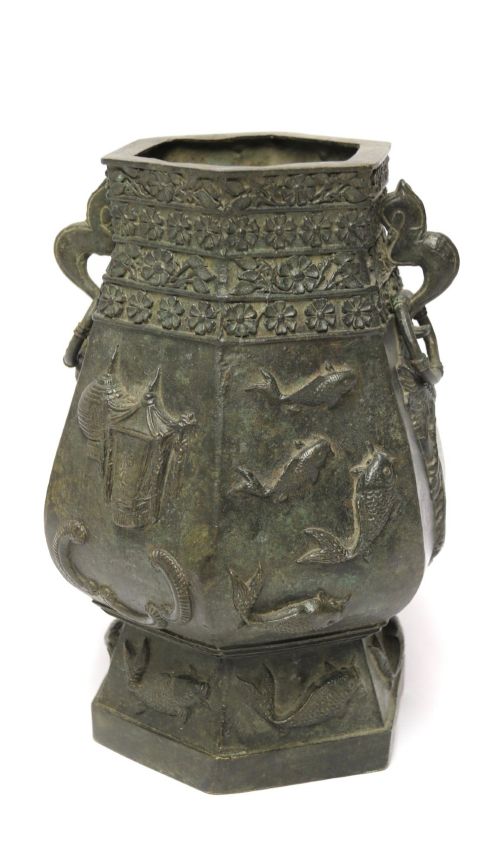
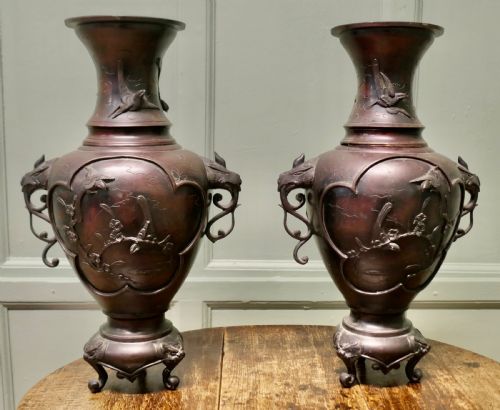
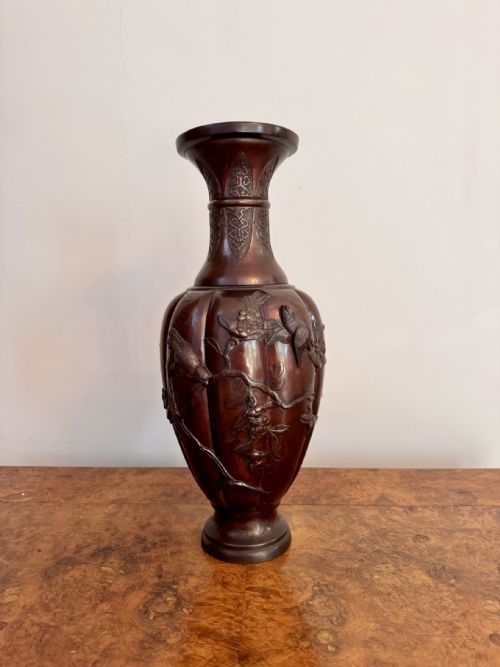
Patinated bronze oriental vases include heavy vessels, urns, and garniture sets originating primarily from Japanese Meiji period workshops and Chinese dynasties. Buyers seeking these pieces encounter baluster forms, ritual vessels, and hexagonal shapes designed for display or conversion to table lamps.
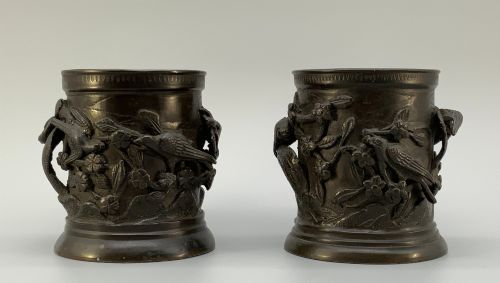
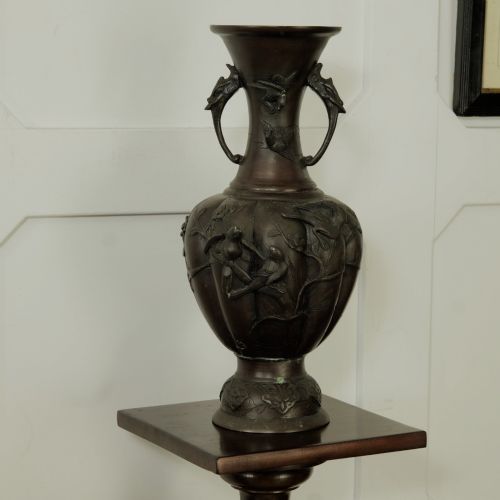
The selection ranges from diminutive stem vases standing fifteen centimetres high to massive sculptural pieces weighing several kilograms. Japanese Meiji examples frequently feature birds, blossoms, and dragons, whilst Chinese pieces include archaic Hu and Gu vessel forms.
How they were made
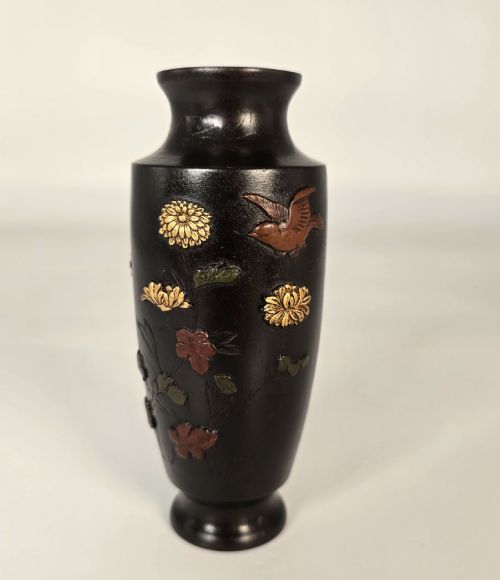
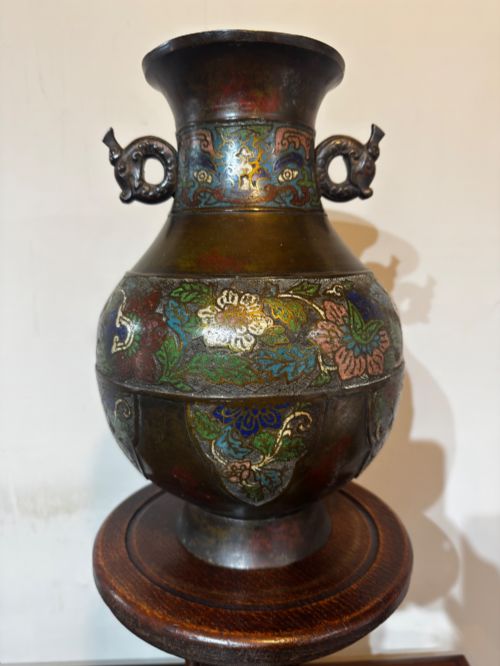
Makers utilised cast bronze, mixed metal, and copper, often enhancing surfaces through patination to achieve deep, weathered brown and dark tones. Selected pieces incorporate gold inlay, enamel, and champleve techniques to accentuate decorative motifs.
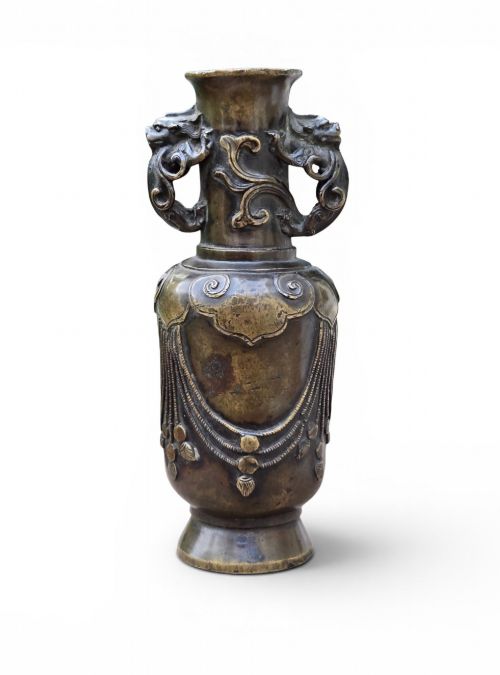
Handles and surface details such as egrets, dragons, and floral bouquets were cast separately and applied or integrated directly into the body during the casting process. Some vessels demonstrate sophisticated mixed metal work combining different alloy colours within a single design.
Listings span the seventeenth to the early twentieth century, incorporating Victorian interpretations alongside Meiji Japanese and Qing Chinese styles.
What varies in quality
Quality rests upon the crispness of the casting and the depth of the patination, distinguishing mass-produced items from works bearing strong sculptural presence. Heavier pieces often indicate substantial metal thickness and superior craftsmanship in handling complex forms like dragons and floral bouquets.
The refinement of surface embellishments, such as inlaid metalwork and detailed chasing, separates standard decorative vessels from those of notable artistic ambition. Signed pieces and those demonstrating precise control over mixed metal alloys command greater interest among collectors.
The Patinated Bronze Oriental Vases Glossary
- Patinated bronze
- Bronze treated with chemicals, heat, or natural weathering to produce a deliberate surface colour and finish. This dark or greenish skin protects the metal and defines the visual character of the object.
- Meiji Period
- The era in Japanese history spanning from 1868 to 1912, noted for a surge in artistic bronze production aimed at export and domestic display. Pieces from this time often show naturalistic motifs like birds and blossoms.
- Hu
- An archaic Chinese vase form with a rounded body and a tapering neck, originally used for wine or ritual purposes. Antique examples in bronze frequently adopt this ancient silhouette for decorative display.
- Champleve
- An enamelling technique where troughs or cells are hollowed out of the bronze surface and filled with vitreous enamel before firing. The resulting design sits flush with the surrounding metal partitions.
- Garniture set
- A matched group of three or more vases or urns designed to be displayed together on a mantelpiece or cabinet. These sets share decorative themes and proportional sizing.
- Archaistic
- A style in later decorative arts that deliberately imitates the forms, patterns, and patination of ancient ritual bronzes. Makers during the Meiji period frequently employed this aesthetic to evoke venerable antiquity.
Patinated Bronze Oriental Vases: Frequently Asked Questions
How do I identify a Meiji period bronze vase?
Meiji period bronze vases generally date between 1868 and 1912, often displaying naturalistic subjects such as birds, blossoms, and dragons rendered with high technical skill. Many pieces from this era incorporate mixed metal highlights or signature marks on the body.
Examining the casting weight and the depth of the patination helps distinguish these Japanese works from later reproductions. The inclusion of traditional forms alongside sculptural handles like egrets further points toward Meiji production.
Were these vases used as lamps originally?
Most of these bronze vessels served originally as decorative ornaments, flower pots, or ritual objects rather than lighting fixtures. Wiring for electricity typically occurred much later in the twentieth century.
Converted lamps appear frequently in the listings alongside standard vases. Buyers should inspect whether the conversion preserved the underlying bronze structure without causing permanent damage to the original vessel.
What is a Gu ritual vessel?
A Gu is an ancient Chinese ceremonial beaker form featuring a flared top, a slim central stem, and a wider base. Antique bronze examples adapt this ritual shape for decorative display and posy arrangements.
These pieces reflect historic vessel typologies adopted by later artisans. Their distinct silhouette sets them apart from standard baluster or hexagonal vases.
How should I care for patinated bronze?
Patinated bronze requires minimal intervention to preserve its stable surface layer and aged appearance. Dusting gently with a soft, dry cloth prevents particulate accumulation without disturbing the patina.
Harsh cleaning agents, polishes, and abrasive materials must be avoided entirely because they strip away the deliberate chemical or environmental colouring. Keeping the bronze away from excessive moisture ensures the finish remains stable over time.