






Bronze Baluster Vase Pair
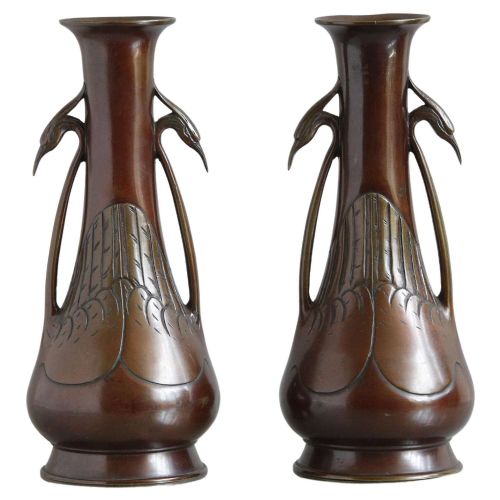
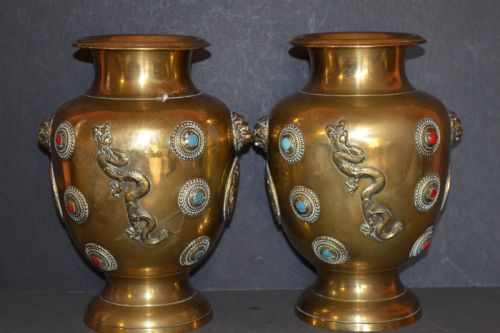
A bronze baluster vase pair brings heavy cast weight and slender flared necks to a room, drawing the eye instantly.
Bronze Baluster Vase Pair
A bronze baluster vase pair consists of matching vessels featuring the characteristic bulbous lower body tapering up to a narrower neck, originating predominantly from Japanese workshops of the Meiji and Edo periods alongside Tibetan and Chinese examples. These pieces appear on this page as both decorative vases and adapted table lamps, often mounted with ormolu or paired with fabric shades.
The evidence shows items spanning the nineteenth century through the early twentieth century, taking the form of baluster urns and stem vases. Many reflect Japanese Meiji aesthetics, while others display Tibetan or Nepalese metalwork traditions and Chinese powder blue glazes with ormolu mounts.
How they were made
These items are cast in bronze using traditional metalworking techniques, frequently incorporating applied decorative elements such as egret handles and intricate surface detailing. Workshops utilised mixed metals and patination to achieve varied surface tones on the bronze bodies.
Some examples combine the cast bronze with ormolu mounts, gold leaf, and gilt metal, while related pieces on the page integrate porcelain bodies such as Arita Imari and powder blue ceramics with metallic fittings.
Bronze Baluster Vase Pair Retail Price Guide 2026
Typical asking prices for bronze baluster vase pair among the pieces listed under this phrase on Sellingantiques today, from the lower quarter to the upper quarter. They describe what is for sale here now, not the wider market.
What varies in quality
Quality rests upon the crispness of the cast decoration, such as the relief work on handles and bodies, and the richness of the bronze patination. Finer examples display meticulous hand-finishing on details like avian handles or botanical motifs.
The integrity of any added mounts, whether ormolu or lamp fittings, also influences the piece, as does the preservation of the original surface texture and colour across both vessels in the pair.
The Bronze Baluster Vase Pair Glossary
- Baluster
- A vase shape characterised by a swollen lower portion and a narrow neck, resembling an architectural baluster. This profile provides stability and a balanced silhouette.
- Meiji
- A period in Japanese history spanning from eighteen sixty-eight to nineteen twelve, noted for exceptional metalwork and decorative arts exported to the West. Pieces from this era often exhibit highly detailed casting.
- Ormolu
- Gilt bronze mounts applied to furniture, ceramics, or vases, popular in European-influenced decorative schemes. This technique adds metallic highlights to the main body.
- Patina
- The surface coloration and sheen developed naturally over time or chemically applied by the maker to enhance the bronze. A well-preserved finish deepens the visual depth of the metal.
Bronze Baluster Vase Pair: Frequently Asked Questions
How were these vases used?
These vessels served primarily as decorative objects within homes, often displayed on mantelpieces or tables as matching pairs. Many have since been converted into table lamps while retaining their original bronze bodies.
Their substantial weight and balanced proportions made them suitable for holding floral arrangements or standing alone as sculptural elements in a room.
Are these vases always Japanese?
While a large portion of the metalwork originates from Japanese Meiji and Edo workshops, the selection also includes Tibetan, Nepalese, and Chinese pieces. Some listings feature porcelain bodies with ormolu mounts rather than solid bronze.
Examining the casting style and decorative motifs helps distinguish the various Asian and European-influenced origins represented on the page.
How do I date a bronze vase?
Dating relies on stylistic markers associated with specific periods, such as the Meiji era or nineteenth-century manufacturing techniques. Surface patination and the nature of any added mounts also provide clues to the age of the piece.
Makers and workshops often adhered to traditional aesthetic conventions of their reign or period, which assists in narrowing down the date of production.
Can I use them as lamps?
Several pieces on this page are listed as vases or lamps, indicating they were adapted for electrical wiring either historically or more recently. This dual function allows them to serve as functional lighting while preserving the antique bronze base.
Buyers should inspect the wiring and fittings to ensure they meet current standards for domestic use.