





Brown Bronze Vessel Pair
These brown bronze vessel pair selections bring together cast metal containers from the nineteenth century, valued for their distinct forms and heavy foundry work.
Brown Bronze Vessel Pair
A brown bronze vessel pair brings together matching cast metal containers originating from nineteenth century workshops in Japan, China, and Europe. Buyers seeking a brown bronze vessel pair encounter Japanese Meiji period examples alongside Chinese Qing dynasty pieces and Italian Grand Tour items.
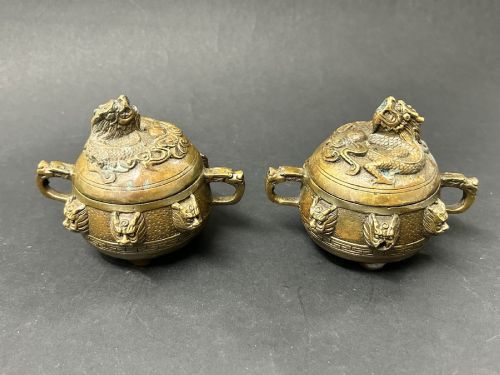
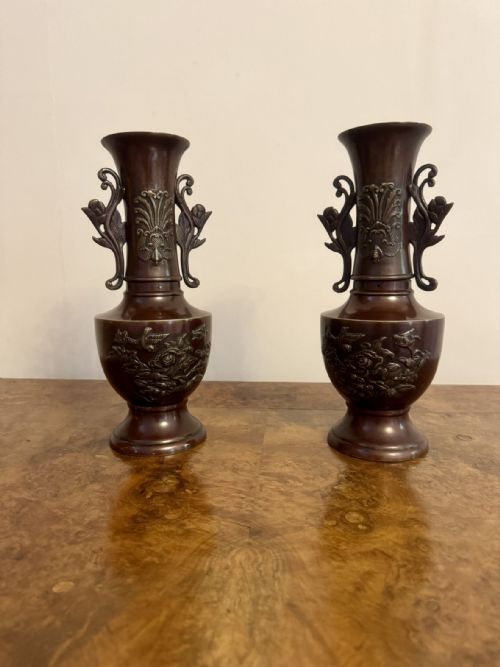
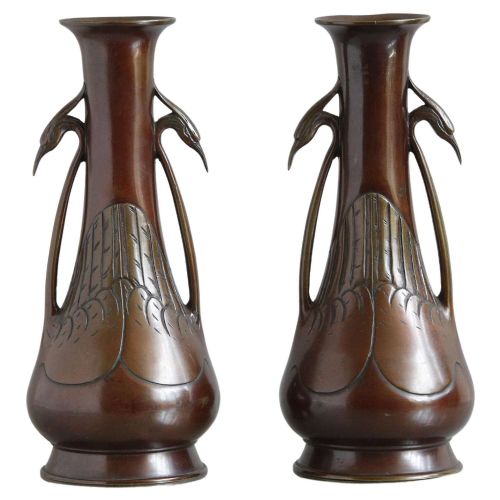
The objects take the form of twin handle vases, incense burners, altar vases, decorative urns, and ewers. Japanese examples dominate the selection, often featuring handles shaped as birds or figures alongside patinated surfaces.
Materials and construction
These items are shaped from bronze using traditional casting methods that produce substantial weight, with larger pieces scaling upwards to several kilograms. Makers utilised controlled cooling and chemical treatments to achieve the characteristic deep brown surface tones.
Surface ornamentation relies on applied relief work, such as dragons and egrets, integrated directly into the metal during the casting process. The resulting vessels combine robust structural walls with finely detailed decorative handles and rims.
Brown Bronze Vessel Pair Retail Price Guide 2026
Typical asking prices for brown bronze vessel pair among the pieces listed under this phrase on Sellingantiques today, from the lower quarter to the upper quarter. They describe what is for sale here now, not the wider market.
The listings feature nineteenth century bronze items exclusively, spanning Japanese Meiji, Chinese Qing dynasty, and Victorian Grand Tour styles.
Judgements of quality
Distinctions in quality rest on the crispness of the cast relief work and the stability of the metal walls. Finer examples display sharp definition in decorative elements like dragon motifs and avian handles without surface pitting.
Weight and proportion separate standard production pieces from exceptional foundry outputs. A balanced heft and deliberate attention to the patinated finish indicate superior craftsmanship.
The Brown Bronze Vessel Pair Glossary
- Bronze
- An alloy consisting primarily of copper combined with tin, utilised across these listings for its strength and suitability for casting.
- Patina
- The surface coloration and texture developed through age and chemical treatment, shifting the raw metal towards deep brown tones.
- Censer
- A vessel designed for burning incense, frequently featuring a fitted cover and supportive feet.
- Grand Tour
- A nineteenth century travel phenomenon that inspired European workshops to produce classical bronze decorative urns and ewers for collectors.
Brown Bronze Vessel Pair: Frequently Asked Questions
What are these vessels made from?
The pieces listed are constructed entirely from bronze, a durable copper alloy chosen for its casting properties.
Foundries used this metal to achieve both structural stability and rich brown surface finishes.
Where do these pieces originate?
Origins span Asian and European workshops, with particular representation from the Japanese Meiji period and Chinese Qing dynasty.
European items from the same era reflect classical revival and Grand Tour influences.
How heavy are these bronze vessels?
Weights vary depending on the scale of the object, ranging from smaller decorative ewers to substantial items scaling past several kilograms.
This heft reflects the solid bronze casting techniques employed by nineteenth century makers.
How should I clean bronze vessels?
Maintenance requires only gentle dusting with a soft cloth to preserve the original patinated surface.
Avoid chemical polishes or abrasive cleaners that might strip away the historic brown finish.