






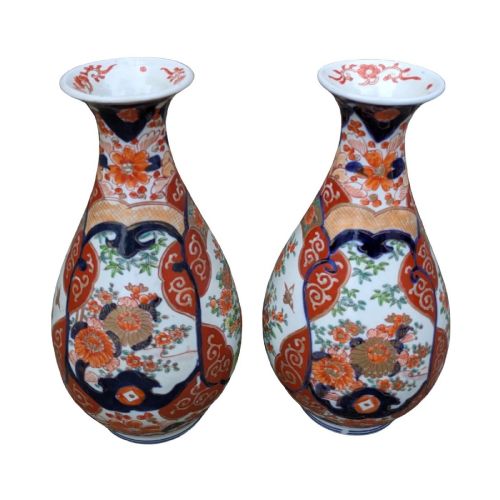


Japanese Baluster Vases
Japanese baluster vases combine sweeping curves with intricate hand-painted palettes, offering a commanding centrepiece for any room.
Japanese Baluster Vases
Japanese baluster vases take their name from their distinctive silhouette, characterised by a rounded body that tapers toward the base and flares at the neck. When searching for japanese baluster vases, a buyer encounters forms ranging from compact vessels to monumental floor-standing urns. The examples on this page predominantly date from the Meiji period and the nineteenth century, reflecting robust trade and artistic exchange.
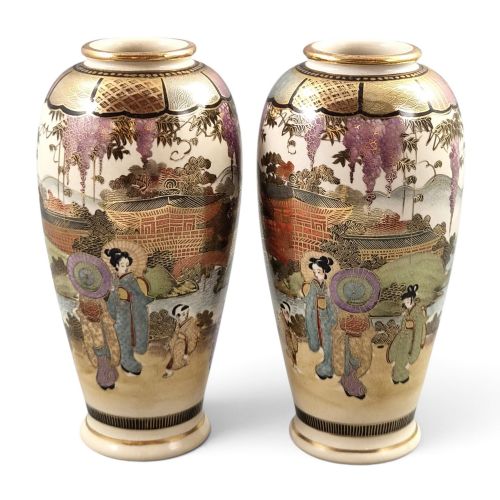
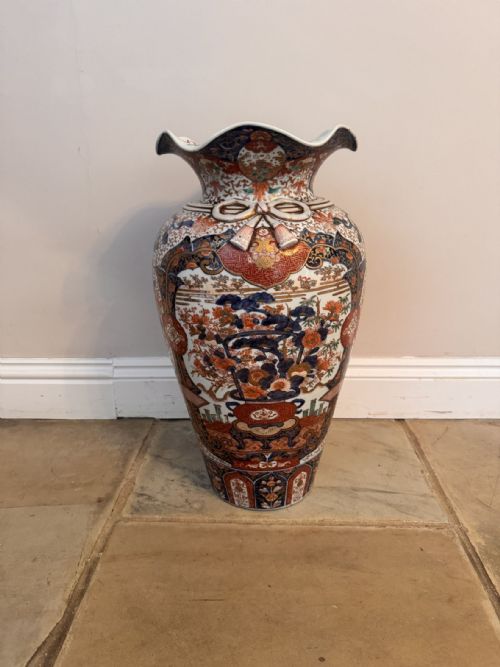
The decorative styles span distinct ceramic traditions, most notably the rich blue, iron red, and gilt schemes of Imari alongside the finely detailed earthenware of Satsuma. Many survive in pairs or larger garnitures, intended originally for symmetrical display on mantelpieces or cabinets. Certain pieces incorporate lids or handles shaped as egrets, whilst others take the form of table lamps.
Origins stretch from the kilns of Arita and Kyoto to workshop productions marked by named makers. Forms include hexagonal and octagonal bodies as well as standard round vessels suited for floral arrangements or standalone display. The historical span covers Edo period traditions through to early twentieth-century interpretations.
How They Were Made
Ceramic vases rely on porcelain or earthenware bodies shaped on the wheel or pressed into moulds, then painted with underglaze cobalt blue and overglaze enamel colours before firing. Gilding and gold leaf often accent the designs, applied with meticulous precision across floral and figural motifs.
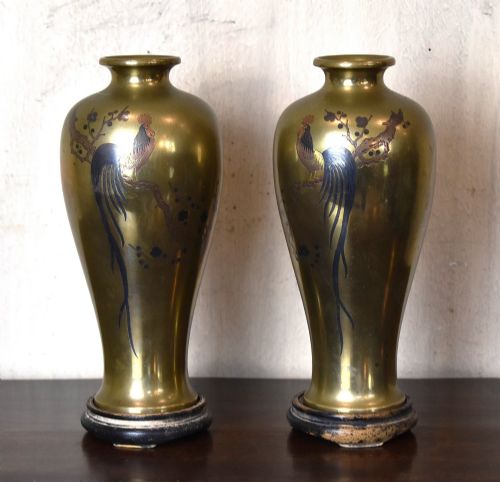
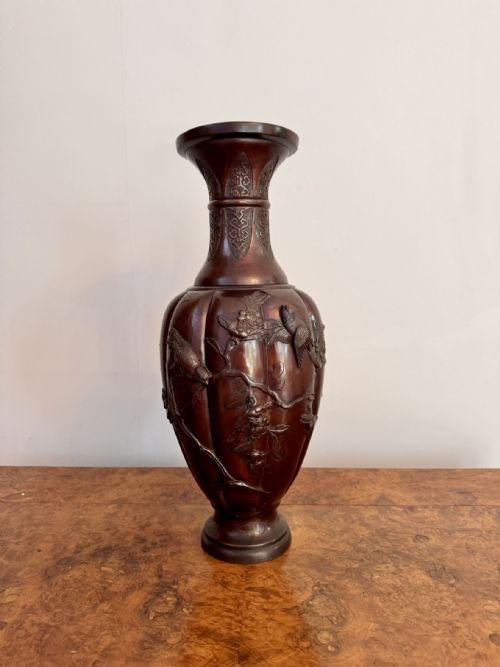
Bronze and mixed metal pieces utilise casting techniques, sometimes incorporating champlevé enamel or applied figures such as karako and birds. Artisans built up surface texture through relief work, incising, and mixed metal alloys to create varied tonalities across the body.
Glaze application varied from smooth, translucent porcelain coats to the crackled finishes typical of Satsuma earthenware. Kiln temperatures and controlled cooling dictated the depth of the blue pigments and the permanence of the surface gilding.
Japanese Baluster Vases Retail Price Guide 2026
Typical asking prices for japanese baluster vases among the pieces listed under this phrase on Sellingantiques today, from the lower quarter to the upper quarter. They describe what is for sale here now, not the wider market.
Listings feature periods spanning from the seventeenth-century Edo era through to the early twentieth-century Taishō period.
What Varies in Quality
The clarity and registration of the hand-painted details separate standard production from superior work. Crisp lines in Imari palettes and finely drawn facial expressions on Satsuma figures indicate master execution rather than mass output.
Weight and balance distinguish sturdy bronze castings and thick porcelain bodies from lighter, less substantial pieces. The depth of the glaze, the richness of the gilding, and the crispness of applied elements like handles or figures dictate overall execution.
Signatures by recognised artists or reputable potteries add documentary weight to a piece, separating unsigned commercial wares from documented studio productions. Preservation of the enamel and minimal wear to surface gold leaf determine the physical integrity of surviving vessels.
Shozan·Makuzu Kozan·Kōko·Kinkozan
The Japanese Baluster Vases Glossary
- Baluster
- A vase form with a rounded lower body and a narrow neck, resembling an architectural baluster. This silhouette provides stability and visual balance.
- Imari
- A style of Japanese porcelain featuring a palette of underglaze blue, iron red, and gilt highlights. These wares were heavily exported to Europe from the seventeenth century onward.
- Satsuma
- A type of Japanese earthenware featuring a pale, crackled glaze decorated with polychrome enamels and gilding. Production flourished during the Meiji period for international markets.
- Champlevé
- An enamelling technique where troughs are dug into a bronze surface and filled with vitreous paste before firing. This creates durable, multi-coloured patterns across metal vessels.
- Garniture
- A set of three or more matching vases and jars designed to be displayed together as a decorative scheme. These sets were popular in grand interiors.
- Karako
- Chinese-style children depicted in Japanese art, often shown playing in groups. They appear frequently as applied figures on ceramic and metal works.
Japanese Baluster Vases: Frequently Asked Questions
What is Satsuma earthenware?
Satsuma wares are ceramic pieces covered in a characteristic ivory-coloured glaze marked by a fine network of intentional cracks.
They are hand-painted with intricate figural scenes and heavy gilding, distinguishing them from smooth blue and white porcelain.
Are these vases watertight?
Many antique ceramic and bronze vases were made primarily for decorative display rather than holding water and fresh stems.
Using them for dried arrangements protects the historic interior glaze and prevents moisture damage to the body.
How do I date a Meiji period vase?
The Meiji period spans from eighteen sixty-eight to nineteen twelve, a time of rapid artistic output for international export.
Vases from this era often bear artist signatures, workshop marks, or stylistic traits combining traditional motifs with Western influences.