


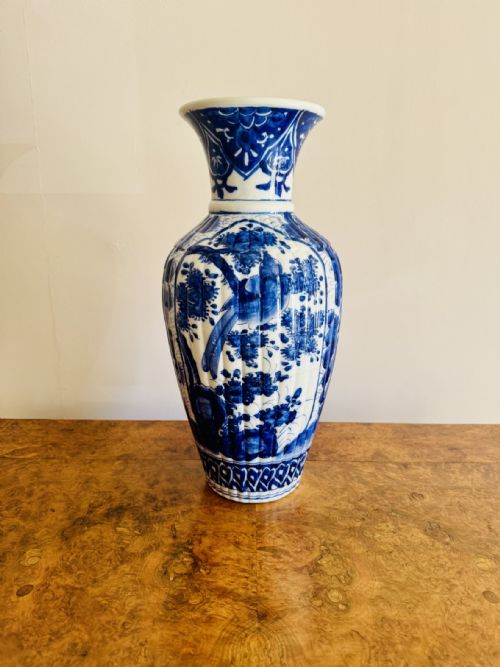
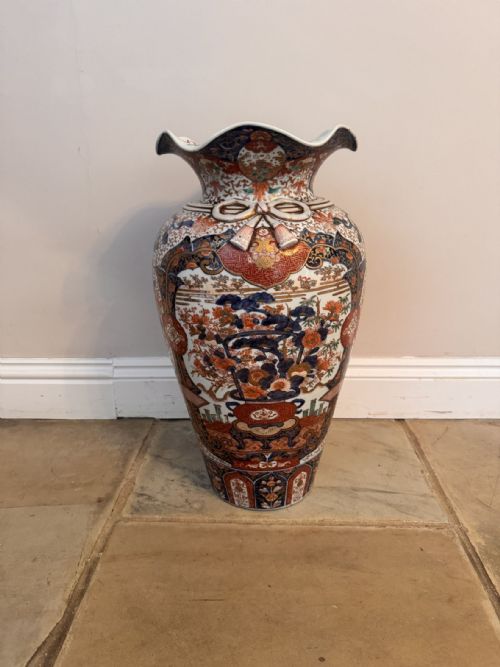
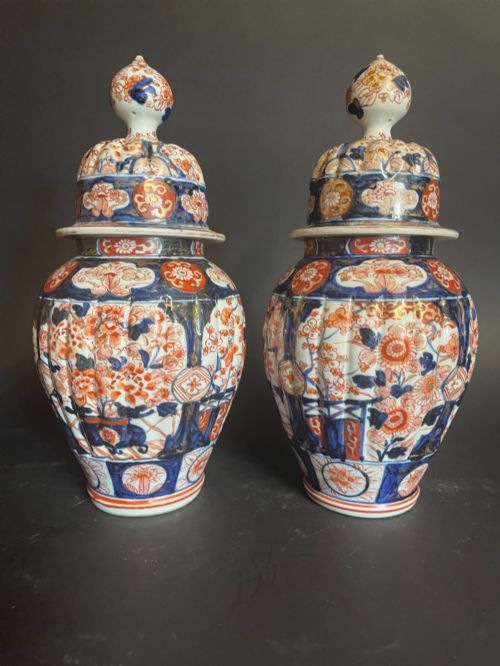


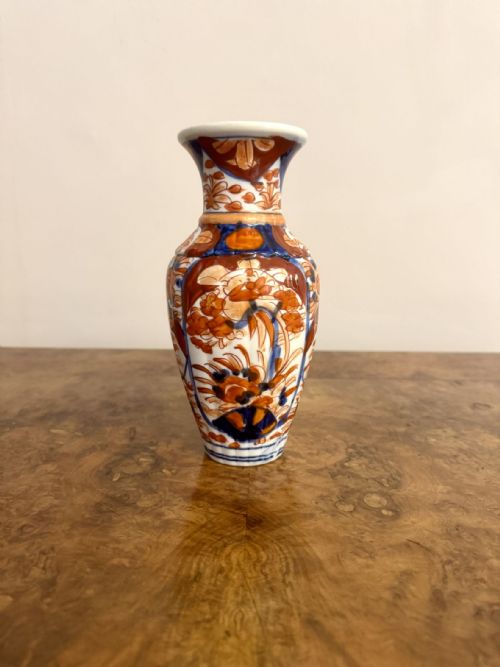


Japanese Arita Imari Jar
These japanese arita imari jar examples are vibrant porcelain vessels that bring centuries of kiln tradition and striking polychrome decoration straight into a room.
Japanese Arita Imari Jar
When you search for a japanese arita imari jar, you are looking at porcelain vessels produced in the Hizen province around Arita, decorated in the distinctive Imari palette. The pieces on this page span from the seventeenth century through to the nineteenth century, encompassing both the Edo period and later Victorian eras. You will encounter various forms here, ranging from lidded ginger jars and pairs of covered vases to single decorative floor vases and converted table lamps.
The earlier pieces often date back to the late seventeenth and early eighteenth centuries, reflecting the classic Genroku aesthetics with careful cobalt blue underglaze work. Later nineteenth-century examples display bolder panels and heavier enamelling, sometimes adapted later in Europe with ormolu mounts or hardwood bases. Lidded jars and garniture sets remain the most frequent configurations met in this selection, prized for their symmetrical presence.
How They Were Made
These vessels start as local clay bodies formed into porcelain, fired at high temperatures to achieve a dense, vitrified structure. Artisans then apply cobalt blue underglaze directly to the biscuit body before the initial glaze firing.
Following the glaze fire, craftsmen add overglaze enamels, predominantly iron red and rich gilt highlights, before a subsequent lower-temperature fixation fire. Gold leaf and intricate hand-painted enamel details complete the palette, contrasting sharply against the bright white porcelain ground.
Japanese Arita Imari Jar Retail Price Guide 2026
Typical asking prices for japanese arita imari jar among the pieces listed under this phrase on Sellingantiques today, from the lower quarter to the upper quarter. They describe what is for sale here now, not the wider market.
The listings on this page span the seventeenth, eighteenth, and nineteenth centuries, utilising porcelain, enamel, gold leaf, and cobalt blue underglaze.
What Varies in Quality
Quality rests heavily on the crispness of the cobalt blue underglaze and the precision of the overglaze enamels. Finer vessels display controlled brushwork where iron red and gold leaf align perfectly with the underlying blue lines, avoiding muddy overlap.
The weight, throwing consistency of the porcelain body, and survival of original matching covers elevate certain examples above others. Early seventeenth and eighteenth-century pieces demonstrate a different potter's discipline compared to mass-exported late nineteenth-century items.
The Japanese Arita Imari Jar Glossary
- Imari palette
- A decorative style featuring a triad of cobalt blue underglaze, iron red overglaze, and gold highlights. This distinct colour scheme originated in Arita and was shipped through the port of Imari for export.
- Cobalt blue underglaze
- Pigment applied to the raw porcelain body before glazing and firing, creating a deep blue tone fixed permanently beneath a clear glass layer. It forms the structural outline for many traditional Japanese designs.
- Garniture
- A set of matching vases or jars designed to be displayed together on a mantelpiece or cabinet. These sets typically consist of three or five graduated pieces with covers.
- Genroku Period
- A historic Japanese era spanning from sixteen eighty-eight to seventeen hundred four, associated with a flourishing of merchant culture and highly refined decorative arts. Pieces from this time carry specific early stylistic markers.
Japanese Arita Imari Jar: Frequently Asked Questions
How do I date a Japanese Imari jar?
Dating relies on assessing the porcelain body, the depth of the cobalt blue underglaze, and the style of the overglaze enamels. Seventeenth and early eighteenth-century pieces often show finer throwing marks and softer iron reds.
Later nineteenth-century examples tend to feature denser, brighter gilt work and heavier potting. Comparing the footrim and glaze contraction helps confirm the era of production.
Were these jars made for export?
The vast majority of Arita Imari wares were produced specifically for export to European markets via Dutch and Chinese traders. Western houses displayed them proudly in garniture sets on mantelpieces and cabinets.
This export trade influenced the shapes and sizes demanded by foreign buyers, leading to robust lidded jars and ginger jars suited for long sea voyages.
Can I use an antique jar as a lamp?
Many surviving jars were converted into table lamps during the nineteenth or twentieth centuries, often fitted with metal mounts or turned hardwood bases. While purists prefer intact lidded vessels, these conversions are period alterations that reflect historical domestic use.
Care should be taken with wiring to ensure the original porcelain body remains unharmed by the fitting.
What is the difference between Arita and Imari?
Arita is the geographic production centre in Hizen province where the porcelain clay was mined, formed, and fired. Imari is simply the port town from which these finished ceramics were shipped out for domestic and international distribution.
Consequently, all true Imari porcelain of this type originates from the kilns of Arita.