

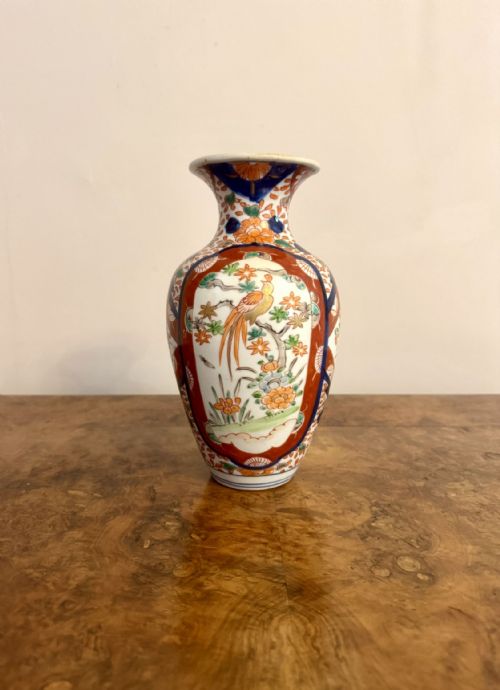


Decorated Porcelain Jar
These decorated porcelain jar listings gather international vessels and table lamps spanning the eighteenth and nineteenth centuries.
Decorated Porcelain Jar
A decorated porcelain jar draws the eye with varied glazing and painting techniques applied across diverse global traditions. When you search for a decorated porcelain jar, you encounter forms ranging from large temple jars and sugar bowls to converted table lamps and urns.
The pieces on this page span the eighteenth and nineteenth centuries, taking in Qing dynasty works, French copies, and Japanese Edo or Meiji period outputs. You are most likely to meet Japanese Imari palette pieces and Chinese celadon vessels among these selections.
Forms include covered vases, garnitures, and sugar bowls utilising diverse artistic manners. Each object reflects the distinct aesthetic priorities of its origin, whether European neoclassical and rococo revival or Japanese export traditions.
Materials and construction methods
Makers shaped these objects using porcelain and earthenware bodies, frequently finishing surfaces with polychrome enamel paint. Many examples incorporate gold leaf and gilding to accentuate painted motifs.
Mounts and secondary elements utilise brass and wood, particularly where vases are adapted into table lamps or fitted with covers. Firing techniques and pigment application vary widely between European factories and East Asian kilns.
Decorated Porcelain Jar Retail Price Guide 2026
Typical asking prices for decorated porcelain jar among the pieces listed under this phrase on Sellingantiques today, from the lower quarter to the upper quarter. They describe what is for sale here now, not the wider market.
The site records periods spanning the 18th Century, 19th Century, 1880, 1900, and the Edwardian era.
Distinguishing quality in porcelain jars
Quality rests in the precision of the painted detail and the crispness of the porcelain body form. Finer pieces demonstrate careful control over the enamel palette and gilding execution.
The distinction between standard production wares and exceptional studio pieces involves the depth of the glaze and the harmony of the decorative scheme across the vessel surface.
Shozan Kyoto Studio·Samson of Paris·Richard Ginori
The Decorated Porcelain Jar Glossary
- Imari palette
- A traditional Japanese decorative style utilising strong blues, iron reds, and gold on a white porcelain ground. This palette appeared on exports widely imitated across Europe.
- Celadon
- A type of transparent green glaze applied to porcelain, creating subtle jade-like tones over carved or plain surfaces. It originates in Chinese ceramic traditions.
- Garniture
- A set of matching vases or urns designed to be displayed together on a mantelpiece or sideboard. These sets often comprise three or five matching vessels.
- Polychrome
- Painted or printed in several colours. This term describes ceramics decorated with a rich variety of enamel pigments.
- Edo period
- A period in Japanese history spanning from 1603 to 1868, noted for distinct artistic developments in ceramics and printmaking. Pieces from this era often feature traditional motifs.
Decorated Porcelain Jar: Frequently Asked Questions
How were these jars used?
Many of these vessels served as ornamental display items, garniture sets, or functional storage for goods like sugar.
Over time, some larger vases were adapted into table lamps while retaining their original ceramic bodies.
How do I date a porcelain jar?
Dating relies on stylistic markers, studio signatures, and the characteristics of the glaze and paste. Examining the specific enamel palette and potting technique helps place a piece within its manufacturing era.
Comparative analysis with documented examples from periods like the Meiji or Qing dynasties provides further chronological context.
What is the Imari palette?
The Imari palette refers to a specific colour combination featuring underglaze blue, iron red, and gilt highlights on porcelain. This style originated in Japan and heavily influenced European ceramic production.
Pieces decorated in this manner display high-contrast patterns and floral or pictorial motifs.
How do I care for antique porcelain?
Antique porcelain requires gentle handling and cleaning with a soft, dry cloth to protect delicate enamel and gilding. Avoid using harsh chemical cleaners or submerging pieces with metallic or wooden mounts.
Display vessels away from direct sunlight and areas prone to heavy vibrations or temperature fluctuations.