

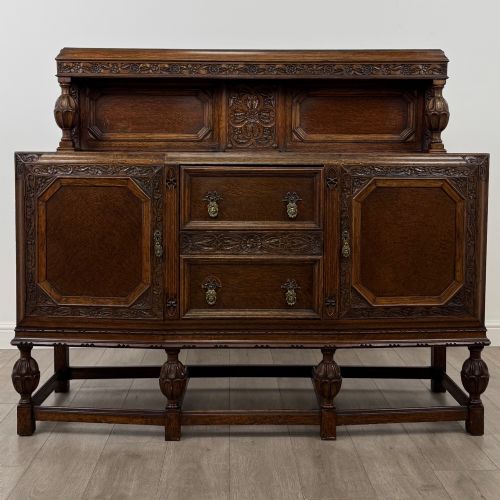

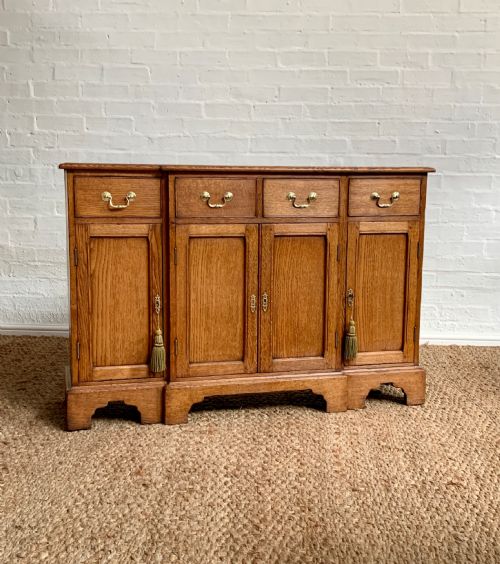
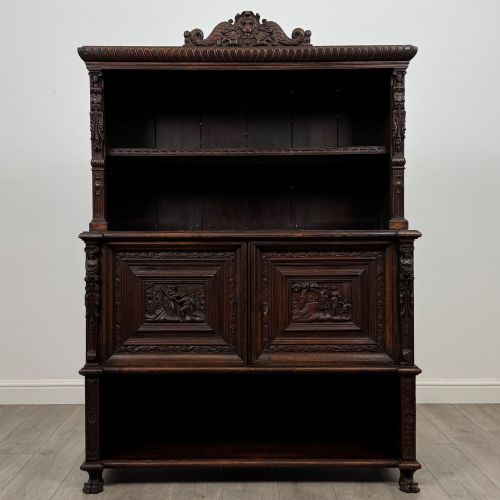
Jacobean Sideboard Cabinet
When you search for a jacobean sideboard cabinet, you are looking at substantial timber storage pieces rooted in seventeenth-century design.
Jacobean Sideboard Cabinet
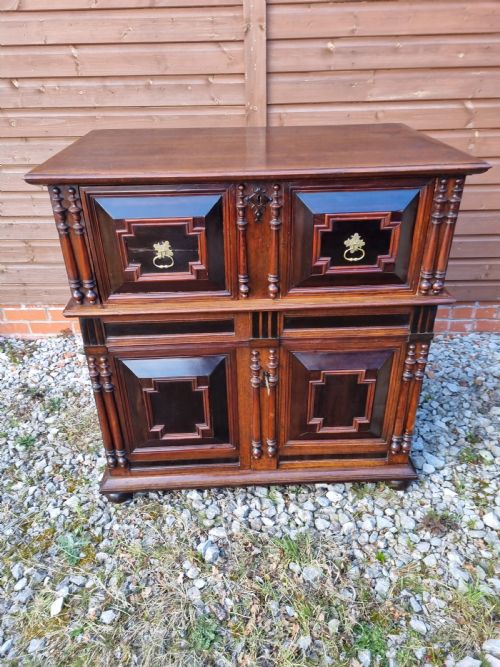
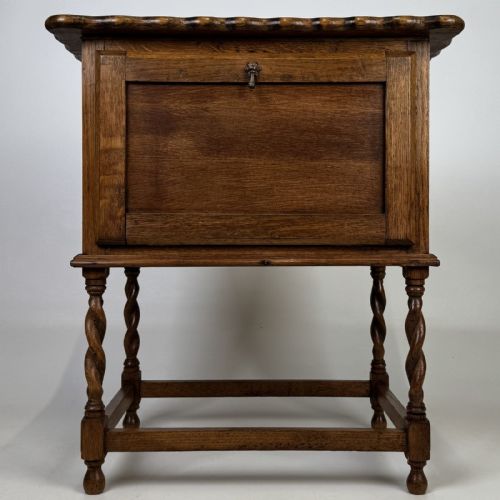
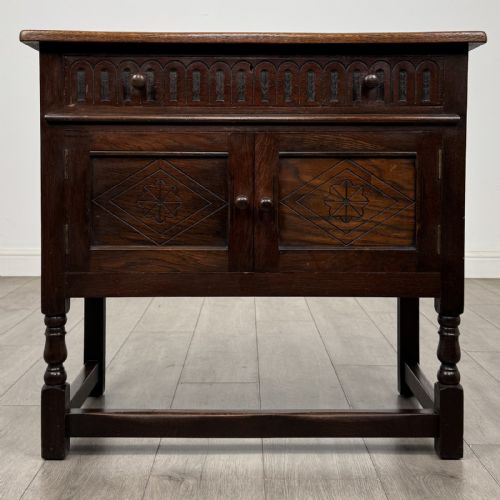
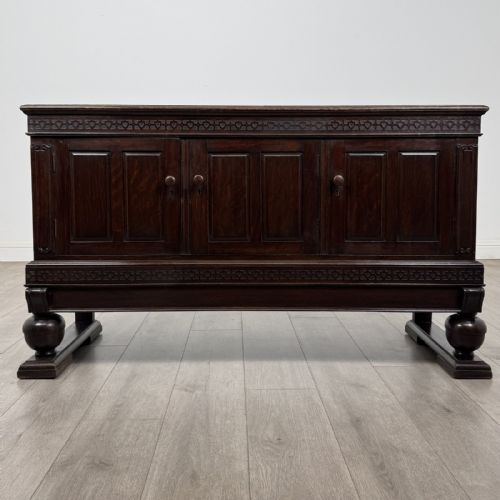
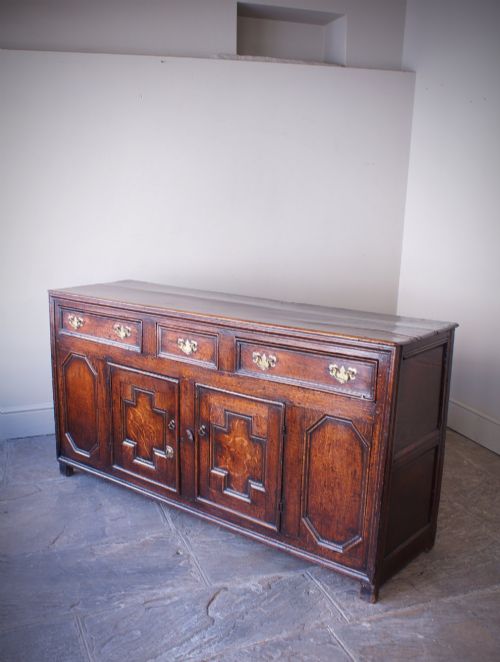
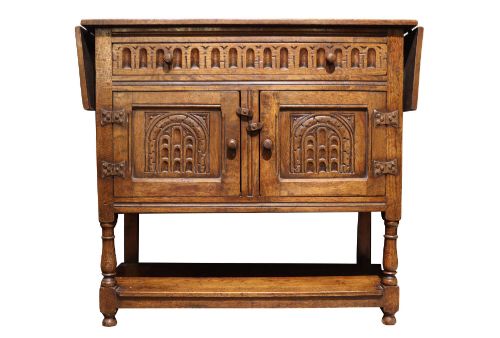
A jacobean sideboard cabinet brings together centuries-old storage forms, encompassing heavy oak dressers, court cupboards, and press cupboards alongside later revival iterations from the nineteenth and twentieth centuries. These forms serve as prominent storage furniture for dining spaces and hallways, offering substantial interior capacity behind panelled doors and beneath drawer banks.
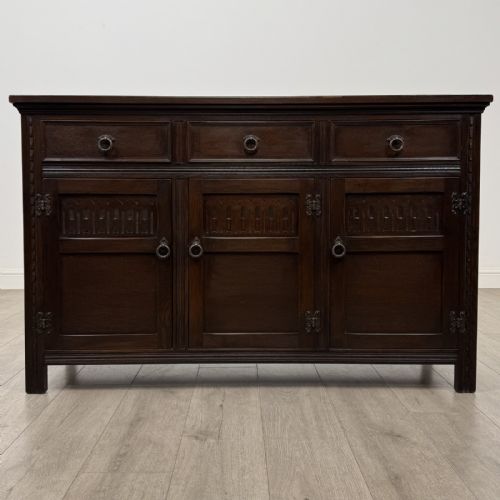
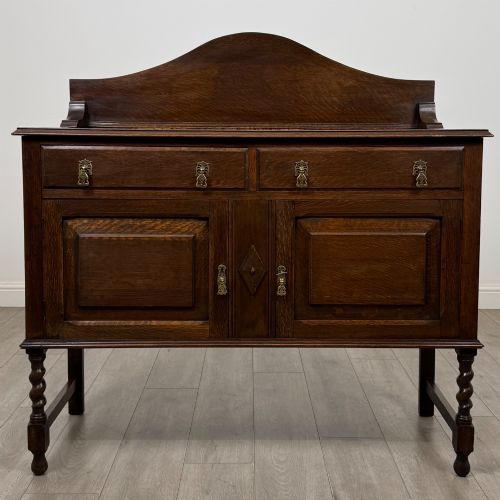
The pieces you meet most often on this page date from the nineteen-twenties and Edwardian periods, constructed in the jacobean revival style with deep panel carving and turned supports. Alongside these twentieth-century interpretations, genuine seventeenth-century examples appear, presenting authentic joined construction and centuries of honest wear.
How they were made
Construction relies primarily on English oak, selected for durability and timber movement stability, occasionally supplemented by fruitwood and walnut in seventeenth-century examples. Joinery techniques include mortise and tenon joints secured with wooden pegs, creating rigid frames capable of supporting heavy loads without metal fasteners.
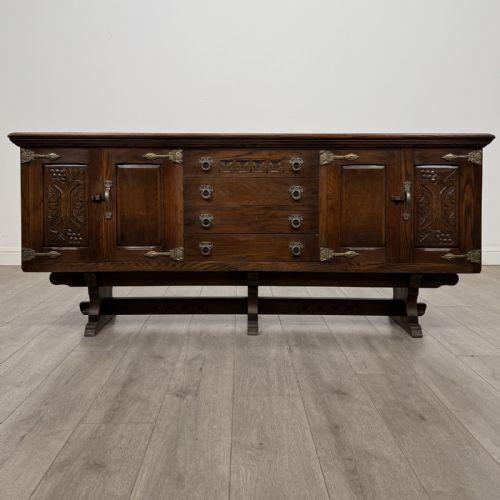
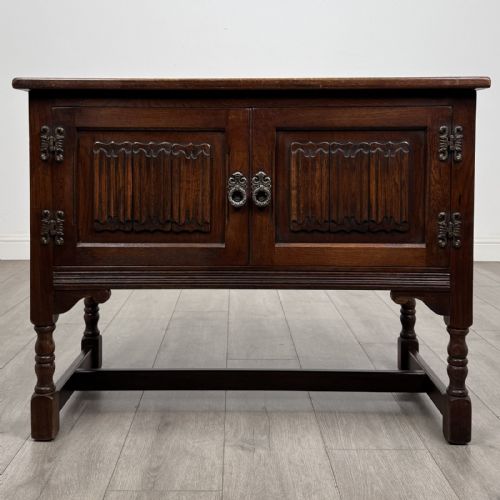
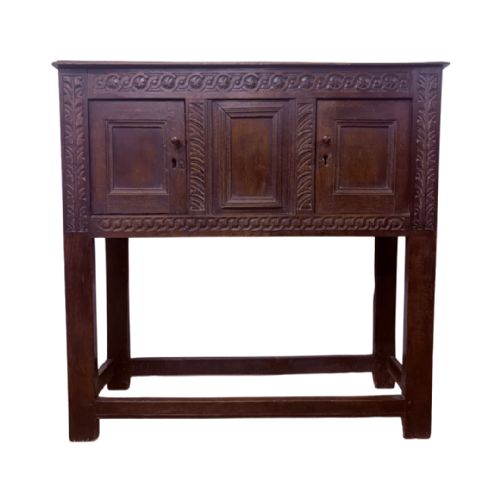
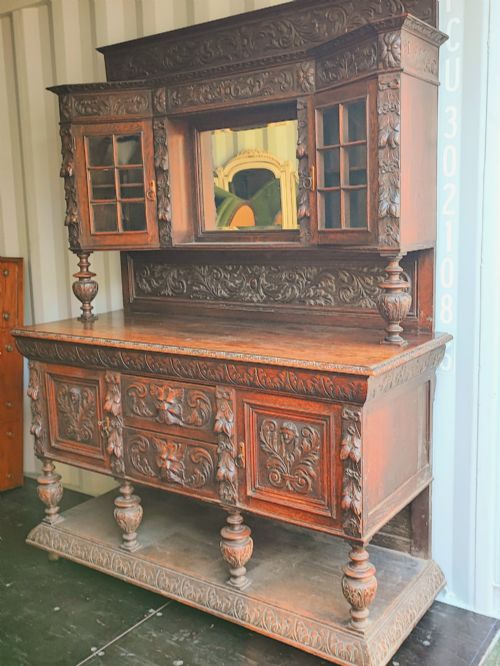
Surface ornamentation is achieved through direct carving into the solid timber, featuring linenfold panels, geometric strapwork, and relief motifs. Metal elements are restricted to brass handles, iron hinges, and occasionally glass or mirrored panels in later iterations.
Jacobean Sideboard Cabinet Retail Price Guide 2026
Typical asking prices for jacobean sideboard cabinet among the pieces listed under this phrase on Sellingantiques today, from the lower quarter to the upper quarter. They describe what is for sale here now, not the wider market.
Several pieces feature the stern gaze of the Green Man carved directly into the oak, watching over your dining room.
What varies in quality
Quality reveals itself in the integrity of the timber and the depth of the hand-carved detail, distinguishing solid period construction from lighter revival pieces. Pieces retaining their original hardware, uncompromised drawer linings, and untouched surface patina command greater interest from collectors.
The precision of the joinery and the balance of proportions govern the overall execution, separating utilitarian workshop output from master cabinetmaker production across all represented periods.
The Jacobean Sideboard Cabinet Glossary
- Court cupboard
- A heavy seventeenth-century storage piece featuring an upper recessed cabinet supported by columns above a lower section enclosed by doors. This form served primarily for displaying plate and storing household provisions.
- Press cupboard
- A large enclosed storage furniture piece designed for garments and linens, featuring upper and lower cupboard sections. These items often display rich relief carving and panelled doors.
- Linenfold
- A style of woodcarving depicting vertical folds of fabric, widely utilised on sixteenth and seventeenth-century cupboard doors. This decorative technique creates a textured surface resembling folded linen cloth.
- Barley twist
- A turned wooden furniture leg resembling a spiral rope, popular in seventeenth-century joinery and revived during the Victorian and Edwardian eras. This decorative turning adds vertical movement to heavy cabinet bases.
- Stretcher base
- Horizontal wooden rails connecting the lower legs of a table or cabinet to provide structural rigidity. These supports frequently incorporate raised footrests in early joined oak furniture.
Jacobean Sideboard Cabinet: Frequently Asked Questions
How do I date a jacobean cabinet?
Examine the construction methods visible inside the piece, looking for hand-cut joints, wooden peg fixings, and timber shrinkage patterns that indicate genuine seventeenth-century origin.
Revival pieces from the nineteen-twenties often display machine-cut elements, standard modern screw fixings, and cleaner internal surfaces that distinguish them from older furniture.
What is a court cupboard used for?
Court cupboards were originally designed to store food, beverages, and valuable household silver in the dining hall or parlour of a substantial home.
Today, they function as display and storage furniture in living rooms or dining spaces, holding tableware and books.
Are these cabinets made of solid oak?
The majority of pieces listed are constructed from solid oak or English oak, utilising heavy timber for both structural frames and visible panelling.
Some revival examples incorporate secondary timbers or mixed hardwoods within internal shelving and drawer linings.
How do I care for antique oak furniture?
Maintain antique oak by applying traditional beeswax sparingly to nourish the wood and preserve the natural surface patina developed over centuries.
Keep these cabinets away from direct heat sources and sudden humidity changes to prevent timber splitting and joint movement.