

Jacobean Revival Oak Cupboard
A jacobean revival oak cupboard brings heavy 17th-century character and dark timber presence into a room without the fragility of genuine antiquity.
Jacobean Revival Oak Cupboard
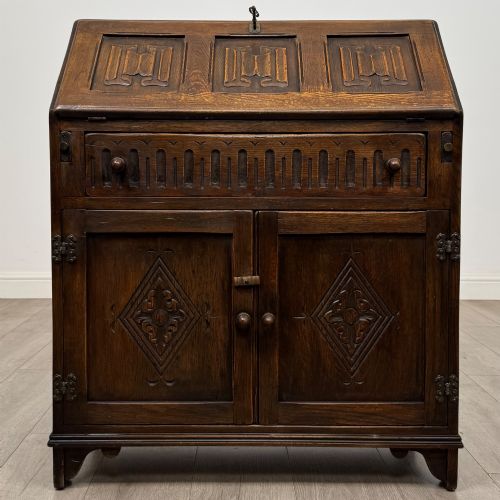
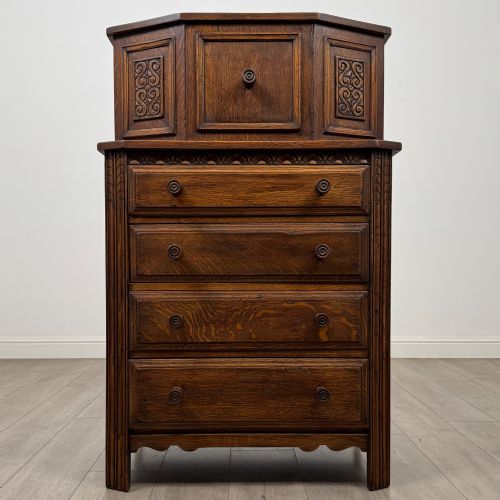
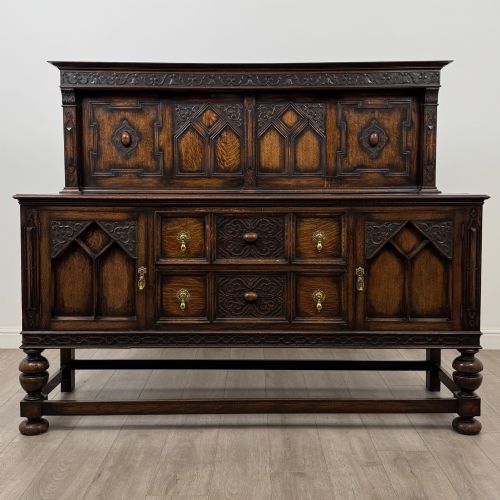
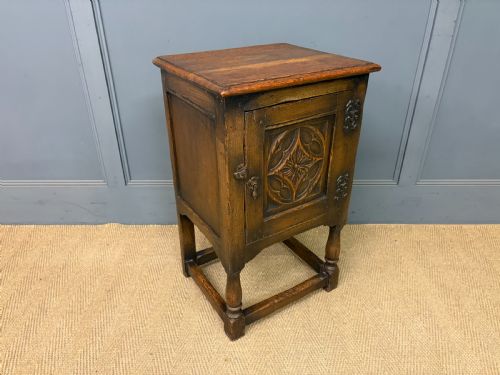
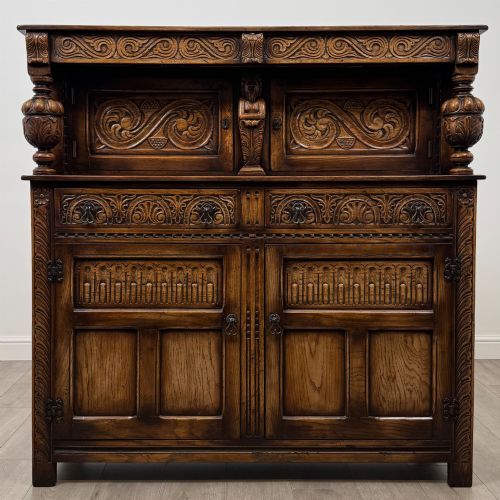
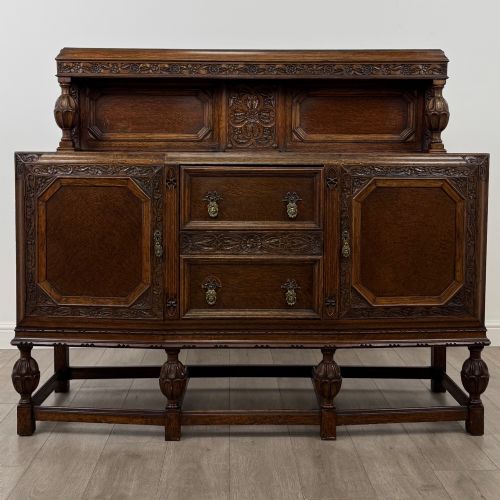
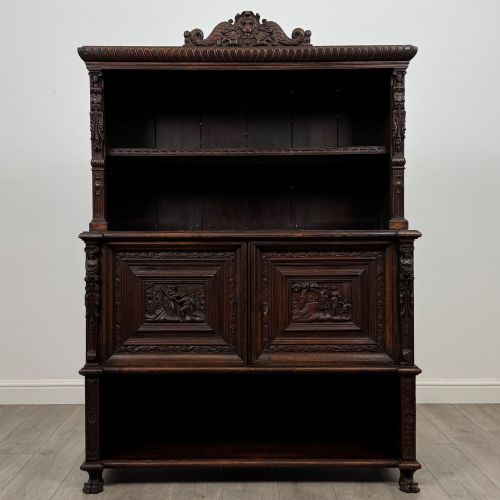
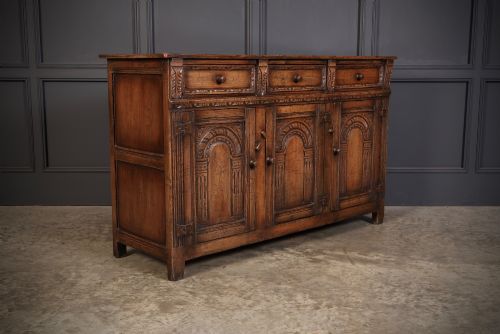
A jacobean revival oak cupboard is a solid storage piece built to echo the robust forms of the 17th century, drawing heavily on styles seen in Edwardian, Victorian, and 1920s workshops. These items range from wall-hanging corner cupboards to substantial court cupboards and sideboards.
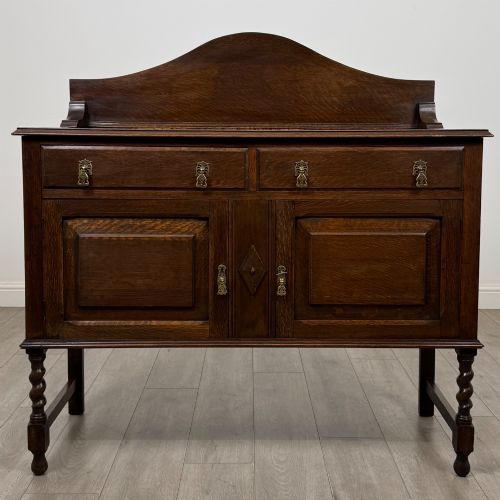
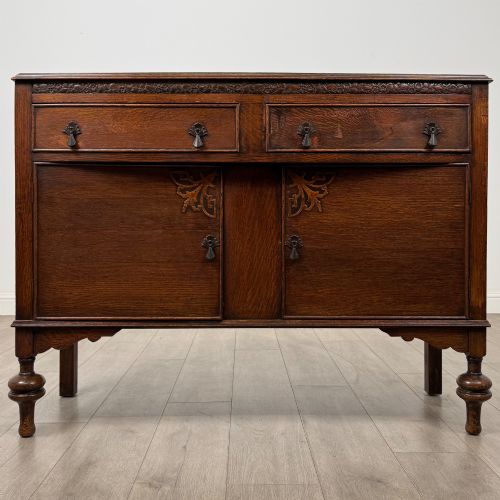
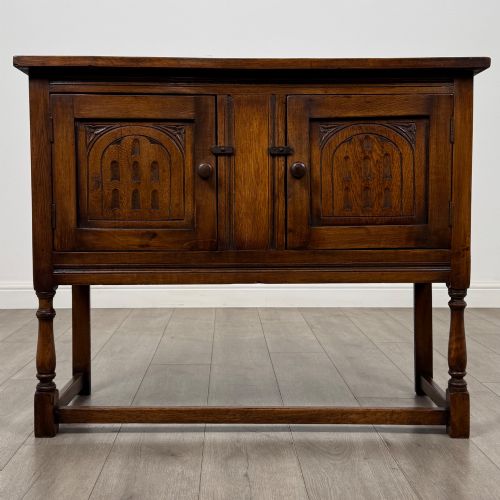
The version most commonly met on this page is the Edwardian or 1920s side cabinet, often featuring carved panels, linenfold detailing, or barley twist legs alongside standard cupboard doors.
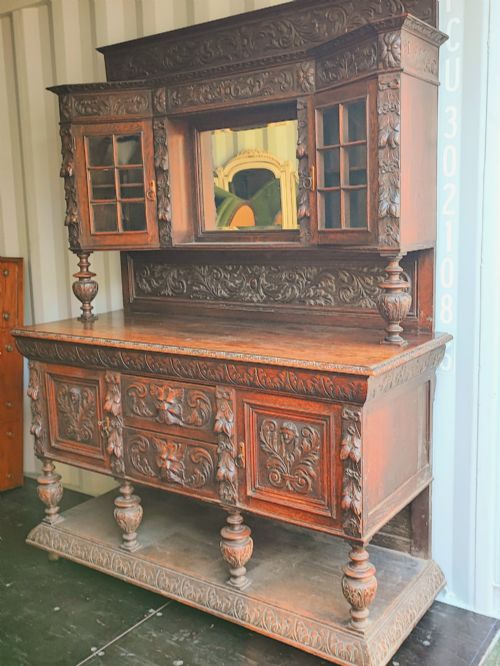
Makers of these revival pieces relied on earlier historical motifs, incorporating Tudor revival elements and carved green man details into everyday domestic storage.
How they were made
These items are constructed primarily from solid oak, sometimes combined with internal elements of other timbers, relying on traditional mortise and tenon joinery to support heavy timber frames.
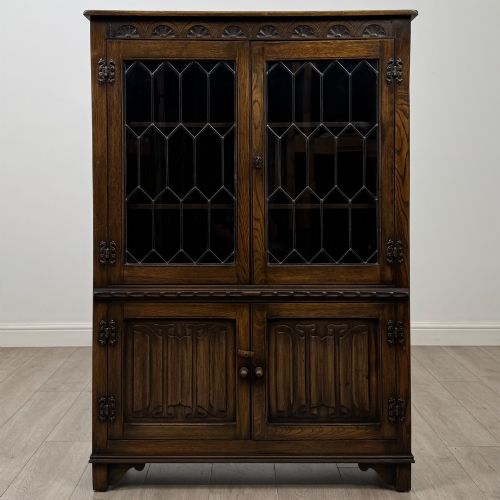
Decoration is achieved through deep hand or machine carving, incorporating linenfold patterns, geometric strapwork, and applied mouldings directly onto the oak panels.
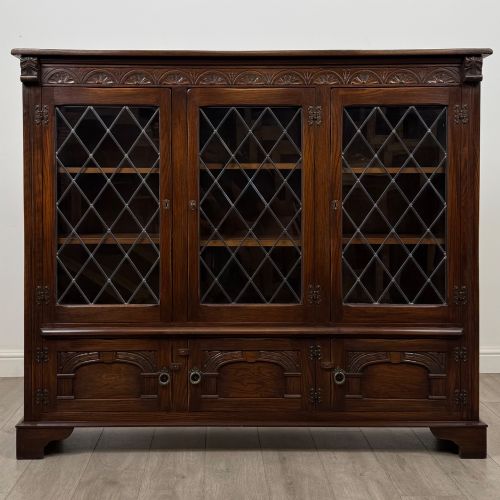
Hardware consists of heavy brass or iron drop handles, hinges, and occasional leaded glass doors that complement the dark, dense grain of the wood.
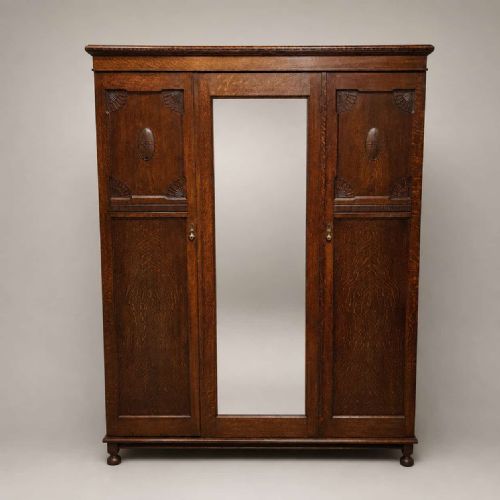
Listings demonstrate a strong presence of 1920s and Edwardian pieces, alongside 19th-century examples built from solid oak with brass and iron hardware.
What varies in quality
The distinction between standard commercial production and finer work lies in the depth and crispness of the timber carving, where sharp relief work contrasts with flat, pressed imitation mouldings.
Timber selection dictates the overall presence of the piece; quarter-sawn oak showing distinct medullary rays sits firmly above plain planks with minimal figure.
Structural integrity depends on the weight of the timber used and how well the joints handle the natural movement of solid oak over decades of domestic use.
The Jacobean Revival Oak Cupboard Glossary
- Court cupboard
- A traditional short-stature storage cabinet with enclosed upper and lower sections, frequently heavily carved with strapwork and floral motifs. These pieces serve as focal points in dining rooms and halls.
- Linenfold
- A style of wood carving that mimics the appearance of folded linen cloth, popular on panels of wardrobes and cupboard doors. This technique adds vertical texture to otherwise flat timber surfaces.
- Barley twist
- A turned wooden column or leg resembling a twisted rope, common in furniture from the 17th century and its later revivals. It provides a sense of dynamic movement beneath heavy cabinet tops.
- Green man
- A sculptural architectural ornament depicting a human face emerging from or entwined with foliage and vines. It appears frequently on carved panels of 19th-century and Edwardian furniture.
- Strapwork
- Flat, interlaced bands carved in low relief to resemble leather straps or ribbons. This ornament decorates friezes and panels on revival case furniture.
Jacobean Revival Oak Cupboard: Frequently Asked Questions
What is a court cupboard?
A court cupboard is a specific form of heavy storage furniture featuring stacked cabinet compartments, often supported by stout columns or carved posts. They originate from earlier centuries but were widely reproduced during the revival periods.
These pieces were traditionally used to display plate and store provisions in grand houses, evolving later into decorative dining room sideboards.
How do I identify a revival piece?
Revival pieces combine 17th-century decorative motifs such as linenfold carving and strapwork with the internal construction methods of the Victorian, Edwardian, or 1920s eras. Look at the drawer linings, backboards, and hardware to determine the actual age of manufacture.
Machine-cut joints, standard modern screw types, and lighter internal timbers usually point to a 20th-century interpretation rather than an original antique.
Where should I place an oak cupboard?
Solid oak cupboards require stable environmental conditions away from direct heat sources and strong sunlight, which can dry out and split the heavy timber. Placing them against interior walls helps prevent excessive temperature fluctuations.
Their substantial visual weight makes them well-suited to spacious hallways, dining rooms, or living spaces with high ceilings.
How do I care for dark oak?
Maintenance involves regular dusting with a dry, soft cloth and occasional treatment with appropriate beeswax to nourish the timber grain. Avoid silicone-based sprays that build up a sticky residue over time.
Keeping the surface clean preserves the rich patina developed by the oak over decades of handling.