
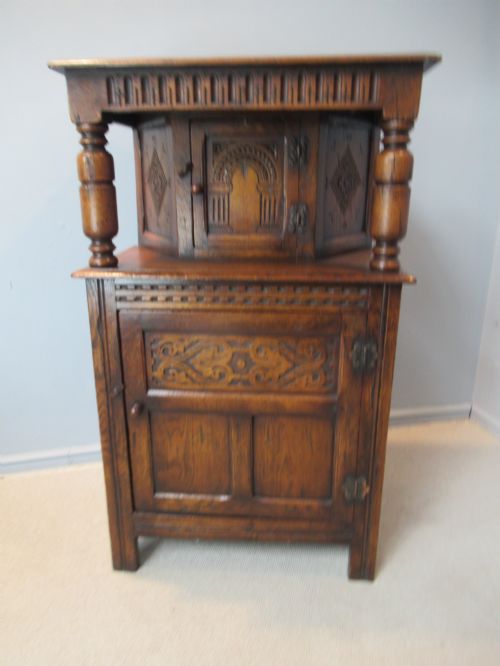


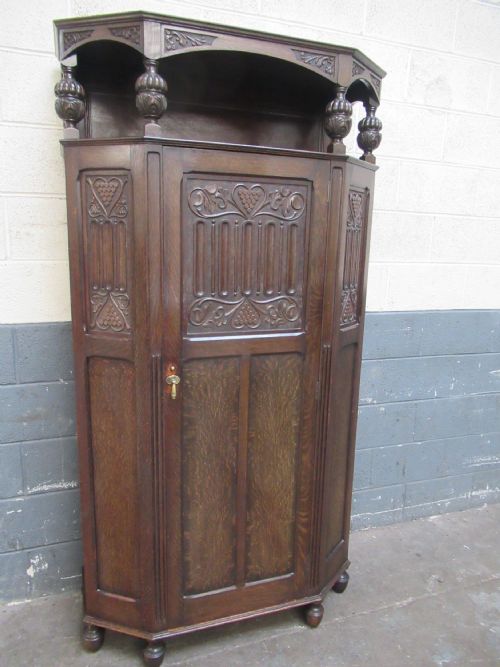


Jacobean Revival Hall Cabinet
These heavy, timber-framed pieces bring a dependable architectural presence to an entranceway, prized for robust storage and rich carved detail.
Jacobean Revival Hall Cabinet
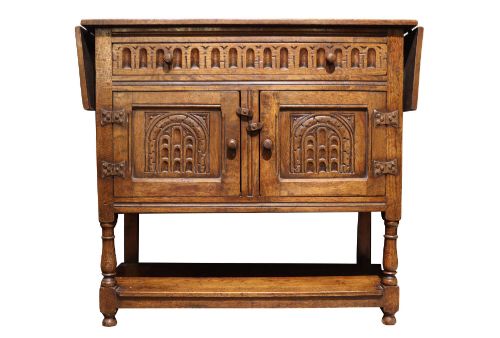
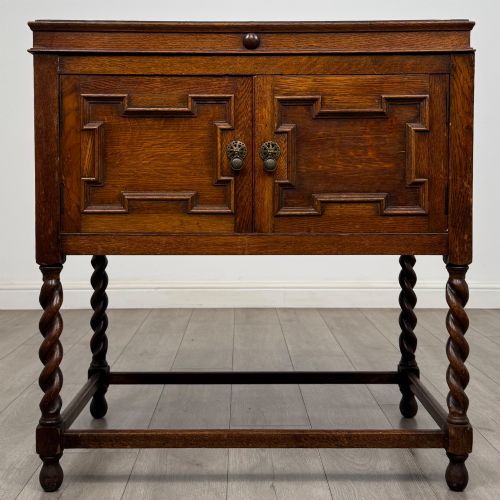
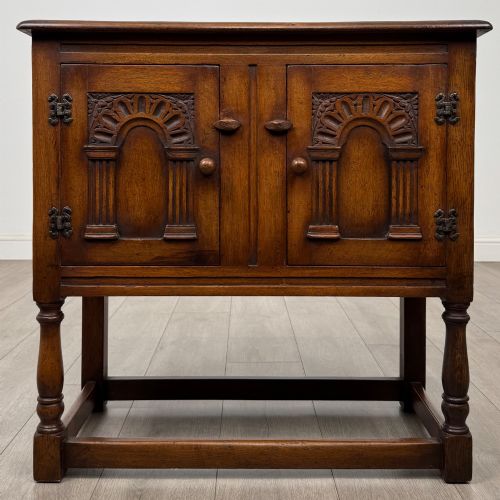
A jacobean revival hall cabinet combines the heavy proportions and dark timber of seventeenth-century joinery with the practical storage needs of Victorian and Edwardian hallways. You will most frequently encounter compact oak cupboards, small side cabinets, and court cupboards dating from the nineteenth and early twentieth centuries.
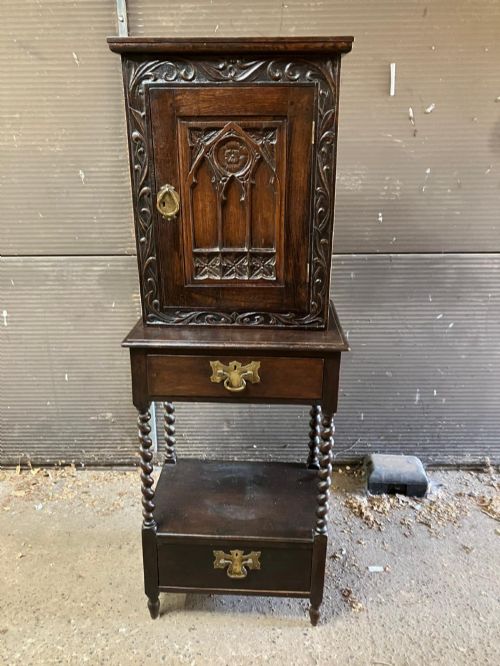
The form adapts historical domestic furniture into functional hall furniture designed to hold coats, hats, sticks, and entryway clutter. Pieces range from simple panelled cupboards to elaborate hall stands featuring fruitwood marquetry inlay and carved panels.
How they were made
Makers relied primarily on solid oak, utilising its natural grain and structural strength to build heavy frames and panelled doors. Iron and brass hardware, such as hinges and handles, fastened the doors and added functional metalwork contrast to the dark wood.
Surface decoration depended on hand-carved details, linenfold panels, and occasional fruitwood marquetry inlay to introduce pattern across the timber. Joinery methods prioritized mortise and tenon construction to ensure the cupboards withstood daily hallway use.
The listings show pieces spanning the Victorian, Edwardian, and 1920s periods, executed primarily in solid oak with occasional fruitwood marquetry inlay.
What varies in quality
The standard of carving defines the distinction between standard production and superior craftsmanship, with crisply undercut foliage and balanced proportions marking out the better examples. Plain timber surfaces rely entirely on the depth of the grain and the execution of panel mouldings for their visual weight.
Proportion and scale also separate the pieces, as smaller cabinets demand tighter joinery to maintain strength without bulk. The integration of decorative elements like fruitwood marquetry inlay indicates a higher tier of workshop production.
The Jacobean Revival Hall Cabinet Glossary
- Court cupboard
- A traditional enclosed piece of furniture featuring an upper section supported by pillars above a lower storage base. This form frequently appears in revival pieces scaled down for domestic hallways.
- Linenfold
- A style of wood carving that imitates folded fabric, commonly seen on cupboard doors. This decorative technique creates vertical texture across flat oak panels.
- Marquetry
- The art of applying small pieces of veneer to a structure to form decorative patterns. Fruitwood marquetry inlay adds contrasting lighter tones to dark oak surfaces.
- Jacobean Revival
- A nineteenth and twentieth-century design movement that reinterprets early seventeenth-century English furniture characteristics. It emphasises dark finishes, heavy turning, and deep geometric carvings.
Jacobean Revival Hall Cabinet: Frequently Asked Questions
What is a jacobean revival hall cabinet?
A jacobean revival hall cabinet is a piece of storage furniture made in the nineteenth or early twentieth century using seventeenth-century decorative motifs. These pieces typically feature dark oak construction, panelled doors, and carved details suited for an entranceway.
They were built to provide practical storage for outdoor wear while echoing historical architectural styles. The form includes small side cupboards, court cupboards, and hall wardrobes.
How do I date an oak hall cabinet?
Dating relies on examining the timber preparation, hardware fixings, and overall construction methods used by the maker. Pieces from the Victorian period often display heavier carved decoration, while Edwardian and 1920s examples may incorporate simpler linenfold panelling or more compact proportions.
Changes in styling reflect the shifting revivals of the nineteenth and early twentieth centuries. Comparing the specific joinery and hardware helps place the piece within the Victorian, Edwardian, or 1920s periods.
Where should I place a hall cabinet?
These cabinets suit entrance halls, corridors, and reception rooms where their compact footprint and vertical storage prove useful. Their enclosed shelves and cupboards help conceal everyday clutter while anchoring the room with a dark timber presence.
Positioning them away from direct heat sources protects the solid oak and marquetry inlay from drying out. Adequate clearance allows the panelled doors to open fully within the hallway space.
How do I care for antique oak furniture?
Maintaining solid oak involves keeping the timber clean with a soft, dry cloth and avoiding harsh chemical polishes. Applying occasional natural wax preserves the finish and protects the wood grain without building up a sticky residue.
Stable room humidity prevents the oak and any marquetry inlay from warping or splitting over time. Gentle handling of brass and iron hardware preserves the original fixings.