
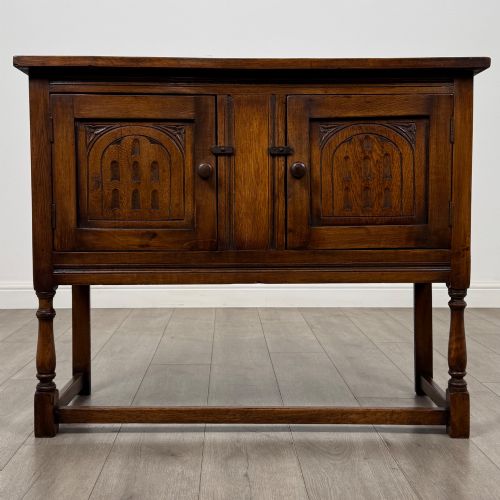
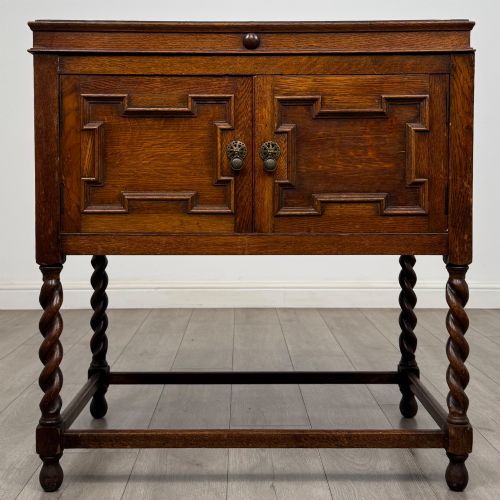
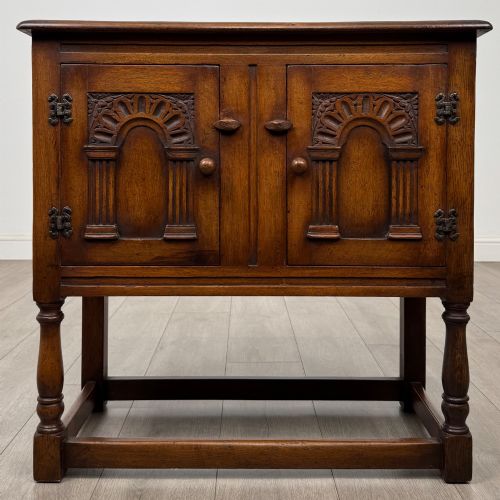
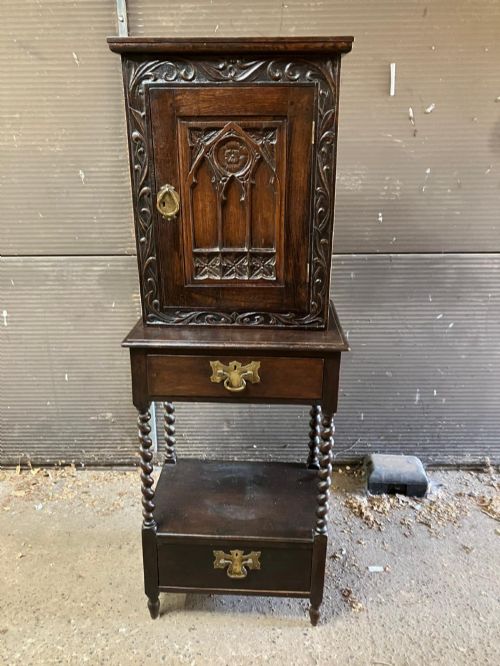
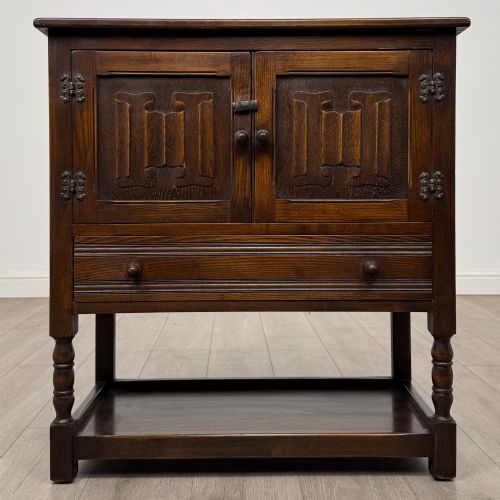

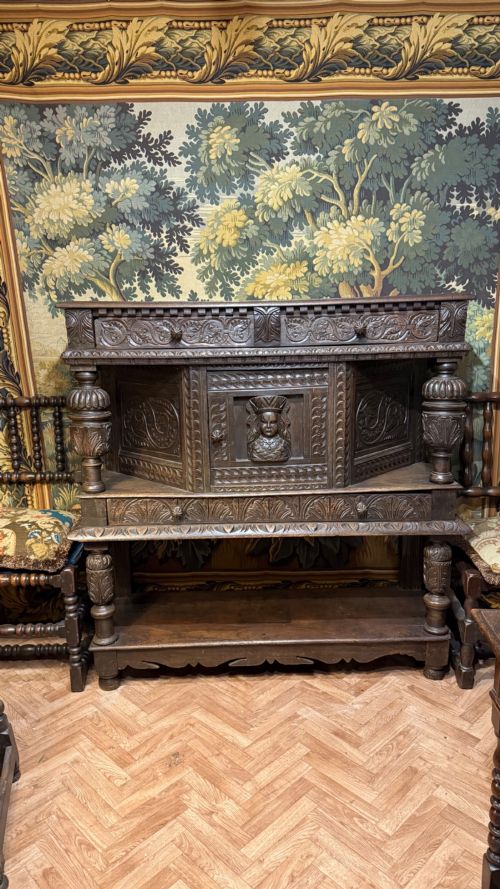
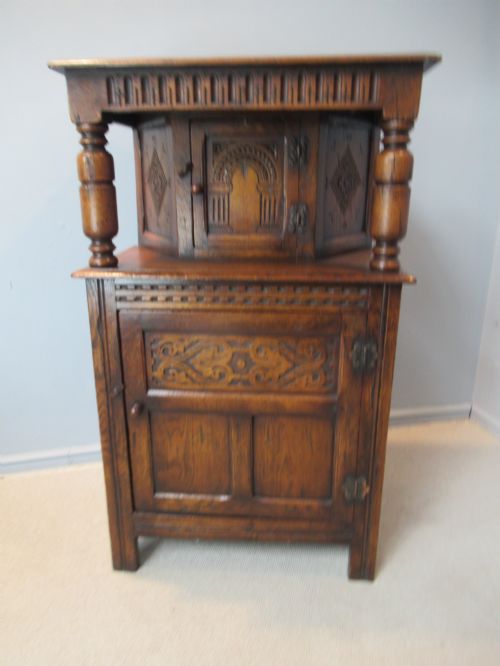


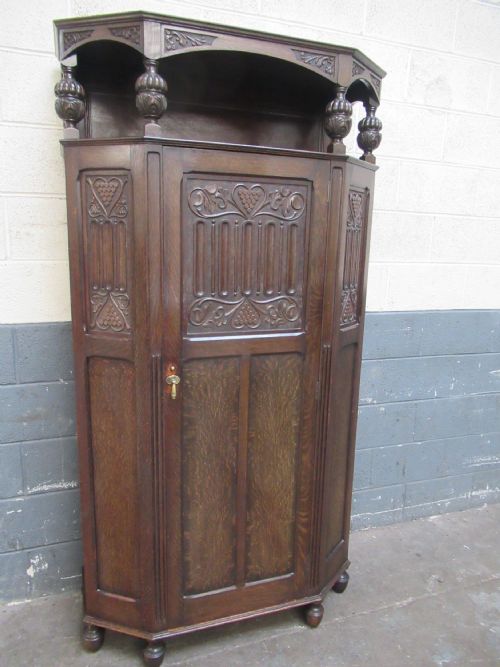
Dark Oak Hall Cabinet
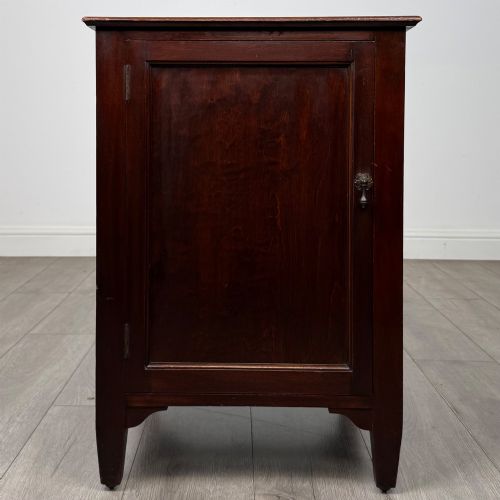
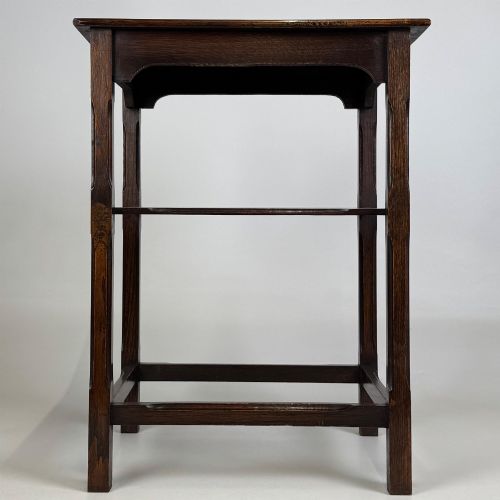
A dark oak hall cabinet offers deep storage and rich timber tone for an entrance, drawing on centuries of sturdy English joinery.
Dark Oak Hall Cabinet
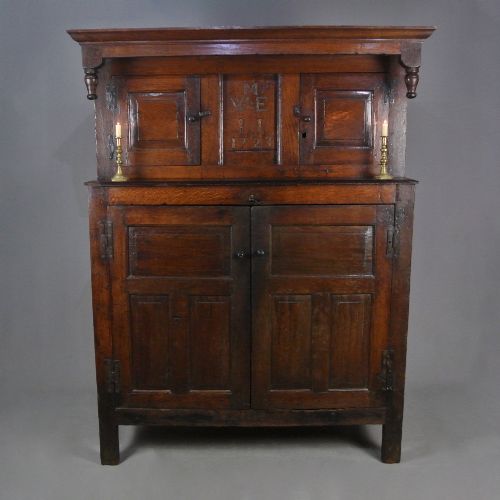
A dark oak hall cabinet brings substantial timber and practical storage to an entryway, appearing in forms such as side cupboards, court cupboards, and hall wardrobes. These pieces serve to organise cloaks, boots, and everyday items while setting a grounded tone the moment you cross the threshold.
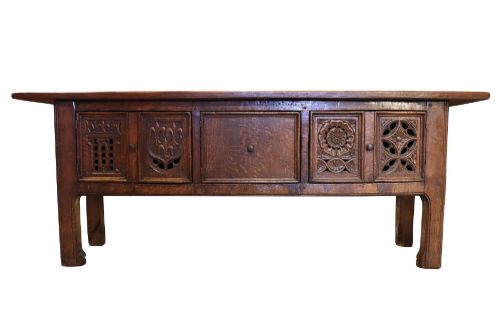
The selection here draws heavily from twentieth-century revivals, Edwardian interpretations, and Victorian examples, alongside earlier seventeenth and eighteenth-century origins. You will frequently meet compact side cabinets, carved hall cupboards, and linenfold cupboards designed to fit narrow spaces.
Makers and joiners historically utilised sturdy proportions to anchor an interior, relying on timber grain and panelled doors rather than fragile veneers. Each dark oak hall cabinet reflects the domestic requirements of its period, shifting from utilitarian storage to decorative revival showpieces.
How they were made
Joiners built these cabinets primarily in solid oak, occasionally incorporating stained wood to achieve deeper, darker tones. Construction relied on traditional frame and panel techniques, allowing the heavy timber to expand and contract with household temperature changes without splitting.
Metal hardware played an essential structural and decorative role, featuring iron, wrought iron, and brass hinges, locks, and handles. Blacksmith-made locks and strap hinges frequently secure earlier doors, while later iterations utilise simpler brass fittings.
Several cabinets retain their original blacksmith-made locks, proving that stubborn doors have annoyed homeowners for centuries.
What varies in quality
The depth and execution of the carving separate standard production pieces from superior examples, particularly in revival styles where relief work defines the facade. Crisp, hand-chiselled panels show an engagement with traditional craft that shallow machine milling lacks.
Timber selection and structural integrity dictate the upper tiers of quality, marked by heavy solid oak boards, well-fitted tongue and groove backs, and original working iron or brass locks. Lesser examples rely on thinner stock timber and later replacement hardware.
The Dark Oak Hall Cabinet Glossary
- Court cupboard
- A traditional English two-tier storage piece, often featuring a recessed upper section supported by turned columns. These date from the seventeenth century and later revival periods.
- Linenfold
- A style of carved wooden panelling that resembles folded vertical folds of fabric. Cabinet makers utilised this motif extensively on door panels.
- Livery cupboard
- A ventilated cabinet historically used for storing provisions or daily rations before evolving into general domestic storage. They often feature turned spindle galleries.
- Revival style
- Design movements such as Jacobean, Gothic, or Tudor Revival that emulate historical periods. Nineteenth and twentieth-century makers reinterpreted these older aesthetics for contemporary homes.
Dark Oak Hall Cabinet: Frequently Asked Questions
Where should I place a dark oak hall cabinet?
These cabinets suit entryways, boot rooms, and corridors where narrow proportions allow for practical storage without blocking pathways. Their heavy timber presence anchors large hallway spaces effectively.
Ensure you measure the depth of the cabinet against your hallway clearance, as many historical pieces were built with surprisingly shallow footprints to sit comfortably in tight passages.
How do I care for dark oak furniture?
Maintain the timber by applying a traditional beeswax polish occasionally to nourish the grain and protect the surface from moisture. Avoid placing the cabinet near direct heat sources or radiators.
Keep polishing to a modest frequency to prevent wax build-up, using a soft lint-free cloth to remove dust from carved recesses and mouldings.
Are these cabinets suitable for small hallways?
Many examples on this page are specifically described as having narrow proportions or small sizes, making them ideal for restricted layouts. Side cabinets and compact cupboards provide storage without overwhelming a tight entrance.
Look for lowboy styles or shallow sideboards if floor space is particularly limited, ensuring doors can swing open freely without obstructing movement.
How can I tell an older cabinet from a revival piece?
Examine the construction marks, timber movement, and hardware, noting that seventeenth and eighteenth-century pieces display hand-riven boards and forged iron locks. Revival pieces from the Victorian and Edwardian eras often use more uniform machinery-sawn timber.
Check the interior boards and back panels for consistency, as older furniture frequently shows signs of timber shrinkage and past alterations that modern copies lack.