
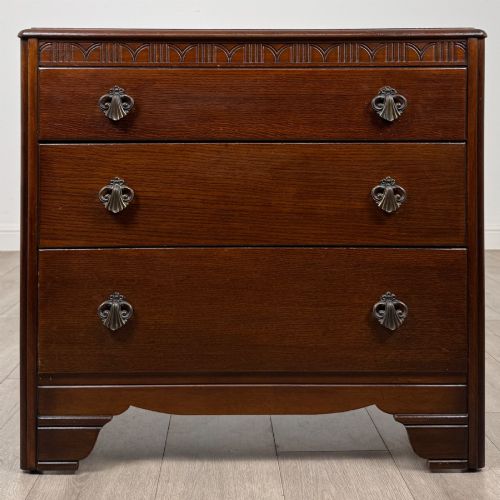
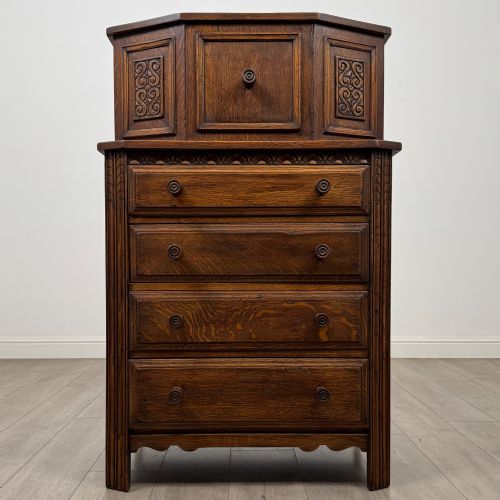

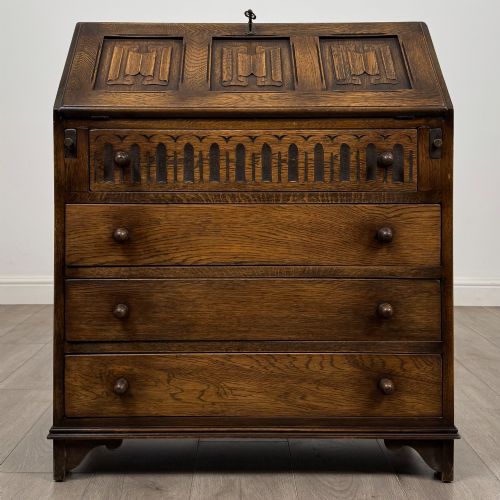
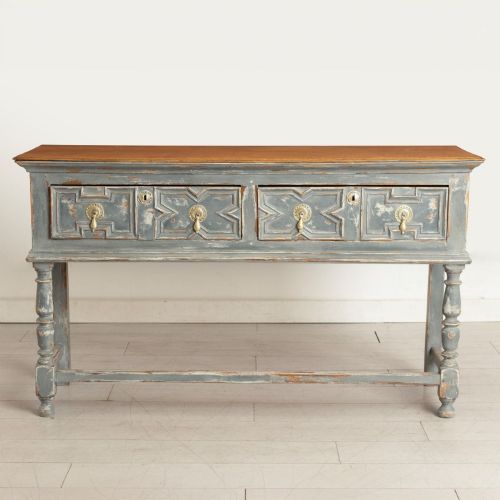


Jacobean Revival Chest
A jacobean revival chest brings heavy timber and formal carving into a room, offering sturdy storage rooted in seventeenth-century design.
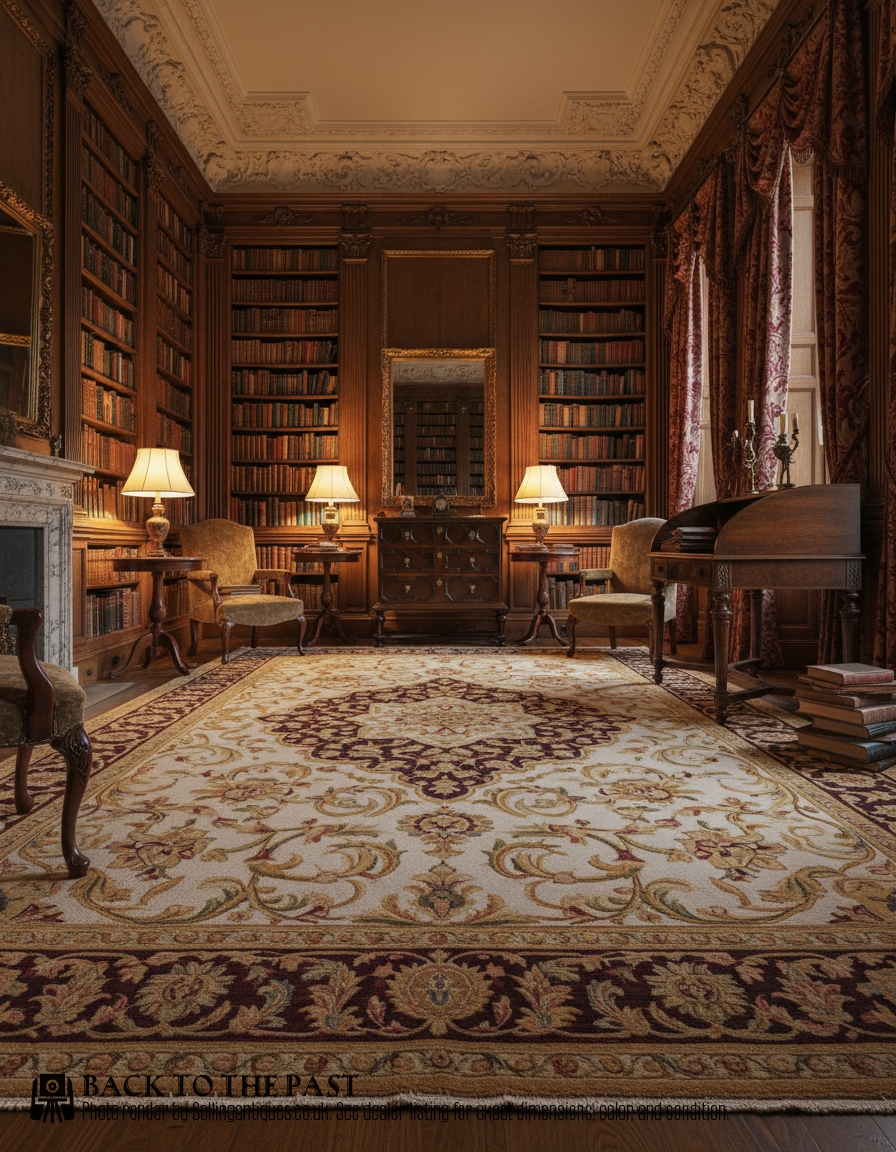
Jacobean Revival Chest
A jacobean revival chest embodies the heavy, structured proportions and dark timber aesthetic of early seventeenth-century furniture, reinterpreted during the Edwardian era and the early twentieth century. When searching for a jacobean revival chest, buyers encounter items ranging from standard drawer chests to side tables, bureaus, and hall benches that echo the same architectural language.
Most pieces on this page date from the Edwardian period up through the nineteen-thirties, though older examples occasionally appear alongside Victorian and Tudor revivals. These works typically feature rectangular forms, panelled construction, and substantial timber frames built to anchor a room.
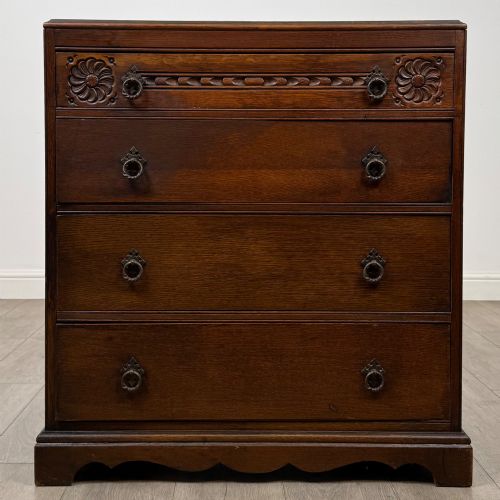
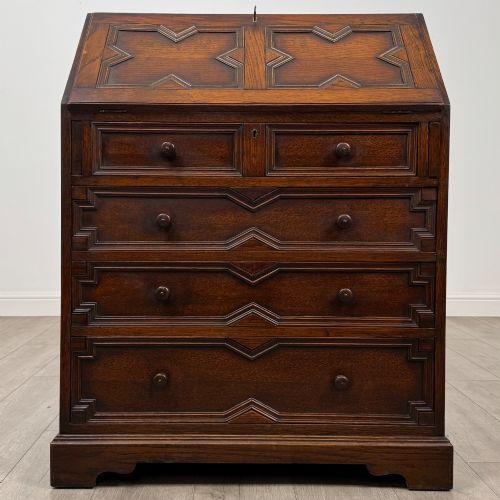
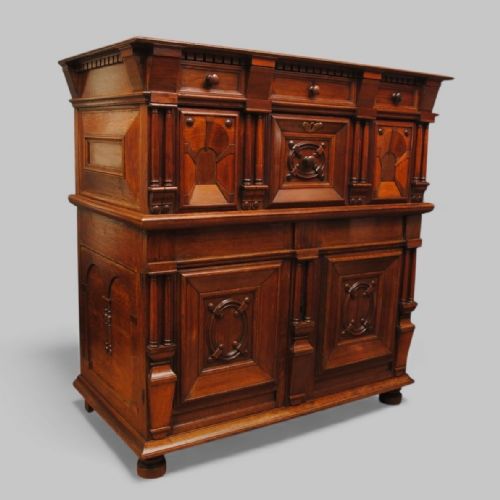
Makers of these revival pieces relied on traditional vocabulary, incorporating carved panels, geometric mouldings, and sturdy supports that emulate genuine seventeenth-century joinery. The resulting forms serve as practical storage units while projecting an air of historical weight.
Judging the range
Quality in these pieces depends on the depth and crispness of the carving, the selection of timber grain, and the integrity of the joinery. Superior examples display sharply defined geometric patterns and deeply carved panels rather than shallow, mechanical stampings.
The weight of the timber and the tightness of the drawer construction distinguish better workshops from mass-produced output. Original hardware and sound, unwarped panels elevate an item above simpler utility pieces.
Watch for the occasional carved Green Man glaring out from the woodwork, keeping a watchful eye over your hallway.
The Jacobean Revival Chest Glossary
- Jacobean Revival
- A nineteenth and twentieth-century style that copies or adapts the architectural furniture forms of the early seventeenth century.
- Linenfold
- A style of woodcarving used on panels to imitate folded fabric, popular in Tudor and revival periods.
- Coffer
- A heavy wooden chest with a hinged lid, traditionally used for storing valuables or textiles.
- Dresser Base
- A low sideboard or cabinet featuring drawers and cupboards, originating from early kitchen and dining room furniture.
Jacobean Revival Chest: Frequently Asked Questions
How old is a jacobean revival chest?
Most pieces matching this description date from the Edwardian era through the nineteen-thirties, as cabinetmakers reinterpreted seventeenth-century styles for modern homes.
While genuine seventeenth-century furniture exists, the vast majority of revival pieces reflect the craftsmanship of the early twentieth century.
What wood was used?
Oak is the primary timber found in these pieces, valued for its durability and traditional appearance in early English furniture.
Cabinetmakers also incorporated walnut, fruitwood, and painted finishes depending on the specific revival style and period.
How do I style one?
These substantial chests anchor traditional and transitional interiors well, pairing naturally with leather upholstery, neutral walls, and heavy textiles.
Their dark timber tones contrast effectively against crisp, contemporary spaces when used as focal storage points.
Are they practical for storage?
Yes, these pieces were built to offer deep drawers, cupboards, or lift-top compartments designed for heavy household use.
Their sturdy construction makes them suitable for everyday storage in hallways, bedrooms, and living spaces.