


Jacobean Oak Wood Carving
Jacobean oak wood carving brings robust 17th-century craftsmanship and revival pieces into a room, offering tactile historical depth.
Jacobean Oak Wood Carving
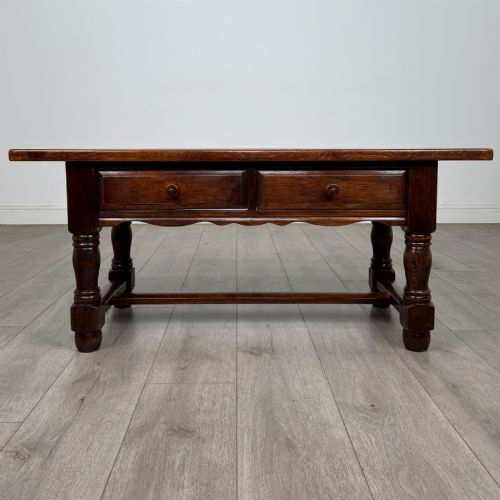
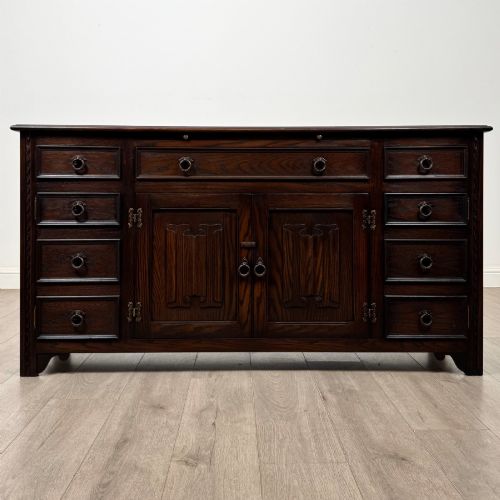
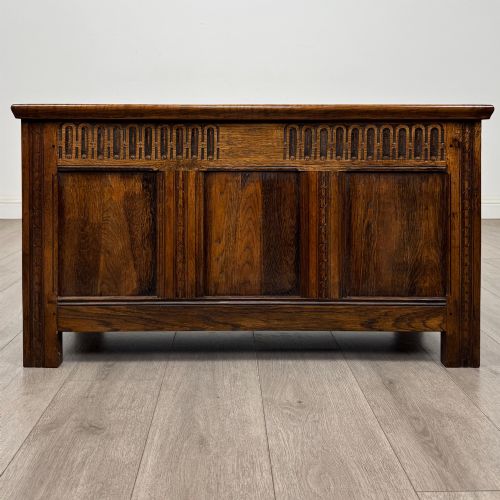
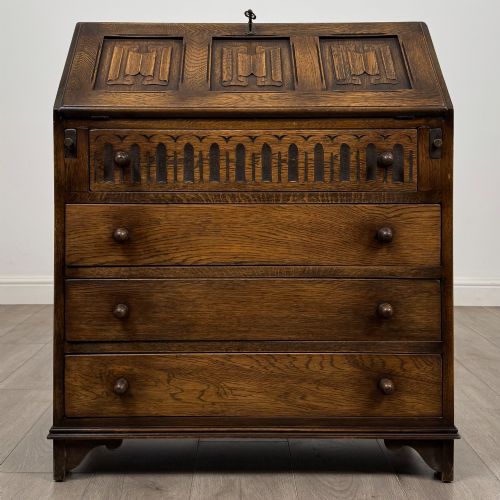
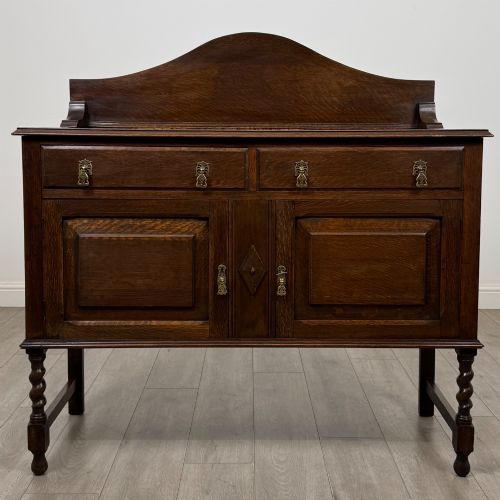
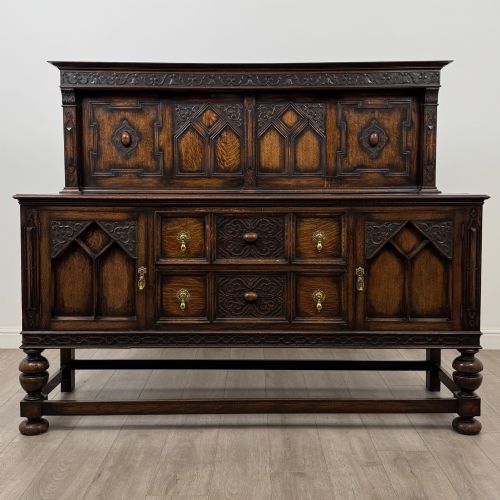
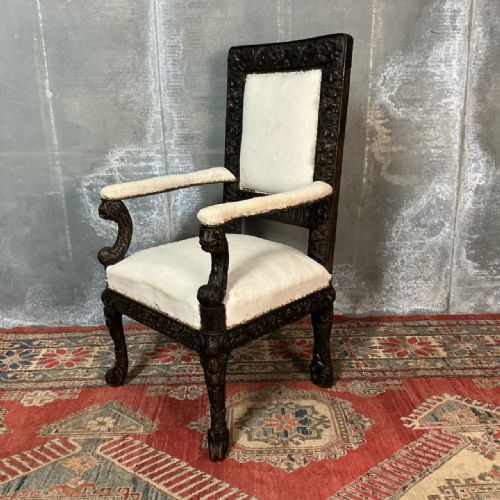
Jacobean oak wood carving encompasses both genuine 17th-century survivals and later revival pieces from the Victorian, Edwardian, and early 20th-century periods. These items range from wall panels and relief carvings to functional furniture such as coffers, chests, sideboards, and side tables.
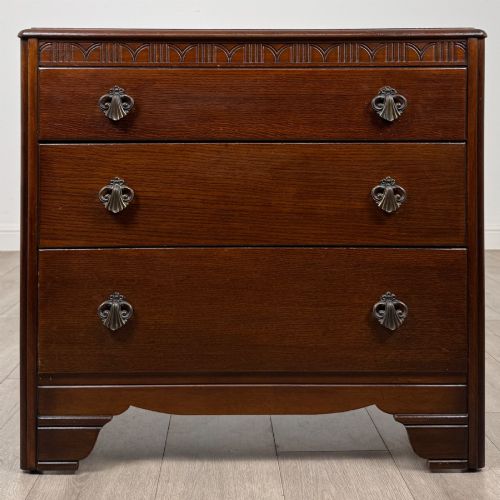
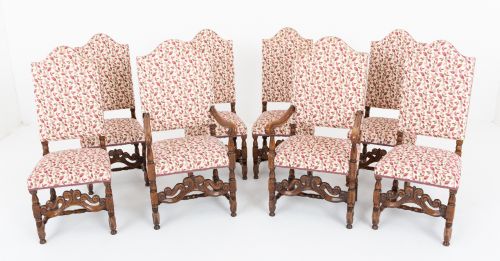
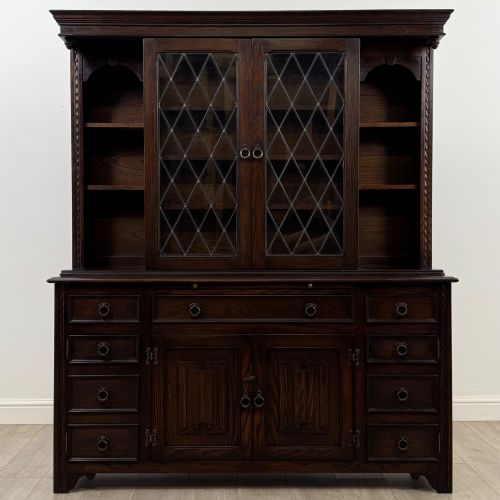
The pieces on this page are heavily represented by Edwardian and 19th-century interpretations alongside period items, showing how later makers continually returned to early styles. Buyers seeking this phrase typically encounter dark oak furniture and architectural panels bearing deep, geometric, or figural decoration.
Materials and construction
Solid oak serves as the primary medium, supported occasionally by secondary elements of brass, iron, and metal hardware. Carpenters and carvers utilised dense timber, shaping panels and framing joints through traditional methods suited to heavy wood.
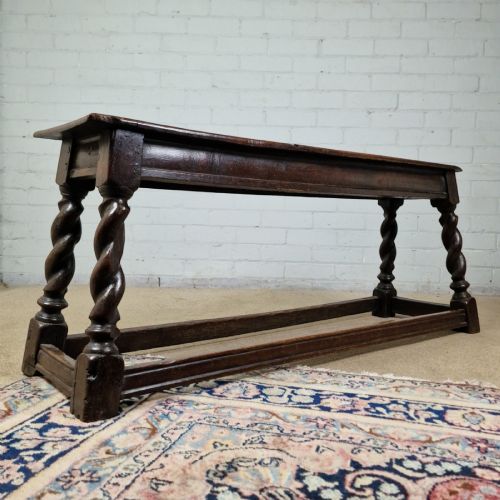
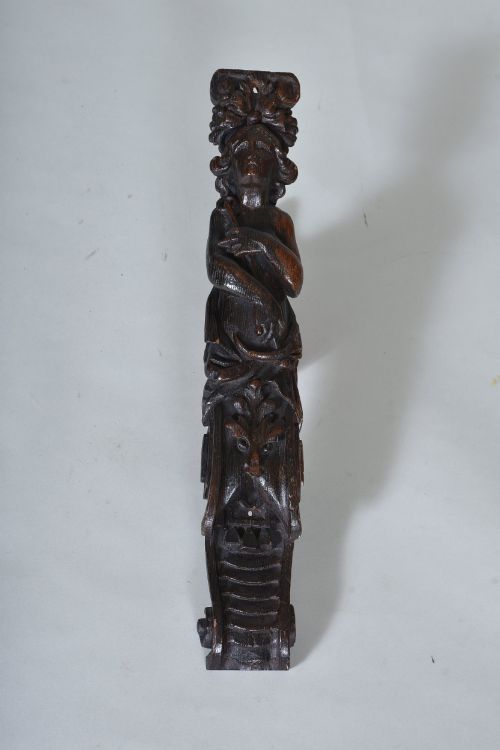
Surface decoration relies on direct chisel work, creating high-relief panels, linenfold motifs, and turned elements like barley twists. Dark oak finishes and patination develop either through age or deliberate historical staining techniques applied during revival periods.
A solitary depiction of Joan of Arc stands among the geometric panels, proving that carvers occasionally looked far beyond standard floral scrolls.
Assessing quality and depth
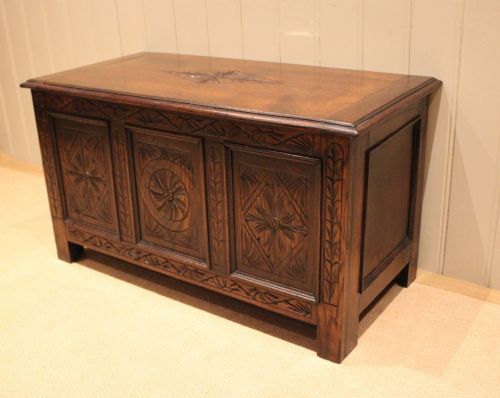
Depth and crispness of the chisel work separate proficient carving from flat, mechanical reproduction. Superior examples display confident hand-carved relief with distinct tool marks and well-proportioned architectural framing.
The integrity of the timber and the cohesion of the period style dictate the overall success of a piece. Authentic 17th-century examples carry historical patina, whereas revival pieces depend on the fidelity of their construction and the quality of the solid oak used.
The Jacobean Oak Wood Carving Glossary
- Coffer
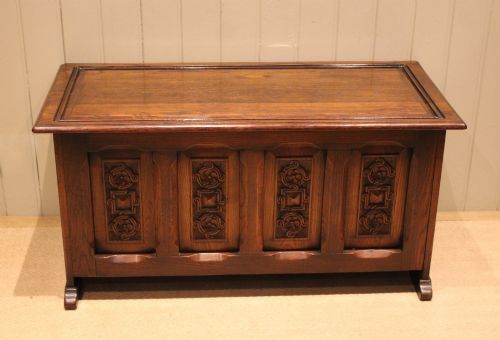
- A heavy wooden chest used historically for storage, often featuring front panels decorated with carving. These boxes typically have hinged lids and sturdy plank construction.
- Linenfold
- A style of relief carving imitating folded linen or parchment, frequently seen on panelled woodwork. This motif gained widespread use during the Tudor and Jacobean periods.
- Barley twist
- A type of furniture leg or column turned in a spiral helix shape. This form became particularly popular during the 17th century and later revival eras.
- Wainscot chair
- A solid wooden armchair constructed with panelled backrests and sturdy arms, usually made from oak. These seats date back to a time when chairs were status items rather than everyday household furniture.
- High-relief
- A sculptural technique where figures or patterns project significantly from the background plane. This method creates strong shadows and a sense of three-dimensional depth on wooden panels.
Jacobean Oak Wood Carving: Frequently Asked Questions
What is jacobean oak wood carving?
Jacobean oak wood carving refers to decorative woodwork and furniture from the early 17th century, alongside later revival pieces made in the 19th and 20th centuries. It is characterised by dark oak timber and deep relief motifs.
Buyers encounter everything from architectural wall panels to functional chests, coffers, and side tables built in this enduringly popular style.
How do I date a carved oak coffer?
Dating a coffer involves examining the construction joints, tool marks, and style of the carving. Original 17th-century pieces often show hand-riven timber and traditional pegged mortise and tenon joints.
Revival pieces from the Edwardian era or the 19th century replicate these forms using machinery, sometimes combining older decorative panels with later carcase structures.
Where were these carvings originally used?
These wooden carvings and panelled furniture items belonged primarily to domestic interiors, country houses, and civic buildings. They formed integral parts of panelled rooms, wall displays, or heavy storage furniture.
Over time, individual panels were repurposed into wall hangings or incorporated into later sideboards and cabinets during revival periods.
How do I care for antique oak furniture?
Antique oak benefits from stable indoor humidity and protection from direct sunlight, which can dry out the timber. Regular dusting with a dry, soft cloth maintains the surface without trapping moisture.
Applying a traditional beeswax occasionally helps nourish the dark oak finish and preserves the natural patination built up over decades or centuries.