
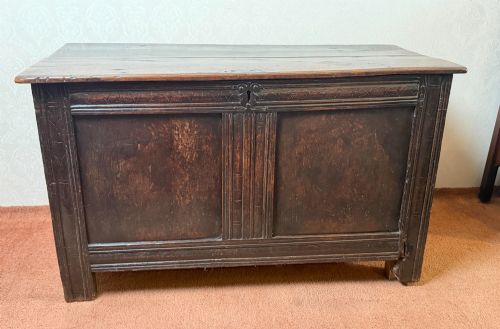
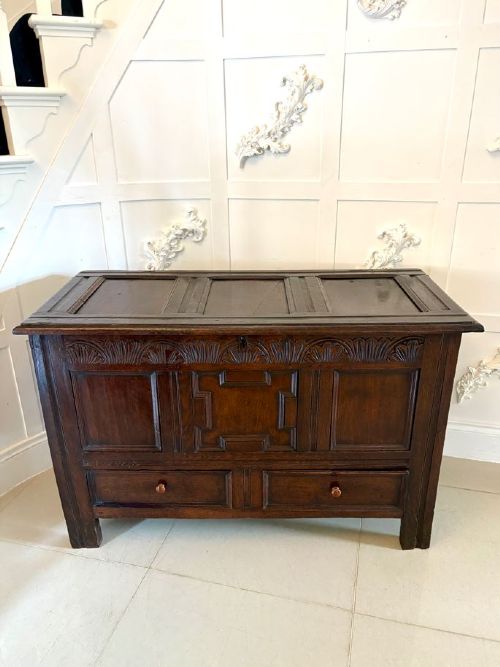
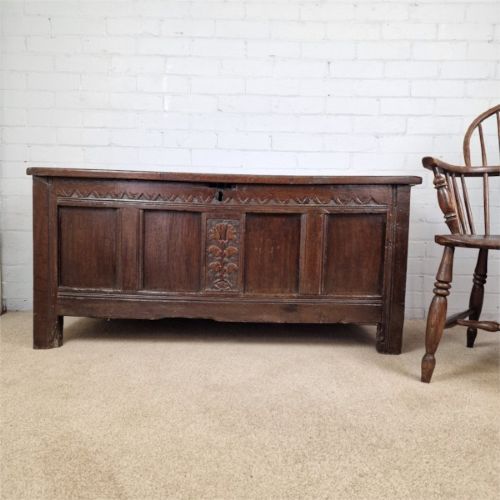
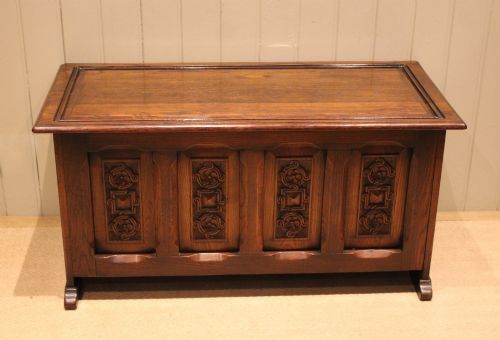

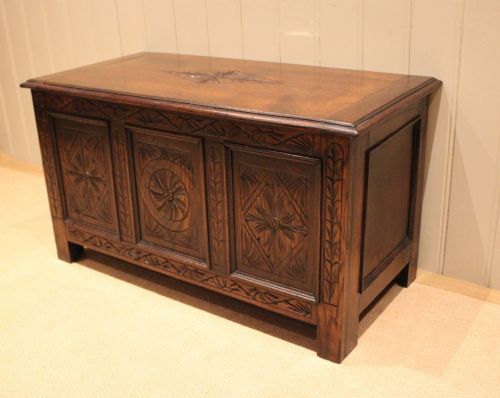
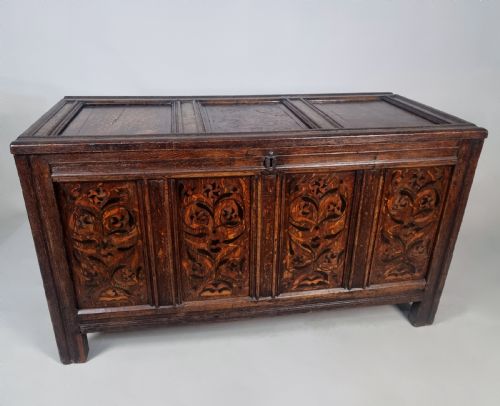
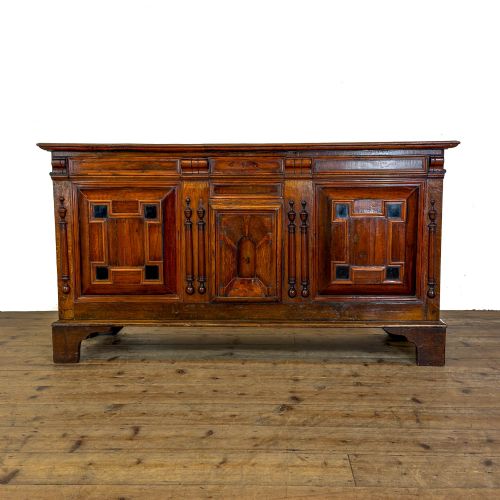
Jacobean Carved Trunk
A jacobean carved trunk provides substantial period storage with deep historical character.
Jacobean Carved Trunk
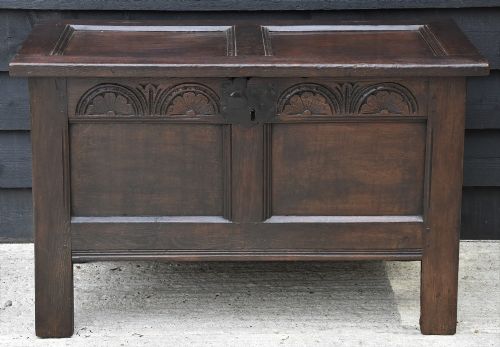
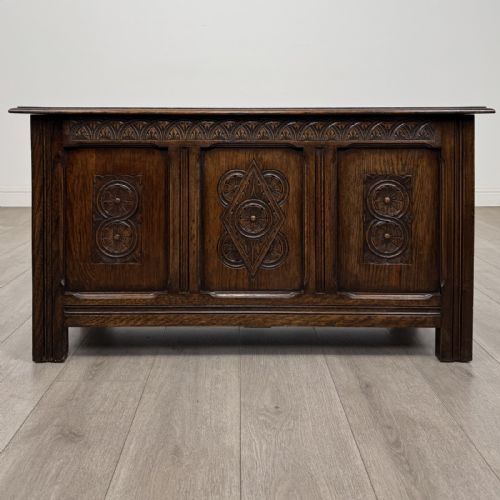
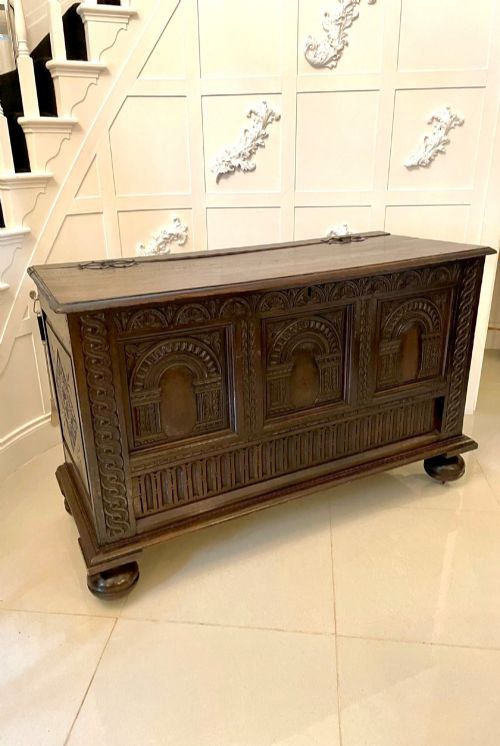
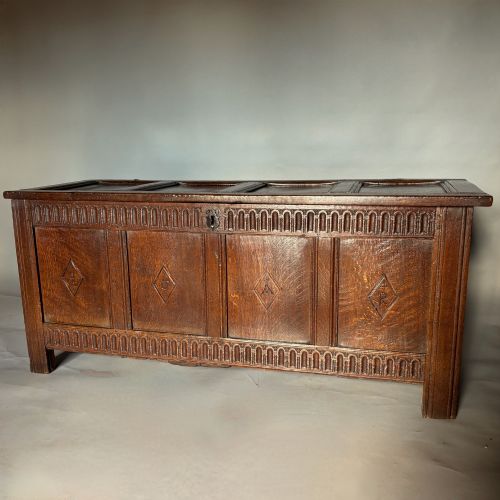
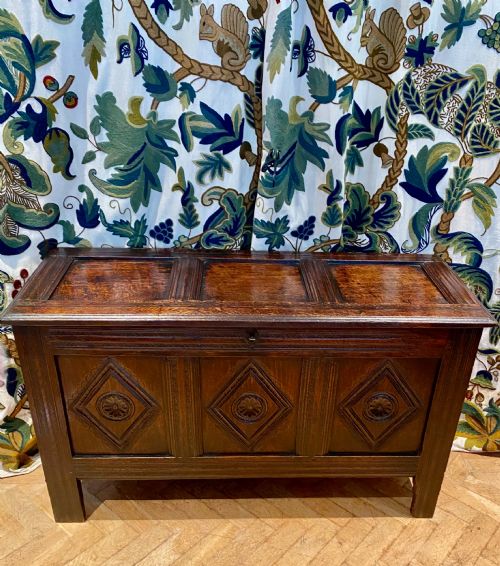
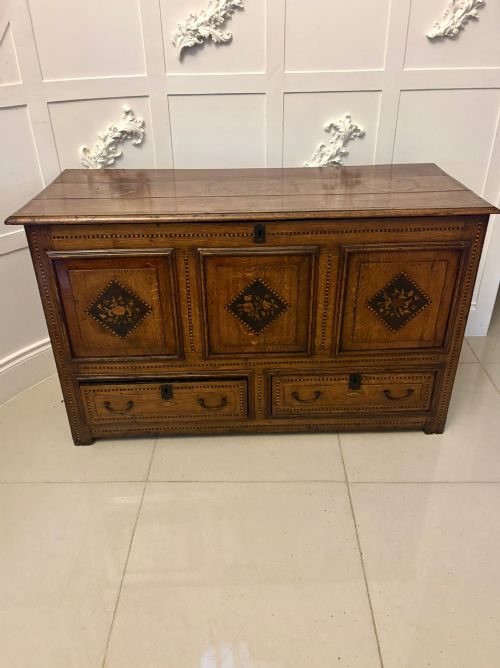
When you search for a jacobean carved trunk, you are looking at sturdy domestic storage pieces that date primarily to the seventeenth century or appear in later revival forms from the Edwardian period and the twentieth century. These objects function as coffers, blanket chests, mule chests, and document boxes, serving households for centuries as secure containers for linens, valuables, and papers.
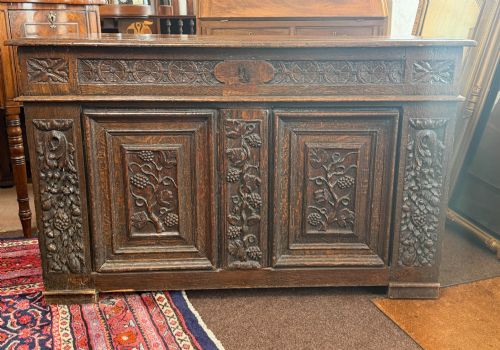
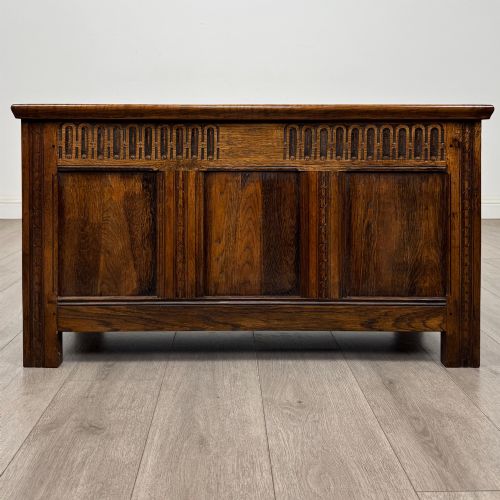
The version you are most likely to meet on this page is the oak coffer, often constructed with joined panels and heavily decorated fronts. Examples span from genuine seventeenth-century specimens down to pieces produced in nineteen-thirty, nineteen-ten, and nineteen-hundred, capturing both original period making and subsequent revival craftsmanship.
Materials and construction methods
The primary material across these listings is English oak, supplemented by solid oak boards and occasional marquetry inlay or wood inlay. Cabinet makers utilised frame and panel construction to accommodate the natural expansion and contraction of timber over long periods.
Surfaces display hand carving along the fronts and sides, often integrating iron or brass hardware to secure the lids and hinges.
Listings span multiple centuries, ranging from original seventeenth-century examples to twentieth-century revival pieces made in nineteen-thirty.
Separating top tier examples from standard pieces
Quality in these trunks rests upon the crispness of the hand carving and the integrity of the original timber framing. Pieces showing deep, well-defined relief work on the front panels command greater attention than simple or later mechanical reproductions.
Proportion and scale also dictate worth, with smaller dimensions and dated inscriptions providing stronger evidence of period authenticity compared to later twentieth-century revival interpretations.
The Jacobean Carved Trunk Glossary
- Coffer
- A heavy wooden chest used for storing valuables, linens, or documents. These objects typically feature a hinged lid and solid timber construction.
- Mule chest
- A storage chest featuring one or more drawers beneath the main compartment. This form bridges the traditional coffer and the modern chest of drawers.
- Linenfold
- A style of wood carving that mimics the appearance of folded fabric. Craftsmen frequently applied this motif to vertical panels on period furniture.
- Marquetry
- The art of applying decorative veneer pieces to a structure to form geometric or pictorial designs. This technique appears on select chests alongside traditional carving.
- Joined oak
- Furniture constructed using mortise and tenon joints held together with wooden pegs rather than metal nails. This method defines seventeenth-century cabinet making.
Jacobean Carved Trunk: Frequently Asked Questions
What were jacobean carved trunks used for?
These pieces served households as secure storage receptacles for valuable textiles, clothing, and important family documents.
Due to their robust construction, many also functioned as seating benches or tables within the main rooms of early homes.
How do I date an oak coffer?
Dating relies on examining the construction methods, tool marks, and specific carving styles present on the wood panels.
Original seventeenth-century pieces display pegged joints and hand- cleft timber, while revival pieces from the twentieth century show different sawing techniques.
Are later revival trunks authentic antiques?
Trunks produced during the Edwardian era or the early twentieth century are categorized as revival pieces rather than original seventeenth-century artefacts.
These items were manufactured to emulate earlier styles and hold their own distinct place in furniture history.
How do I care for solid oak furniture?
Maintain the timber by keeping the surface clean with a soft cloth and applying traditional beeswax periodically to nourish the dry wood.
Avoid placing these chests near direct heat sources or rapid temperature shifts that can cause the oak panels to split.