

Jacobean Carved Oak Armchair
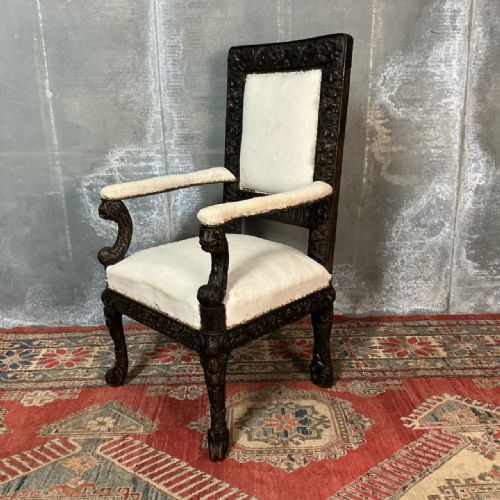
A jacobean carved oak armchair brings solid timber architecture and deep regional carving into a room, offering a tangible link to seventeenth-century domestic life.
Jacobean Carved Oak Armchair
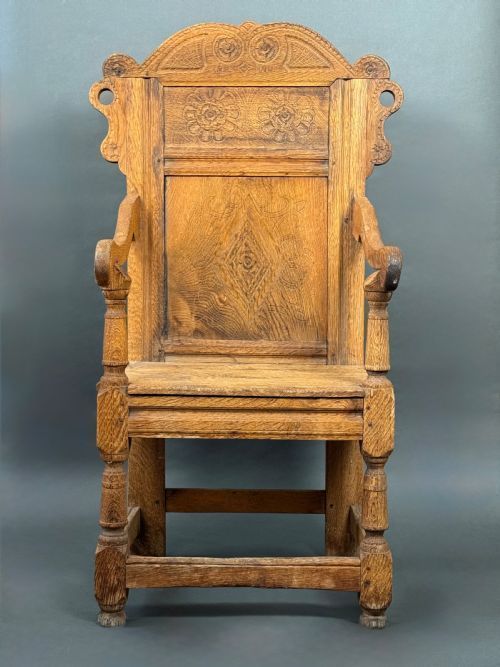
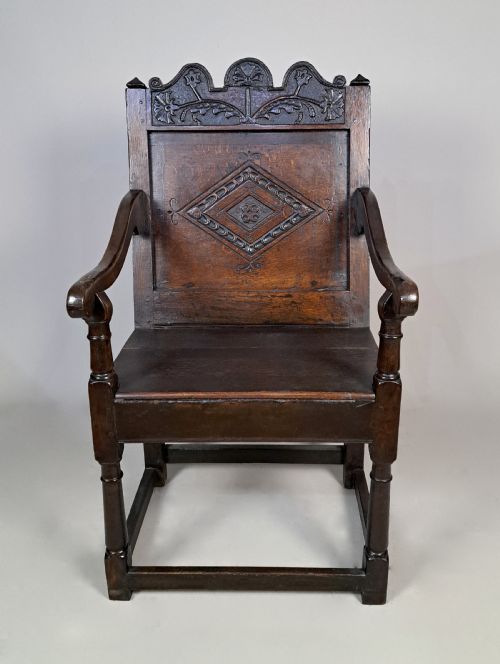
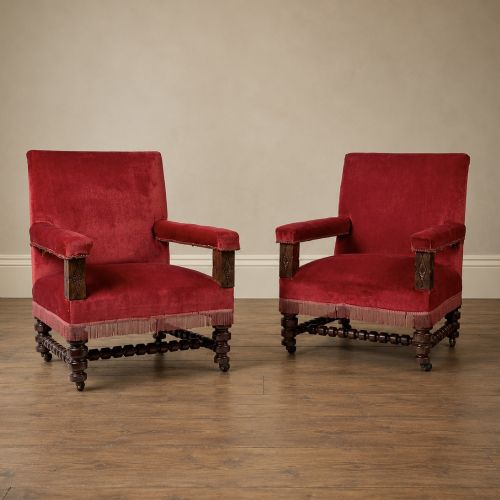
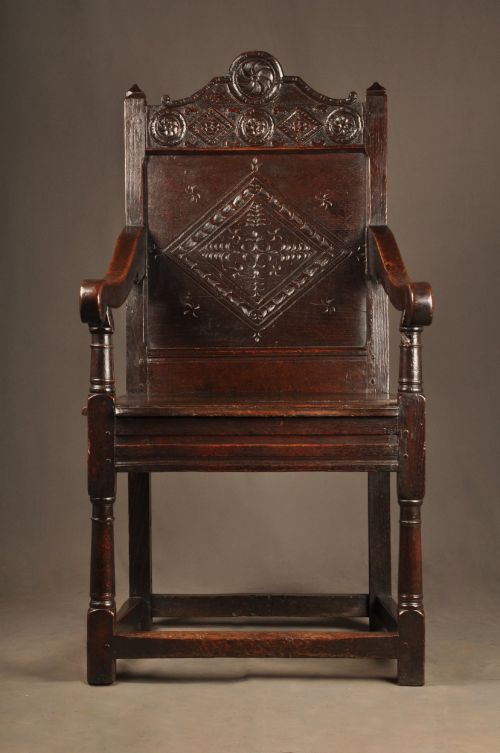
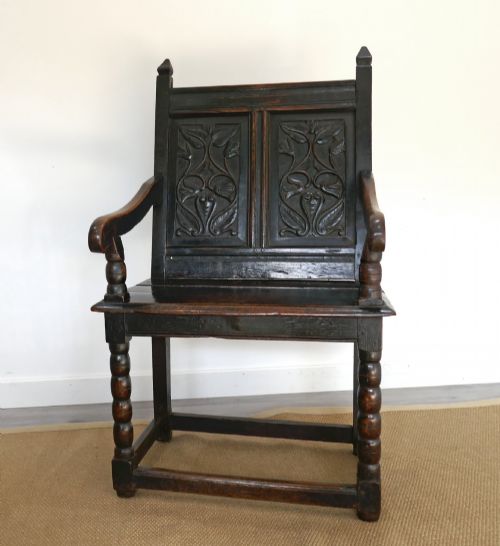
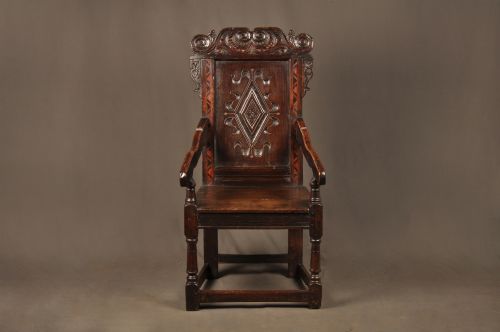
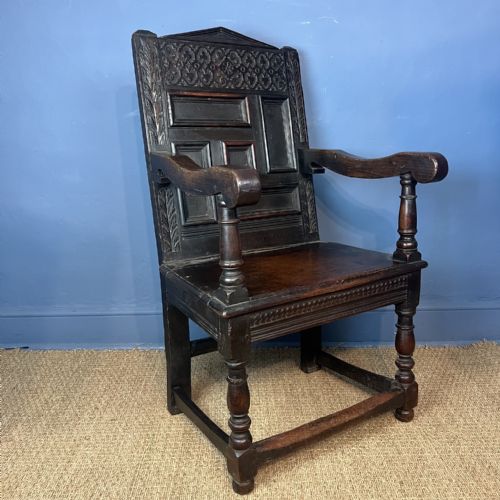
A jacobean carved oak armchair is a heavy, joined wooden seat typically constructed with a high panelled back, sturdy armrests, and a plank or frame seat. These seating forms appear across several distinct eras, spanning authentic seventeenth-century examples alongside nineteenth-century revivals and twentieth-century interpretations.
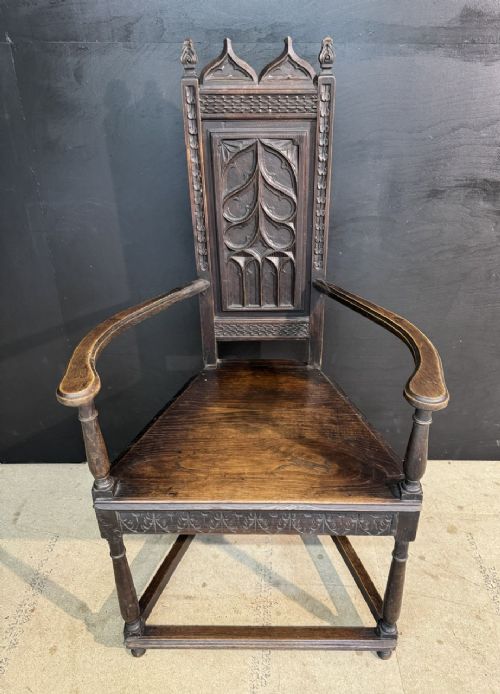
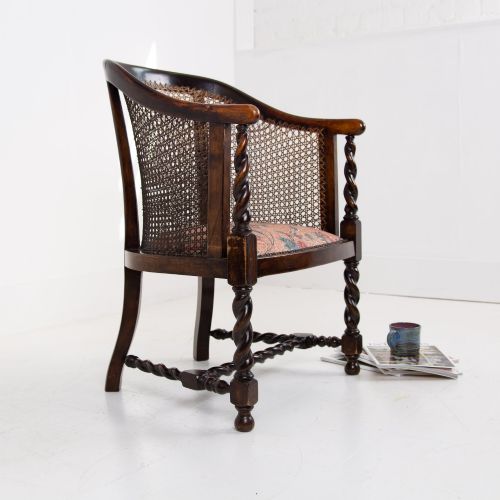
The majority of pieces encountered on this page belong either to the primary seventeenth-century period or to later revival movements from the Victorian and Edwardian eras. Regional variations such as Lancashire, Yorkshire, and Scottish styles shape the specific silhouette and decorative programme of each individual chair.
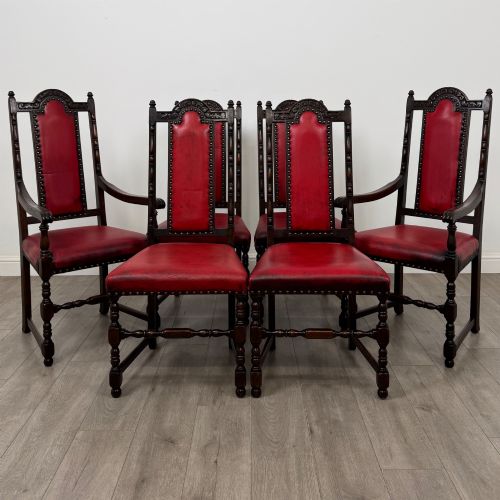
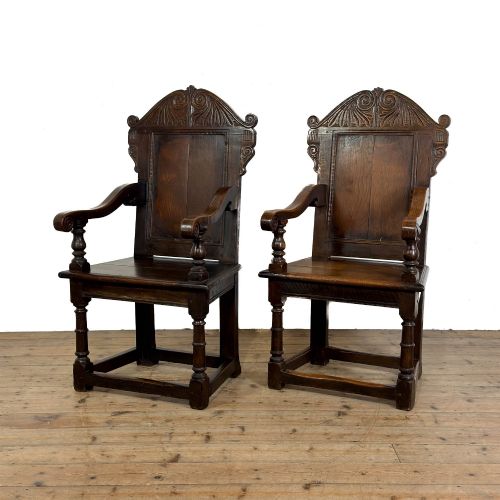
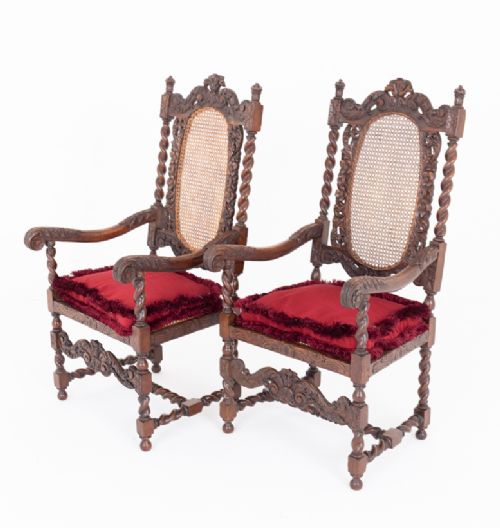
Beyond standard single armchairs, the broader category encompasses wainscot forms, highchairs, and matched pairs or sets designed for halls and dining spaces. Each variant demonstrates the enduring appeal of heavy turned supports and flat relief carving applied to sturdy domestic timber.
Materials and construction methods
Construction relies heavily on solid oak joined using traditional mortise and tenon joints secured with wooden pegs. Master joiners shaped the dense timber with hand axes, saws, and chisels before assembling the structural frame without reliance on modern metal fastenings.
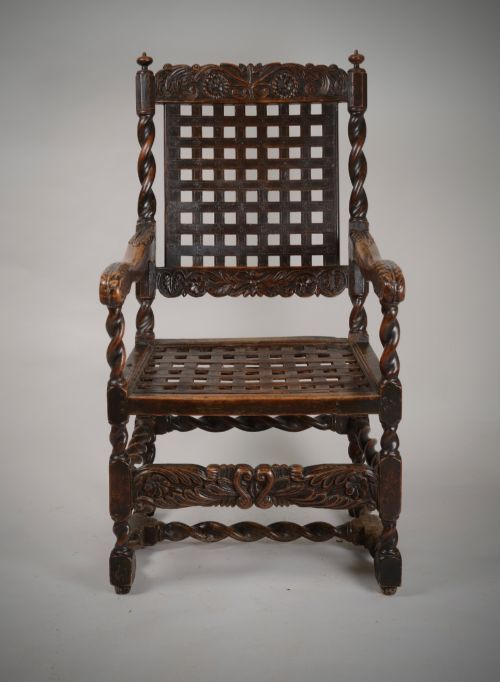
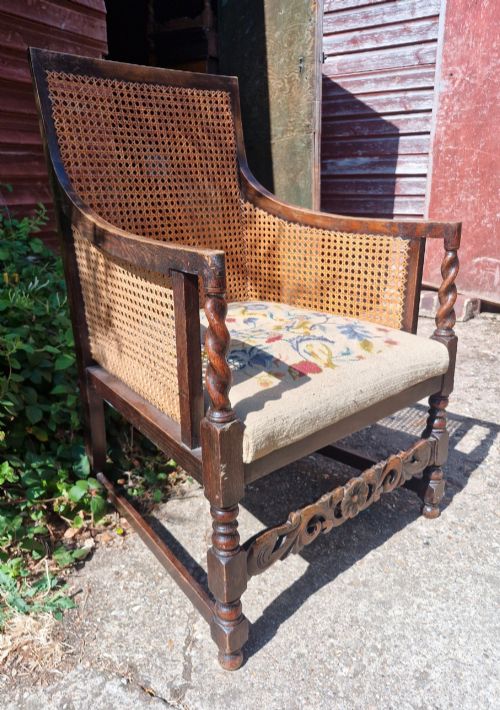
Surface decoration depends on gouges and chisels to produce geometric strapwork, guilloche patterns, and stylised floral motifs directly into the solid wood panels. Secondary materials such as brass tacks, cane, velvet, and tapestry fabric appear on specific seating variants to provide cushioning and upholstery.
One surviving child's highchair on a stand bears carved initials and the precise date 1688.
Assessing quality and craftsmanship
Quality rests upon the depth and crispness of the hand carving, where sharper relief and balanced proportions distinguish superior joinery from later, more mechanical production. The integration of the joints and the preservation of the original timber surface also determine the integrity of the piece.
Originality of components, including the armrests, seat boards, and lower stretchers, separates untouched examples from those heavily rebuilt during subsequent centuries. A rich natural surface patina developed over generations indicates minimal intervention and careful preservation.
The Jacobean Carved Oak Armchair Glossary
- Wainscot
- A heavy wooden armchair constructed with panelled backboards and solid arms, originating from the type of oak panelling used in period interiors. This form provides a rigid, upright seat.
- Joined oak
- Furniture built using interlocking mortise and tenon joints secured with wooden pegs rather than modern adhesives or metal fixings. This technique creates a stable frame capable of lasting centuries.
- Strapwork
- A carved decorative motif resembling intertwined leather bands or flat ribbons arranged in geometric patterns across the wooden panels. Artisans utilised this ornament widely during the seventeenth century.
- Bobbin turning
- A woodturning technique producing a series of rounded spherical or pill-shaped swellings along the length of a furniture leg or stretcher. This process creates rhythmic, spool-like profiles.
- Panelling
- Thin wooden boards fitted within grooved uprights and rails to form the backrest of a chair. This method accommodates the natural expansion and contraction of timber.
Jacobean Carved Oak Armchair: Frequently Asked Questions
How do I identify a seventeenth-century chair?
Authentic seventeenth-century chairs display traditional joinery pegged with wood, hand-carved decorative motifs, and natural timber surfaces showing centuries of wear. Regional characteristics often point to specific workshops in areas like Yorkshire or Lancashire.
Later revival pieces produced in the nineteenth or twentieth centuries frequently utilise machine cutting and lack the organic integration found in period joinery.
Were these chairs used for dining?
These armchairs were primarily designed as solitary statement pieces for the hall or parlour rather than matched suites around a dining table. Lower-ranking household members sat on simple joint stools or benches while the head used the wainscot chair.
Later nineteenth and twentieth-century revival sets adapted the heavy aesthetic to accommodate larger dining configurations.
How should I care for antique oak?
Maintaining antique oak involves keeping the timber away from direct heat sources and sudden humidity changes that cause the wood to split. Regular dusting with a dry, soft cloth preserves the natural surface.
Applying occasional appropriate wax feeds the dry timber and protects the historic patina without sealing the wood beneath synthetic finishes.