


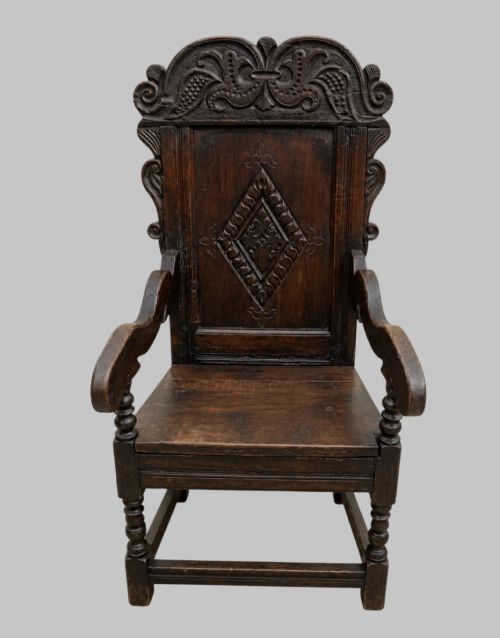

Jacobean Oak Throne Chair
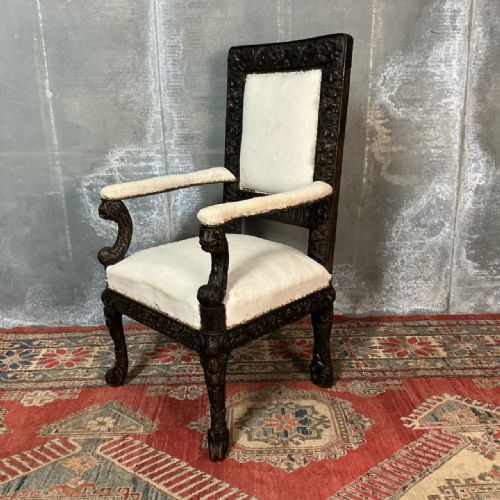
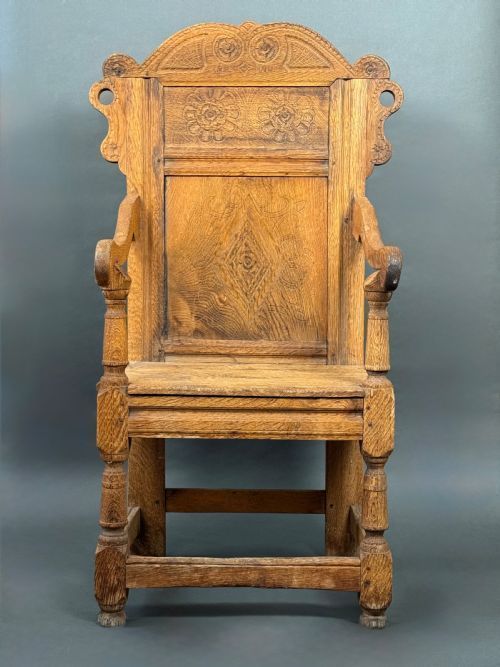
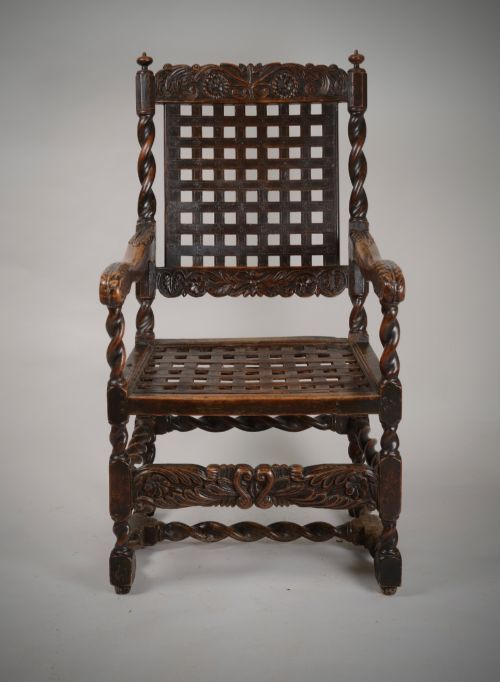
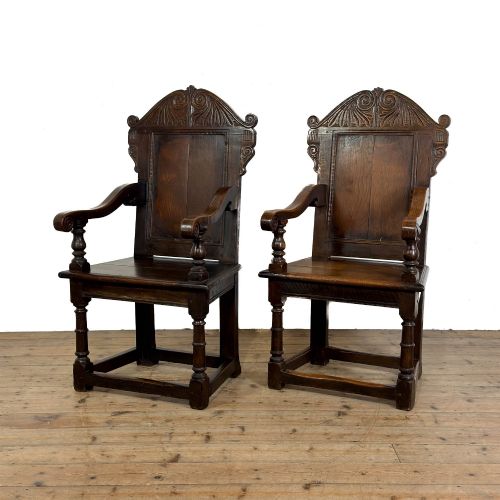
A jacobean oak throne chair brings robust timber framing and historic seating presence into a room.
Jacobean Oak Throne Chair
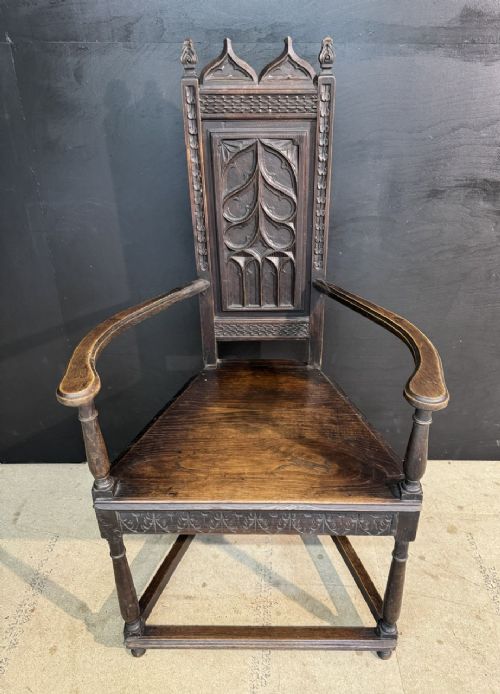
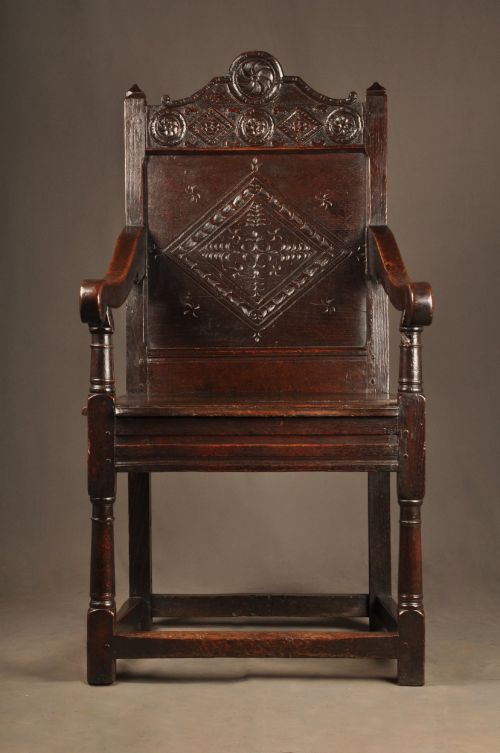
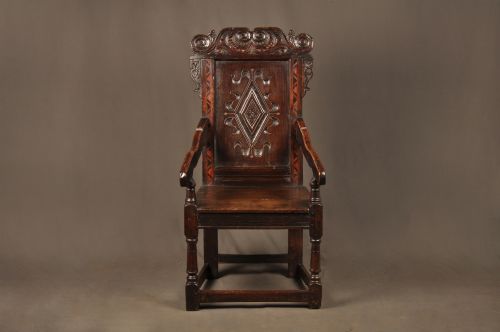
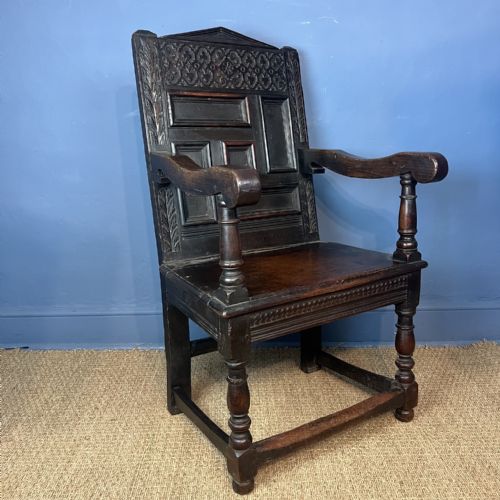
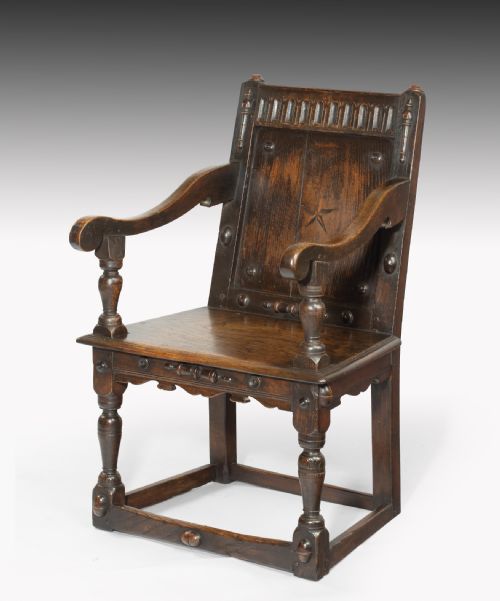
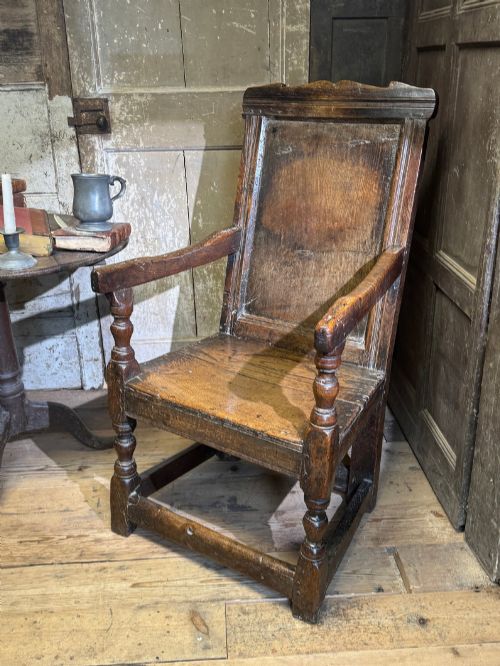
A jacobean oak throne chair stands as a heavy, panelled seat rooted in seventeenth-century domestic and civic tradition. Buyers encounter both authentic seventeenth-century examples and later nineteenth-century revival interpretations styled after the period.
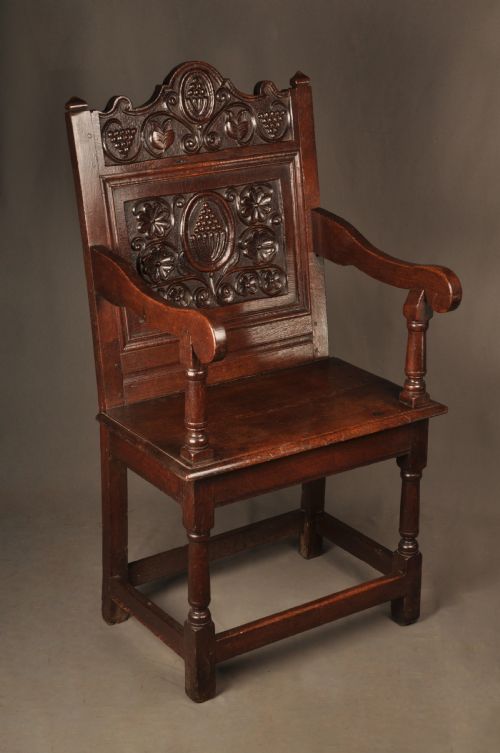
The form typically manifests as a wainscot armchair or a high-backed hall chair featuring carved wooden elements. Regional variations such as Lancashire, Yorkshire, Scottish, and West Country pieces appear alongside Welsh great chairs.
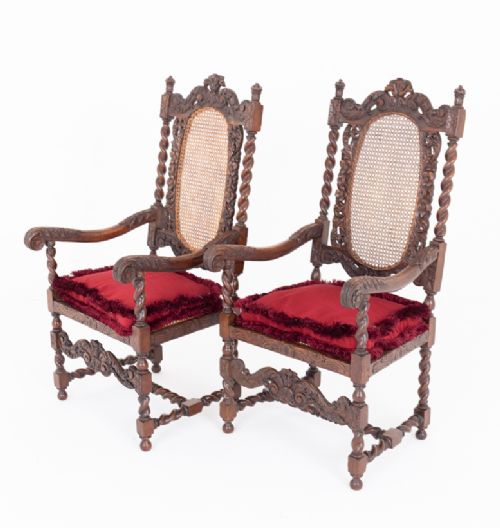
Revival pieces from the Victorian era and the early twentieth century replicate the substantial proportions and dark timber aesthetic of the earlier centuries. These larger throne chairs often incorporate elaborate carved motifs including green man imagery.
How they were made
Solid oak serves as the primary structural material, worked using traditional joinery techniques such as mortise and tenon framing. Timber panels are fitted into grooved uprights to construct the solid backs characteristic of wainscot construction.
Carving provides surface ornamentation, utilising gouges and chisels to create geometric patterns, strapwork, and figural details directly into the wood. Additional materials like brass, cane, leather, textile, and velvet appear selectively for upholstery or structural hardware.
Materials documented across the inventory include oak, velvet, cane, fabric, leather, and brass.
What varies in quality
The depth and crispness of the hand-carving distinguish finer examples from simpler vernacular pieces. Crisp relief work on the crest rails and panel backs indicates skilled artisan execution rather than mechanical or hurried production.
Timber selection and surface preservation dictate the visual weight of the chair. Retained original patination on solid oak surfaces creates depth, whereas excessive refinishing diminishes the historic character of the timber.
The Jacobean Oak Throne Chair Glossary
- Wainscot chair
- A heavy wooden armchair constructed with panelled backboards rather than open spindles. This form utilises solid oak framing derived from wall panelling traditions.
- Elbow chair
- An armchair featuring substantial wooden armrests integrated into the front and rear posts. The term describes seating designed for domestic comfort or positional authority.
- Crest rail
- The top horizontal member of a chair back, frequently shaped or carved with ornamentation. On these pieces, the crest often displays regional carving styles.
- Green man
- A sculptural architectural motif depicting a face encompassed by or sprouting foliage. Victorian revival throne chairs frequently incorporate this carved imagery.
- Revival
- A nineteenth or twentieth-century design movement recreating historic aesthetics from earlier centuries. Pieces from this era copy seventeenth-century proportions and joinery methods.
Jacobean Oak Throne Chair: Frequently Asked Questions
What is a wainscot chair?
A wainscot chair is a heavy wooden armchair constructed with panelled backboards and solid oak framing. The form originates from seventeenth-century domestic interiors where panelled walls provided draft-proof seating.
These chairs rely on mortise and tenon joinery rather than upholstery for structural integrity. They function as imposing seating options suitable for halls and principal rooms.
How do I date a carved oak chair?
Dating relies on examining the construction methods, tool marks, and timber patination visible across the frame. Original seventeenth-century examples display hand-split oak boards and period joinery details.
Revival pieces from the nineteenth century often feature machine-sawn timber elements and softer secondary woods behind the primary carved oak facade.
Where were these chairs made?
Regional workshops across Britain produced these chairs, with specific structural traits identifying different geographic origins. Lancashire, Yorkshire, the West Country, and Scotland each developed distinct regional carving patterns on their wainscot frames.
Local timber availability dictated whether makers used local oak or imported varieties for the primary construction.
How should I live with heavy oak seating?
These robust chairs function well as statement pieces in entrance halls, studies, or dining rooms. Their substantial wooden frames require adequate floor space to balance their visual weight.
Placing them away from direct heat sources prevents the solid oak from drying out or splitting over time.