




Jacobean Carved Bench
A jacobean carved bench brings heavy timber and formal carving into a hall, appearing most often here in later revival forms.
Jacobean Carved Bench
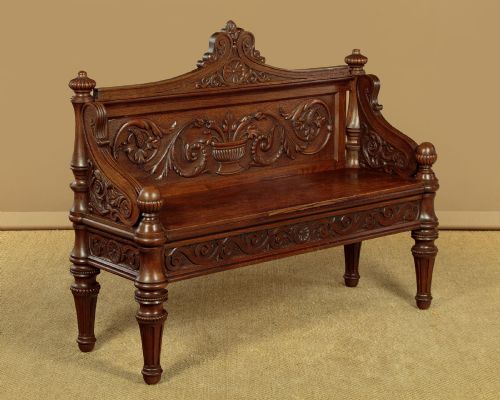
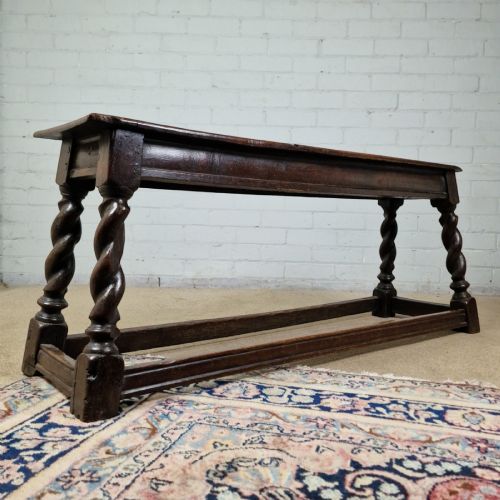
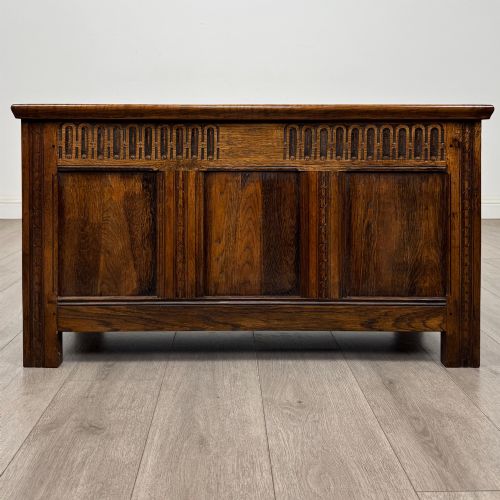
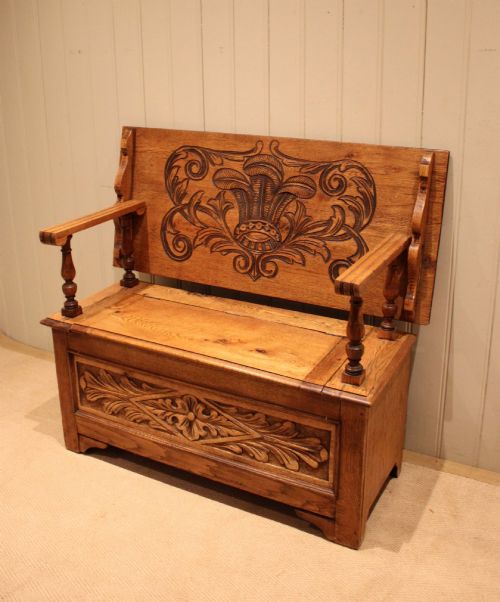
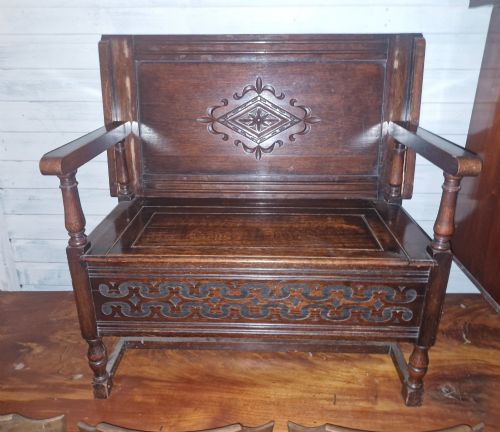
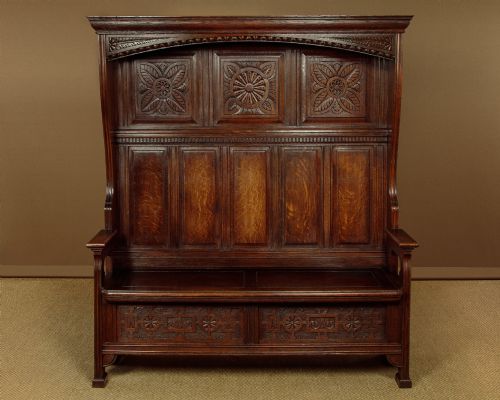
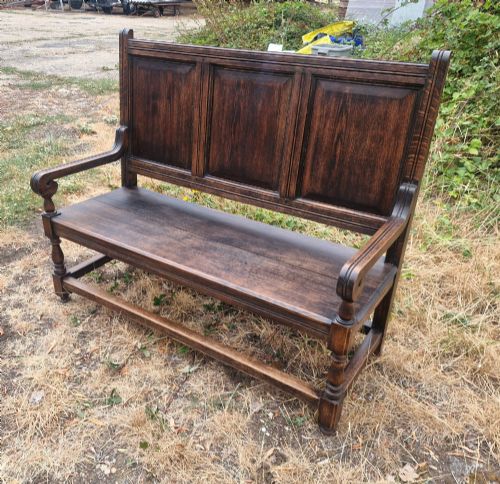
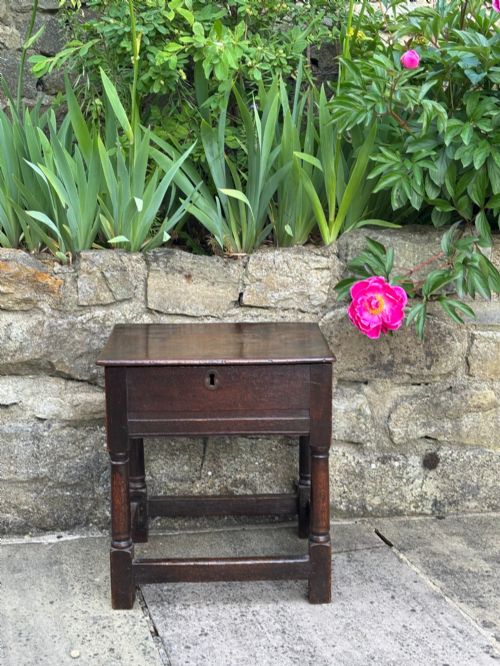
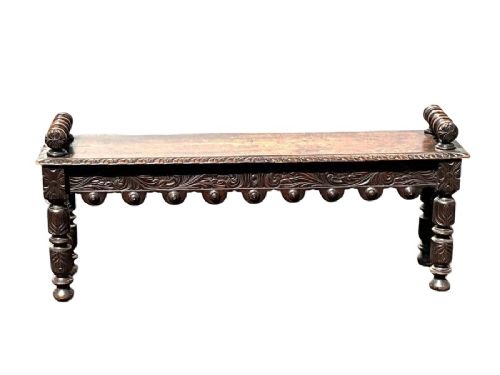
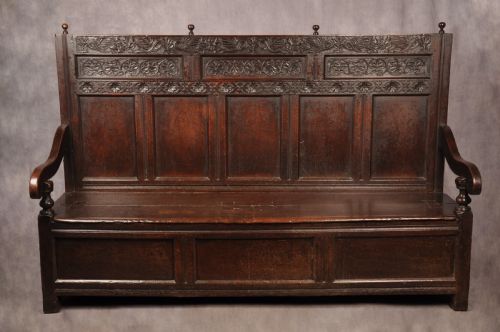
A jacobean carved bench takes several forms across this selection, including settles, hall benches, and monks benches. These seating pieces serve entries and reception spaces with high panelled backs and substantial timber frames.
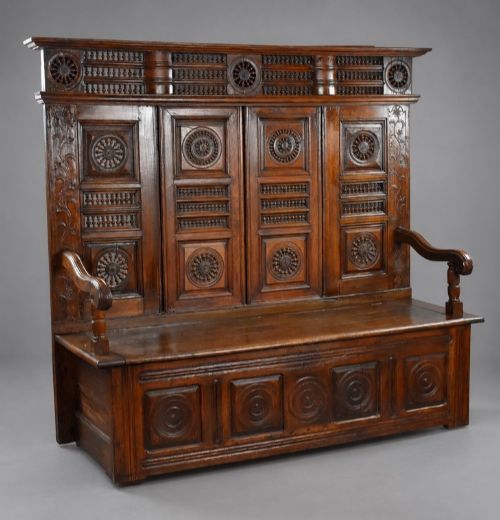
Most examples met on this page belong to the revival periods of the nineteenth and twentieth centuries, alongside genuine seventeenth-century pieces. Buyers encounter panelled settles, box settles with lift-up lids, and folding monks benches most frequently.
Origins span English country houses and Scottish halls, showing traditional regional cabinet-making. The forms range from small hall seats to large baronial settles designed for substantial rooms.
How they were made
Solid oak provides the primary material for these benches, supplemented occasionally by fruitwood, mahogany, iron, brass, and leather. Carpenters utilised mortise and tenon joinery to construct rigid frames capable of bearing heavy daily use.
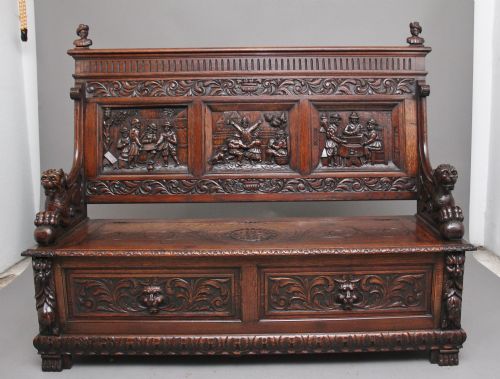
Carving defines the decoration, utilising gouges and chisels to cut strapwork, panels, and foliate motifs directly into the timber. Surfaces often feature waxed or polished finishes that highlight the grain of the oak.
One golden oak coffer bench watches the room through carved Green Man faces tucked into the woodwork.
What varies in quality
Quality separates through the crispness of the hand-carving and the thickness of the timber used in the frame. Superior pieces display deep, well-defined relief work on the panels rather than shallow, mechanical stamping.
Construction methods also distinguish better examples, particularly the tightness of the joints and the retention of original timber components in box seats and settles. The handling of the oak grain and the depth of the polish reveal the maker's competence.
The Jacobean Carved Bench Glossary
- Settle
- A wooden bench with a high back, solid arms, and often a storage box beneath the seat. This form protected sitters from draughts in early halls.
- Monks Bench
- A dual-purpose seat featuring a hinged top that folds down to form a table. It combines the functions of a small table and a hall chair.
- Panelling
- Framework constructed with vertical stiles and horizontal rails enclosing thin wooden panels. It provides structural rigidity and decorative surface depth.
- Revival
- A design movement that imitates the historical styles of earlier centuries. Pieces from the nineteenth and twentieth centuries frequently adopt seventeenth-century motifs.
- Strapwork
- A carved ornament resembling flat bands or leather straps interlaced in geometric patterns. It appears frequently on the friezes and panels of these pieces.
Jacobean Carved Bench: Frequently Asked Questions
What is a monks bench?
A monks bench functions as both a seat and a table through a hinged back that folds flat over the arms. This dual utility made it practical for smaller rooms and halls.
Most examples seen here date from the revival periods of the late nineteenth and early twentieth centuries, using solid oak construction.
Where should I place a settle?
Settles suit entrance halls, boot rooms, and large living spaces where their high backs create a visual screen against drafts. Their enclosed bases provide concealed storage for everyday items.
Measuring the clearance for folding tops or lift-up lids ensures the bench functions properly in restricted corridor spaces.
What does jacobean style mean?
Jacobean style refers to the decorative arts of the reign of James the First, characterised by geometric mouldings, heavy turned legs, and carved strapwork. This vocabulary reappeared in nineteenth-century revival furniture.
Makers working in the Victorian and Edwardian periods interpreted these early motifs with varying degrees of literal accuracy and elaboration.