

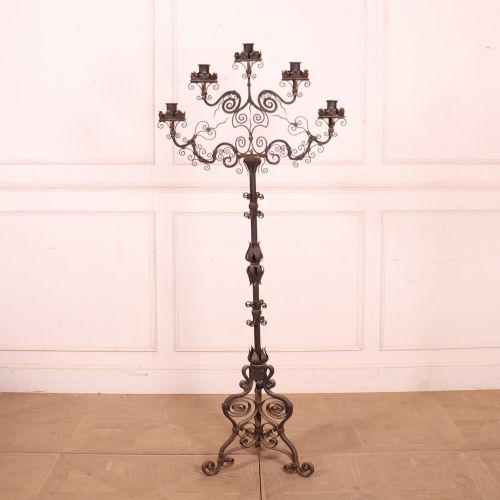
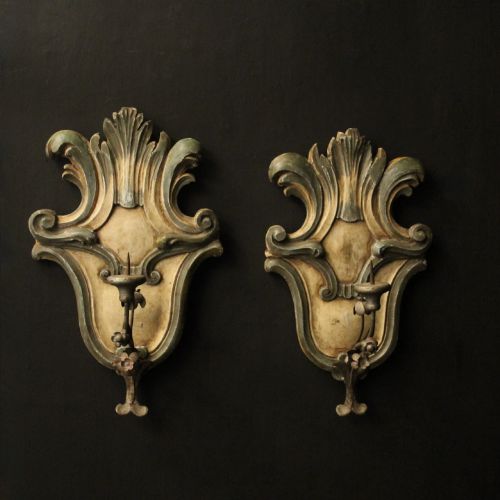
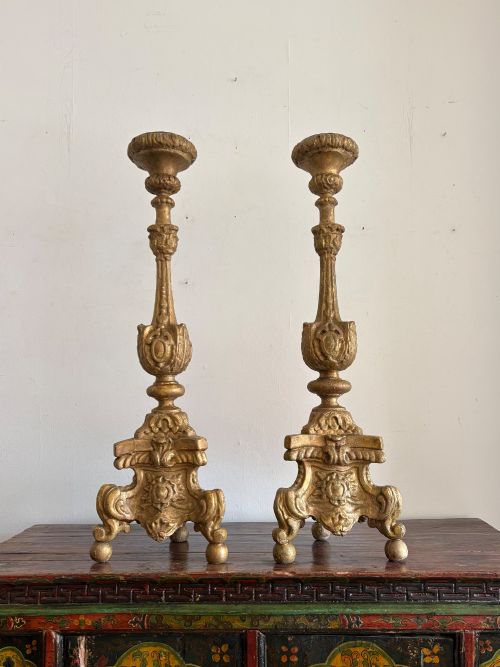
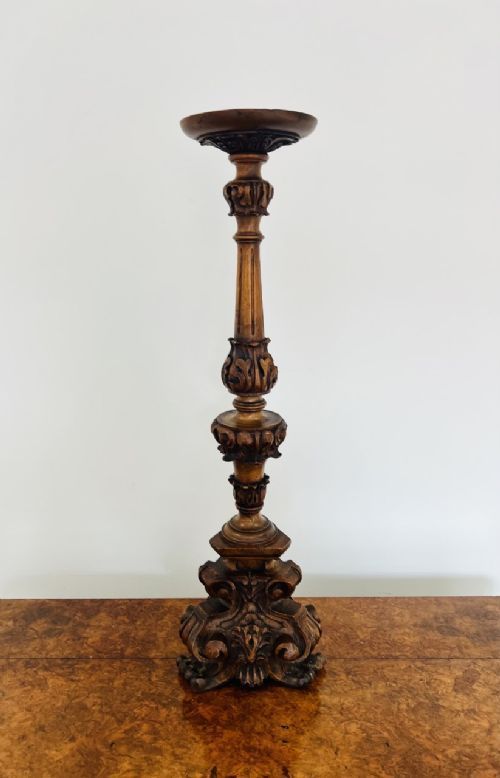


Italian Pricket Candle Holders
These Italian pricket candle holders combine devotional purpose with dramatic scale, offering an imposing source of lighting for the interior.
Italian Pricket Candle Holders
Italian pricket candle holders are primarily ecclesiastical items designed for altars, torchere stands, and wall sconces. When searching this phrase, a buyer encounters church furnishings repurposed for domestic display, ranging from modest tabletop candlesticks to tall floor-standing altar pieces.
The selection on this page relies heavily on historical forms from the seventeenth, eighteenth, and nineteenth centuries. Baroque and Neoclassical styles dominate, reflecting the ornate decorative traditions of Italian workshops across these periods.
Forms vary considerably from simple turned wooden sticks to large carved floor candelabras and giltwood altar pieces. Buyers most frequently meet carved wooden examples decorated with gold leaf, silver leaf, gesso, or polychrome finishes.
Materials and Techniques
Makers shaped these pieces primarily from solid woods such as pine, walnut, and other timbers, which were then heavily carved by hand. Artisans applied layers of gesso onto the carved wooden base to create a smooth, prepared surface for subsequent gilding or painting.
Giltwood and silver leaf finishes required delicate application of thin metal leaf over the gesso ground, often burnished to achieve a brilliant reflective quality. Wrought iron and standard iron appear less frequently, used principally for sturdy structural components on wall sconces and older utilitarian pieces.
Italian Pricket Candle Holders Retail Price Guide 2026
Typical asking prices for italian pricket candle holders among the pieces listed under this phrase on Sellingantiques today, from the lower quarter to the upper quarter. They describe what is for sale here now, not the wider market.
Listings feature items spanning the seventeenth through to the twentieth century, encompassing Baroque, Neoclassical, and Gothic Revival styles.
Factors of Quality
The depth and crispness of the hand-carving separate standard utility pieces from exceptional works. Finer examples display fluid organic detail in the acanthus leaves, scrollwork, and architectural moulding that reflects skilled artisan labour.
The preservation of the original giltwood, silver leaf, or polychrome surface heavily influences the character of each piece. Superior items retain their layered historic finishes with natural patination, whereas lesser examples show heavy modern repainting or loss of surface detail.
The Italian Pricket Candle Holders Glossary
- Pricket
- A sharp metal spike on top of a candlestick designed to hold a candle with a hollow base securely in place. This traditional form predates the socket candle holder.
- Giltwood
- Timber that has been coated with a thin layer of gold leaf or gold paint over a prepared gesso ground. This technique creates a rich decorative surface typical of Baroque church furnishings.
- Torchere
- A tall stand or pedestal originally designed to support a candle or torch. These freestanding pieces often feature elaborate carved decoration and substantial proportions.
- Gesso
- A plaster mixture applied to wood surfaces to provide a smooth base for gilding and painting. It allows intricate relief detail to be built up before the final finish is applied.
- Altar Candlestick
- A large, stable candle holder created for use on church altars. These pieces often exhibit grand architectural proportions and ornate stylistic motifs.
Italian Pricket Candle Holders: Frequently Asked Questions
What is a pricket candle holder?
A pricket candle holder is a lighting device featuring an upright metal spike that impales the base of a candle to keep it upright. This design is distinct from socket holders and is commonly found on historic church altar pieces.
These items originated largely from ecclesiastical settings where large wax candles were burned during services. Today, they are collected for their decorative impact and historic craftsmanship.
How do I date an Italian giltwood candlestick?
Dating relies on examining the carving style, the preparation layers under the gilding, and the natural wear of the wood. Seventeenth and eighteenth-century pieces often display deeper, hand-chiselled relief work and denser timber substrates.
Later nineteenth-century and revival examples may show different tool marks and fresher gesso applications. Comparing the specific decorative vocabulary, such as Baroque scrollwork versus Neoclassical symmetry, helps establish the era.
Where should I place a floor candelabra?
Floor-standing candelabras suit substantial rooms with high ceilings where their height creates a strong vertical focal point. They work effectively in corners, beside fireplaces, or framing architectural doorways.
Because many were originally designed for churches, pairing them with traditional interiors or minimalist spaces creates a striking contrast. Ensure they stand on level flooring to maintain stability given their height.