

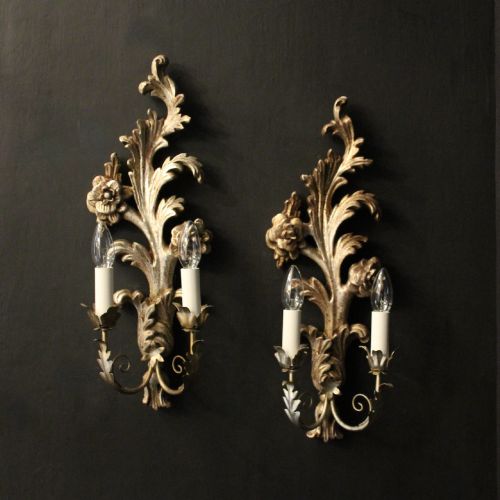
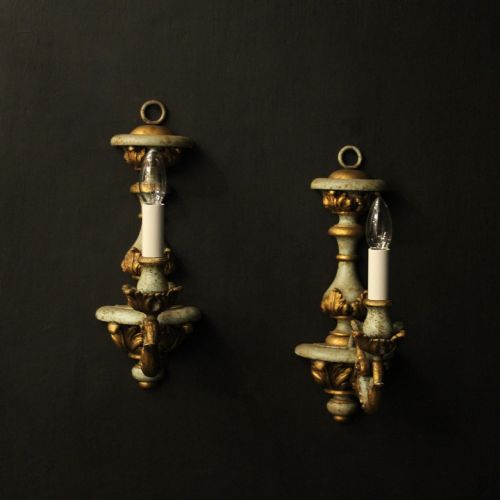
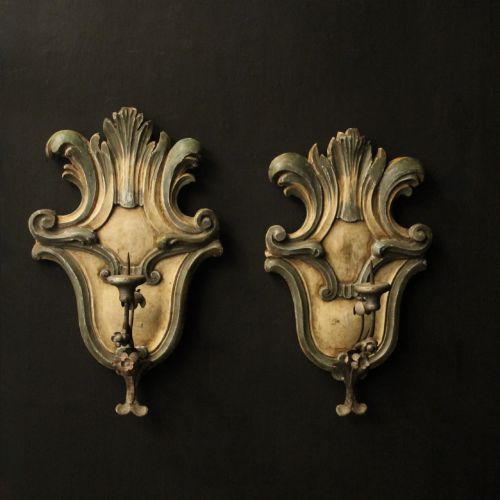
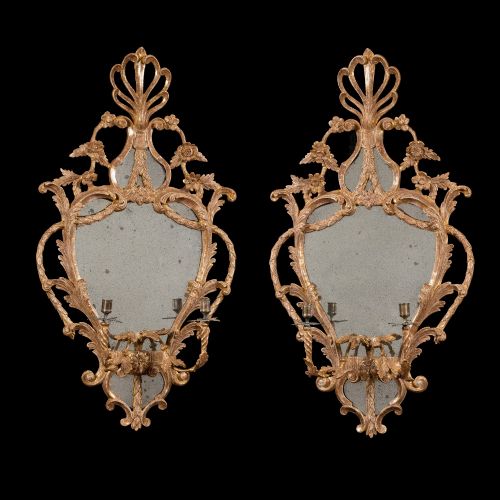
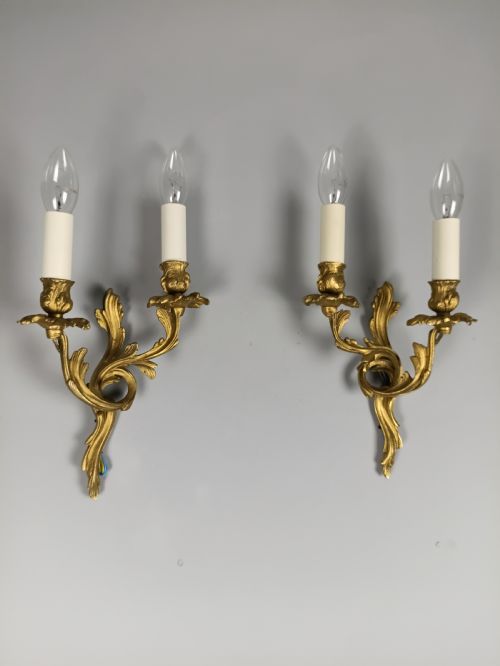
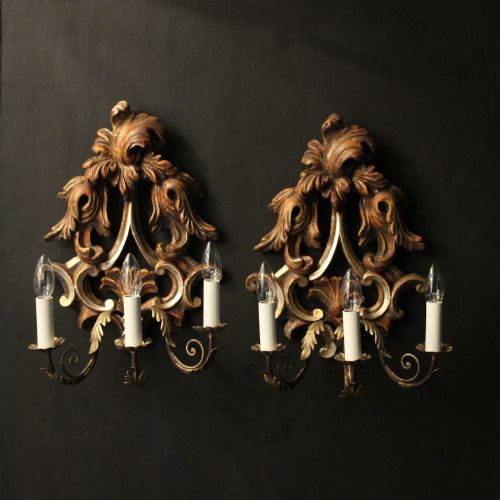
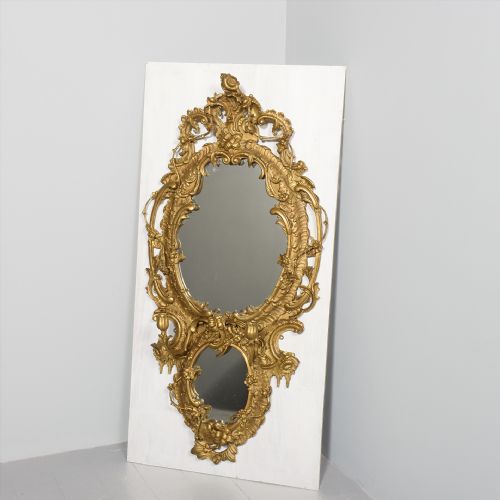


Carved Acanthus Wall Sconces
Carved acanthus wall sconces bring sculptural depth and classical botanical ornament to interiors, combining practical illumination with ornate historical presence.
Carved Acanthus Wall Sconces
Carved acanthus wall sconces draw upon centuries of classical design, appearing across periods from the eighteenth century through to the nineteen-thirties. When searching for carved acanthus wall sconces, buyers encounter lighting fixtures and wall brackets that frequently embrace styles such as Florentine Rococo, Baroque Revival, and Neoclassical forms.
The pieces on this page span diverse formats, including twin and triple arm wall lights, single candle sconces, and gilded wall brackets. Examples range from eighteenth-century giltwood creations to twentieth-century Italian and French interpretations featuring carved wooden and gesso surfaces.
How they were made
Craftsmen utilised carved wood, plaster, and bronze as foundational structures, shaping intricate botanical motifs by hand. Giltwood and gold leaf were applied over gesso layers to achieve brilliant reflective surfaces that enhanced candlelight and interior illumination.
Finishes include polychrome paint and silver giltwood, demonstrating traditional decorative layering techniques. Structural elements range from heavy architectural corbels and capitals to delicate wall brackets designed to support candle nozzles or electrical conversions.
Cherubs occasionally peer out from behind acanthus leaves, watching over the candles.
What varies in quality
The distinction between standard production and exceptional work lies in the crispness and depth of the carving. Superior pieces display fluid, deeply undercut acanthus leaves where every scroll and serration exhibits botanical movement rather than flat mechanised shaping.
Gilding technique and surface preservation dictate overall visual impact. Finer items retain dense layers of gold leaf or silver gilt applied over smooth gesso grounds, whereas lesser examples show thin metallic applications or coarse plaster repairs over wooden bases.
The Carved Acanthus Wall Sconces Glossary
- Giltwood
- Wood that has been coated with a thin layer of gold leaf. This technique was widely utilised on eighteenth and nineteenth-century decorative items to create a luminous metallic finish.
- Gesso
- A plaster mixture applied as a smooth base before gilding or painting. It allows craftsmen to carve extremely fine details onto wooden surfaces.
- Girandole
- An ornamental bracket or wall light featuring a mirror. The reflective glass multiplies the flickering light of candles within a room.
- Corbel
- A structural bracket projecting from a wall to support a weight. In decorative contexts, these elements are heavily carved with foliage and scrollwork.
Carved Acanthus Wall Sconces: Frequently Asked Questions
How do I clean gilded wall sconces?
Dust surfaces gently with a soft dry brush to prevent damaging delicate gold leaf or gesso layers. Avoid using water or chemical cleaning solutions.
Keep fixtures away from direct moisture and excessive heat to preserve the integrity of the underlying wood and metallic finishes.
Were these sconces originally wired for electricity?
Many of the earlier examples were designed exclusively for candles or oil before later being adapted for modern electrical wiring. Candle sockets and arms often show evidence of conversion work.
Buyers should examine the internal wiring paths to ensure they meet contemporary safety standards while maintaining the historic appearance of the fixture.
How do I distinguish eighteenth-century pieces?
Eighteenth-century items generally exhibit hand-carved timber construction beneath heavy gesso and gold leaf applications. The tool marks and ageing patterns on the wood provide clues to their age.
Later revival pieces from the nineteenth and twentieth centuries often utilise different joining techniques and machine-prepared grounds.
Where should I mount wall sconces?
Mount fixtures at eye level or slightly above to create balanced ambient lighting in hallways, living rooms, or dining spaces. Ensure the wall structure can support the weight of heavy timber and giltwood brackets.
Pairing sconces symmetrically beside mirrors or architectural doorways enhances their classical proportions and decorative impact.