
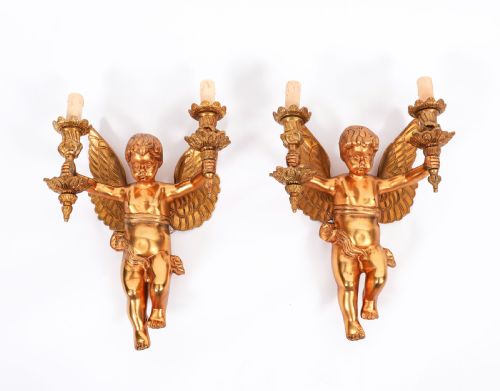


Italian Gilt Sconces
Italian gilt sconces bring warm reflective light and carved texture to a room, offering the decorative richness of centuries of regional craftsmanship.
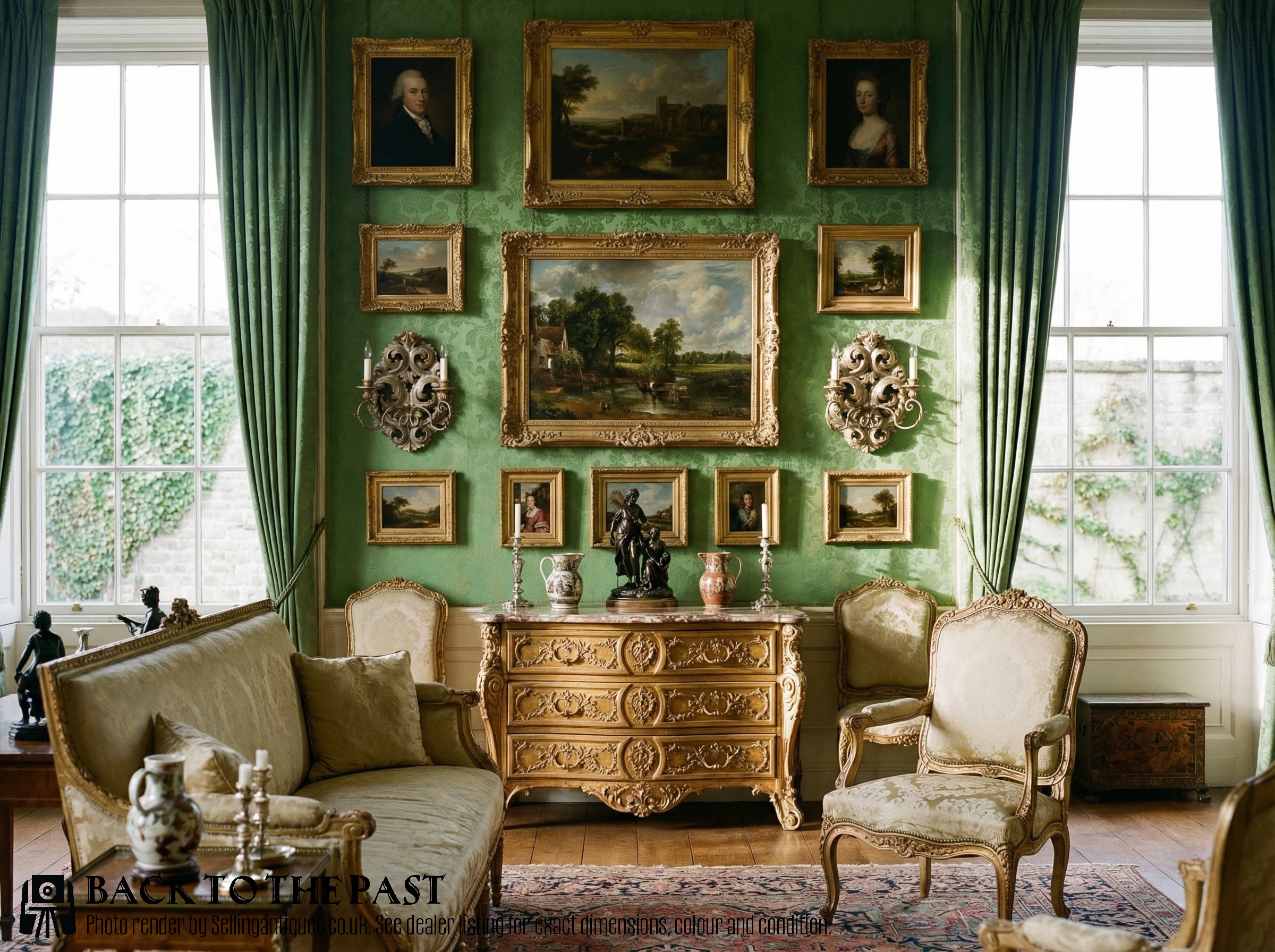
Italian Gilt Sconces
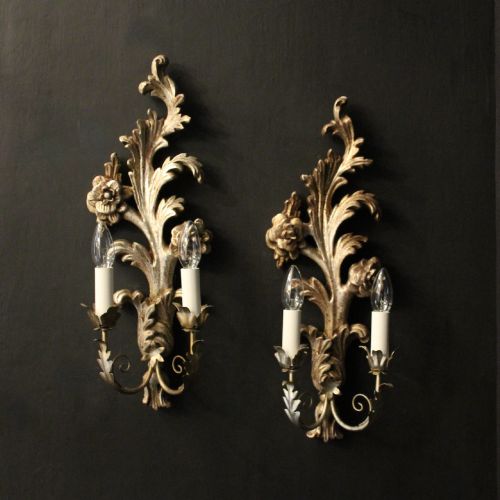
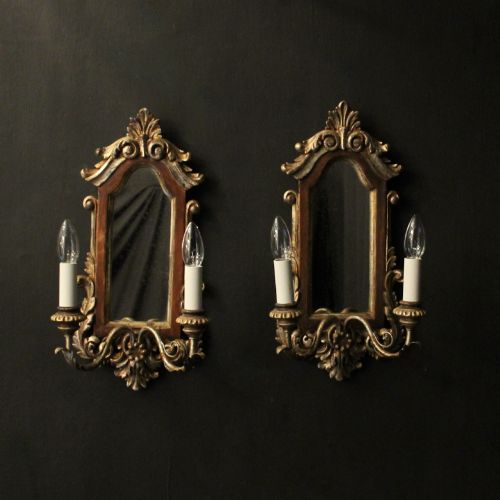
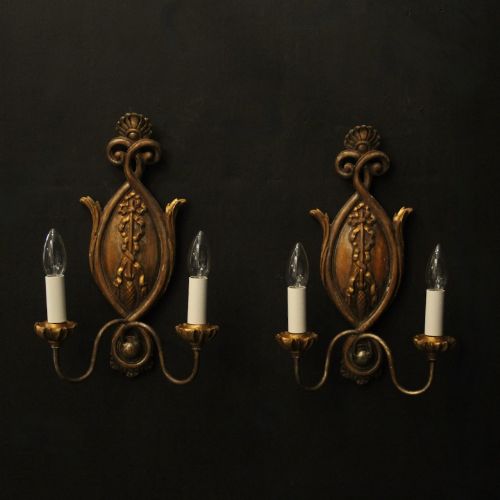
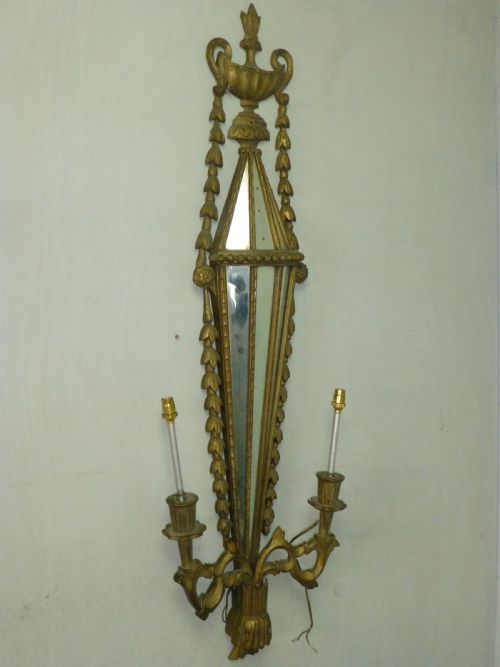
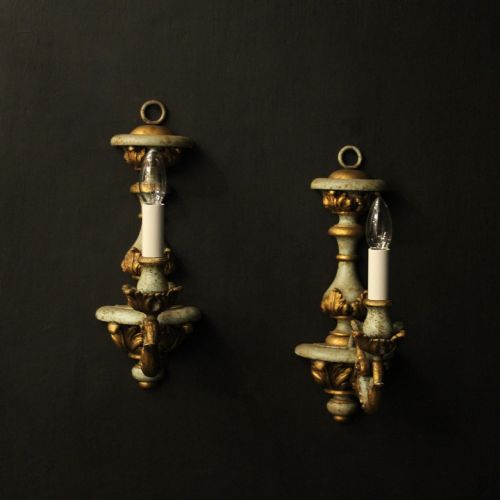
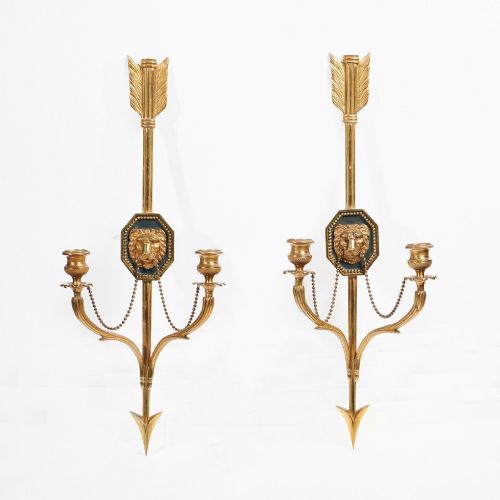
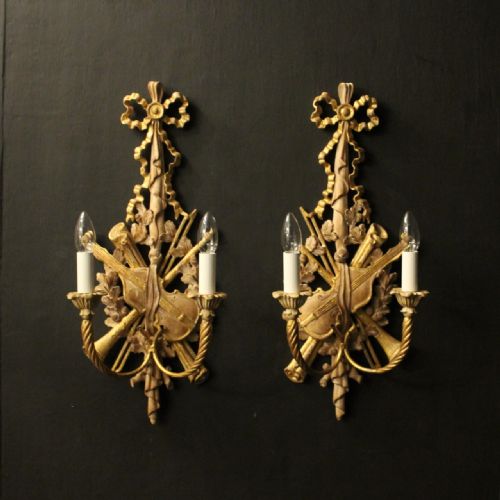
Italian gilt sconces comprise wall-mounted light fittings and girandoles designed to hold candles or electric bulbs against a reflective surface. The selection spans from the ornate forms of the seventeenth and eighteenth centuries to simpler carved wooden pairs produced in the early twentieth century.
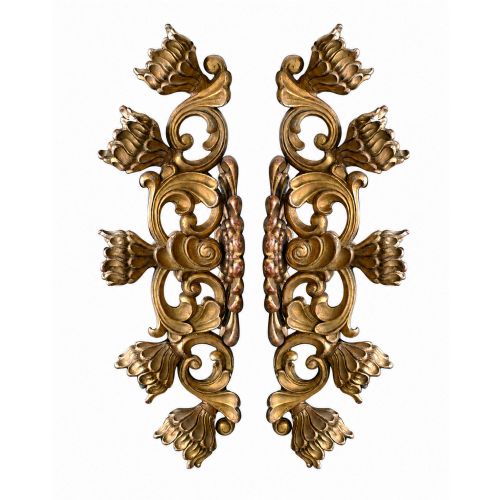
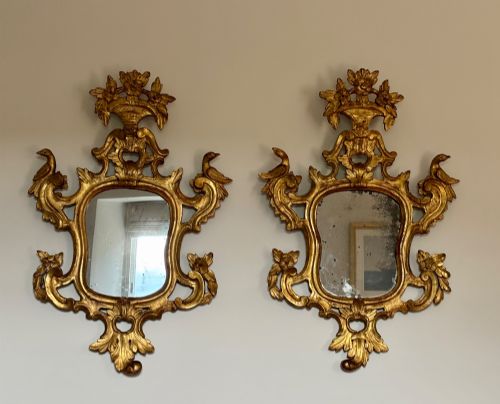
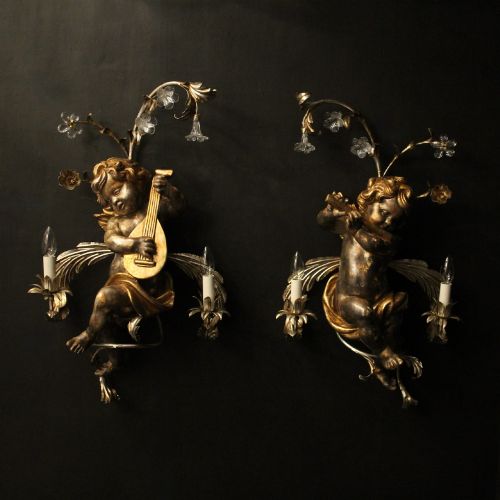
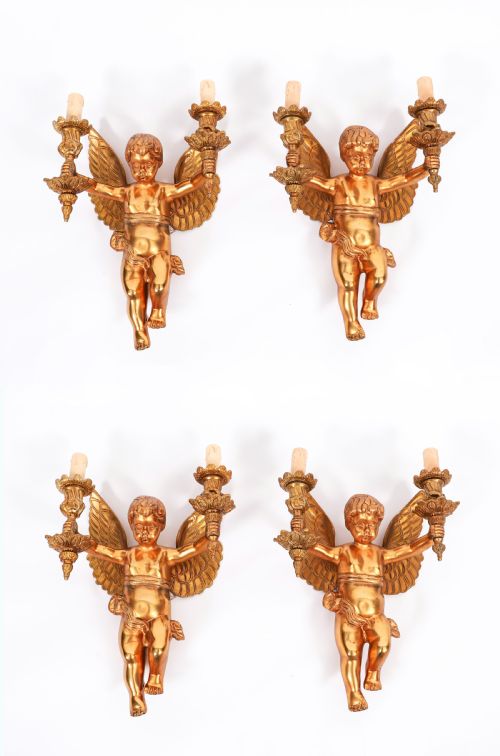
Buyers will encounter Florentine styles frequently, alongside examples drawing on Baroque, Rococo, and Neoclassical vocabularies. Forms range from single-arm wall brackets to multi-branched fixtures incorporating carved cherubs, scrolling foliage, and associated wall mirrors.
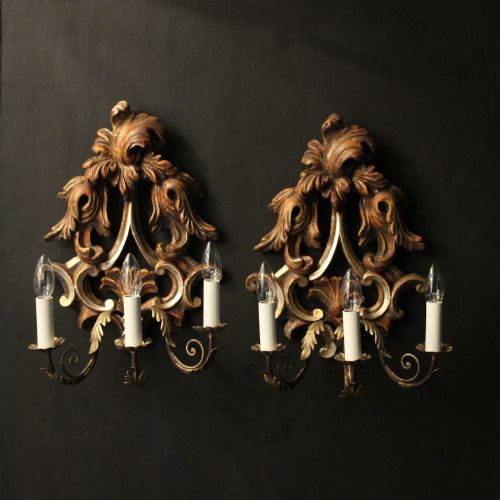
Originating largely from Italian workshops, these pieces utilise traditional regional aesthetics such as polychrome accents, silver gilding, and ebonised details alongside standard gold leaf finishes.
Materials and construction
Carved wood, gesso, and solid timber form the structural base for the majority of these pieces, providing the substrate for intricate surface decoration. Artisans applied layers of gesso to carved wooden frames to achieve smooth contours before laying gold or silver leaf by hand.
Metal elements such as ormolu, brass, and toleware appear in various configurations, often combined with carved wooden arms or paired with Murano glass components. Polychrome painted finishes and genuine foxed glass mirror plates complete the decorative vocabulary of many eighteenth and nineteenth-century examples.
Listings feature Italian gilt sconces spanning from the seventeenth century through to the nineteen-thirties, utilising carved wood, gesso, ormolu, and Murano glass.
Factors of quality
The depth and crispness of the hand-carved woodwork dictate the visual impact of each piece, distinguishing finely rendered foliage and figures from softer, simpler moulding. The application of the gold or silver leaf, and the survival of original gilding over gesso, determines the richness of the reflective surface.
Coherence of design, such as balanced multi-arm configurations and well-matched pairs, separates standard production from exceptional decorative examples. The integration of specialised materials like Murano glass elements or authentic period mirror plates adds distinct architectural weight.
The Italian Gilt Sconces Glossary
- Giltwood
- Wood that has been coated with gold leaf or a gold-coloured metallic finish. This technique creates a luminous surface that catches candlelight and ambient room illumination.
- Girandole
- A branched wall light or sconce, frequently incorporating a mirror plate to multiply the reflected light in a space. These fixtures often feature elaborate carved frames in regional Italian styles.
- Gesso
- A plaster-like mixture applied to wood surfaces as a preparation for gilding. It allows carvers to achieve sharp detail before the application of metal leaf.
- Ormolu
- Finely chased gilt bronze utilised for decorative mounts and structural components on lighting fixtures. The material imparts a heavy, metallic lustre distinct from wooden framing.
- Toleware
- Enamelled and painted sheet metal used to form decorative components on lighting fixtures. It often introduces contrasting colour and metallic durability to traditional wooden designs.
- Foxed plate
- A mirror glass panel showing age-related spots and oxidation behind the reflective coating. This patination indicates considerable age in historical mirror and sconce plates.
Italian Gilt Sconces: Frequently Asked Questions
What is the difference between a sconce and a girandole?
A standard wall sconce is a bracket fixture designed purely to hold lights against a vertical surface. A girandole incorporates an integrated mirror plate behind the candle arms to reflect and amplify the illumination.
Both forms share similar decorative carving traditions, particularly within Florentine and Venetian workshops across the centuries.
How do I clean giltwood and gesso surfaces?
Giltwood requires extremely gentle maintenance using a dry, soft brush to remove dust from intricate carved crevices. Moisture and commercial cleaning chemicals can strip delicate gold leaf layers and damage underlying gesso.
Preserving the original surface depends entirely on avoiding abrasive contact and protecting the fragile metallic leaf from moisture.
How can I tell an eighteenth-century piece from a twentieth-century reproduction?
Early pieces display hand-carving irregularities, traditional gesso application, and aged patination on the gilding and timber substrate. Twentieth-century revivals, such as pieces from the nineteen-twenties and thirties, often exhibit more uniform construction methods and distinct tool marks.
Examining the reverse of the wood, the construction joints, and the state of any mirror plates helps clarify the period of manufacture.