


Italian Neoclassical Furniture
Italian neoclassical furniture brings classical symmetry and restrained ornament into a room through carved giltwood, walnut, and painted surfaces.
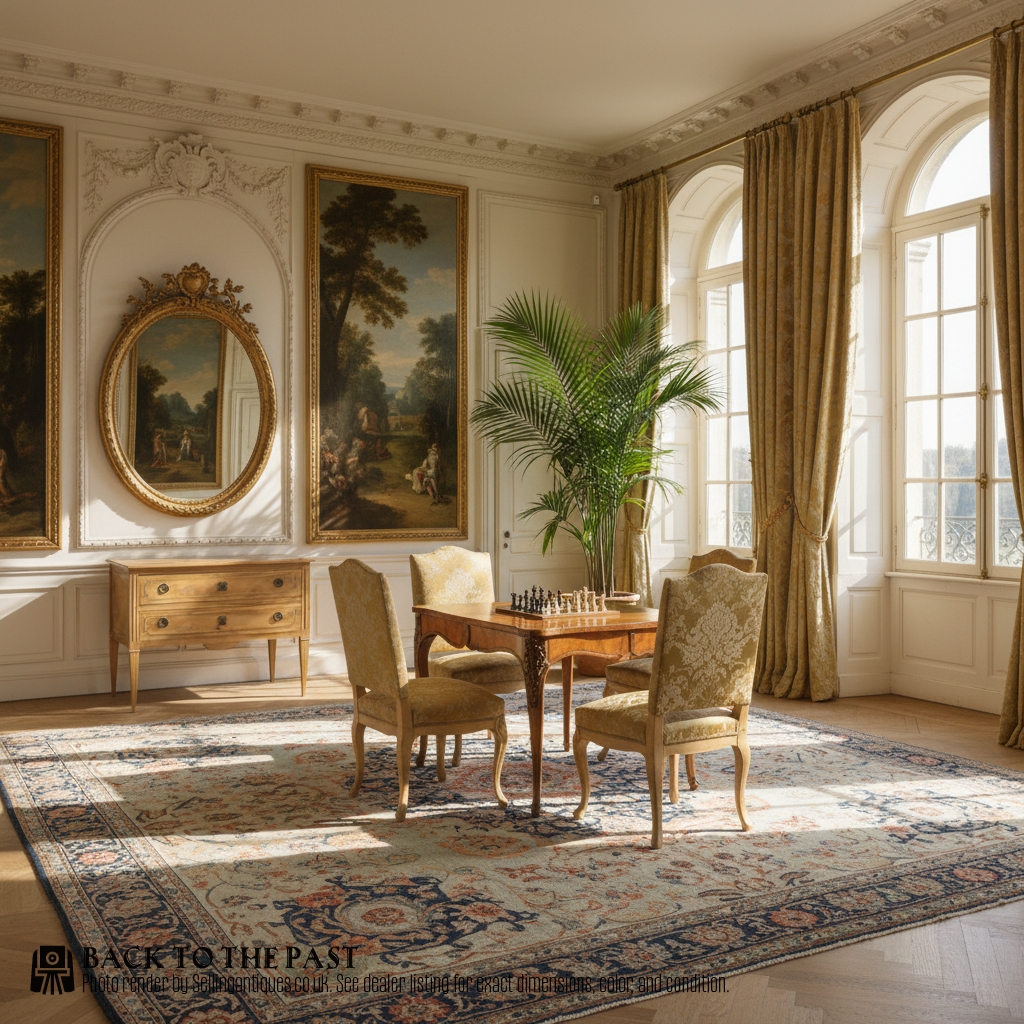
Italian Neoclassical Furniture
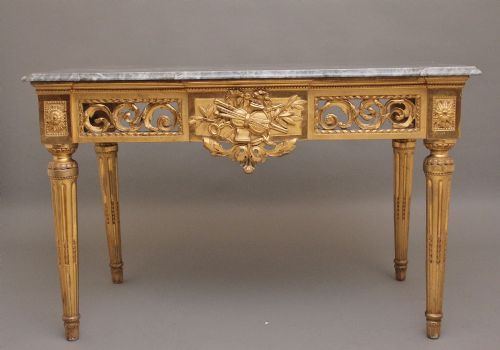
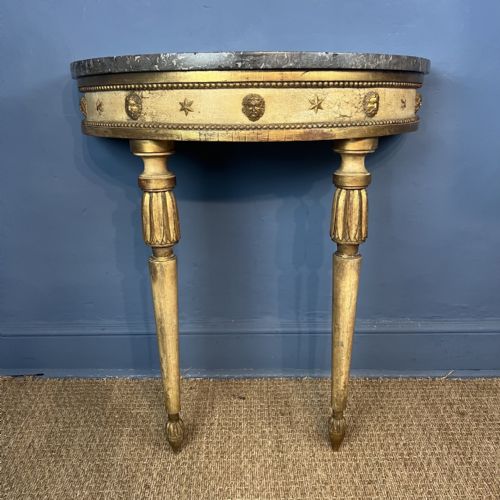
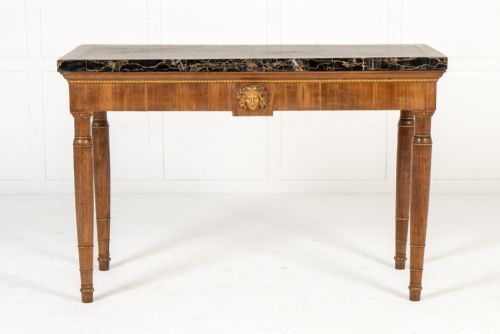
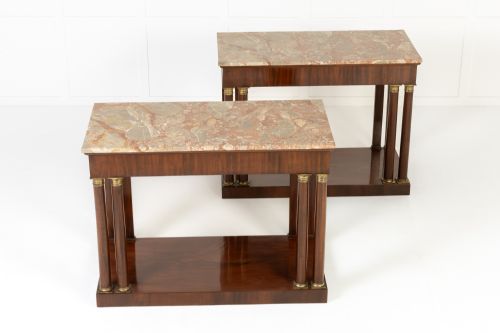
When you search for Italian neoclassical furniture, you encounter a refined domestic tradition focused largely on console tables, chests of drawers, and seating such as settees and stools.
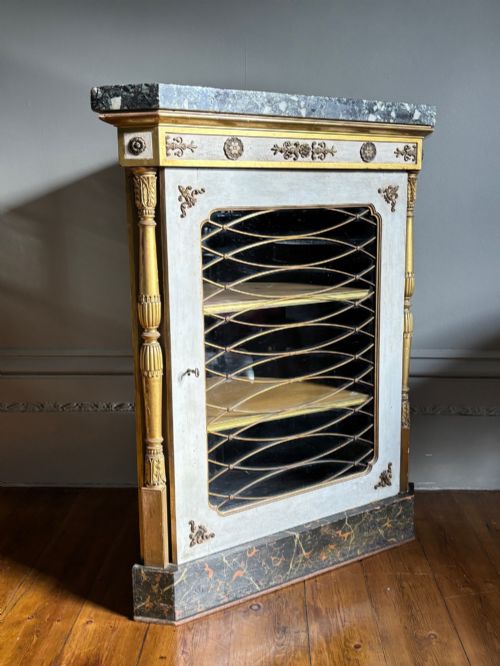
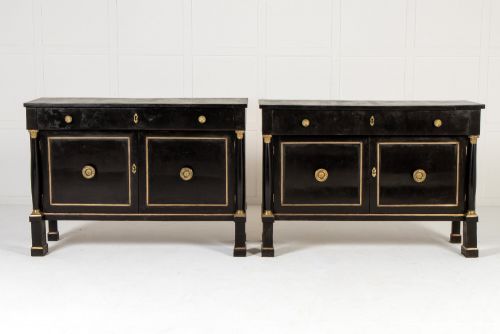
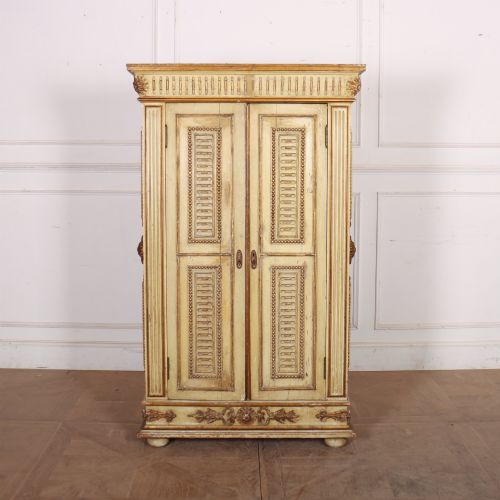
The objects span the eighteenth and nineteenth centuries, taking forms from console tables and sideboards to corner cupboards and benches.
North Italian regions and specific centres like Lombardy and Genoa produced distinct variations in marquetry and painted finishes.
Materials and Construction Methods
Carpenters utilised native and imported timbers, combining solid walnut, mahogany, and kingwood with softwood carcasses prepared for paint or gilding.
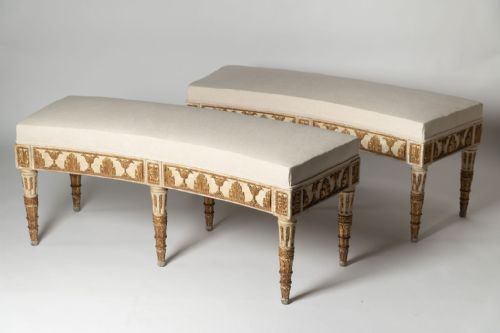
Surface decoration relied on gesso applied over carved wood to receive gold leaf, or hand-painted schemes finished with parcel gilding.
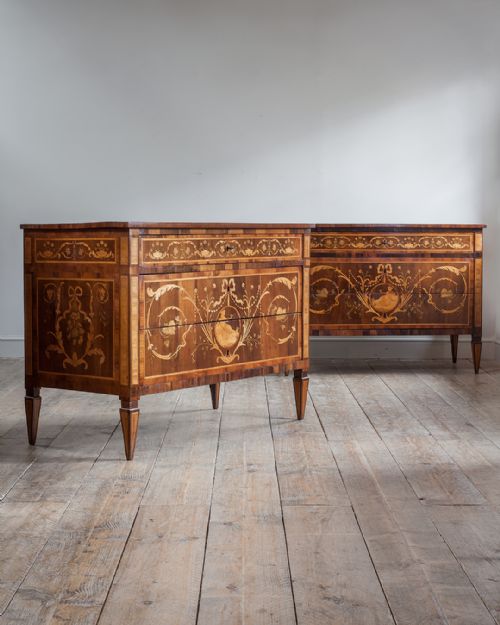
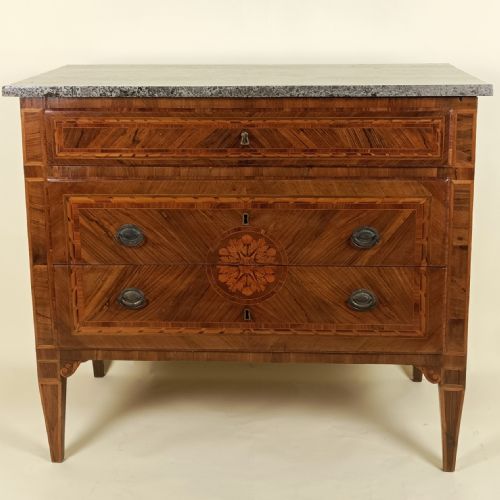
Inlaid pieces incorporated contrasting veneers arranged in geometric or figural marquetry patterns across drawer fronts and tabletops.
Italian Neoclassical Furniture Retail Price Guide 2026
Typical asking prices for italian neoclassical furniture among the pieces listed under this phrase on Sellingantiques today, from the lower quarter to the upper quarter. They describe what is for sale here now, not the wider market.
Some console tables come equipped with carved wooden dolphins to support the weight.
Assessing Quality and Execution
The refinement of the carving dictates the visual success of giltwood and parcel gilt pieces, separating sharp, deep relief from soft or summary moulding.
In painted and faux finishes, the subtlety of the ground colour and the crispness of the surviving gilding determine the visual coherence.
Marquetry quality rests on the precision of the veneer cuts and the tightness of the joints across complex geometric layouts.
The Italian Neoclassical Furniture Glossary
- Giltwood
- Wood carved and coated with gold leaf over a prepared gesso ground. This finish catches the light and defines neoclassical architectural motifs.
- Commode
- A decorative chest of drawers or cabinet standing on legs. These items often feature shaped marble tops and inlaid veneers.
- Marquetry
- Patterns formed by inserting contrasting pieces of veneer into a wooden background. It appears on tabletops and drawer fronts from Lombardy.
- Console table
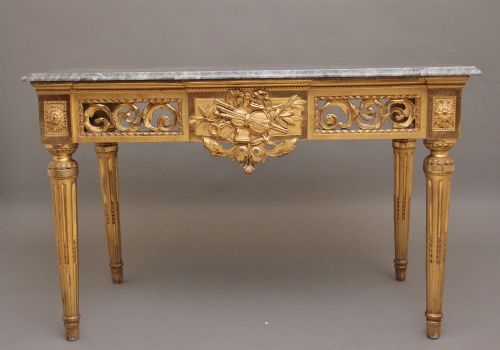
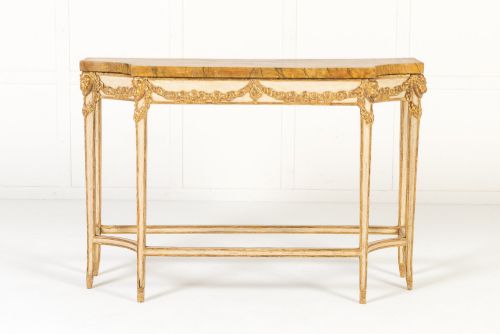
- A wall-mounted or freestanding table supported by two or four legs. They frequently carry marble tops and carved giltwood frames.
- Parcel gilt
- Portions of an object highlighted with gold leaf while the rest retains a painted or polished wood surface. This technique creates a controlled contrast on console tables and seating.
Italian Neoclassical Furniture: Frequently Asked Questions
What is Italian neoclassical furniture?
It is a group of decorative and functional objects produced in Italy during the eighteenth and nineteenth centuries, drawing inspiration from classical antiquity. The forms emphasise balance, straight lines, and restrained ornament over baroque exuberance.
You will find console tables, commodes, mirrors, and seating pieces that incorporate carved giltwood, painted surfaces, and inlaid veneers.
How do I identify an eighteenth century piece?
Eighteenth century examples typically display hand-carved giltwood details, original painted surfaces, and construction methods characteristic of pre-industrial cabinet making. The proportions remain tied to neoclassical design principles.
Examining the secondary timbers and the wear on the gesso or paint layer helps confirm the age and origin of the piece.
Where were these pieces made?
Production occurred across various Italian regions, with North Italian workshops and centres such as Lombardy and Genoa developing distinct regional characteristics. Cabinet makers in these areas utilised local walnut alongside imported hardwoods.
Specific regional traits often appear in the choice of veneer, the style of marquetry, or the palette of the painted finishes.
How should I care for painted surfaces?
Painted and parcel gilt surfaces require stable indoor humidity and protection from direct sunlight to prevent cracking or fading. Dusting should be done gently with a dry, soft cloth.
Avoid liquid cleaners and harsh chemical polishes, as these can permanently damage historic gesso and paint layers.
What are console tables used for?
Console tables were designed to stand against a wall, frequently positioned beneath a matching wall mirror in a reception room or hallway. Their marble or wooden tops provided a surface for decorative objects.
Today they function effectively in entryways and living spaces as narrow display tables that anchor a wall composition.