


Italian Carved Stand
An Italian carved stand brings theatrical timber and gilded presence to a room, turning everyday elevation into a display of historic craft.
Italian Carved Stand
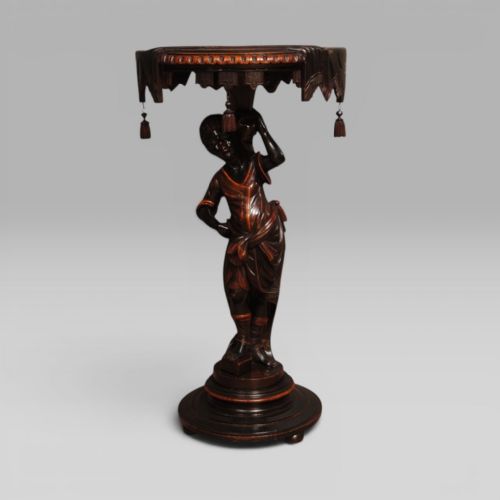
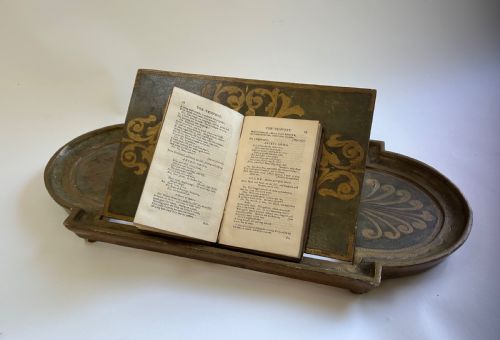
An Italian carved stand encompasses an array of timber supports, from lofty torcheres and pedestals to low console tables and book troughs. These pieces emerge across the eighteenth, nineteenth, and early twentieth centuries, reflecting changing domestic rituals around lighting, sculpture, and display.
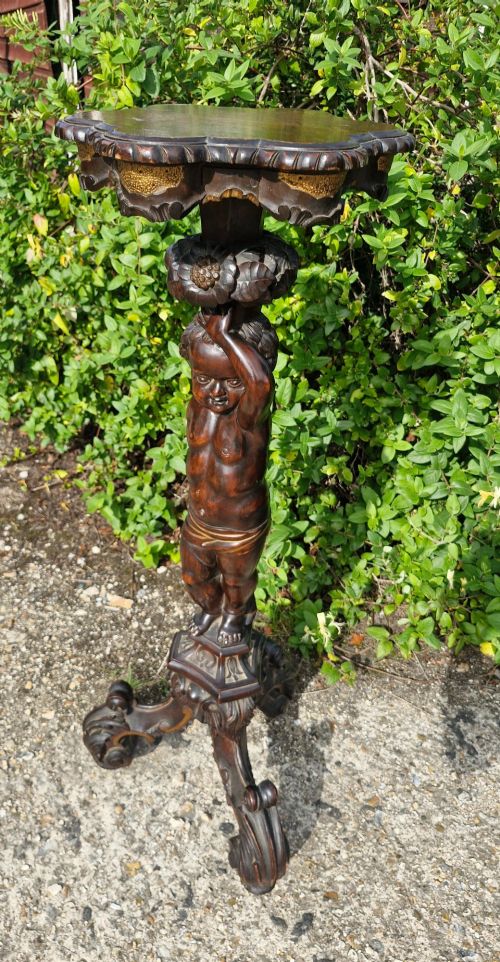
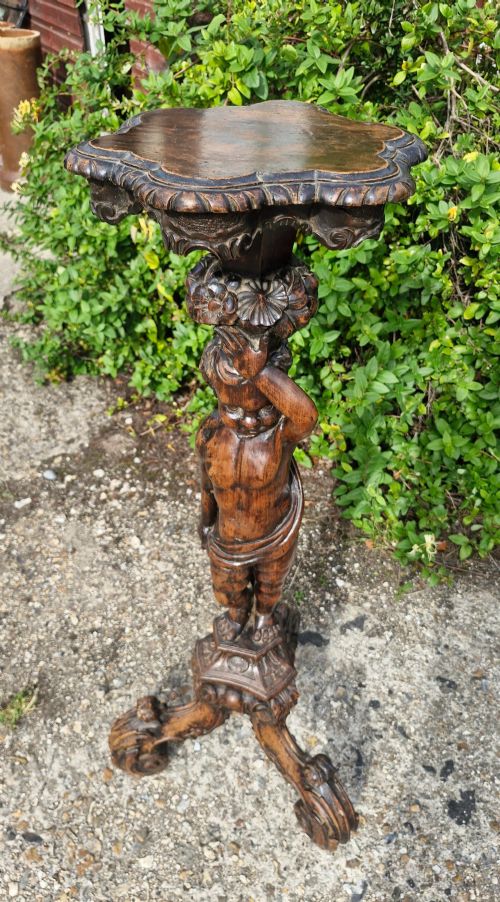
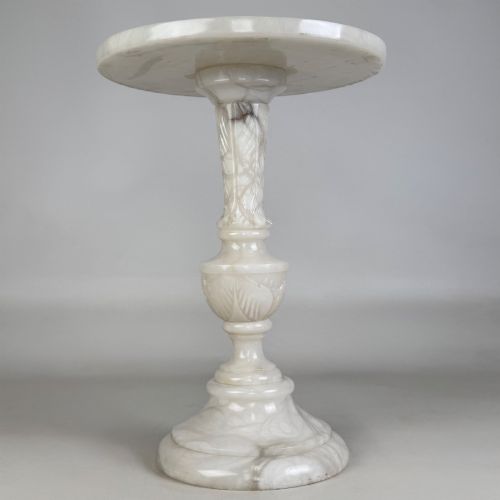
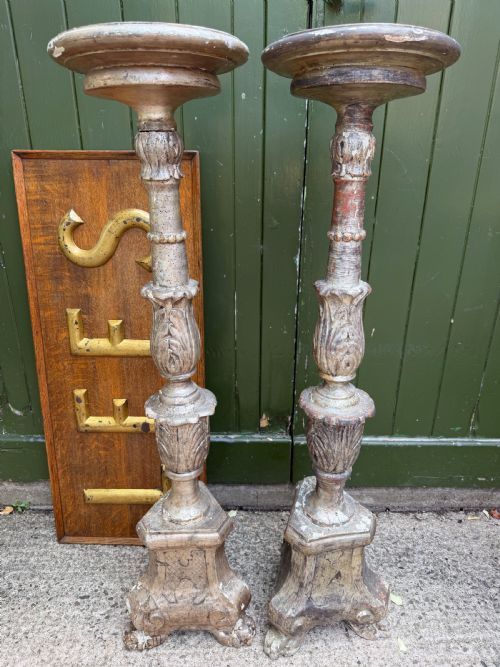
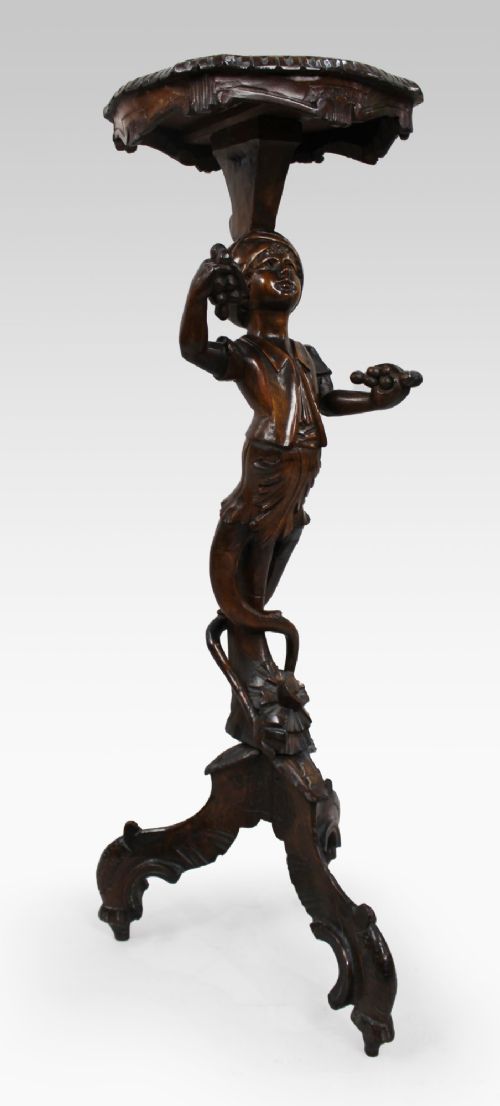
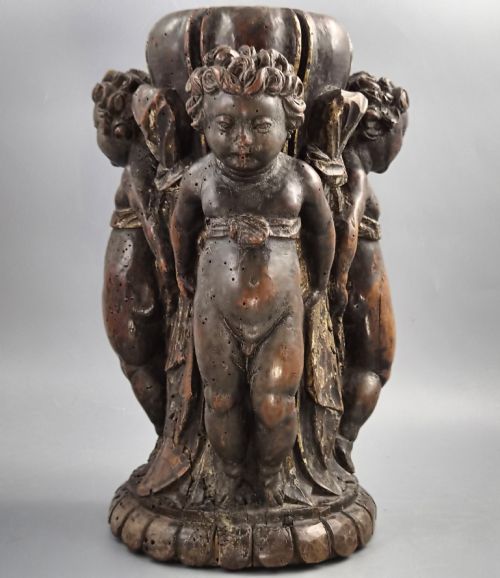
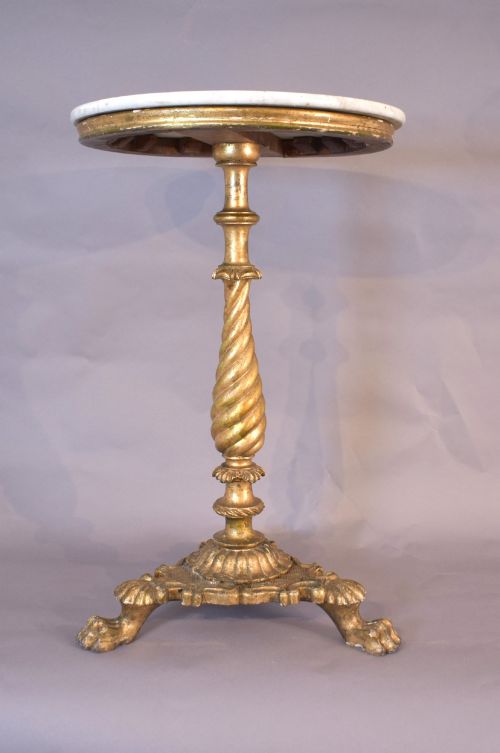
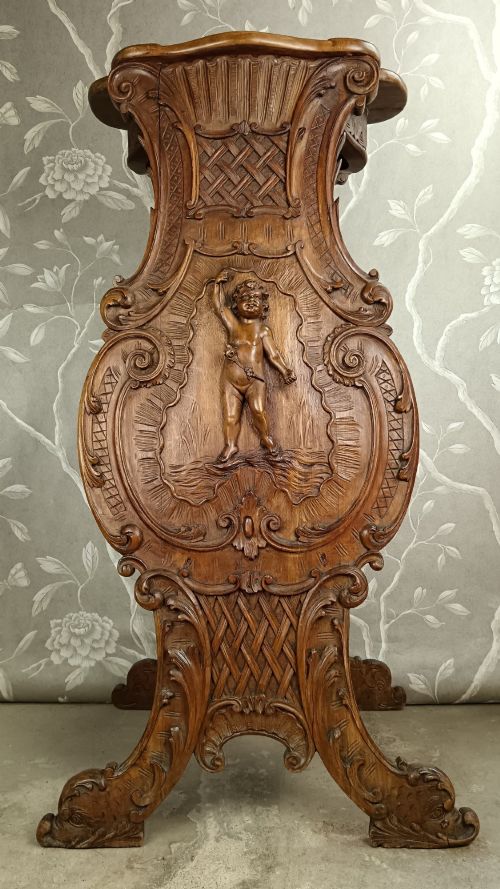
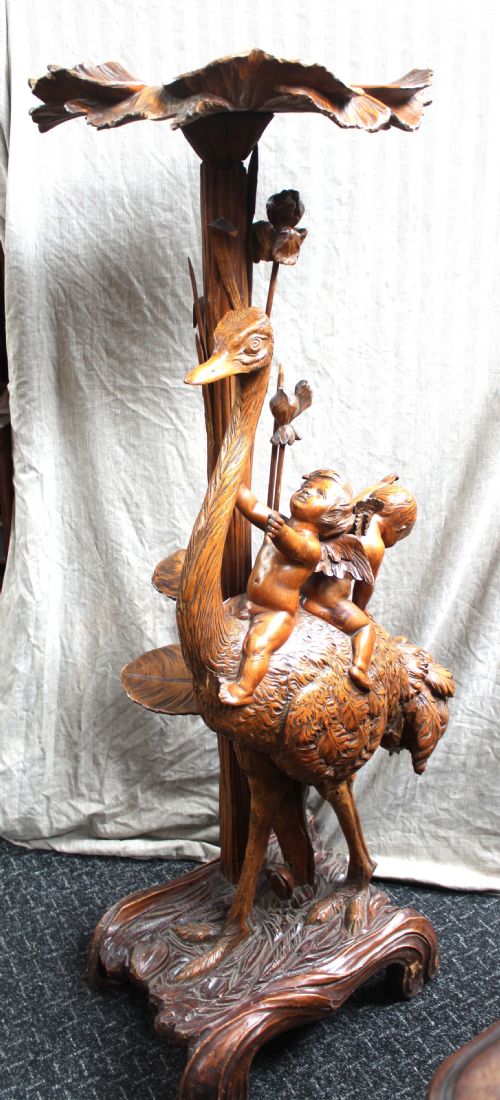
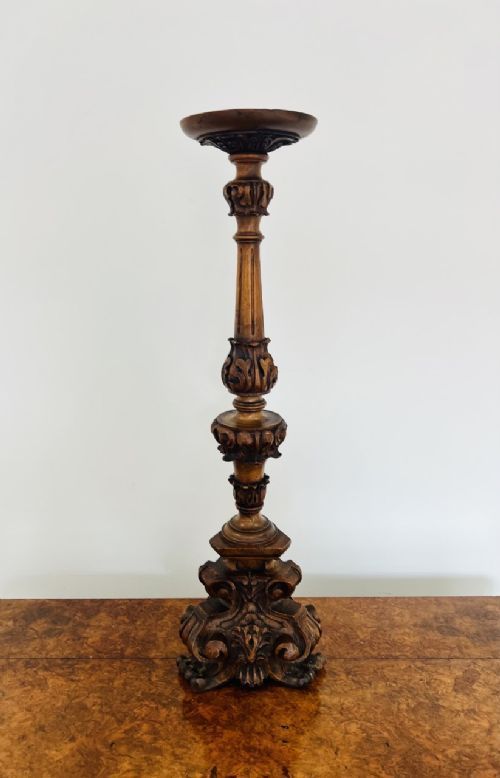
The dominant examples on this page date to the nineteenth century, often channelling Baroque, Renaissance Revival, or Venetian styles. Walnut and giltwood recur frequently, shaping furnishings that range from simple turned shafts to figural pedestals with putti.
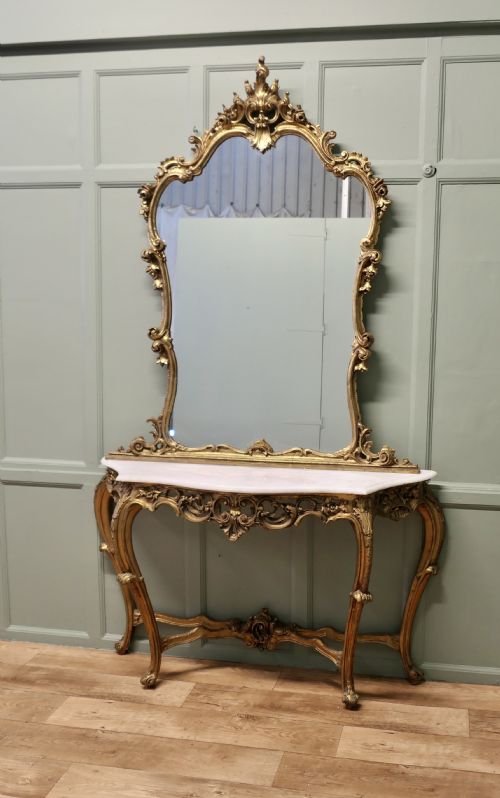
Beyond pedestals, the selection includes related forms like side tables, floor lamps, and mirrors set upon carved bases. Buyers find both monumental altar candlesticks and domestic book stands sharing the same sculptural DNA.
Materials and construction methods
Makers relied heavily on native and imported timbers, primarily walnut, oak, and pine, shaping them through deep hand chiselling. These structural woods frequently received decorative skins of gesso, gold leaf, or silvering to catch candlelight in dimly lit interiors.
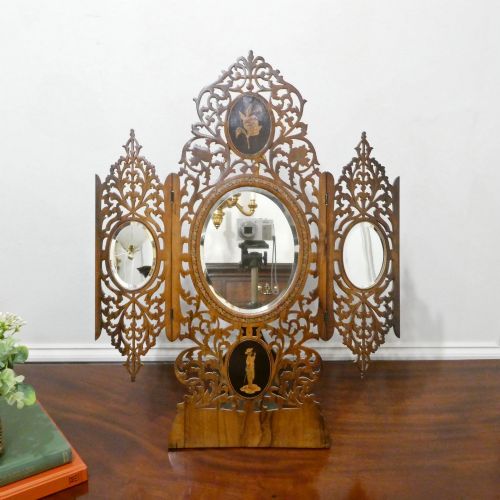
Surface ornamentation often involved polychrome paint, ebony veneers, or the integration of inset marble tops and columns. Craftsmen combined carpentry with sculptural modelling, seen in figural supports and intricate openwork fretting.
Watch for carved putti clinging to column bases, quietly supervising your room from beneath heavy marble tops.
Judging quality in carved stands
Quality rests in the depth and crispness of the hand carving rather than surface flash alone. Superior pieces display fluid undercut foliage, expressive figural work, and confident proportion that survives structural stress.
The integrity of the underlying material and finish separates workshops. Original gilding or untouched walnut patination holds greater integrity than unsympathetic modern overpainting or heavy timber replacement.
The Italian Carved Stand Glossary
- Torchiere
- A tall stand or floor lamp designed to hold a light source. Originating in the seventeenth century, these pieces often feature slender shafts rising from triform bases.
- Giltwood
- Wood coated with a thin layer of gold leaf over a prepared gesso ground. This treatment creates a luminous metallic finish typical of Baroque and Rococo furnishings.
- Gesso
- A plaster mix applied to wood surfaces as a smooth base for gilding and painting. It allows carvers to achieve sharp details before applying gold leaf.
- Scagliola
- A composite material made from selenite, glue, and pigments, mimicking marble and other stones. Artisans inlay and polish this paste to create decorative table tops and pedestals.
- Verde Antico
- A dark green serpentine marble often used in classical columns and pedestals. Its mottled appearance provides strong visual contrast against gilded or walnut stands.
Italian Carved Stand: Frequently Asked Questions
What rooms suit an Italian carved stand?
These pieces function well in reception halls, libraries, and drawing rooms where height and architectural presence matter. A tall pedestal holds a bronze or marble bust, while a smaller book stand sits on a library table.
Placing them in corners or beside seating anchors empty wall space. Their sculptural silhouettes introduce historic texture to contemporary or traditional interiors alike.
How do I care for gilded wood?
Gilt surfaces require gentle dry dusting with a soft feather brush or clean microfiber cloth. Moisture and chemical polishes damage the delicate gold leaf and underlying gesso layer.
Keep pieces away from direct sunlight and heat sources to prevent the wood from shrinking and cracking. Stable indoor humidity preserves both the timber and the historic finish.
How do I tell an 18th-century stand from a 19th-century revival piece?
Eighteenth-century stands often show hand-tool marks, heavier timber shrinkage, and wear patterns consistent with genuine use as candle supports. The carving tends to be deep and spontaneous, reflecting contemporary Baroque or Rococo workshop practices.
Nineteenth-century revival pieces utilise historic styles with precise machine-assisted preparation alongside hand finishing. Examining the base joints and the composition of the gesso helps clarify the manufacturing era.
Can these stands support heavy objects?
Sturdy walnut pedestals and solid wood columns easily bear the weight of heavy marble sculptures, large vases, or bronze figures. Triform and tripod bases distribute downward pressure effectively across the floor.
Lighter torcheres or elaborately carved giltwood stands are better suited for modest decorative items. Checking the structural joinery at the base ensures the piece remains stable under load.