
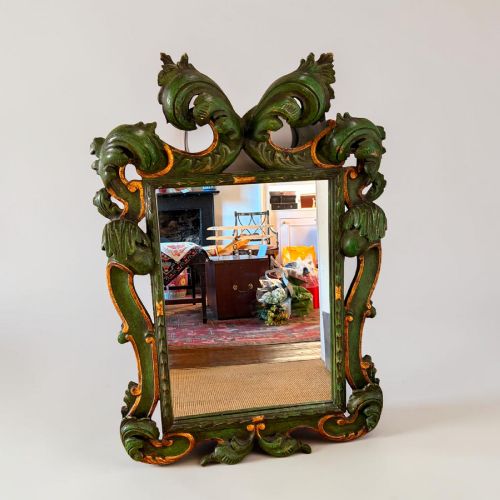
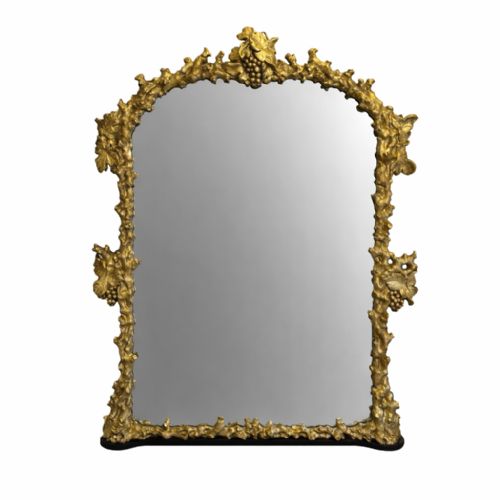
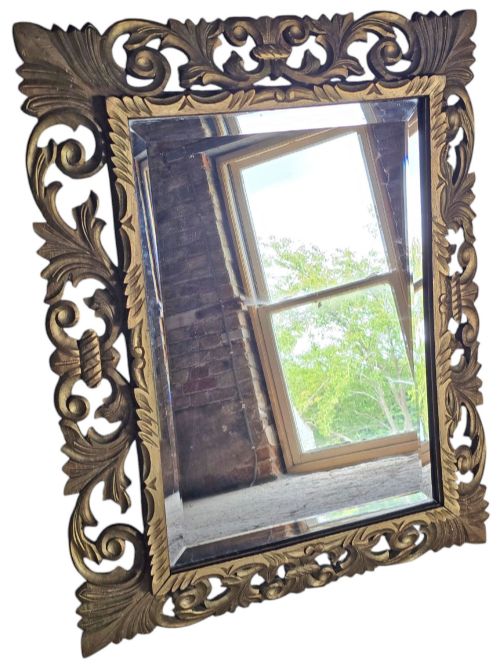
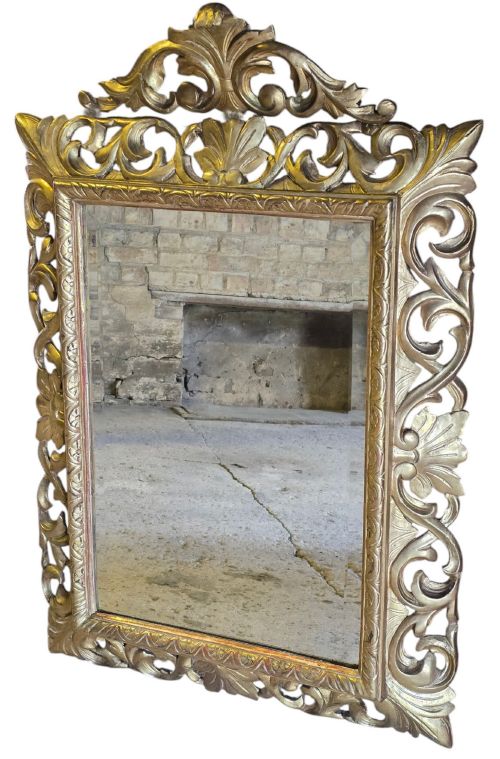


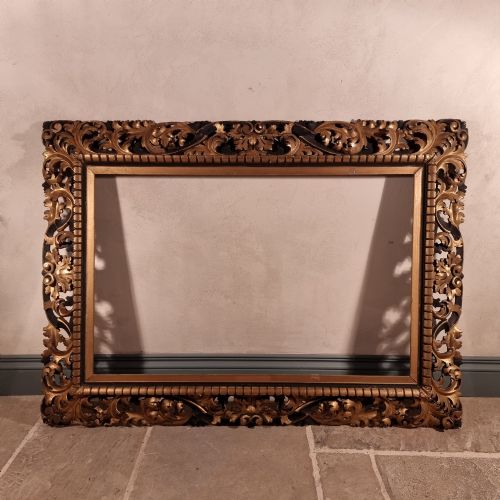
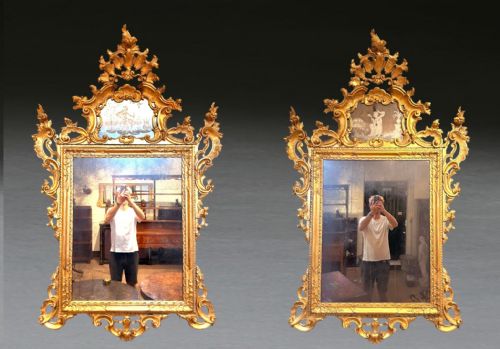
Italian Carved Gilt Frame
When you search for an italian carved gilt frame, you enter a world of masterly woodcarving, layered gold leaf and centuries of decorative history.
Italian Carved Gilt Frame
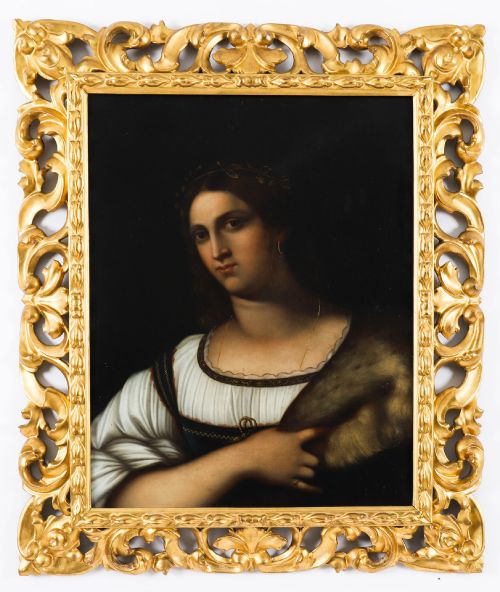
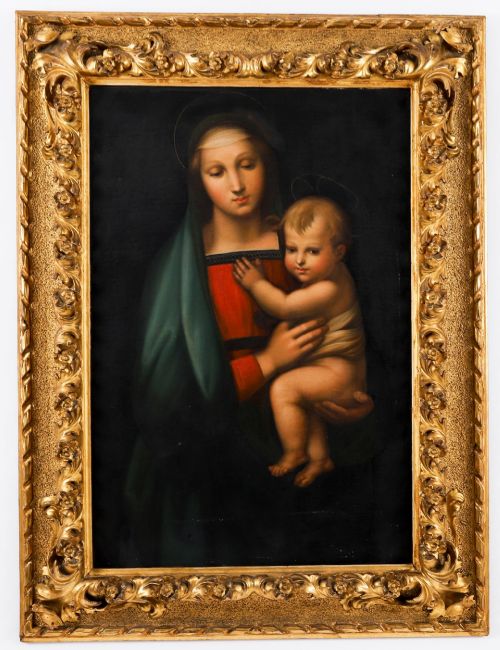
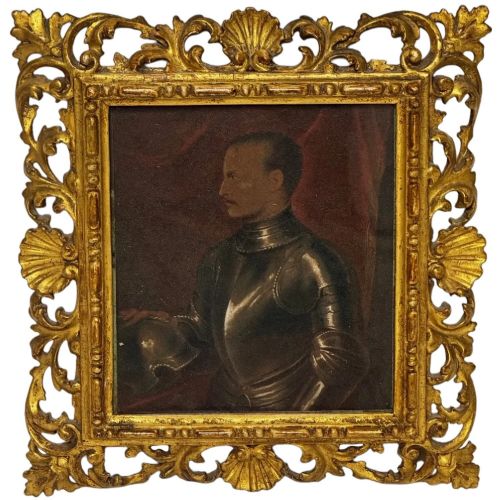
An italian carved gilt frame brings centuries of continental craftsmanship into an interior, functioning primarily as housing for mirrors, portraits, and religious canvases. The pieces on this page span from the seventeenth century through to the early decades of the twentieth century, reflecting enduring regional styles.
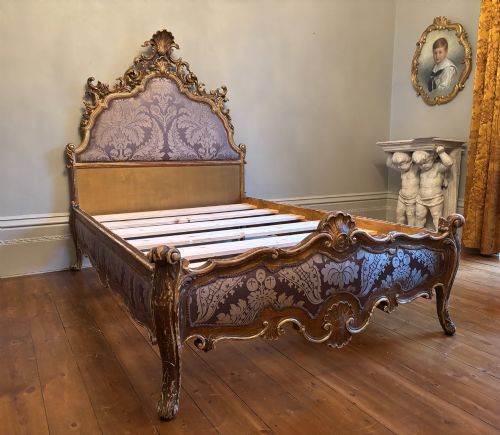
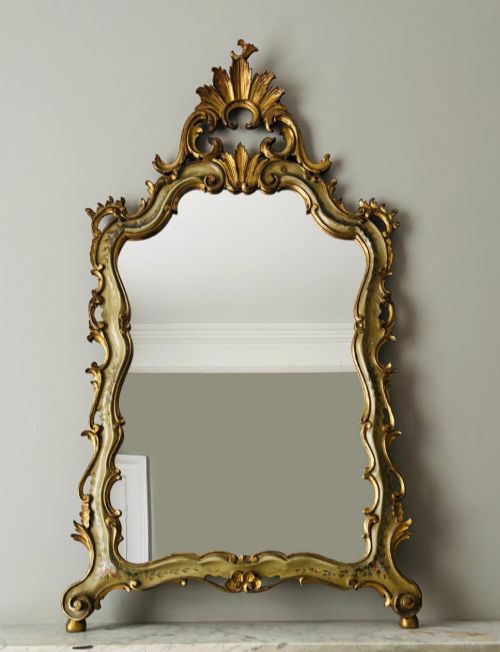
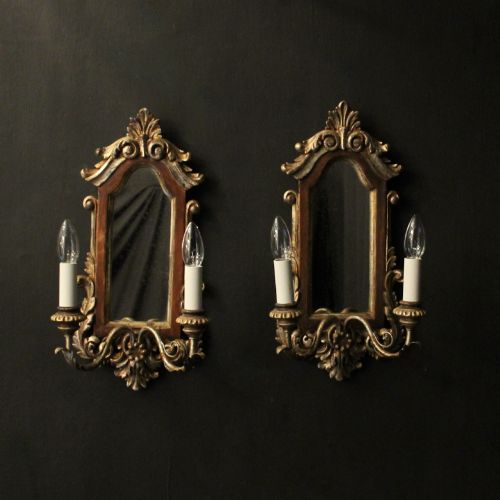
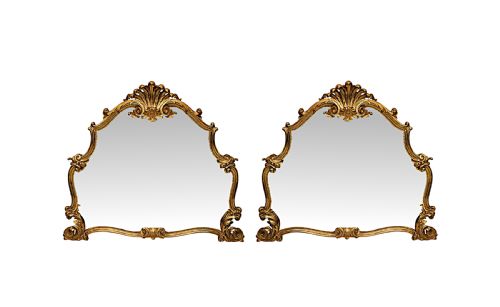
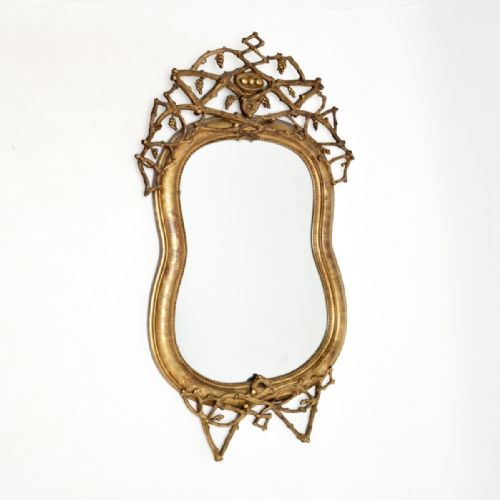
The most common form encountered here is the large wall mirror, often incorporating overmantel, pier, or cushion formats carved in dense wood and finished in gold leaf. Alongside these stand empty picture frames, girandoles with twin arms, and occasional furniture elements such as beds and stools carrying similar gilded ornamentation.
Origins heavily favour Florentine workshops, though examples stretch into Venetian, Baroque, and Rococo revivals executed across the nineteenth century. Buyers typically select these works to anchor a room with a reflective focal point or to frame fine art with historic depth.
How they were made
Makers shaped structural carcasses from solid woods like pine or oak before applying intricate relief carvings directly into the timber or building up motifs in gesso. This mixture of chalk and glue was smoothed and tooled to create sharp scrolls, leaves, and architectural mouldings.
Surfaces received thin sheets of gold leaf or silver leaf laid over bole, occasionally combined with paint or left to weather into a distressed patina. Artisans then burnished parts of the metal leaf to high polish while leaving recessed areas matte to create visual depth.
Materials recorded across the inventory include carved wood, gesso, silver leaf, and oil on canvas alongside traditional gold leaf.
What varies in quality
Quality rests upon the crispness and depth of the hand carving, where skilled carvers achieved undercut foliage and fluid asymmetric scrolls rather than flat, mechanical repetition. The integrity of the underlying gesso layer dictates how well the ornamentation survives the centuries without extensive cracking or loss.
The method and material of the gilding further separate standard decorative items from superior works, with genuine gold leaf ageing into a warm, soft lustre compared to harsh modern metallic paints. Original mirror glass with natural foxing and silvering adds distinct character and authenticity to surviving looking glasses.
The Italian Carved Gilt Frame Glossary
- Giltwood
- Wood that has been coated with thin sheets of gold leaf over a prepared base.
- Gesso
- A plaster mixture applied to wood frames as a smooth base for subsequent gilding and carving details.
- Florentine
- A decorative style originating from Florence, typically defined by dense leaf motifs, pierced scrollwork and deep relief framing.
- Overmantel
- A large horizontal mirror or frame designed specifically to hang above a fireplace mantelpiece.
- Girandole
- A branched wall fixture or mirror with candle sconces attached directly to the frame.
Italian Carved Gilt Frame: Frequently Asked Questions
How do I hang a heavy gilt mirror?
Large carved wooden frames carry substantial weight due to dense timber and gesso construction. They require professional wall anchors fixed directly into masonry or heavy stud work rather than standard plasterboard fixings.
Position the frame at eye level where the carved cresting can be appreciated without structural strain. Ensure the hanging wire or integrated brackets match the actual mass of the piece.
Are these frames suitable for modern interiors?
The ornate reflection and reflective gold surfaces work exceptionally well to contrast minimalist or contemporary room schemes. A large antique mirror expands visual space and introduces historic texture to plain walls.
Pairing a rustic or distressed antique frame with clean architectural lines creates a balanced focal point. The scale of these pieces allows them to stand alone without competing gallery wall clutter.
How do I tell an 18th century frame from a 19th century revival?
Earlier frames from the seventeenth and eighteenth centuries often display hand-cut joinery, oxidized gesso bases, and deeper, more spontaneous tool marks. Nineteenth-century revival pieces frequently employ machine-sawn timbers and heavier composition ornament.
Examining the reverse side of the wood reveals the tooling methods and age patina characteristic of different periods. Closer inspection of the gold leaf application helps differentiate genuine period wear from later decorative treatments.
Can I replace the glass in an antique mirror?
Original mirror glass often exhibits foxing, dark spots, and wavy distortions that contribute significantly to the historic charm of the piece. Replacing it should be avoided unless the glass is broken or missing entirely.
If replacement is necessary, select silvered glass that mirrors the thickness and slight imperfections of historic plates. Preserving the original backing boards and fixings maintains the integrity of the piece.