


Italian Candle Stands
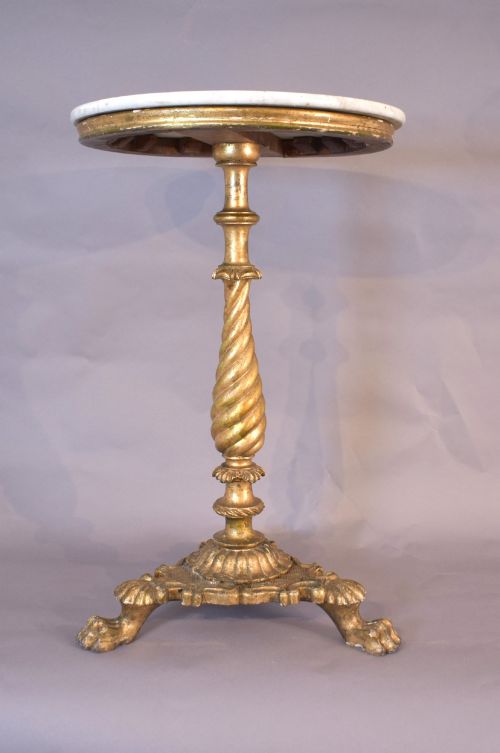
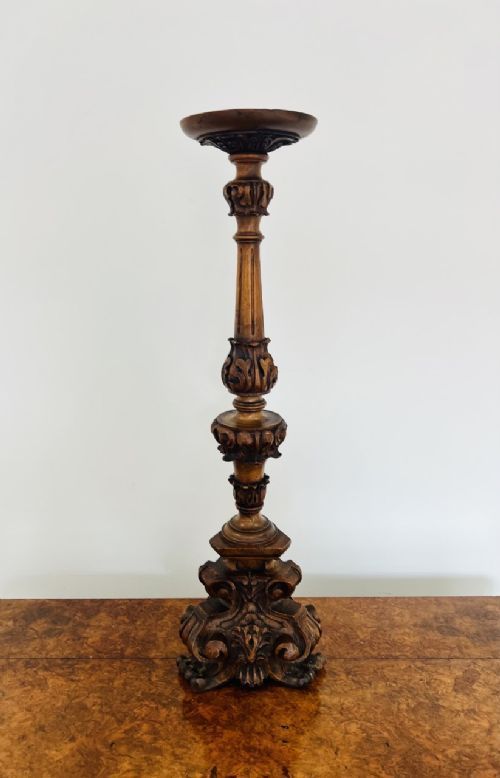
Italian candle stands are carved and gilded liturgical or decorative supports designed to elevate light.
Italian Candle Stands
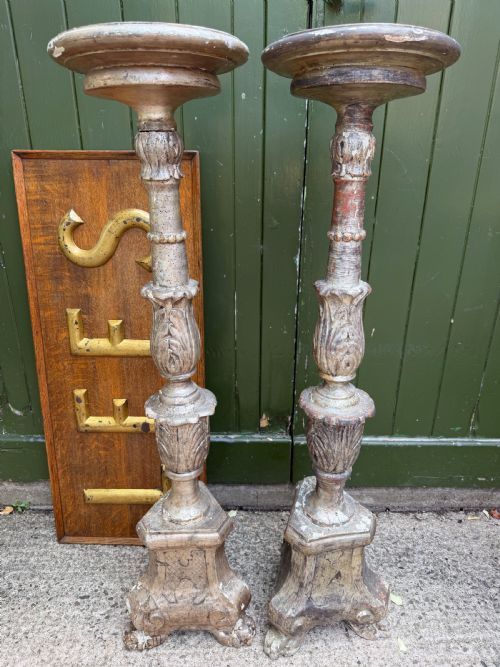
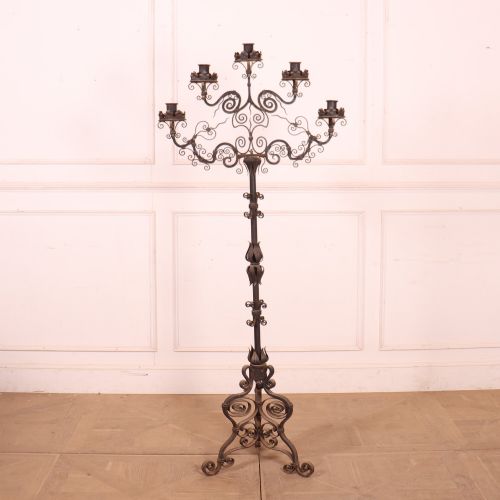
When searching for Italian candle stands, buyers encounter wooden torcheres, altar candlesticks, and floor-standing pricket sticks originating from various centuries. These pieces manifest primarily as tall carved wooden columns or sculptural bases intended to hold large candles or lamps.
The selection ranges from grand eighteenth-century giltwood altar pieces to nineteenth-century walnut and bronze torchere pedestals. Baroque and Neoclassical styles dominate the offerings, frequently displaying intricate hand-carved ornamentation.
Materials and construction
Carved wood forms the structural core of most pieces, utilising pine, walnut, and gesso to build up sculptural depth before finishing. Artisans applied layers of silver leaf, gold leaf, or polychrome paint directly onto the carved wooden surfaces.
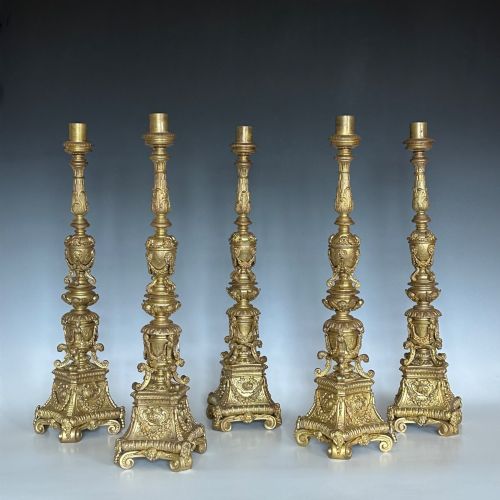
Metal alternatives appear in cast brass and bronze, particularly among candlesticks and specific pedestals. These metallic versions rely on traditional foundry techniques to achieve detailed figures and socket components.
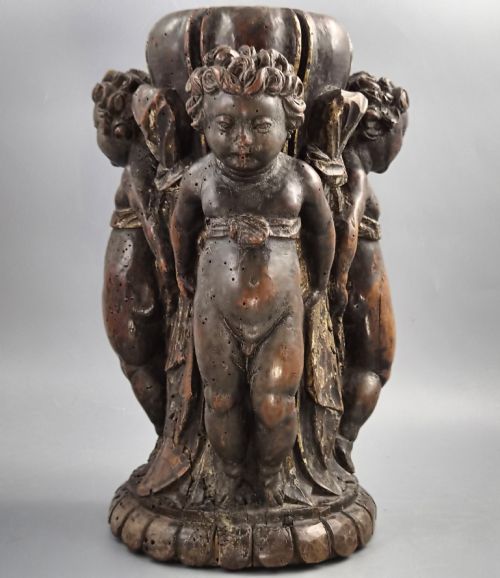
Several towering wooden figures hold aloft your candles, ensuring polite Italian putti silently supervise your evening reading.
Assessing craftsmanship and condition
The depth and fluidity of the hand-carving dictate the distinction between standard items and exceptional examples. Finer pieces exhibit expressive figural work, such as putti or detailed foliage, executed with crisp precision rather than mechanical repetition.
The integrity of the original giltwood or silvered surfaces significantly influences the overall character. Preservation of early gilding and gesso layers retains the intended visual texture built up by past craftsmen.
The Italian Candle Stands Glossary
- Torchiere
- A tall ornamental stand designed to support a light source or candle. These architectural pedestals often feature carved wooden columns.
- Pricket
- A sharp metal spike on a candlestick designed to secure the base of a large candle. Altar sticks frequently employ this method.
- Giltwood
- Wood that has been coated with a thin layer of gold leaf. This technique creates a luminous, reflective surface characteristic of Baroque furnishings.
- Gesso
- A plaster-like mixture applied to wood surfaces to prepare them for gilding or painting. It allows craftsmen to carve fine details before applying leaf.
Italian Candle Stands: Frequently Asked Questions
What is a torchere?
A torchere is a tall decorative stand used to elevate a light source or candle. These pieces often serve as sculptural floor elements.
Historically, they provided illumination in grand rooms or supported altar candles in ecclesiastical settings.
How do I date a wooden candle stand?
Dating relies on examining the construction methods, tool marks, and the style of the carved ornamentation. Eighteenth-century examples often show hand-tool textures beneath the gesso.
Later Victorian or revival pieces frequently incorporate machine-cut elements or different assembly techniques that reveal their nineteenth or twentieth-century origins.
Were these used in homes?
Many larger torcheres and floor stands originated from churches or chapels as altar furnishings. Over time, collectors adapted them for domestic use as decorative pedestals or lamp bases.
Smaller candlesticks were standard household items for interior lighting before the advent of electricity.
How should I care for giltwood?
Giltwood requires gentle dusting with a soft, dry cloth to protect the delicate gold leaf and underlying gesso. Avoid moisture and chemical cleaning agents entirely.
Keep these stands away from direct sunlight and heat sources to prevent the wood from warping and the finish from cracking.