
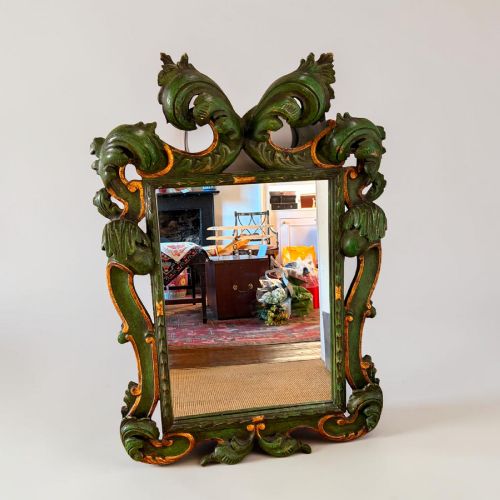
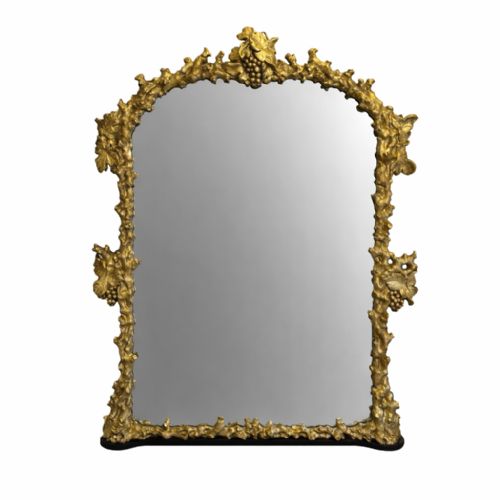

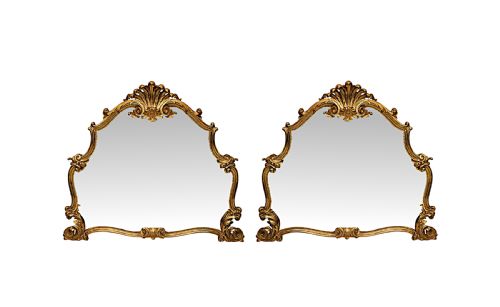
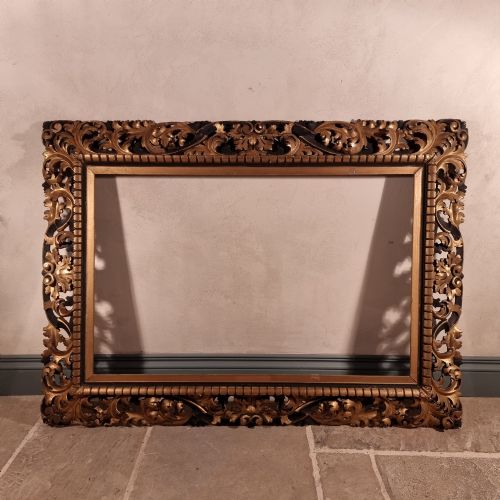
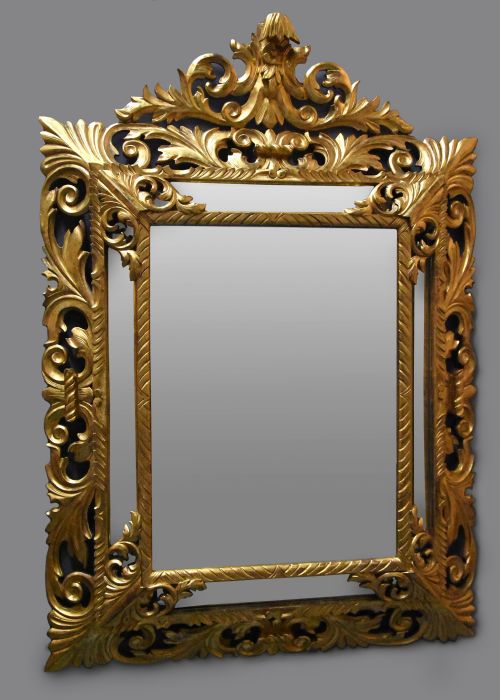
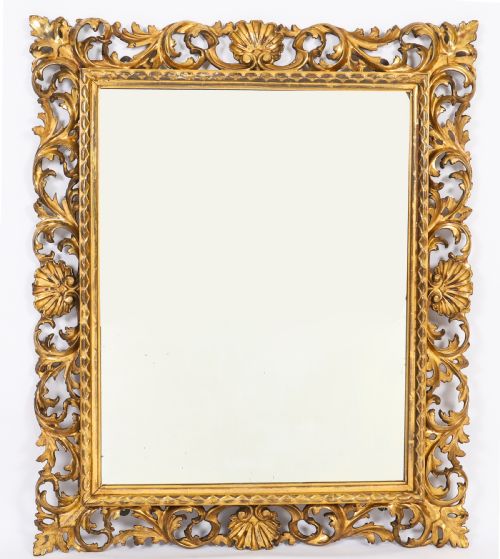


Italian Baroque Gilt Mirror
An italian baroque gilt mirror brings deep historical drama to a room, offering rich carved detail and reflective warmth.
Italian Baroque Gilt Mirror
An italian baroque gilt mirror unites centuries of European craftsmanship, combining heavy decorative frames with reflective glass. These pieces serve primarily as wall mirrors, overmantels, and pier mirrors designed to catch and amplify light within grand spaces.
Most examples encountered on this page originate from the nineteenth century, though the style draws directly from earlier seventeenth and eighteenth-century traditions. Buyers frequently select these objects to anchor a room, pairing wall mirrors with console tables or placing vanity and table mirrors upon surfaces for dramatic effect.
Materials and construction methods
Makers shaped these frames from carved wood, applying layers of gesso to smooth the surface before adding gold leaf, silver leaf, or paint. This meticulous layering process creates the luminous finish characteristic of the period.
Mirrors often feature intricate openwork carving, winged figures, or cushion profiles that require skilled hand tooling. The integration of glass with gilded wood frames demonstrates traditional joinery and finishing techniques passed down through workshops.
Object forms on this page range from wall mirrors and picture frames to console tables and girandoles.
Assessing quality and craftsmanship
The depth and clarity of the hand carving distinguish superior examples from simpler revivals. Crisp undercut foliage and expressive figures demonstrate the hand of a master carver rather than mechanical production.
The integrity of the surface preparation also dictates overall quality. Smooth gesso foundations beneath well-preserved gold or silver leaf age gracefully, maintaining a rich lustre compared to flat or poorly applied modern gilding.
The Italian Baroque Gilt Mirror Glossary
- Giltwood
- Wood that has been coated with thin sheets of gold leaf over a prepared gesso base. This technique protects the timber while providing a brilliant metallic sheen.
- Gesso
- A plaster-like mixture applied to carved wood to create a smooth surface for gilding. It allows carvers to achieve sharp, detailed relief work.
- Pier glass
- A tall mirror designed specifically to hang on the wall space between two windows. These pieces often coordinate with matching console tables.
- Girandole
- A decorative wall mirror fitted with attached candle sconces. The reflective glass multiplies the candlelight to illuminate dark rooms.
- Lacca a mecca
- A specialised varnishing technique used on metal leaf to imitate the rich tone of gold. It creates a warm, translucent surface.
Italian Baroque Gilt Mirror: Frequently Asked Questions
Where should I hang an italian baroque gilt mirror?
These mirrors suit principal reception rooms, hallways, and above mantelpieces where they command attention. Positioning them opposite a window maximises natural light.
Ensure the wall structure supports the substantial weight of carved wood and gesso frames. Secure fixings suited to older plaster walls are essential for safe installation.
How do I clean an antique gilt mirror?
Dust the carved wooden frame gently with a soft, dry brush to prevent accumulation in recessed areas. Avoid moisture and chemical cleaning agents on gilded surfaces.
Clean the mirror glass sparingly using a cloth dampened slightly with water or a mild glass cleaner. Prevent any liquid from seeping behind the glass edge where it could damage the backing.
What is the difference between baroque and rococo styles?
Baroque design emphasises symmetry, grand scale, and monumental drama with robust architectural elements. The ornamentation feels powerful and heavily structured.
rococo style introduces asymmetrical curves, C-scrolls, and lighter, more playful natural motifs like shells and foliage. Frames from this later period appear more fluid and dynamic.
Are these mirrors fragile?
The combination of aged timber, gesso, and delicate carving requires careful handling during movement. Sudden impacts can chip the plaster relief work.
Stable indoor humidity helps preserve the wood and prevents the gesso foundation from cracking. Regular environmental control keeps the structure sound over time.