

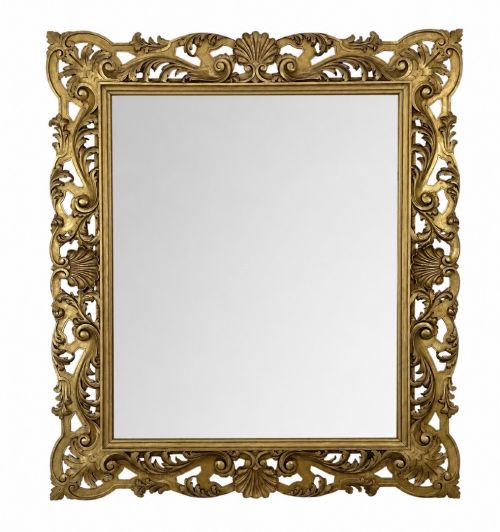
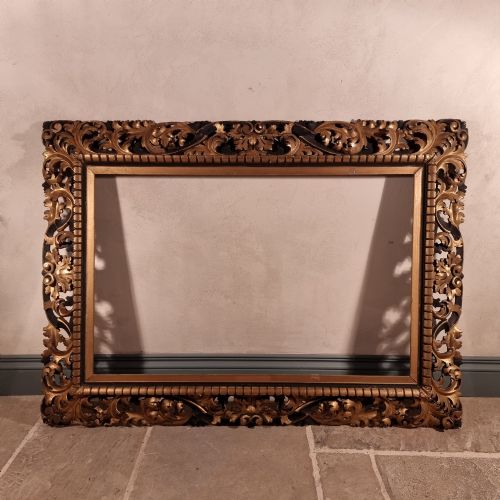
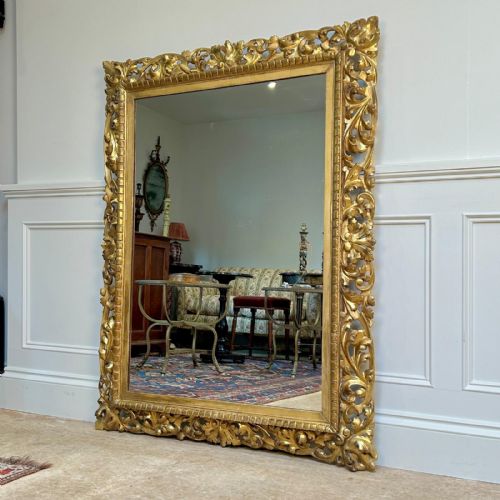


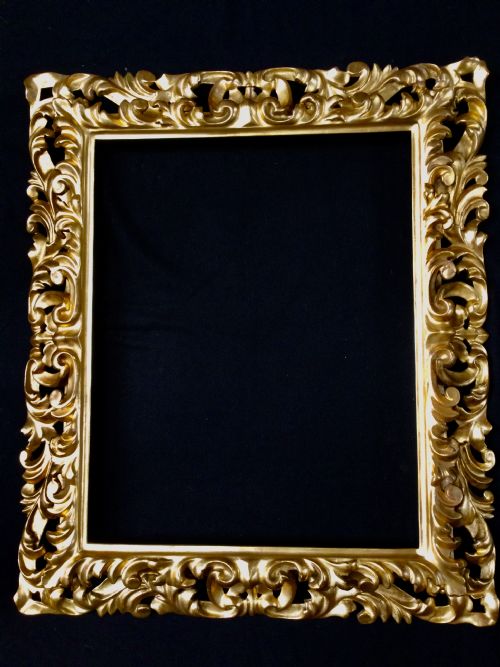


Openwork Carved Mirror
An openwork carved mirror brings texture and light to a room through pierced wooden frames and gilded surfaces.
Openwork Carved Mirror
When buyers search for an openwork carved mirror, they seek decorative wall pieces defined by pierced wooden frames and intricate relief work. The selection on this page leans heavily toward Florentine and French Rococo Revival styles from the nineteenth century, alongside earlier seventeenth and eighteenth-century examples.
Most items present as wall mirrors, picture frames, or cushion mirrors fashioned in giltwood, oak, pine, and padauk. These objects function as central decorative statements, catching light and drawing the eye with pierced scrollwork and deep mouldings.
How they were made
Maker's hands shaped these frames from woods such as oak, pine, and padauk before applying gesso and gold leaf to create the characteristic gilded finish. Carvers worked wood into pierced openwork designs, scrolls, and cushion profiles, often leaving certain timber surfaces scrubbed or unpainted.
Glass plates were set within these elaborate wooden structures, sometimes accompanied by parcel gilding that highlighted specific carved details against a darker background.
Padauk wood makes an unexpected appearance among the pine and oak, proving that nineteenth-century makers liked to experiment with exotic timbers.
What varies in quality
The standard of carving distinguishes superior openwork carved mirror examples from simpler production, with deep, crisp relief work showing far greater hand skill than shallow moulding. The application of gold leaf over gesso also dictates visual depth, where burnished surfaces catch light differently than flat paint.
The choice of underlying timber, from dense padauk to standard pine, alters the weight and longevity of the frame, while the preservation of original gilding and mirror glass completes the assessment of quality.
The Openwork Carved Mirror Glossary
- Giltwood
- Wood covered with gold leaf or gold powder. This surface treatment was widely applied to frame mouldings and carved ornaments to reflect interior candlelight.
- Gesso
- A plaster mixture applied to wood frames as a base for gilding. It provides a smooth white ground that carvers could shape before applying gold leaf.
- Cushion mirror
- A mirror featuring a broad, convex frame profile that swells outward toward the edge. This style creates a pronounced three-dimensional frame around the glass.
- Florentine
- A decorative style originating in Florence, typically characterised by ornate carved foliage, scrolls, and rich gilding. These frames often display intricate openwork patterns.
- Padauk
- A dense tropical hardwood known for its distinct colour and durability. It provides a sturdy dark foundation for carved wall mirrors.
Openwork Carved Mirror: Frequently Asked Questions
Where should I hang an openwork carved mirror?
These mirrors suit principal reception rooms, hallways, or above mantelpieces where their ornate frames can act as focal points. Placing them opposite a window helps maximise the reflection of natural light.
Ensure the wall structure can support the weight of heavier timber and giltwood frames. Secure fixings matching the specific hanging brackets are essential for safe placement.
How do I identify a Florentine frame?
Florentine frames are recognised by dense, pierced carvings of leaves, scrolls, and fruit finished in gold leaf. The openwork design often leaves gaps through which the wall behind remains visible.
Many examples date from the nineteenth century, drawing on earlier Renaissance and Rococo revival traditions. Their elaborate borders distinguish them from simpler geometric frames.
What is parcel gilding?
Parcel gilding is a technique where only specific parts of an object are covered in gold leaf, leaving other areas exposed. On these mirrors, carvers highlighted raised motifs while letting the wood grain show beneath.
This creates a two-tone visual effect that adds depth to the carved surface. It appears on various nineteenth-century regional European pieces.
How do I clean a gilded wood frame?
Dust gilded surfaces gently with a soft, dry brush to prevent damage to fragile gold leaf and gesso. Avoid water, liquid cleaners, and chemical solvents entirely.
Preserving the original surface finish requires minimal intervention. Professional advice should be sought if structural conservation becomes necessary.