



Iron Hearth Fender
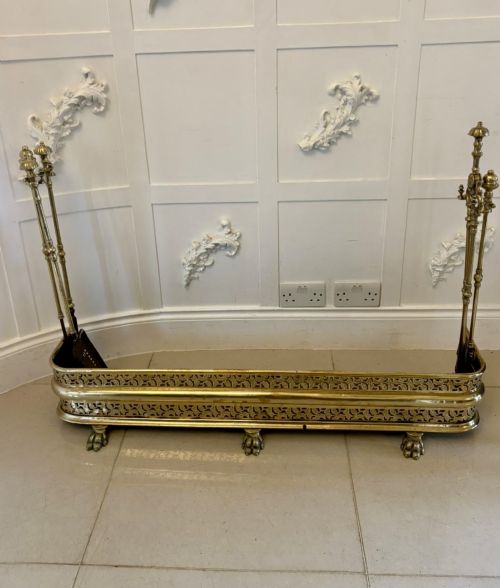
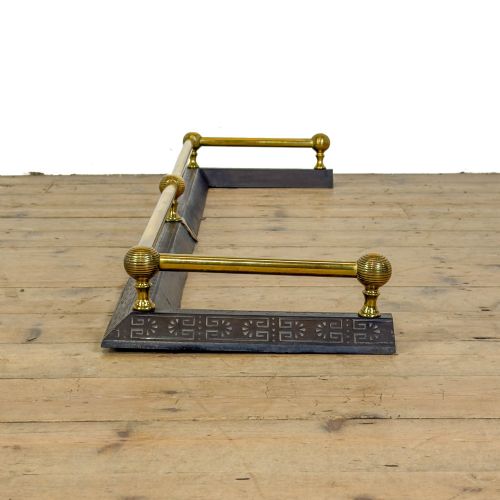
An iron hearth fender frames the hearth to hold back stray coals, appearing here in heavy cast iron, steel, and wrought iron forms.
Iron Hearth Fender
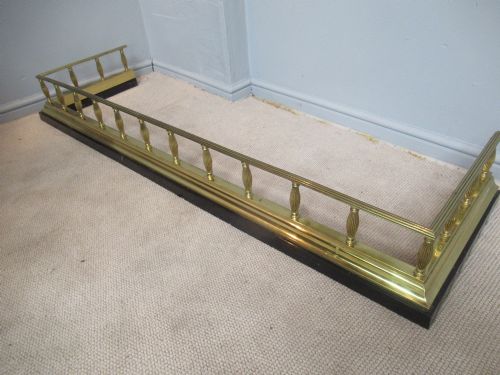
When you search for an iron hearth fender, you find functional barriers designed to protect the floor from embers around an open fire. These pieces sit directly on the floor framing the fireplace hearth, originating from periods including the Georgian era, the Victorian age, and the Edwardian years.
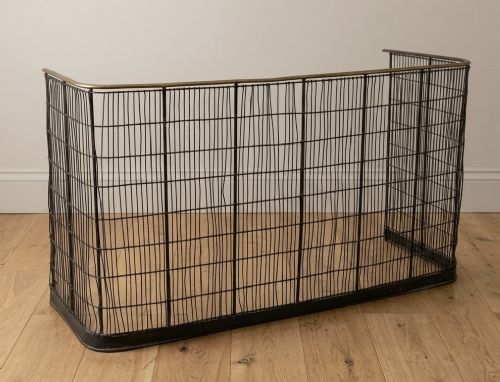
The versions most common on this page combine iron or steel with brass details, alongside specialised forms like low nursery guards with wire mesh and club fenders topped with leather seats. You encounter straightforward hearth curbs alongside heavy cast examples intended for substantial fireplaces.
Makers shaped these items to match the prevailing interior styles of their decades, producing everything from austere Regency steel curbs to decorative Victorian pieces and later Art Deco designs.
Distinctions in quality
Quality rests upon the weight of the metal and the crispness of any cast ornament. Heavy gauge iron and thick steel plates resist warping from intense hearth heat far better than thin sheet metal.
The integrity of secondary materials dictates overall worth, seen in sturdy leather upholstery, solid brass rails securely fastened to the iron base, and original fire irons or mesh screens that match the primary frame.
Listings feature iron hearth fenders paired with leather seats, wire mesh guards, and brass companion fire irons across Victorian and Edwardian periods.
The Iron Hearth Fender Glossary
- Club fender
- A low fireside seat with an upholstered or wooden top built over a metal frame. This form allows people to sit close to the hearth.
- Nursery fender
- A tall protective barrier featuring wire mesh to shield children and skirts from flying sparks. These stand higher than standard hearth curbs.
- Chenet
- A French firedog used to support logs within the hearth. They often appear alongside matching grates and fenders.
- Fireside kerb
- An alternative term for a fender that borders the fireplace opening. It sits flat on the floor to contain ash and embers.
- Fire back
- A heavy iron plate placed at the back of a fireplace to reflect heat into the room. These frequently accompany grates and fenders.
Iron Hearth Fender: Frequently Asked Questions
How do I choose the correct size?
Measure the width and depth of your fireplace opening and hearth stone before selecting a fender. Leave a small clearance around the outer edges so the piece sits squarely on the floor without crowding the fire.
Account for the protruding hearth dimensions, particularly if you are considering a club fender with corner seats that require extra floor space.
What is the difference between a curb and a club fender?
A curb fender is a low metal barrier designed solely to keep logs and embers from rolling out onto the carpet or floorboards. These sit low to the ground and have no seating function.
A club fender incorporates a padded leather or wooden top supported by metal uprights, creating a functional bench around the perimeter of the fireplace.
Can I use a nursery fender with a modern fire?
Yes, nursery fenders provide an effective physical barrier against open flames and hot metal guards regardless of the fuel type. The wire mesh structure lets heat radiate into the room while stopping stray sparks.
Ensure the dimensions match your hearth layout and that the wire mesh remains intact and secure.
How do I care for iron and steel fenders?
Keep the metal clean by dusting regularly with a dry cloth to prevent soot accumulation. Avoid harsh chemical cleaners that can strip protective dark finishes from the iron.
Apply a light microcrystalline wax to steel or iron surfaces if needed to deter moisture and maintain the original texture of the metal.