

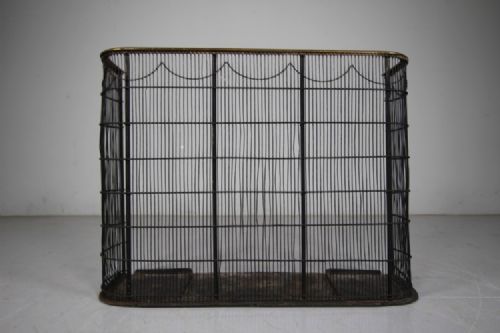


Iron Fireplace Fender
An iron fireplace fender grounds a hearth, containing ash while framing the fire with functional metalwork.
Iron Fireplace Fender
An iron fireplace fender protects the room from stray embers while defining the hearth perimeter. When searching for an iron fireplace fender, buyers encounter various configurations spanning the Georgian, Victorian, and Edwardian periods.
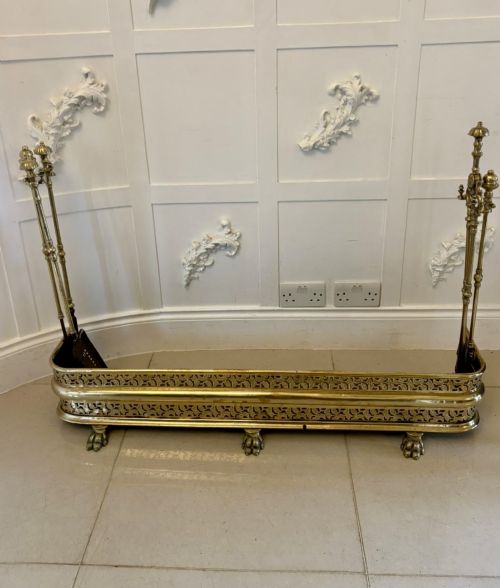
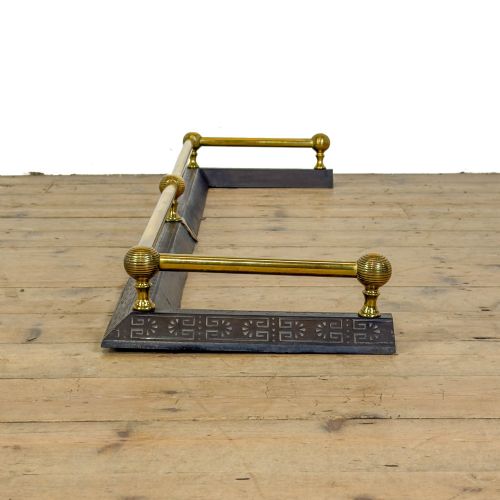
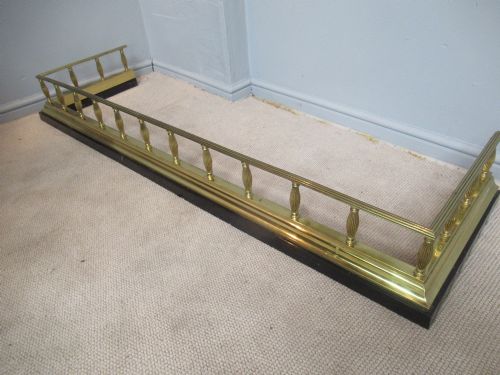
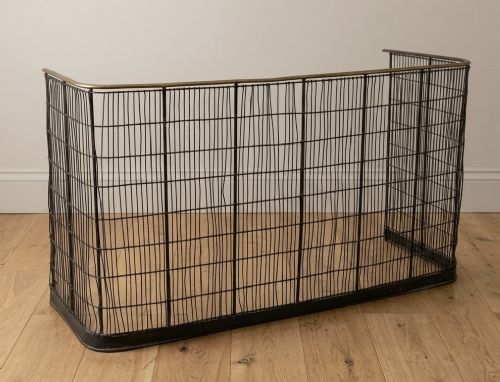
The selection ranges from low floor curbs in cast iron or wrought iron to substantial club fenders featuring upholstered leather seats. Nursery variants incorporate wire mesh screens to protect children, while others combine iron frameworks with brass rails.
These hearth accessories appear alongside steel, bronze, and brass elements. Pieces date from the 19th century onwards, reflecting shifting domestic priorities around fireplace safety and fireside seating.
How they were made
Blacksmiths and metalworkers shaped iron through casting and forging techniques, producing rigid fire curbs and decorative frames. Cast iron allowed for ornamental detail on heavy hearth fenders, while wrought iron provided resilient structural lines.
Makers integrated secondary materials directly into the metal framework. Steel components added strength, wire mesh formed protective nursery guards, and leather provided upholstered seating surfaces on club fenders.
Some 19th-century nursery fenders included built-in clothes rails, letting damp socks dry safely by the hearth.
What varies in quality
The calibre of an iron fireplace fender rests upon the weight of the metal and the precision of its assembly. Heavier cast and wrought iron structures denote more substantial manufacture than lighter contemporary equivalents.
Detailing on the metalwork and the integrity of integrated materials, such as fitted leather upholstery or brass top rails, separate standard utilitarian guards from finer domestic pieces.
The Iron Fireplace Fender Glossary
- Club fender
- A low hearth guard featuring padded leather seats on top of the metal frame. These originated to provide comfortable fireside seating within the warmth of the chimney breast.
- Nursery fender
- An tall wire mesh or iron guard designed to enclose the entire hearth area. This configuration kept children and trailing garments safely away from open flames.
- Cast iron
- Molten iron poured into a mould to create rigid components with decorative relief. It appears frequently in heavier hearth curbs and fire backs.
- Wrought iron
- Iron heated and worked by hand with hammers and tools. This technique yields tough, fibrous metal shaped into structural curbs and decorative scrolls.
- Chenet
- A French term for an andiron used to support logs within the hearth. These often accompany matching fenders and fire grates.
Iron Fireplace Fender: Frequently Asked Questions
How do I choose the right size fender?
Measure the width and depth of your hearth stone carefully before selecting a piece. Ensure the internal dimensions clear your grate while the outer edges sit comfortably on the floor.
Account for any clearance needed for fire irons or ash pans kept near the hearth opening.
What is a club fender used for?
A club fender serves as both a physical barrier against sparks and a low bench for sitting by the fire. The padded top offers convenient seating close to the warmth.
Victorian and Edwardian households utilised these in libraries and drawing rooms to maximise fireside comfort.
How do I clean an iron fender?
Remove accumulated dust and ash using a soft brush or dry cloth. Avoid harsh chemical cleaners that might strip the historic surface.
Light applications of suitable metal wax can help protect iron surfaces from moisture in inactive fireplaces.
Are nursery fenders removable?
Most nursery guards sit independently around the hearth without permanent fixings. This allows them to be positioned when children are present and removed otherwise.
Check the base stability to ensure the guard stands securely on flat floor surfaces.