
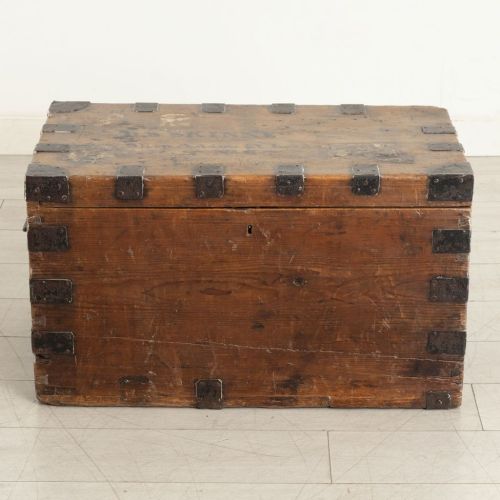
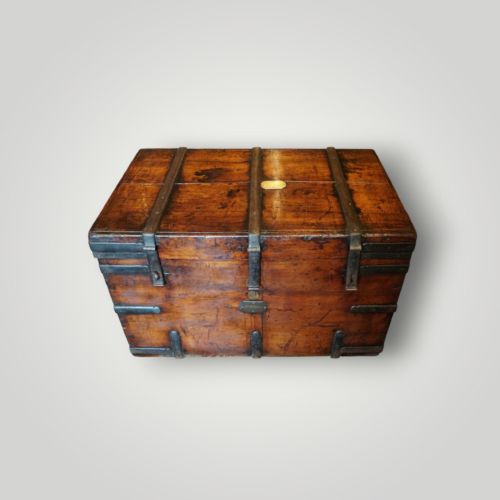
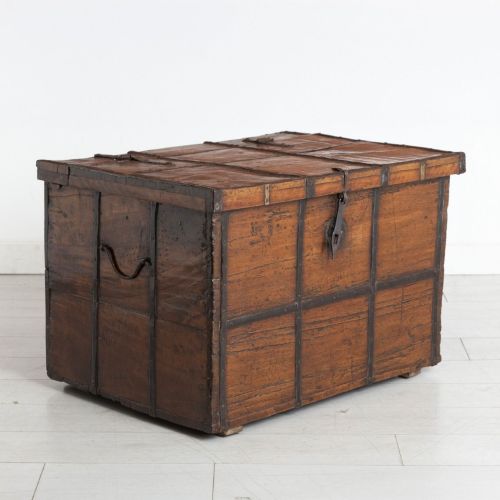
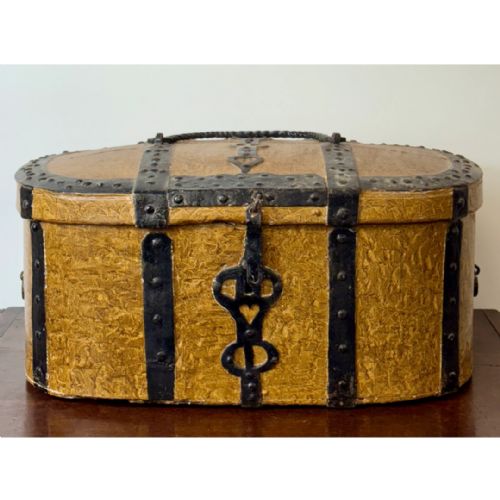
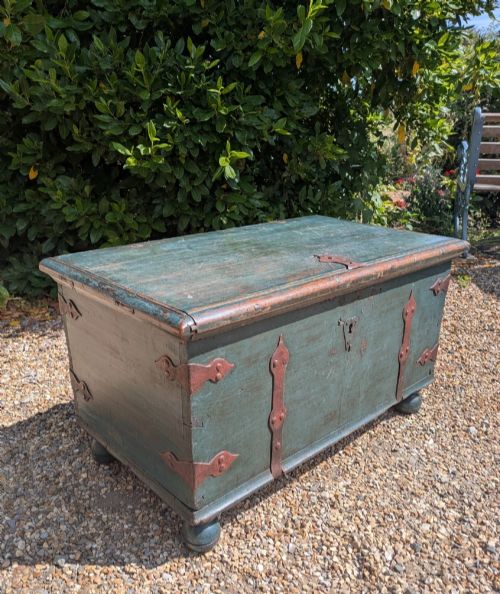
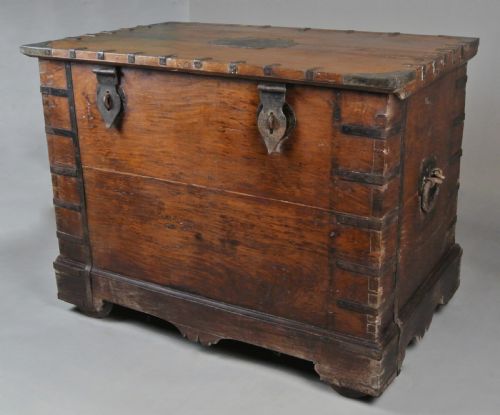
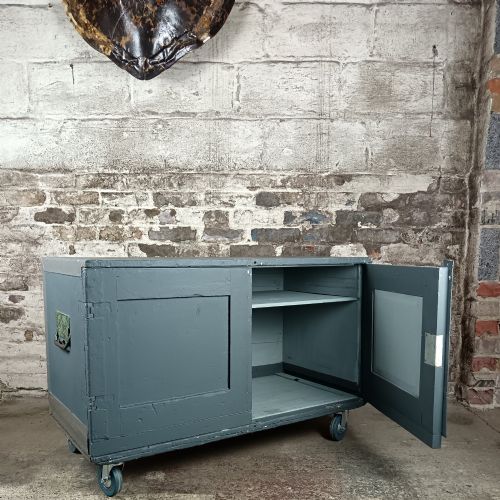
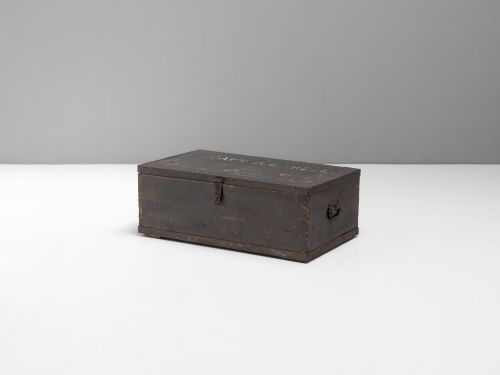
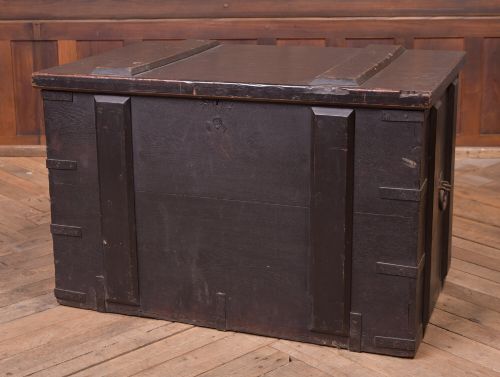
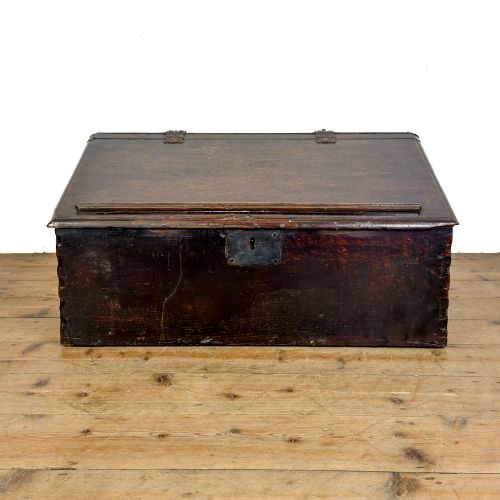
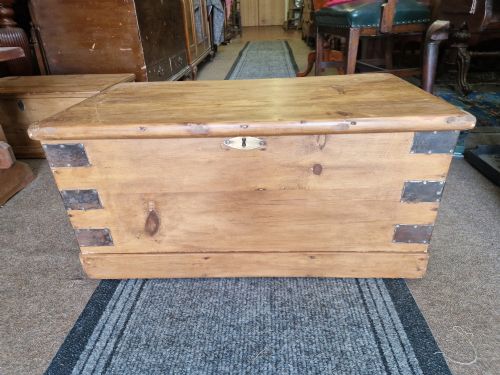
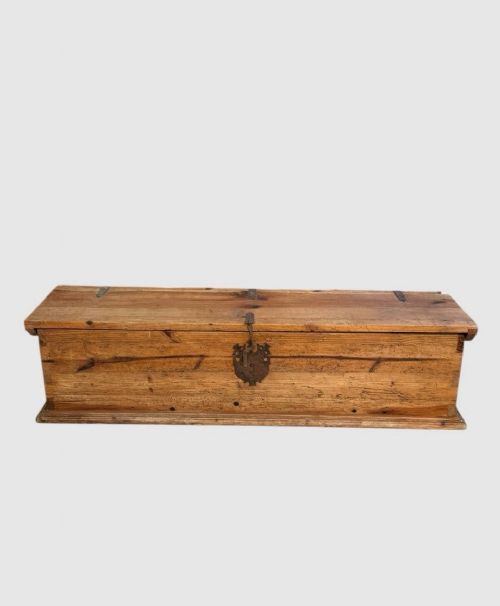

Iron Bound Wooden Box
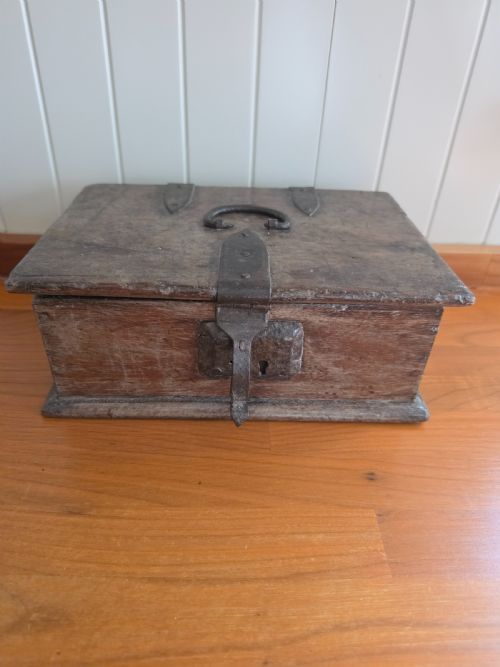
An iron bound wooden box brings rugged utility and folk character into a room, offering robust storage built to last.
What these pieces are
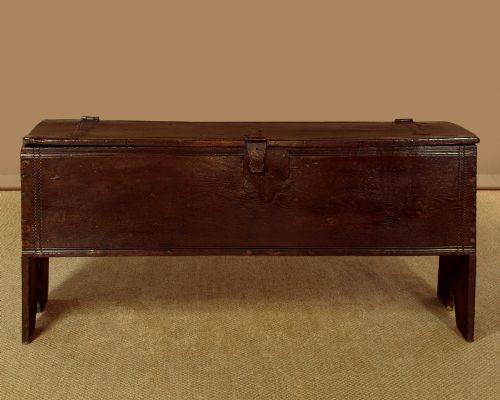
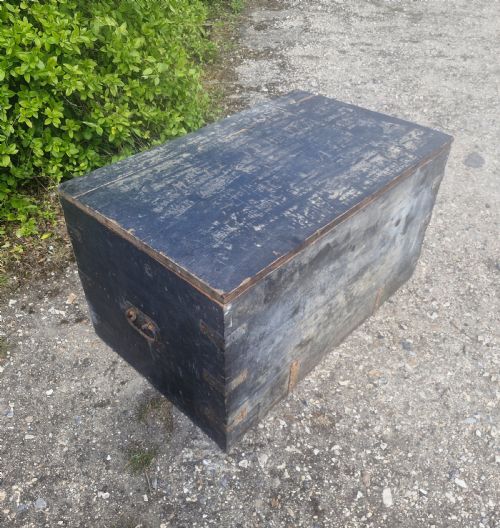
An iron bound wooden box is a durable storage container reinforced with metal straps, bands, or corners to withstand heavy use and secure the contents. These pieces range from folk art marriage chests to travel trunks and merchant strong boxes, reflecting the practical needs of past households.
Buyers searching for an iron bound wooden box will most commonly find nineteenth-century examples alongside eighteenth-century specimens. Scandinavian folk art and country pieces dominate the selection, often featuring hand-painted finishes, pine construction, and dome tops.
Alongside European folk traditions, the listings include specialised forms such as Japanese money boxes and heavy oak silver chests. Each object retains the marks of its original function, whether used for holding valuables, dowry items, or daily coin.
How they were made
Maker construction relies on sturdy timbers such as pine and oak, joined to form heavy walls capable of holding substantial weight. Surfaces are frequently painted, patinated, or left natural, showing the grain and age of the wood.
Iron reinforcement is integral to the design, utilising wrought iron bands, straps, and corner brackets fastened with hand-forged nails or rivets. This metalwork provides structural strength while framing the wooden panels.
Retail Price Guide 2026
Typical UK retail prices for iron bound wooden box, calculated from the Sellingantiques database of over a million retail prices indexed since 2003. This retail price guide relies exclusively on Sellingantiques data; no external sources or auction records are used, so the figures do not describe the wider market.
Listings feature pine, oak, and wrought iron materials across the eighteenth and nineteenth centuries.
What varies in quality
The distinction between standard utility items and finer pieces rests in the execution of the decorative painting and the refinement of the ironwork. Intricate folk art motifs and carefully patinated surfaces elevate simple pine containers into notable works of regional design.
Structural integrity and the survival of original surface finishes dictate the desirability of each piece. Heavy oak construction with well-preserved banded hardware represents a different tier of craftsmanship compared to lighter domestic trunks.
The Iron Bound Wooden Box Glossary
- Zenibako
- A traditional Japanese money box constructed for merchants, typically featuring iron reinforcement and internal compartments for currency. These wooden containers served secure commercial functions in shops and offices.
- Strong box
- A heavily fortified container designed for securing valuables, money, or important documents against theft and damage. They rely on thick wooden walls and substantial iron banding.
- Dome top
- A curved lid design that sheds water and allows for greater internal storage capacity compared to flat lids. This shape is frequently seen on nineteenth-century folk art trunks.
- Marriage box
- A specialised decorative container gifted to commemorate a wedding, often painted with folk motifs and initials. These pieces formed part of a bride's dowry in Scandinavian traditions.
- Wrought iron
- Iron that has been heated and shaped by a blacksmith using tools, resulting in a fibrous texture and durable quality. It appears on these boxes in the form of straps, hinges, and corner plates.
Frequently Asked Questions
What were these boxes used for?
These boxes served as practical containers for transporting and storing valuable possessions, currency, and household goods. Merchants utilised them for money, while families kept them for important documents and dowry items.
Their robust construction ensured contents remained secure during travel and daily domestic life.
How do I date an iron bound wooden box?
Dating relies on examining the construction methods, the style of the iron hardware, and the timber used. Eighteenth-century examples often display deep patination and hand-forged wrought iron.
Nineteenth-century pieces frequently feature factory-assisted hardware alongside traditional hand-painted folk art decoration.
How do I care for a painted wooden box?
Preserving these pieces requires keeping them away from direct sunlight and maintaining stable indoor humidity to protect the paint and wood. Dust gently with a dry, soft cloth without applying modern polishes.
Allowing the natural patina to remain safeguards the historic surface finishes.