
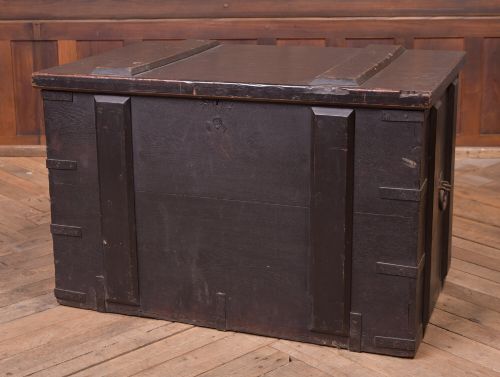
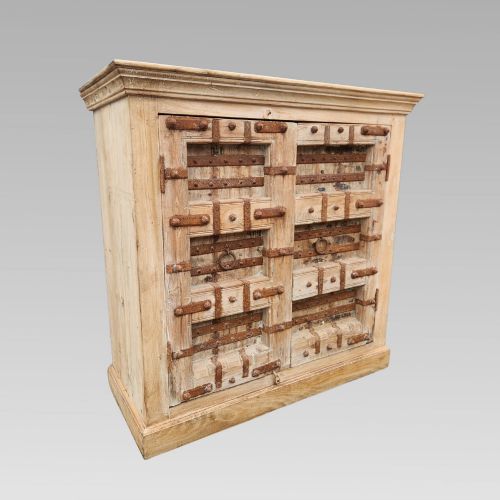
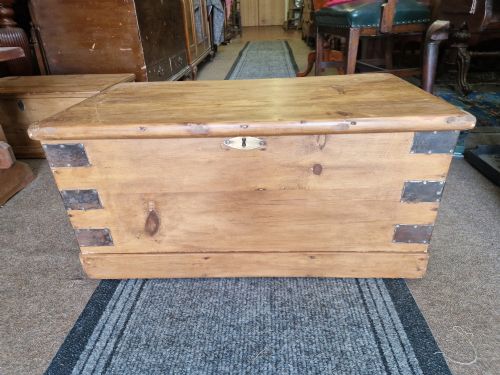
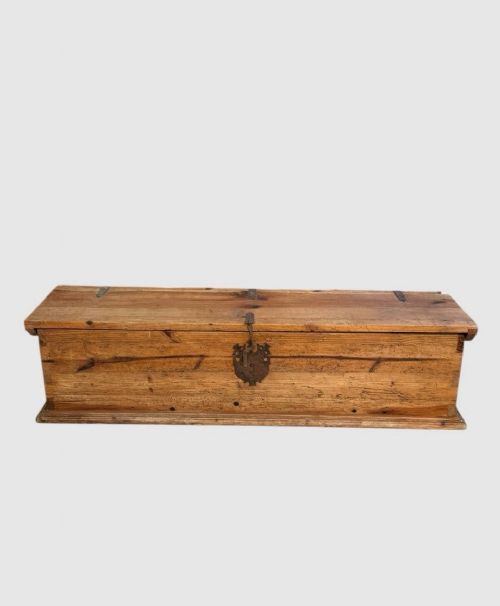
Iron Bound Chest
When you search for an iron bound chest, you are looking at centuries of heavy-duty storage designed to travel, protect valuables, and endure.
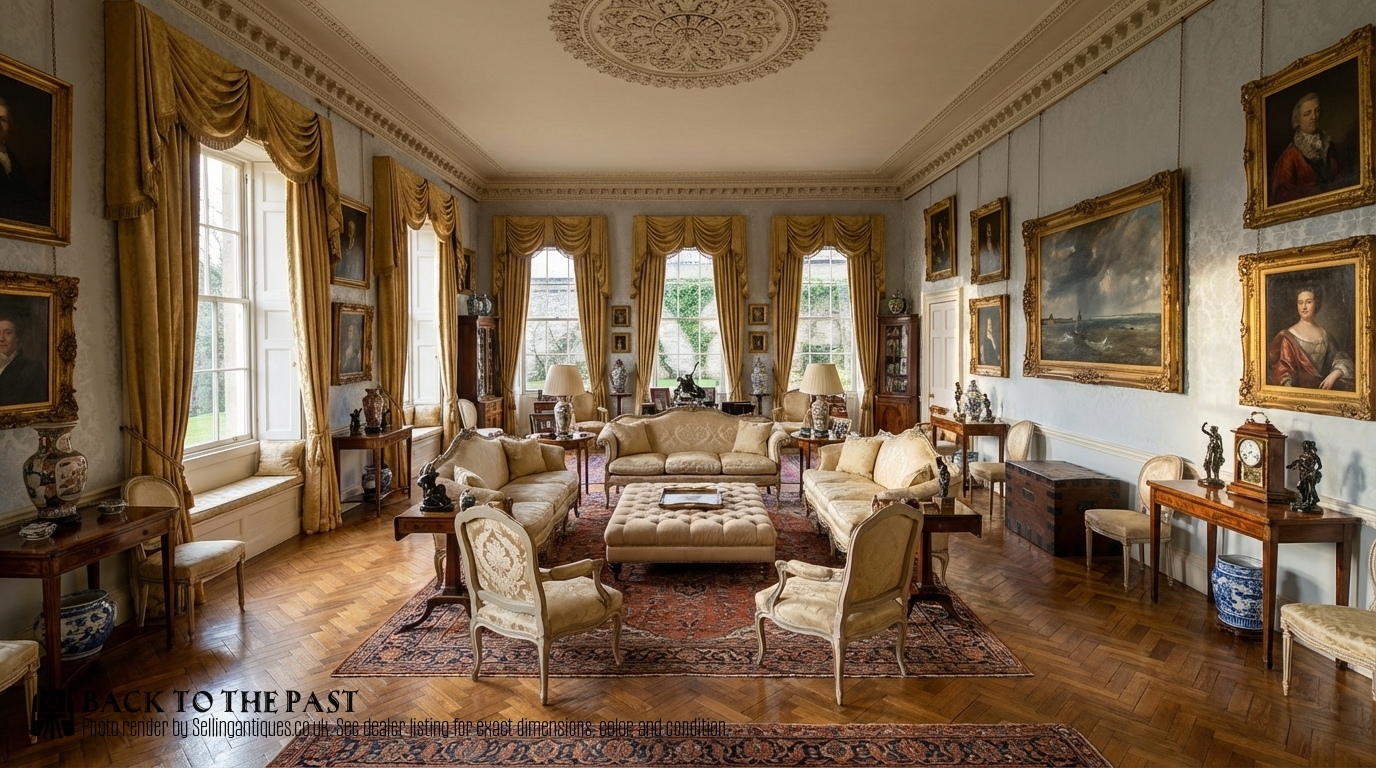
Iron Bound Chest
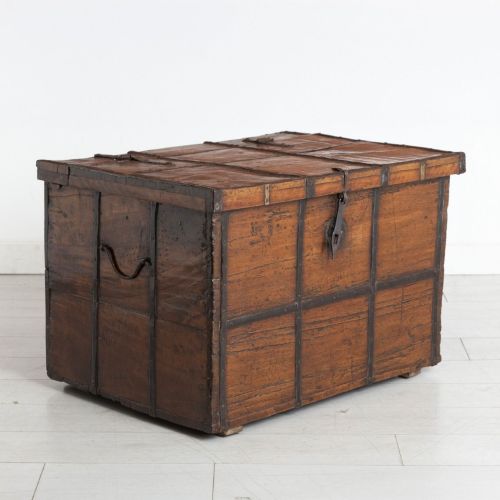
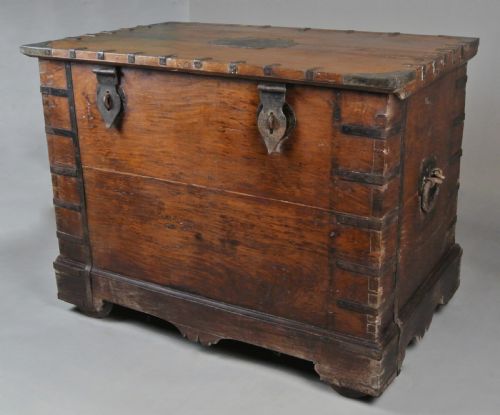
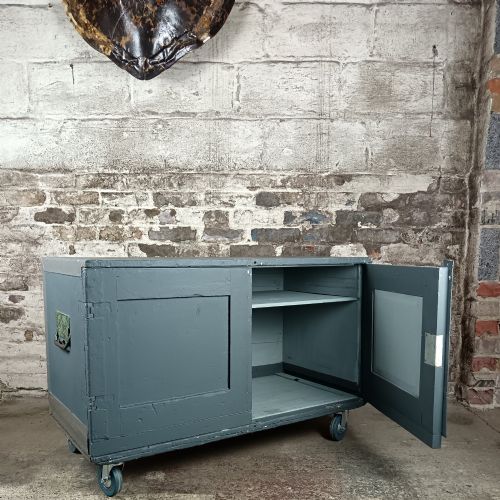
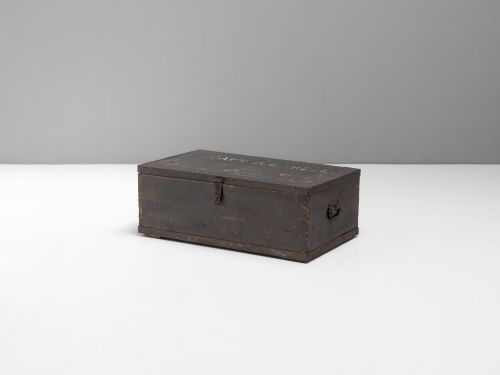
An iron bound chest serves as a robust container built from dense timbers like oak, pine, or teak, reinforced with structural metal strapping. The versions you are most likely to encounter on this page span from the seventeenth and eighteenth centuries into the Victorian era and the nineteenth century, including military campaign boxes, domestic blanket chests, and heavy merchant trunks.
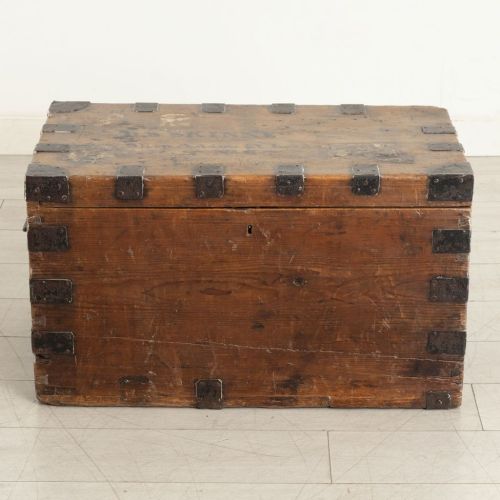
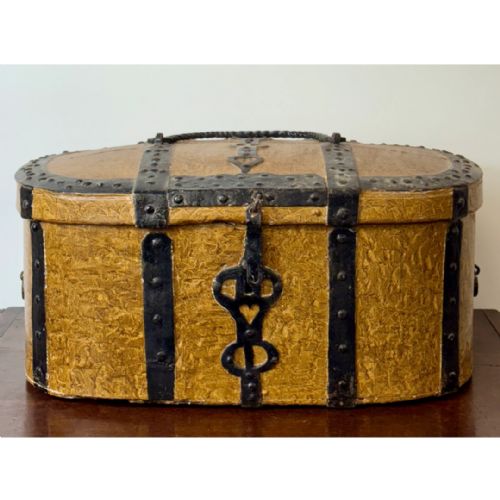
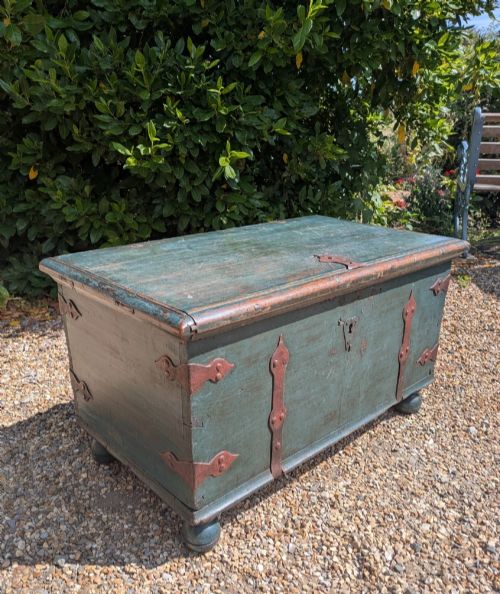
Makers constructed these pieces for function, utilising durable joints and protective metal elements to withstand long journeys by sea, road, or rail. They range from utilitarian pine and iron travelling trunks to domestic oak silver chests and decorative painted Scandinavian dowry coffers.
The form adapts to its original purpose, appearing as dome-topped carriage trunks, long sword chests, or square strongboxes fitted with complex locks. Each piece reflects the material available in its region of origin, whether Scandinavian folk pine, Indian teak, or English hardwood.
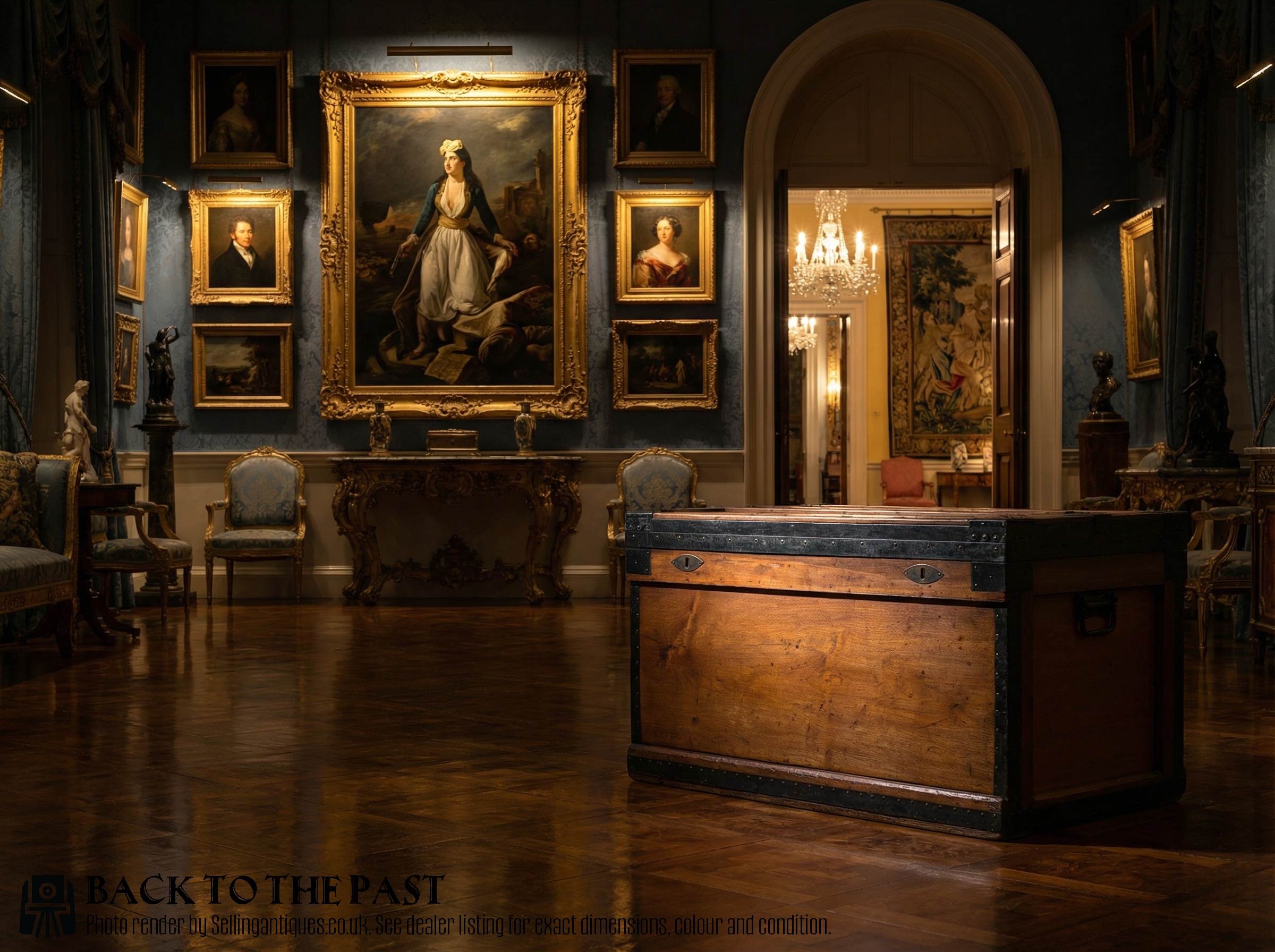
How they were made
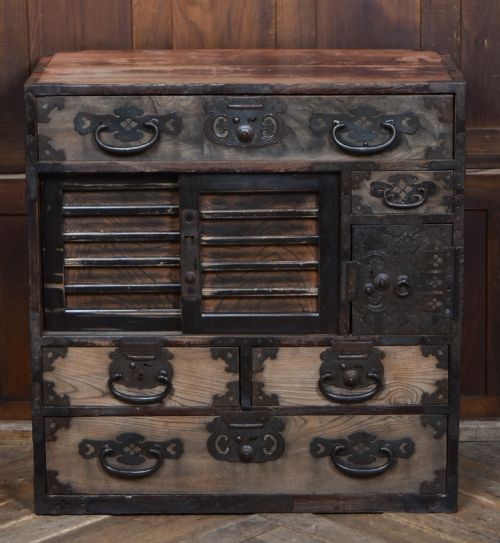
Joiners and blacksmiths worked in tandem, using dense timbers like oak, pine, and teak for the body while hand-forging iron strapwork, hinges, and corner brackets to secure the panels. These iron straps were typically fastened through the wood with rivets or clenched nails to resist splitting under heavy loads.
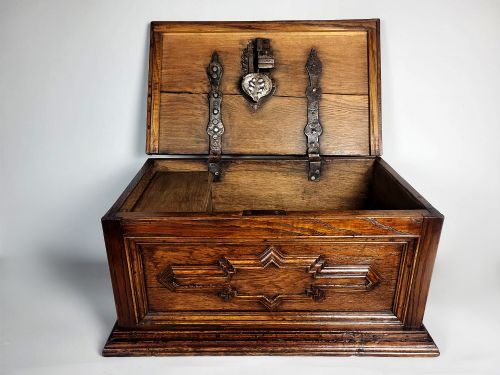
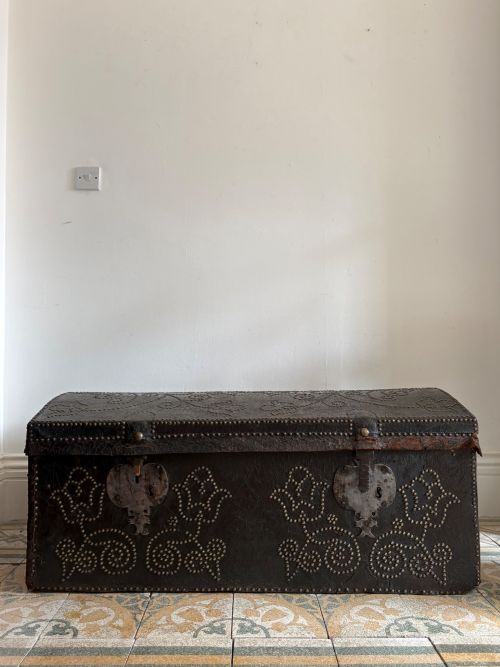
Many examples feature complex steel or iron locks set into the interior lid or front panel, often accompanied by heavy carrying handles forged on the sides for transport. Surface treatments vary from natural waxed grain and dark paint to decorative Swedish folk art patterns and protective leather studding.
Iron Bound Chest Retail Price Guide 2026
Typical asking prices for iron bound chest among the pieces listed under this phrase on Sellingantiques today, from the lower quarter to the upper quarter. They describe what is for sale here now, not the wider market.
Listings feature woods such as oak, pine, teak, elm, walnut, and mahogany paired with wrought iron strapwork across periods from the 16th century to the Victorian era.
What varies in quality
The distinction between standard utility boxes and finer specimens lies in the integrity of the timber selection and the sophistication of the blacksmith work on the iron strapwork. Superior examples retain original complex steel locks, working keys, and untouched hardware that has not been replaced over centuries of use.
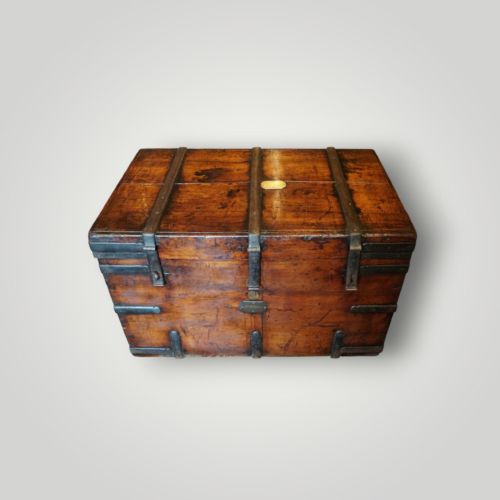
Proportion and execution separate everyday storage from exceptional regional pieces, such as those with signed brass maker plates, bespoke military provenance, or intricate hand-painted folk motifs. The survival of original painted finishes and interior compartmentalisation elevates the standing of any trunk.
The Iron Bound Chest Glossary
- Strapwork
- Flat bands of iron applied across the exterior of a chest to reinforce the wooden joints and protect the edges from impact. This metal framing defines the structural aesthetic of the piece.
- Campaign chest
- A portable trunk designed for military officers on the move, frequently built in sections with recessed brass or iron hardware to prevent snagging during transport.
- Strongbox
- A smaller, highly secure chest constructed with heavy timber walls and complex internal locking mechanisms designed to safeguard currency, documents, or plate.
- Dowry chest
- A traditional piece of furniture made to hold household linens and possessions for a marriage, often richly decorated with paint, carving, or extensive metal banding.
- Coffer
- An early term for a chest used for storing valuables, typically distinguished by a solid timber lid and deep internal capacity.
Iron Bound Chest: Frequently Asked Questions
What were iron bound chests used for?
These chests served primarily for secure transport and storage of valuable goods, including silver plate, military equipment, trading merchandise, and personal documents. Their heavy wooden walls and iron reinforcement protected contents against theft, dampness, and rough handling during travel.
Over time, many functioned as domestic storage for blankets, clothing, or dowries within family homes. Their robust construction made them dependable assets for merchants, soldiers, and households alike.
How do I care for an iron bound chest?
Maintain the timber by applying a microcrystalline wax to nourish the dry wood and protect any original painted or polished surfaces from humidity. Avoid placing the chest near direct heat sources or in damp environments, which can cause the timber to warp and the iron elements to oxidise.
Keep the iron strapwork clean using a dry cloth and apply a very light coat of neutral oil if rust appears. Preserving the dry, authentic surface rather than polishing the metal to a bright shine maintains the historical integrity of the piece.
Are original locks and keys common?
Original locks and keys survive on a select number of pieces, particularly those intended for high-security storage like strongboxes and silver chests. Many surviving chests have lost their original keys or received replacement locks during their long working lives.
A complex, functioning steel lock integrated into the lid or interior remains a desirable feature that indicates the original purpose and security level of the trunk.