
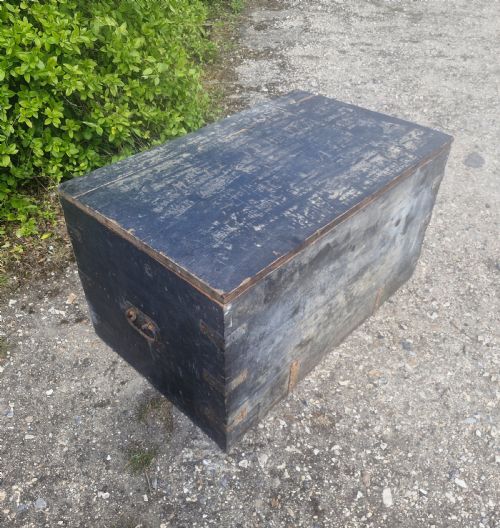


Iron Bound Blanket Chest
An iron bound blanket chest brings heavy-duty timber and forged metal together to secure textiles and valuables across centuries.
Iron Bound Blanket Chest
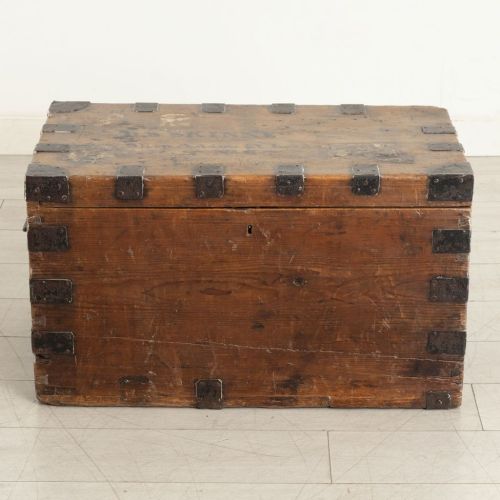
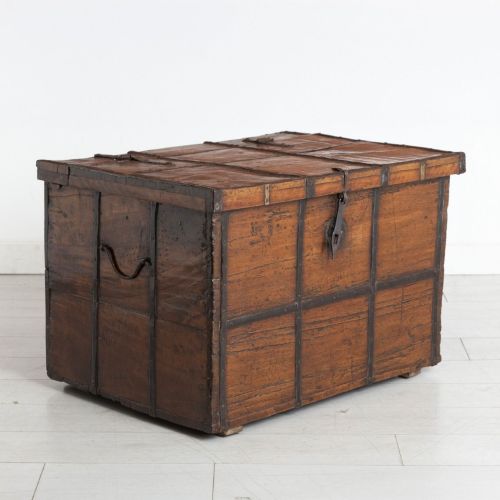
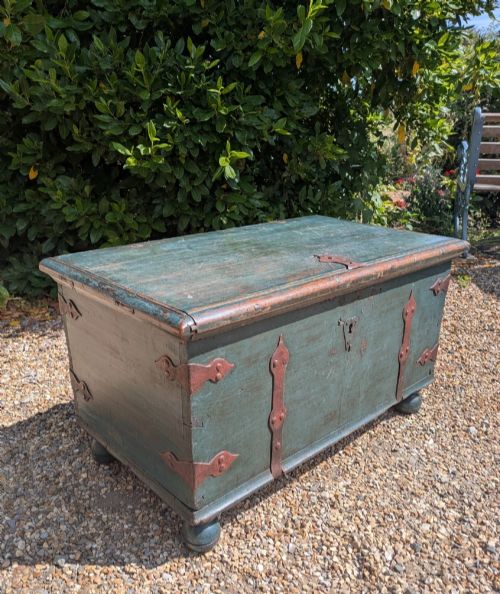
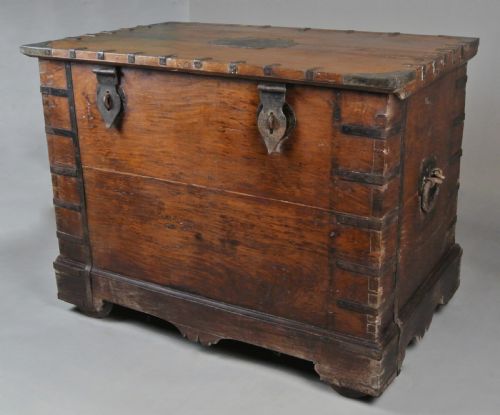
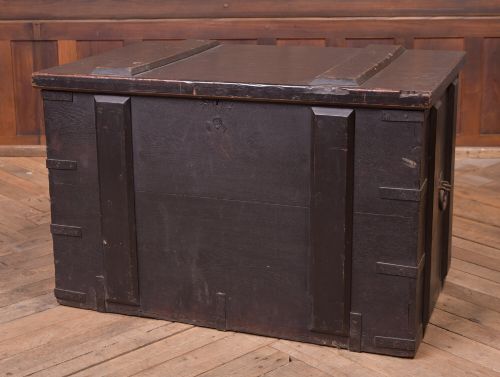
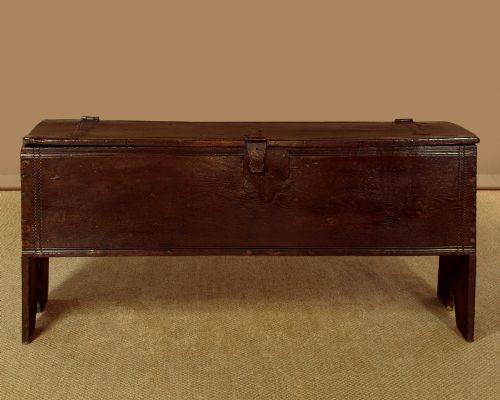
An iron bound blanket chest is a sturdy storage piece built from timbers like pine, oak, mahogany, and teak, reinforced with iron strapwork or bands. These items originate from domestic, military, and travel contexts, spanning Georgian, Victorian, and eighteenth-century periods.
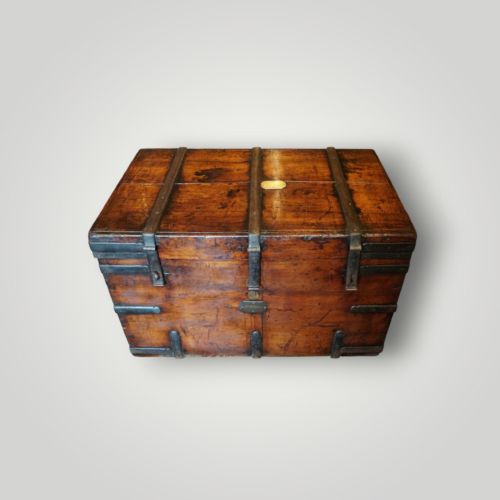
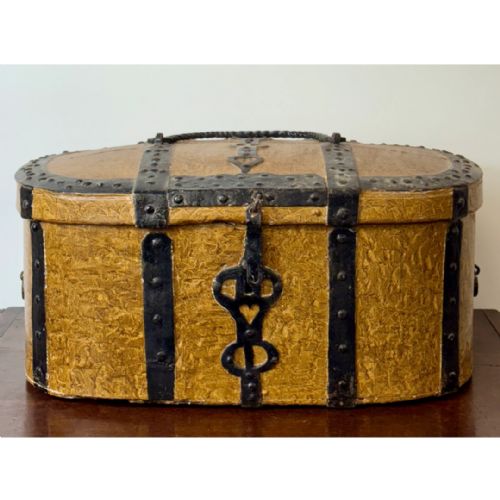
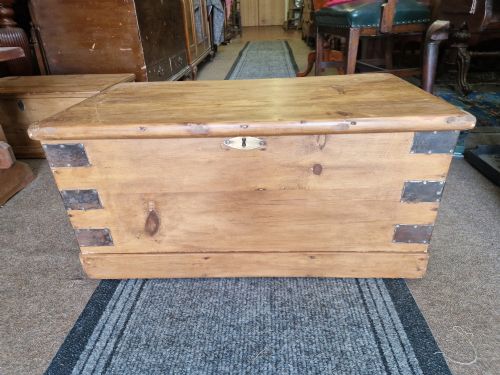
The most frequent versions encountered here are nineteenth-century pine travelling trunks and Victorian oak silver chests fitted with metal banding. Scandinavian and Dutch examples also appear, often featuring hand-painted finishes or dome tops.
Makers utilised these heavy receptacles for domestic storage, campaign use, and long-distance transit. Their robust construction reflects an era when belongings required physical protection from moisture, impacts, and theft.
Materials and Technique
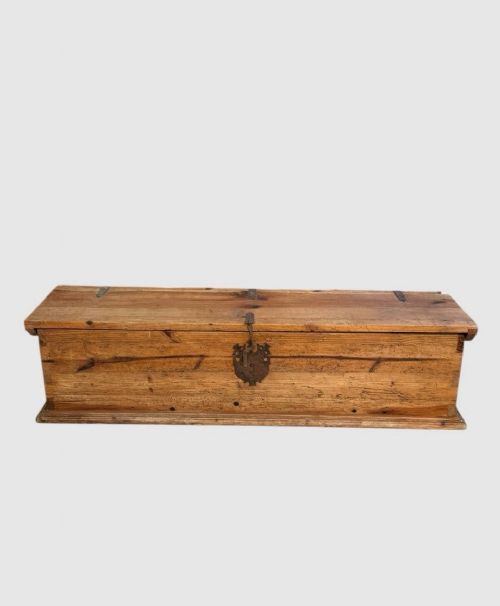
Constructed primarily from domestic softwoods like pine or hardwoods such as oak and teak, these boxes rely on solid timber joints. Iron strapwork, bands, and corner plates are fastened across the wood to reinforce the structure against heavy handling.
Blacksmiths shaped the iron elements by hand, attaching them with rivets or clout nails that pierce the timber walls. Handles, brackets, and locks are forged from iron, steel, or brass to endure demanding transit conditions.
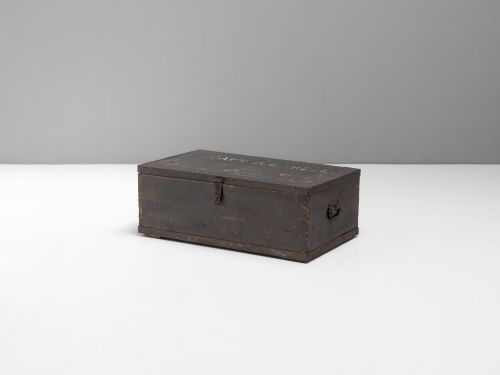
Several trunks bear the travel scars of nineteenth-century military officers and colonial commissioners who hauled them across distant continents.
Standards of Construction
Quality rests in the integrity of the original timber and the weight of the metal reinforcement. Pieces retaining their original forged iron straps, working locks, and interior compartments command greater attention than those with replaced hardware.
Subtle distinctions emerge in the carpentry, from dovetailed corner joints to the thickness of the oak or pine boards. The presence of untouched surface patination, original paint, and maker plaques elevates a chest above standard utility trunks.
Seabrook of St Pauls·Bond Street Silversmith Retailer
The Iron Bound Blanket Chest Glossary
- Strapwork
- Flat strips of iron nailed across the exterior of a chest to reinforce the wooden panels. This metalwork absorbs impacts during travel.
- Silver chest
- A heavy-duty storage box lined to protect table silver from tarnish and damage. These are typically fashioned from solid oak with robust iron or steel banding.
- Campaign trunk
- A portable chest designed for military officers on the move. They often include recessed brass handles and compartmentalised interiors.
- Dome top
- A rounded lid profile designed to shed water during transit. This shape increases internal storage capacity above the rim.
- Dowry chest
- A large storage piece created to hold household linens and possessions for a marriage. Examples from Sweden and India frequently display folk art painting or intricate bandwork.
Iron Bound Blanket Chest: Frequently Asked Questions
How do I clean an iron bound blanket chest?
Wipe the wooden surfaces gently with a dry or barely damp cloth to remove dust without disturbing the historic finish. Apply a microcrystalline wax to nourish dry pine or oak.
Keep iron strapwork dry and treat any active rust spots with a light application of oil using a fine brush. Avoid harsh chemical cleaners that strip patination from the metal.
Where can I place a chest at home?
Position these heavy pieces at the foot of a bed, beneath a window, or as a coffee table in a living space. Their robust build provides a stable surface alongside ample internal storage.
Ensure timber chests stay away from direct radiators or damp stone walls to prevent wood shrinkage or iron corrosion.
How do I date an antique chest?
Examine the construction methods, such as hand-cut dovetails, forged iron nails, and saw marks on the interior boards. Georgian and eighteenth-century examples often feature pegged framing and hand-forged strapwork.
Victorian and later nineteenth-century pieces typically display machine-sawn timber and standardised ironwork components.
What is the difference between a trunk and a silver chest?
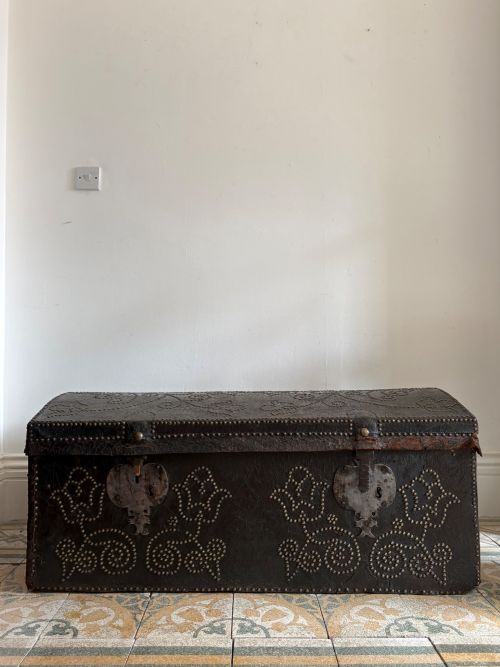
A trunk serves general travel or storage purposes, constructed from pine or leather-covered wood with iron bands. They are built for mobility and luggage transport.
A silver chest is a specialised, heavy oak container fitted with internal baize-lined trays designed to secure heavy cutlery sets and plate.