

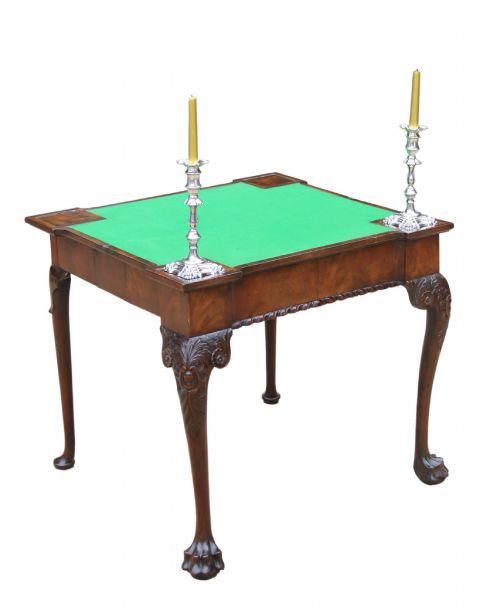


Irish Mahogany Tea Table
An irish mahogany tea table brings substantial timber and deep cabinet-making traditions into a room, offering both a functional surface and historical weight.
Irish Mahogany Tea Table
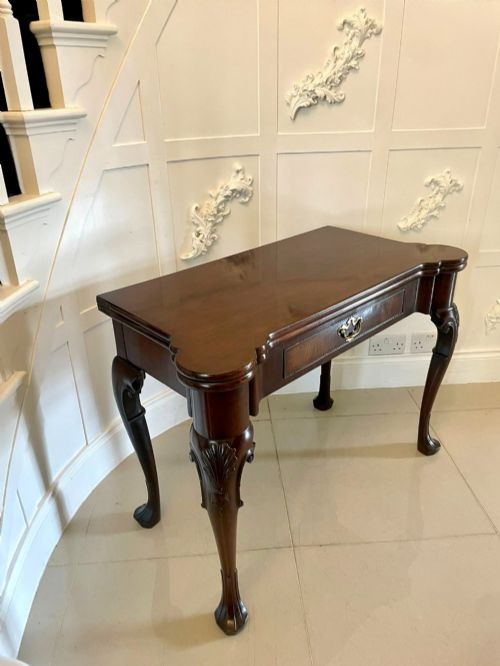
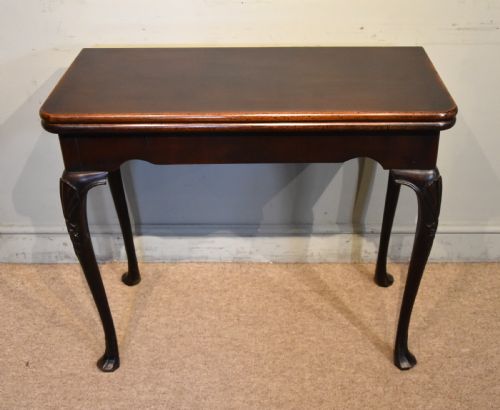
When you search for an irish mahogany tea table, you encounter a distinct form developed across the eighteenth and nineteenth centuries, including George II, George III, and Regency periods. These pieces frequently feature folding tops, concertina actions, or demi-lune shapes designed for entertaining.
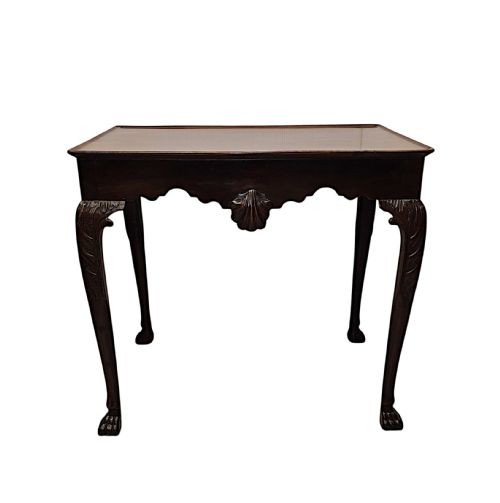
The selection here encompasses related variants such as card tables, games tables, silver tables, and side tables alongside standard tea tables. Pieces hail from distinct eras like seventeen fifty, eighteen hundred, and eighteen sixty, showing how makers adapted the form over generations.
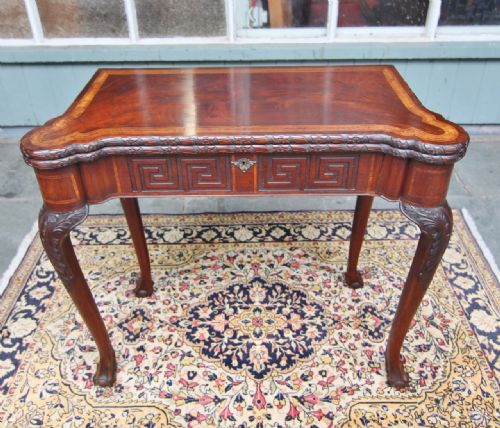
You meet examples displaying specific regional traits, such as heavy carved details or satinwood inlay, connecting each item to its workshop origins. The core purpose remains a sturdy timber table built to handle social rituals of the past.
Materials and methods
Makers constructed these surfaces primarily using solid mahogany, often selected for rich grain patterns and deep colour. Workshops enhanced certain tables with brass inlay, rosewood crossbanding, and satinwood details to create contrasting borders along the top and apron.
Joinery techniques included concertina actions for expanding frames and fold-over mechanisms supported by pivoting legs. Carved ornamentation, seen on Georgian and Chippendale examples, required skilled hand-carving directly into dense timber rather than applied moulding.
Irish Mahogany Tea Table Retail Price Guide 2026
Typical asking prices for irish mahogany tea table among the pieces listed under this phrase on Sellingantiques today, from the lower quarter to the upper quarter. They describe what is for sale here now, not the wider market.
Object forms on this page include card tables, side tables, games tables, occasional tables, tea tables, and teapoys.
Distinctions in quality
Quality rests on the weight of the timber and the crispness of any hand-carved ornament on the knees and edges. Superior examples maintain tight joints in their folding mechanisms and display thoughtful grain matching across the leaves.
Tables with secondary woods like oak or pine in their inner frames show deliberate regional construction standards. The depth of the patina and the precision of brass or satinwood inlay separate standard workshop output from exceptional commissions.
Strahan of Dublin
The Irish Mahogany Tea Table Glossary
- Concertina action
- An expanding frame mechanism that pulls outward on all four legs to support a fold-over top evenly. This design allows the table to double its surface area securely.
- Demi-lune
- A half-moon shape used for tables designed to sit flush against a wall before opening out. Such forms were popular during the eighteenth century for card and tea use.
- Crossbanding
- A strip of veneer applied perpendicularly to the main grain along the edge of a tabletop. It creates a contrasting border using different timber species.
- Teapoy
- A small container or table designed to hold tea caddies, originating when tea was an expensive commodity. Nineteenth-century versions often featured internal compartments.
- Silver table
- An open-topped table with a raised edge or gallery designed to display silver items. These pieces date predominantly to the eighteenth century.
Irish Mahogany Tea Table: Frequently Asked Questions
How do you date an irish mahogany tea table?
Dating relies on observing structural characteristics, joinery methods, and stylistic cues from periods like George II, George III, and the Regency era. Earlier eighteenth-century pieces often display heavier carving and concertina actions.
Later nineteenth-century examples introduce different veneer treatments and mechanical supports. Comparing the secondary woods and hardware helps confirm the manufacturing period.
How were these tables used originally?
These tables functioned primarily during social occasions to hold tea service equipment or to provide a flat surface for card games. The fold-over top allowed households to save space when tea was finished.
In some instances, they acted as silver tables or side consoles in grand rooms. Their dual nature made them central to domestic hospitality.
How do you care for mahogany furniture?
Maintaining mahogany requires keeping pieces away from direct heat sources and sudden humidity changes to prevent timber splitting. Regular dusting with a dry cloth preserves the finish.
Application of appropriate wax helps nourish the wood and maintain its deep patina over time. Avoid harsh chemical cleaners that strip historical finishes.