

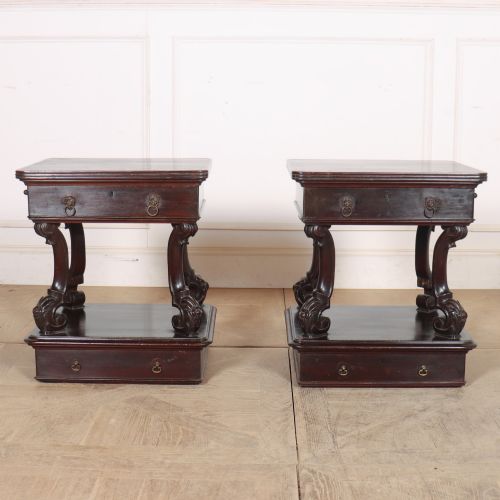
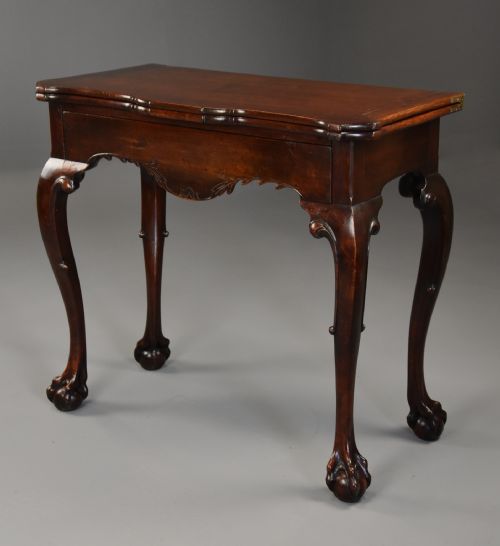


Irish Georgian Side Table
An irish georgian side table brings substantial presence to a room, uniting dense timber and carved detail through robust proportions.
Irish Georgian Side Table
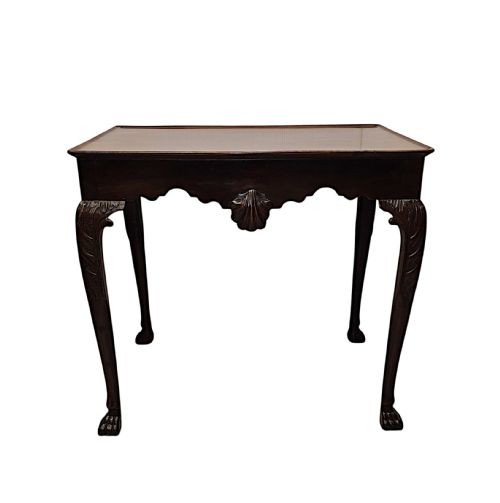
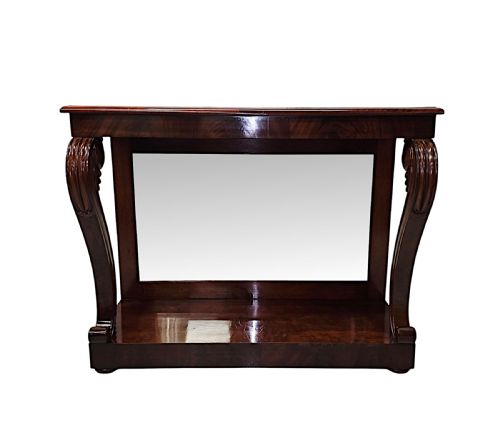
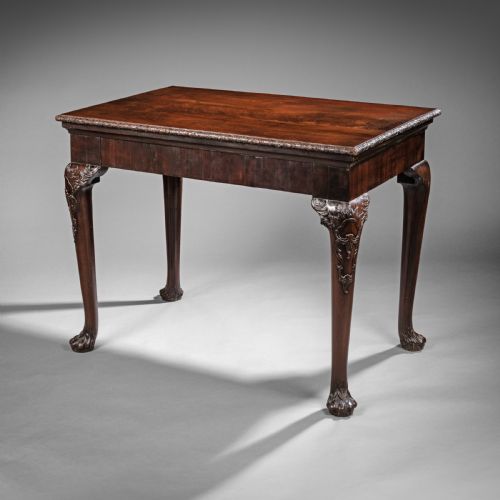
When you search for an irish georgian side table, you encounter formal serving pieces, console tables, and silver tables originating from the eighteenth and nineteenth centuries. These tables often display distinct regional carving, such as lion masks and paw feet, which separates them from their English counterparts.
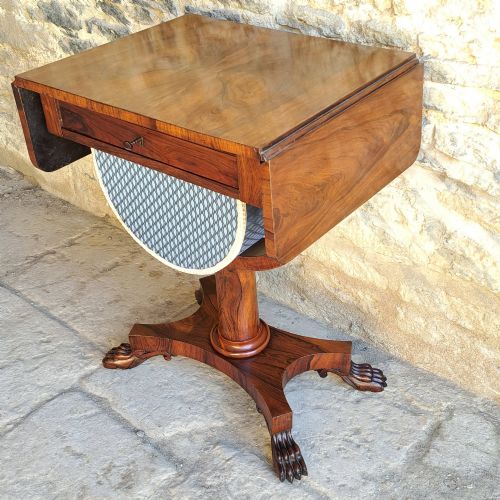
The selection ranges from George II and George III mahogany formats to later nineteenth-century interpretations and revival pieces. Console tables and silver tables dominate the forms, alongside card tables and occasional tripod variations designed for specific domestic rooms.
What Separates Examples
Depth of carving and sharpness of detail separate standard production from master craftsmanship, particularly around lion masks and scrolled friezes. The natural patination and surface richness of the timber dictate visual appeal, reflecting decades of care and the quality of the raw grain.
Structural integrity and the retention of original components, such as brass hardware and timber tops, govern the standing of an individual table. Regional quirks and documented workshop attributions add weight to superior examples.
Some tables hide extra fold-out leaves for unexpected guests.
Gillingtons of Dublin·Hicks of Dublin
The Irish Georgian Side Table Glossary
- Console table
- A table designed to stand against a wall, frequently secured to the vertical surface or supported by prominent front legs. These pieces served decorative and display functions in formal halls and reception rooms.
- Silver table
- A specialised rectangular table with a raised edge or gallery designed to hold silver tea services safely. They appear frequently in eighteenth-century Irish domestic settings.
- Card table
- A folding or pivoting table engineered with a green baize or plain wood playing surface for card games. Many feature concertina actions or swing legs to support the opened leaf.
- Tripod table
- A small occasional table supported by a central pillar resting on three spreading feet. They often incorporate snap-top mechanisms to tilt the surface upright when not in use.
- Patination
- The surface sheen and colour acquired by wood over centuries through handling, light exposure, and polishing. High patination denotes a deep, warm glow across the timber.
Irish Georgian Side Table: Frequently Asked Questions
How do I identify an Irish table?
Irish tables frequently exhibit heavier proportions, bolder relief carving, and distinct motifs like lion masks compared to English equivalents.
Inspect the secondary timbers beneath the piece, as regional workshops often utilised specific native woods for internal framing.
Where were these tables placed?
Console and serving tables stood against drawing room and dining room walls, often beneath large mirrors or window piers.
Smaller silver tables and card tables sat near the centre of reception rooms for entertaining guests.
How do I care for mahogany?
Maintain a stable indoor humidity level and keep timber pieces away from direct heat sources to prevent splitting.
Apply traditional wax sparingly and buff with a soft cloth to preserve the natural surface finish.
What is a silver table?
A silver table is a formal display surface featuring a raised gallery edge to contain tea service items securely.
These tables became popular in the eighteenth century as status symbols for wealthy households.