




Irish Georgian Mahogany Furniture
Irish georgian mahogany furniture carries a heavy timber presence and robust carving that anchors a room with considerable substance.
Irish Georgian Mahogany Furniture
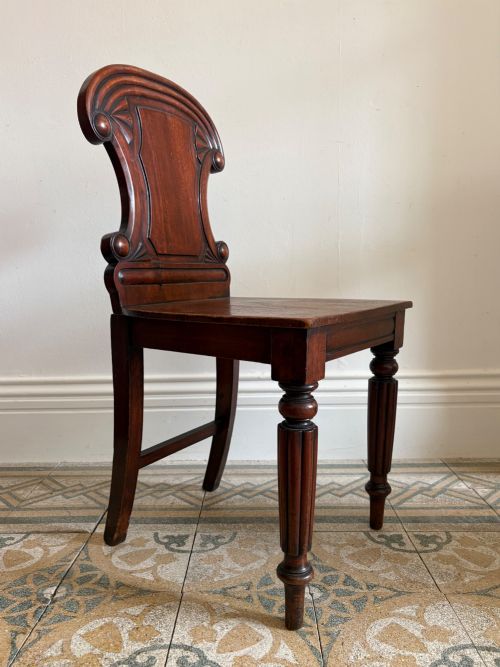
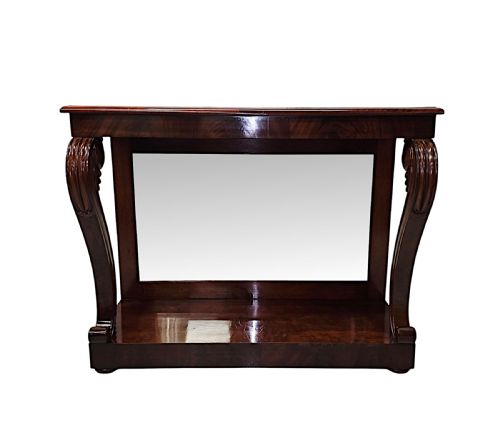
Irish georgian mahogany furniture encompasses dense hardwood tables, seating, and storage pieces produced across the eighteenth and nineteenth centuries. Console tables, dining chairs, and cellarettes appear frequently, showing deep proportions and substantial structural weight. Makers often employed heavy timber and bold carving motifs to distinguish these regional pieces from English counterparts.
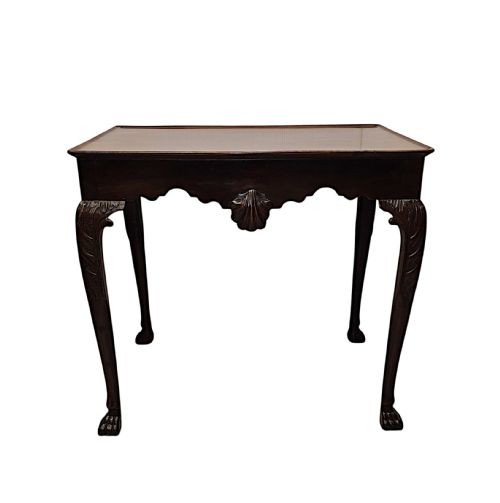
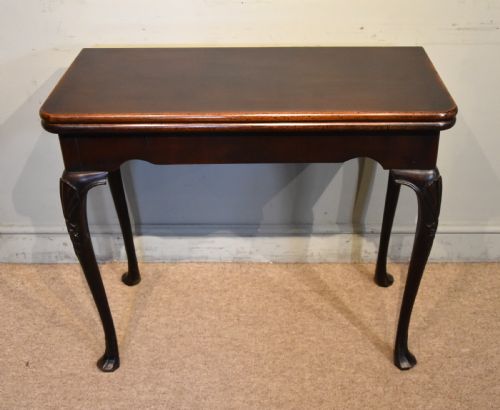
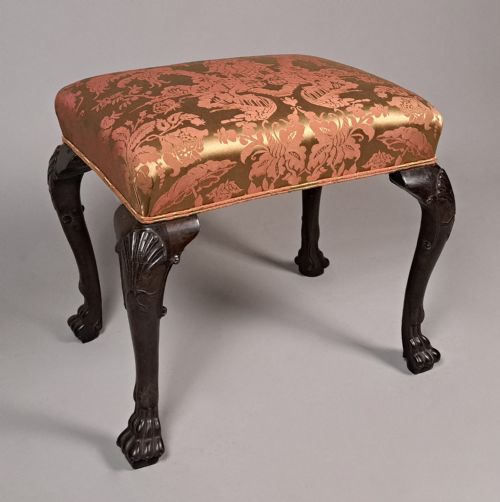
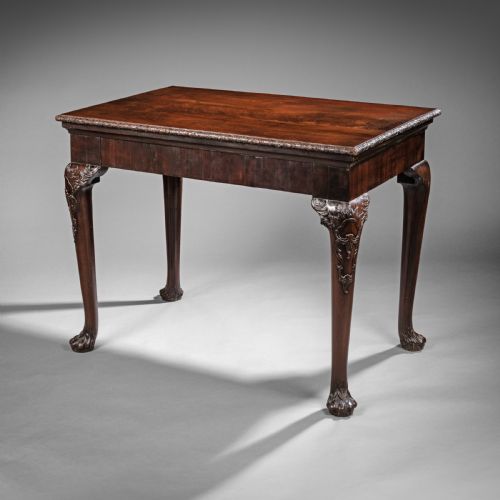
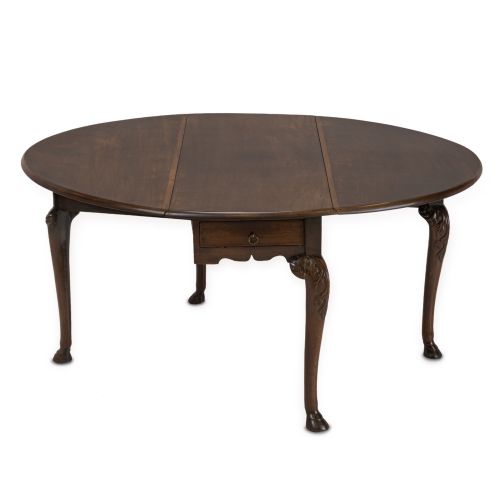
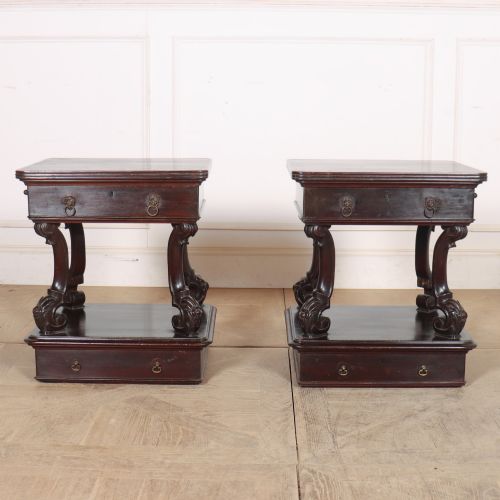
The selection ranges from George II drop-leaf dining tables and Chippendale style side tables to Regency games tables and pedestal cellarettes. Stools, bureaus, and tallboy chests also emerge within the broader grouping of Irish georgian mahogany furniture. These domestic items served formal dining, library organisation, and drawing room hospitality in period interiors.
Materials and Construction
Cabinetmakers relied heavily on dense mahogany timber, frequently supplemented with secondary woods such as oak and pine for interior framing. Brass hardware, leather inserts, and textile upholstery completed functional items like games tables and seating. Selected examples incorporate burr elm veneers and intricate inlay work along serpentine surfaces.
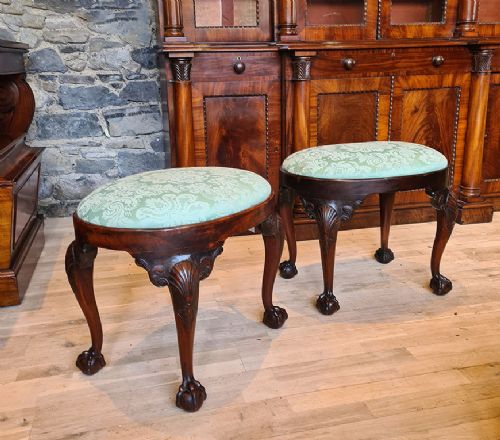
Construction techniques involved robust joinery, carved cabriole legs ending in hoof or paw feet, and sturdy X-frame supports for stools and benches. Workshops utilised solid planks for large dining surfaces and heavy carcases for tallboy chests and breakfront bookcases. Surface finishes brought out the dark, rich grain of the primary timber without excessive gloss.
Cellarettes once kept wine safe from thirsty household staff by incorporating heavy lead linings and stout brass locks.
Assessing Craftsmanship
Distinction within irish georgian mahogany furniture rests upon the depth and vigour of the timber carving, particularly on cabriole legs, aprons, and console borders. Sharply chiselled leaf and shell motifs separate superior workshop production from standard domestic output. The selection of dense, heavily figured mahogany stock also marks out pieces intended for elite patronage.
Structural integrity and the retention of original brass fittings, leather surfaces, or upholstery frames dictate the standing of surviving items. Pieces retaining their structural weight without excessive timber replacement demonstrate better preservation. Subtle variations in proportions, such as the bolder stance characteristic of Dublin workshops, influence the visual gravity of the piece.
Gillingtons of Dublin·Butlers of Dublin·Hicks of Dublin·The Woodworkers Ltd Kilkenny·Robert Strahan & Co of Dublin
The Irish Georgian Mahogany Furniture Glossary
- Cabriole leg
- A furniture leg that curves outward at the knee and tapers inward toward the foot, mimicking animal limbs. This form frequently terminates in carved hoof or paw details on eighteenth-century Irish tables and seating.
- Cellarette
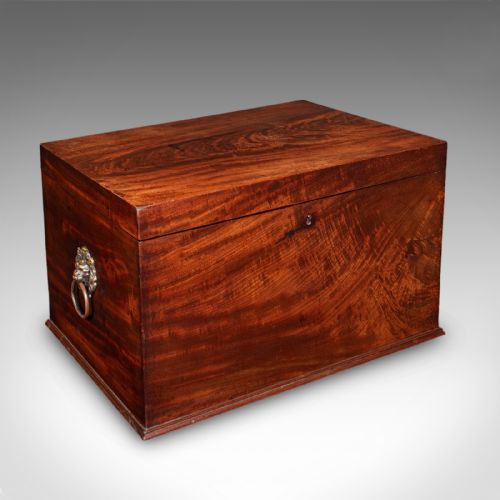
- A lockable container used for storing wine bottles near the dining table or sideboard. These lined boxes often feature sarcophagus shaping or pedestal mounts.
- Console table
- A wall-mounted or freestanding table designed to sit against a flat surface, usually featuring a decorative frieze and cabriole supports. Irish examples often display particularly heavy pierced apron carvings.
- Tallboy
- A tall chest of drawers stacked in two sections, combining a lower base with a larger upper cabinet. These timber carcases provide substantial storage capacity.
- Drop-leaf table
- A table with a fixed centre section and hinged flaps that fold down to save space. Examples on this page include oval dining surfaces supported by swing legs.
Irish Georgian Mahogany Furniture: Frequently Asked Questions
How do I identify Irish mahogany furniture?
Irish georgian mahogany furniture often displays heavier timber dimensions, deeper carving relief, and more robust proportions than English equivalents. Regional cabinetmakers favoured substantial cabriole legs, pronounced claw or hoof feet, and heavily moulded aprons on tables and case pieces.
Secondary woods like oak frequently appear in the internal construction of drawers and carcases. Examining the structural weight and the vigour of the surface carving helps confirm the geographic origin.
What rooms suit Irish georgian furniture?
These robust timber forms anchor principal reception spaces, dining rooms, and hallways with considerable visual weight. Console tables and cellarettes function well against large wall spaces, while dining chairs and wake tables serve formal gathering areas.
Pairing these dark hardwood items with neutral walls allows the dense grain and carved details to stand out. Smaller forms like bedside tables and stools fit comfortably into private sitting rooms.
How were cellarettes used?
Cellarettes served as secure storage boxes for wine bottles within dining rooms before permanent bottle storage became common. Servants kept vintages cool inside lead-lined compartments or partitioned timber interiors.
Placed beneath sideboards or near dining tables, these heavy containers rested on paw feet or pedestals. Their substantial lids kept the contents protected and temperature regulated during long meals.
What is a wake table?
A wake table is an exceptionally long dining table with multiple drop leaves, designed to accommodate large communal gatherings. These heavy mahogany pieces provided expansive surfaces for hospitality and community meals.
When the leaves folded down, the table occupied less floor space along a wall. The numerous supporting legs ensured stability across the extended length.
How do periods differ here?
Pieces span from the mid-eighteenth century through the nineteenth century, tracing shifts from George II exuberance to Regency and Victorian formal styles. Earlier items lean towards heavy cabriole forms and rich carved details, while later nineteenth-century examples incorporate structured library pieces and revival cabinetry.
Stylistic markers shift from deep shell carvings to cleaner architectural lines and inlaid veneers. Each era reflects evolving domestic habits within Irish homes.