


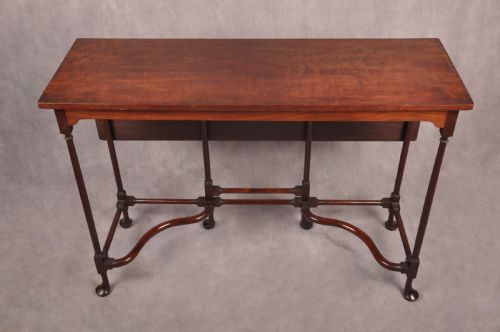


George II Drop Leaf
A george ii drop leaf table offers practical dining space through hinged flaps that fold down when the room requires room.
George II Drop Leaf
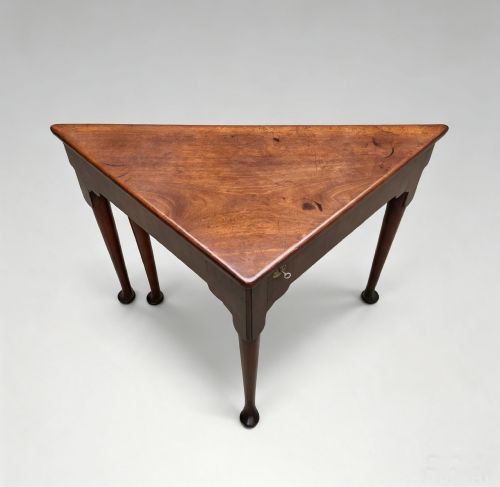
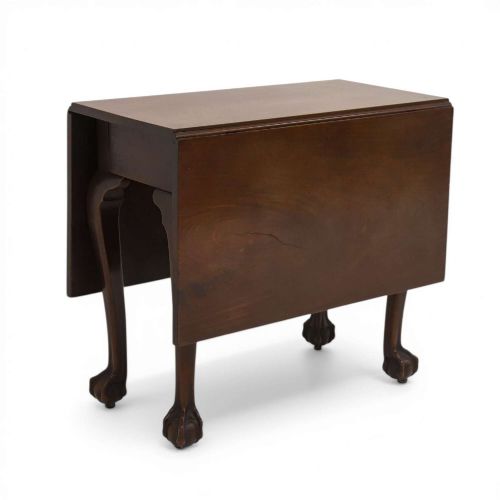
When you search for a george ii drop leaf, you encounter tables built during the eighteenth century designed to fold away when floor space mattered.
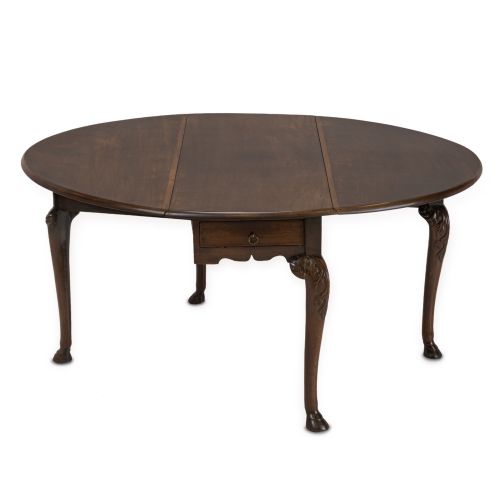
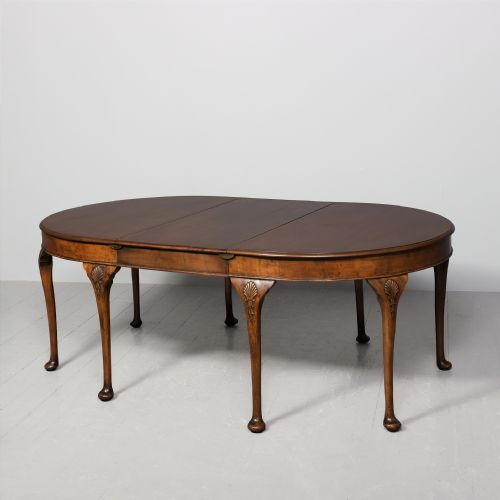
The most common examples on this page are dining tables and occasional tables configured with oval tops supported by folding gate legs.
Makers shaped these pieces from timber stocks like mahogany, walnut and oak, producing sturdy furniture that adapted easily to domestic rooms.
Timber and Joinery
Joiners constructed these tables primarily in solid mahogany, walnut, and oak, occasionally selecting dense Cuban mahogany or red walnut for figured grain patterns.
The folding leaves operate on hinged gate-leg frames or pivot mechanisms that require precise carpentry to support the weight of the extended flaps.
Supports terminate in pad feet, hoof feet, or carved claw-and-ball feet attached to cabriole legs.
Listings span the eighteenth century up to nineteen-twenty, featuring dining tables, side tables and occasional tables in mahogany, walnut, oak and brass.
Proportion and Timber Selection
Quality rests upon the choice of timber, where richly figured Cuban mahogany or red walnut elevates a table above standard domestic oak examples.
The crispness of carving on cabriole legs and the retention of original brass hinges distinguish superior pieces from later reproductions.
Proportion dictates value, as larger dining versions with balanced oval proportions command greater interest than smaller occasional variants.
The George II Drop Leaf Glossary
- Drop-leaf table
- A table with a fixed central section and hinged flaps that fold down at the sides. This design allows the furniture to expand for dining and shrink for storage against a wall.
- Gateleg table
- A table with hinged legs that swing outward like a gate to support the drop leaves. This construction provides stable support for the extended flaps.
- Cabriole leg
- A furniture leg that curves outward at the knee and tapers inward toward the ankle. It frequently terminates in a pad, hoof, or claw-and-ball foot.
- Pad foot
- A simple rounded foot resting flat on the floor at the base of a cabriole leg. This foot type appears commonly on mid-eighteenth-century tables.
- Cuban mahogany
- A dense, dark timber imported from the West Indies during the eighteenth century. Cabinetmakers favoured it for its rich grain and capacity for fine carving.
George II Drop Leaf: Frequently Asked Questions
How were george ii drop leaf tables used?
These tables served primarily for dining in eighteenth-century homes where rooms needed to adapt for multiple activities throughout the day. Families raised the flaps during meals and lowered them afterward to clear floor space.
Smaller versions functioned as tea tables or side tables placed against parlour walls until needed for entertaining guests.
How do I identify a george ii drop leaf table?
Look for structural markers such as cabriole legs ending in pad feet or claw-and-ball feet, alongside structural timbers like mahogany, walnut or oak.
Eighteenth-century examples display hand-cut joinery and forged iron or brass hardware beneath the leaves where the gate mechanism operates.
Can I use a george ii drop leaf for daily dining?
These tables provide sturdy surfaces suited for regular daily use provided the gate-leg mechanisms and hinges receive careful handling.
Protect the timber surface from heat and moisture to preserve the historic polish and finish of the wood.
What woods appear on george ii drop leaf tables?
Makers constructed these tables predominantly using mahogany, walnut, red walnut, Cuban mahogany and oak.
Cabinetmakers selected these hardwoods for their structural strength, which was necessary to support the hinged leaves over centuries of folding.