

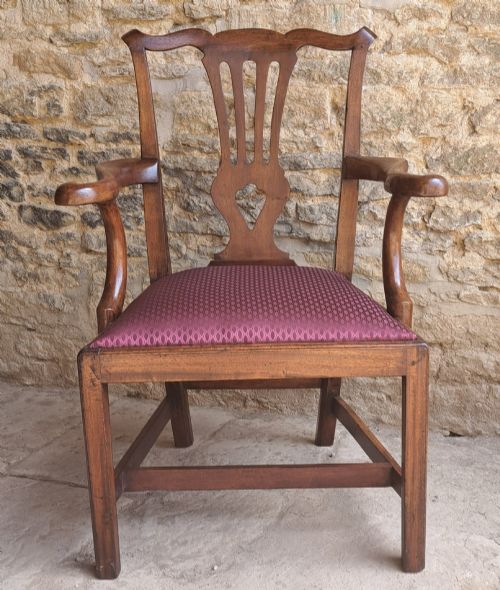
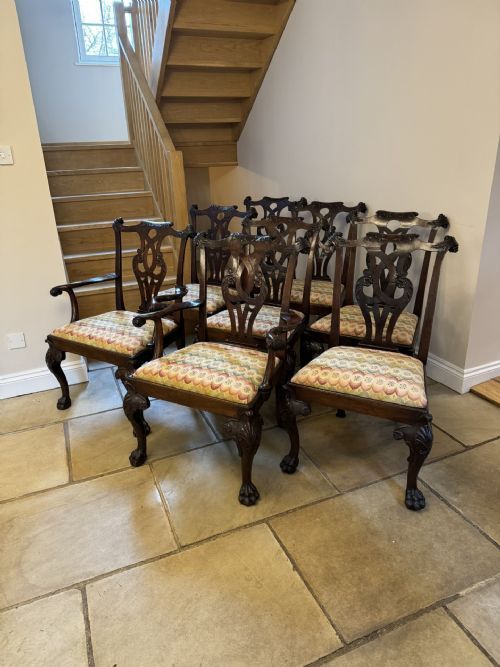


Irish Chippendale Style Chair
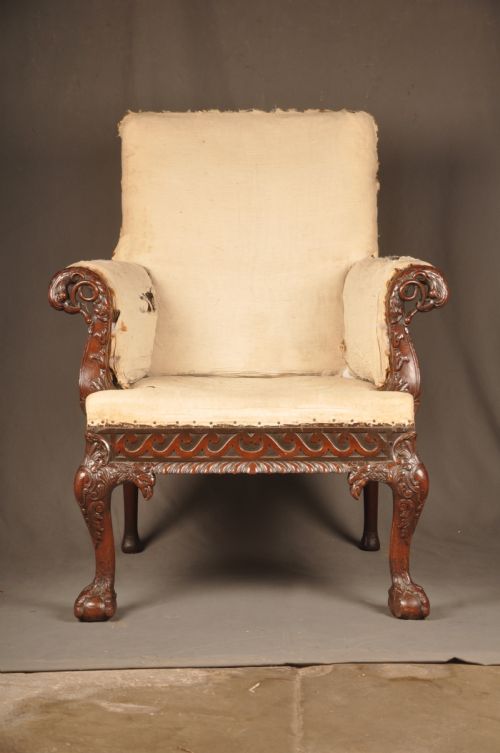
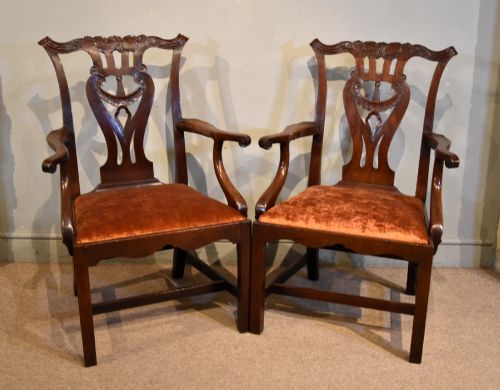
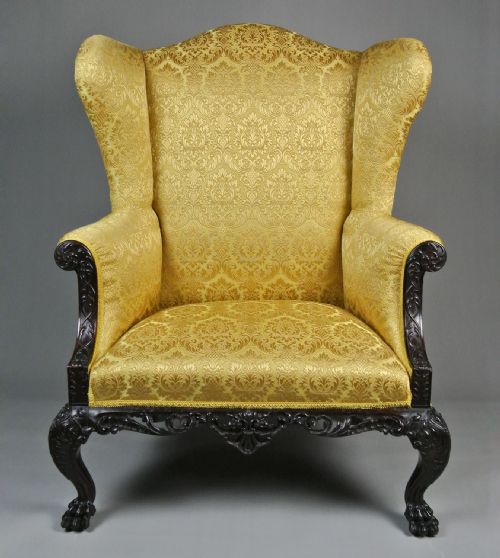
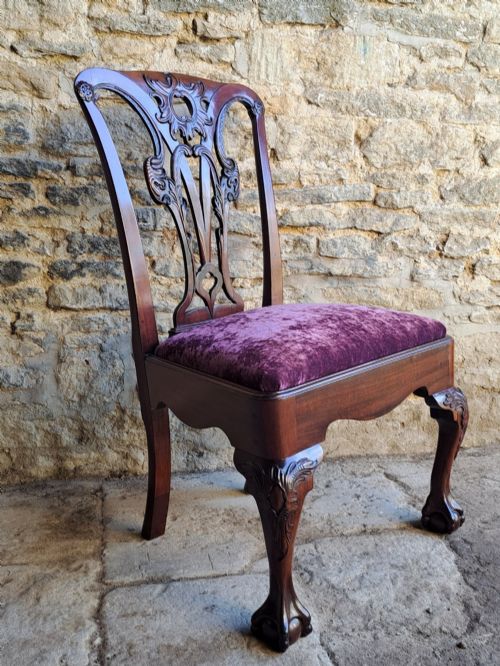
An irish chippendale style chair brings heavy carved mahogany and claw and ball feet into a room.
Irish Chippendale Style Chair
An irish chippendale style chair combines robust proportions with elaborate carved detail, typically executed in rich timber. These seating pieces appear as single armchairs, pairs, or matched sets intended for dining tables or libraries.
Materials and Construction
The makers relied primarily on dense mahogany and walnut, selected for structural strength and deep colour. Timber components were shaped by hand, with substantial frames joined securely to support heavy carved ornamentation.
Upholstered versions incorporate traditional stuffing covered in fabrics such as velvet, leather, damask, calico, or plain textile. Carved elements such as acanthus leaves and animal motifs were worked directly into the solid wood frame.
Irish Chippendale Style Chair Retail Price Guide 2026
Typical asking prices for irish chippendale style chair among the pieces listed under this phrase on Sellingantiques today, from the lower quarter to the upper quarter. They describe what is for sale here now, not the wider market.
Listings span the eighteenth, nineteenth, and twentieth centuries, incorporating materials such as mahogany, walnut, leather, velvet, and damask.
Distinctions in Quality
The refinement of the carving dictates the standing of an irish chippendale style chair. Crisp, deep relief work on the knees and crest rails distinguishes superior examples from simpler or softer execution.
Original period timber and proportional balance separate ambitious cabinet-maker output from routine revival production. The integration of structural joinery with ornamental flourish determines how successfully the piece holds its presence.
Robert Strahan Dublin
The Irish Chippendale Style Chair Glossary
- Mahogany
- A heavy tropical hardwood valued for its reddish-brown colour and stability in carving. It serves as the primary material for these chairs.
- Armchair
- A seating furniture piece equipped with side supports for the arms. These versions often feature wider proportions and more elaborate carving than side chairs.
- George II Revival
- A design movement looking back to the reign of George II for inspiration. Revival pieces emulate the heavy proportions and decorative vocabulary of the earlier era.
- Side Chair
- An upright chair without armrests designed for dining tables or wall placement. These appear both individually and in large matched sets.
Irish Chippendale Style Chair: Frequently Asked Questions
How do I spot a revival chair?
Revival chairs often date from the nineteenth or twentieth centuries rather than the seventeen-hundreds. Examination of tool marks and timber ageing helps clarify the exact period of manufacture.
Cabinet-makers working during revival periods frequently adopted earlier stylistic vocabulary while employing contemporary workshop practices.
Are these chairs suitable for daily dining?
Robust timber construction makes many of these chairs structurally capable of regular use. Sets of dining chairs are built to accommodate everyday seating around a table.
Care should be taken with antique upholstery textiles and delicate carved projections during routine handling.
What woods were used?
Makers relied heavily on mahogany and walnut for their structural resilience and finish. These timbers supported intricate carving without splintering.
Secondary woods might appear in internal framing concealed from view.
How do armchairs differ from side chairs?
Armchairs feature structural side supports designed for resting the arms, requiring wider frames and more prominent placement. They frequently served as library or master seating.
Side chairs remain narrower and simpler, built primarily for arrangement around a dining table.