

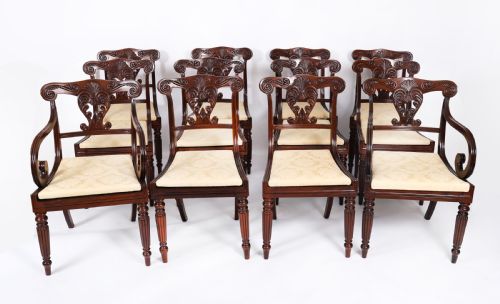
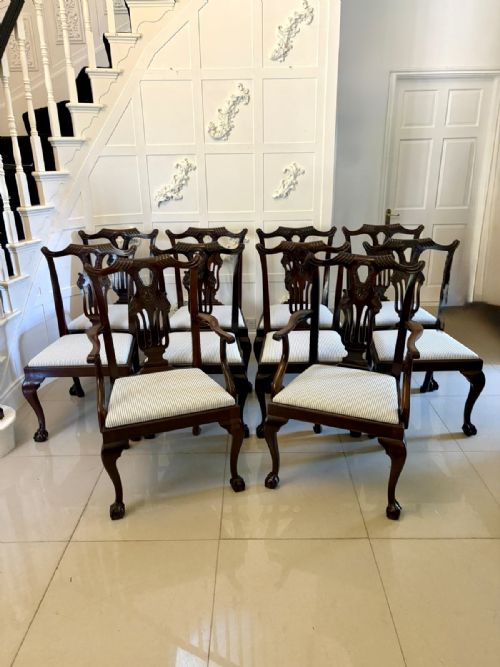


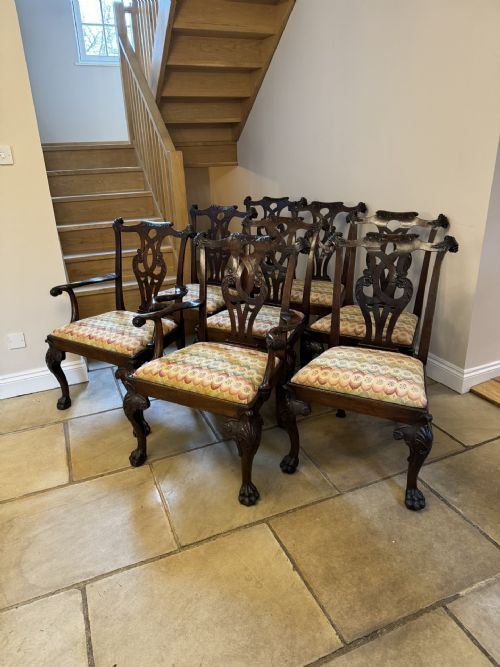


Irish Mahogany Armchair
An irish mahogany armchair brings substantial timber and confident carving into a room, favoured by collectors for its heavy proportions and distinct regional character.

Irish Mahogany Armchair
When you search for an irish mahogany armchair, you encounter seating built from dense tropical hardwood with origins spanning the eighteenth century through to the early twentieth century. These pieces appear primarily as single armchairs, library chairs, desk chairs, or as carvers accompanying larger dining sets.
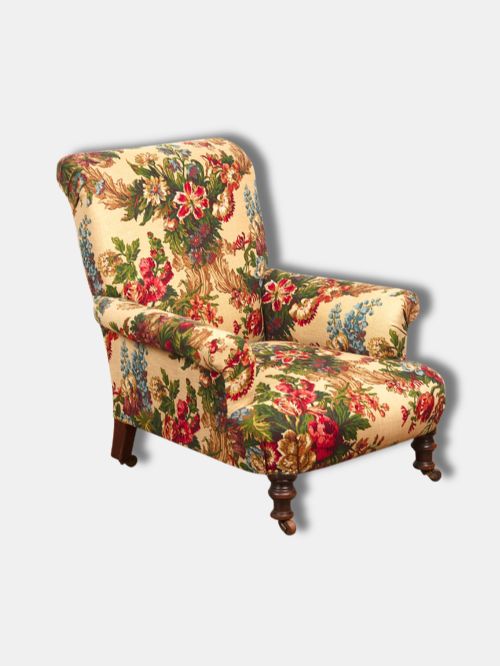
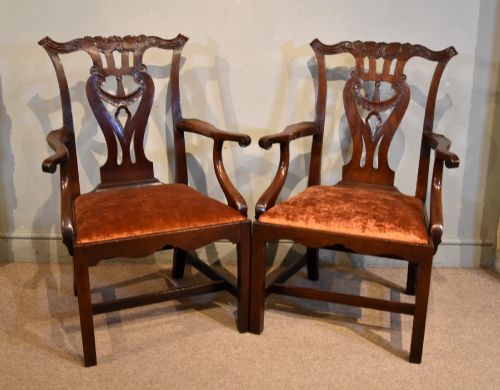
The selections on this page demonstrate the enduring popularity of Georgian and George II styles, alongside later Victorian interpretations and revival pieces. You will regularly find robust framing complemented by upholstered seats in leather, velvet, or fabric.
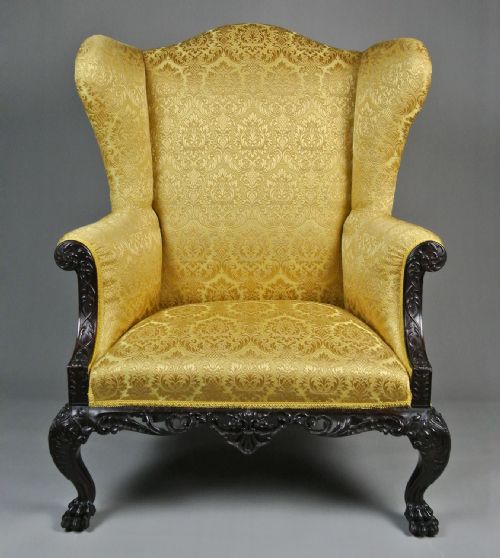
Makers such as Robert Strahan of Dublin produced notable examples, while other pieces reflect the distinctive Chippendale style and bar back forms associated with the Irish workshop tradition. The forms range from open armchairs to winged variants designed for domestic comfort.
How they were made
Cabinet makers built these chairs using solid mahogany timbers, shaping the structural frames with mortise and tenon joints to ensure stability. Secondary supports and internal webbing utilised sturdy materials like hessian and metal fixings where appropriate.
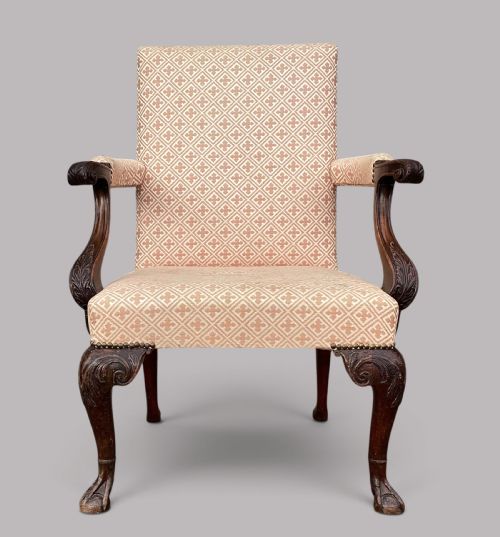
Carving formed a central part of the construction process, with artisans executing intricate details directly into the dense wood grain. Ball and claw feet frequently anchor the legs, reflecting the sculptural ambition typical of Irish cabinet work.
Upholstery involved layering traditional stuffings secured beneath coverings of leather, velvet, or woven fabric, often finished with brass detailing. The combination of heavy timber frames and tactile coverings defined the finished object.
Irish Mahogany Armchair Retail Price Guide 2026
Typical asking prices for irish mahogany armchair among the pieces listed under this phrase on Sellingantiques today, from the lower quarter to the upper quarter. They describe what is for sale here now, not the wider market.
Many a weary librarian has owed their posture to the steadfast embrace of a heavy mahogany frame.
What varies in quality
The standard of a chair rests significantly on the depth and crispness of its carved ornamentation, where sharp lines indicate skilled handwork rather than mechanical smoothing. Timber selection also dictates grade, with deeply figured mahogany commanding greater appreciation than plainer stock.
Proportion and structural integrity separate robust examples from lesser pieces, particularly where heavy use has tested the joints over centuries. The integration of original upholstery elements or appropriate period-style coverings preserves the integrity of the design.
Robert Strahan, Dublin
The Irish Mahogany Armchair Glossary
- Carver
- An armchair designed with open sides to accommodate formal clothing, commonly placed at the head of a dining table. These seating options match standard dining chairs while offering greater arm support.
- Ball and Claw
- A decorative foot motif representing a bird's talon clutching a sphere, frequently carved into the timber legs of eighteenth-century seating. This design element draws influence from Chinese art introduced through trade.
- Bar Back
- A chair design featuring a horizontal wooden slat across the upper backrest, often shaped to resemble architectural or classical motifs. This form appears frequently in nineteenth-century dining sets.
- Gainsborough Chair
- A wide, low-seated armchair with padded armrests and an open frame, originally designed for domestic study or library use. Eighteenth-century iterations set the template for later revival pieces.
Irish Mahogany Armchair: Frequently Asked Questions
What defines an irish mahogany armchair?
These chairs combine dense mahogany framing with regional decorative traits such as pronounced ball and claw feet and heavy carving. They encompass forms ranging from library armchairs to dining carvers.
Originating across multiple centuries, they reflect both eighteenth-century cabinet making traditions and later nineteenth-century revivals of earlier George II styles.
Where were these chairs used?
Historic households placed these armchairs in libraries, studies, and formal dining rooms where substantial seating signalled status and provided durability. Desk chairs served domestic workspaces.
Today, they function effectively as standalone accent pieces in living areas or as statement seating paired with large dining tables.
How do I identify a revival piece?
Revival pieces replicate earlier eighteenth-century aesthetics, such as George II or Chippendale designs, but were manufactured during the Victorian period or the early twentieth century. Material wear and construction techniques often point to these later production dates.
Makers like Robert Strahan produced high-quality revival furniture that mirrored historical proportions while utilising contemporary workshop methods.
What upholstery materials are common?
Original and replacement coverings include leather, velvet, and traditional woven fabrics fastened over internal webbing and hessian support layers. Brass tacks frequently secure the edges of the upholstery.
Selection depends on the specific era of the chair, with leather suiting desk and library variants, and fabric common on dining carvers.