
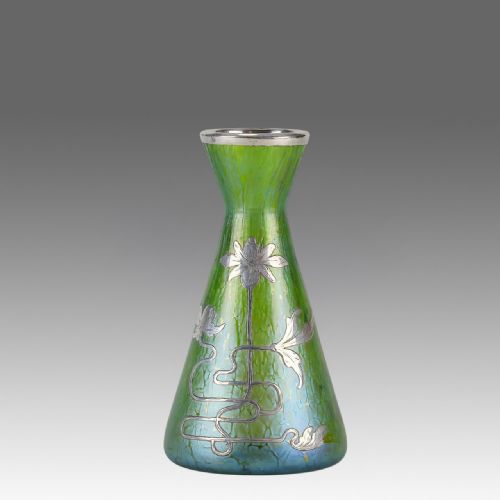


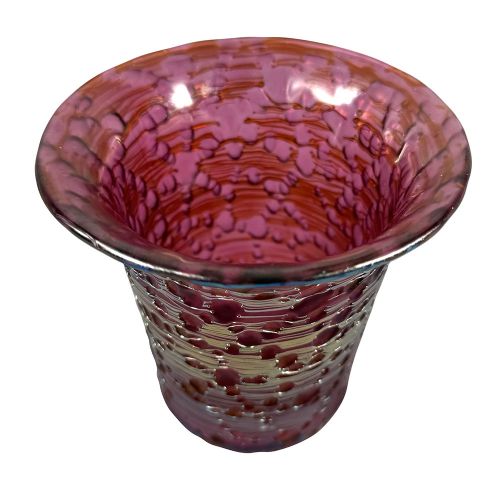


Iridescent Glass Vase
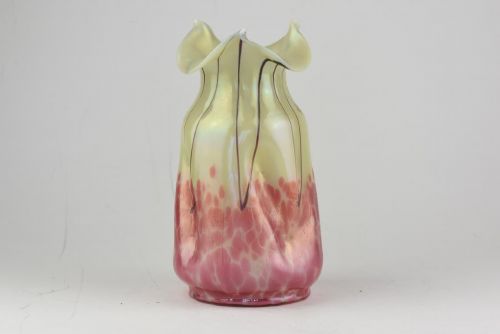
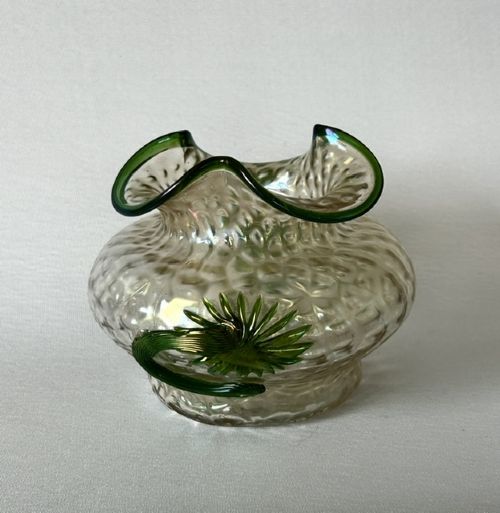
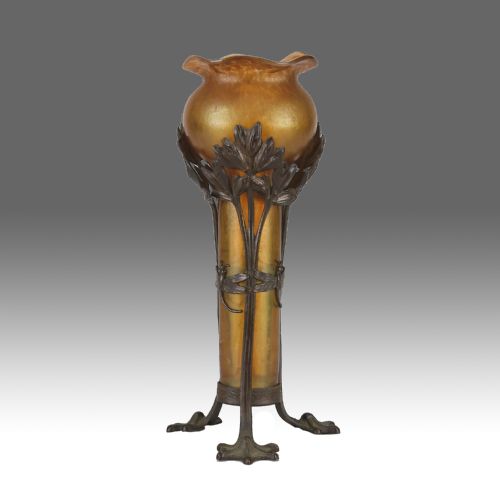
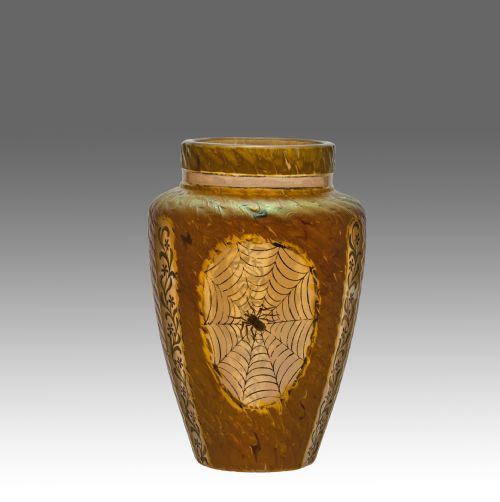
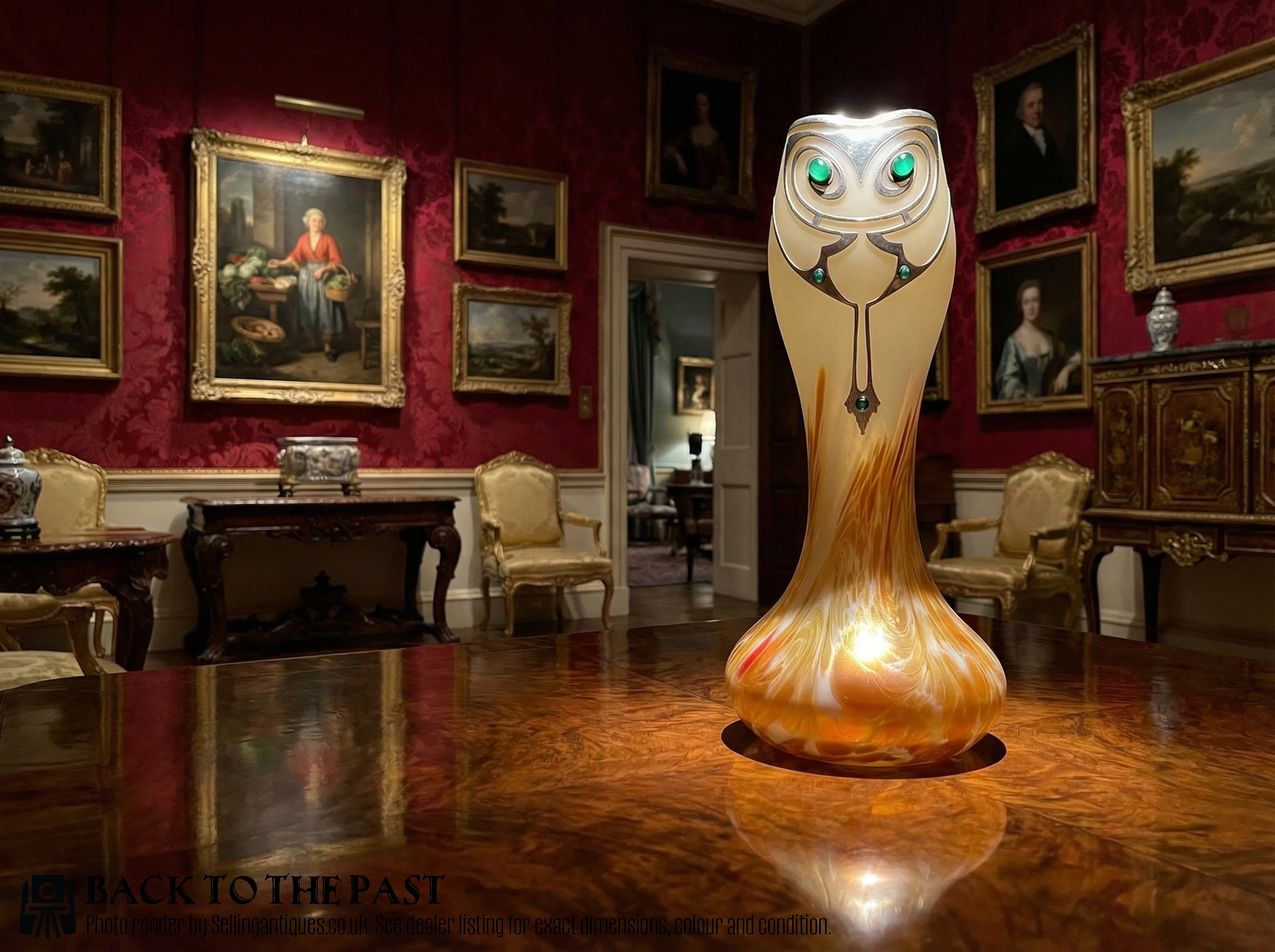
An iridescent glass vase catches the light with shifting metallic sheens, bringing organic curves and luminous colours straight from the workshop into the room.
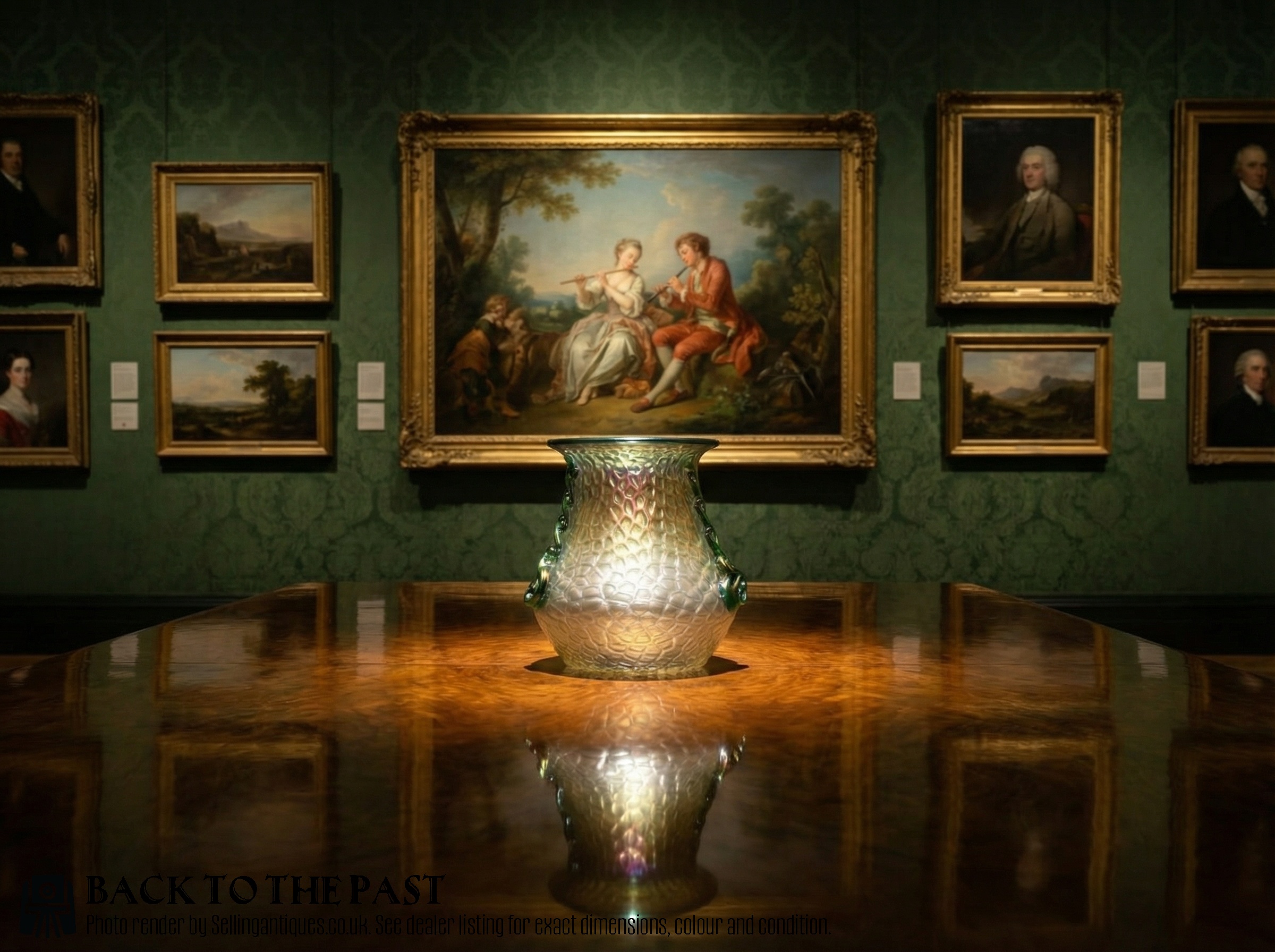
Iridescent Glass Vase
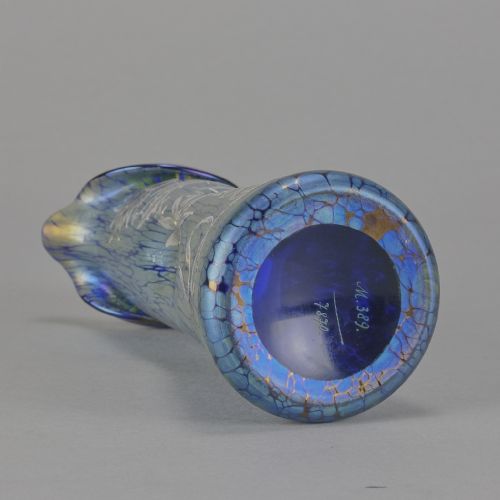
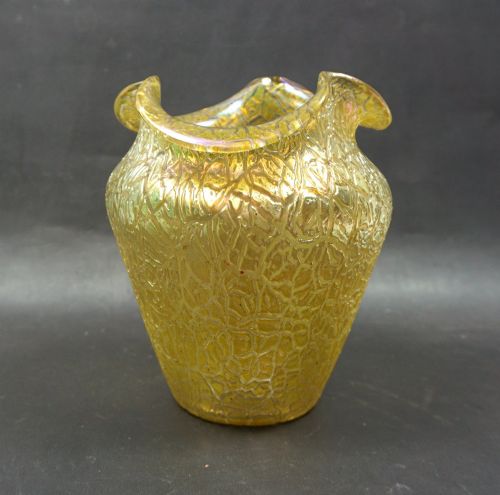
When you search for an iridescent glass vase, you encounter sculptural vessels shaped during the height of the Art Nouveau movement and the early decades of the twentieth century. The examples met on this page span the nineteenth century, the Edwardian era, and the nineteen-tens and twenties, originating largely from Austrian and Bohemian makers alongside English and American glasshouses.
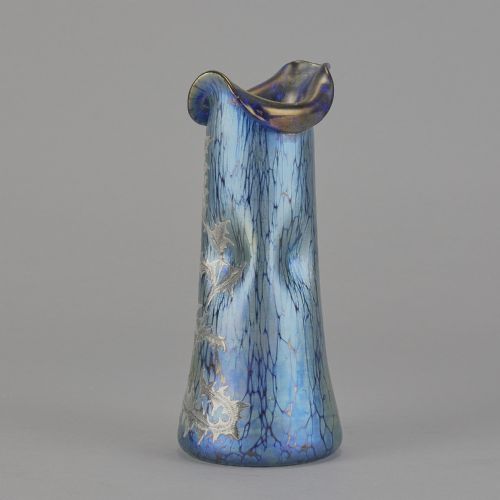
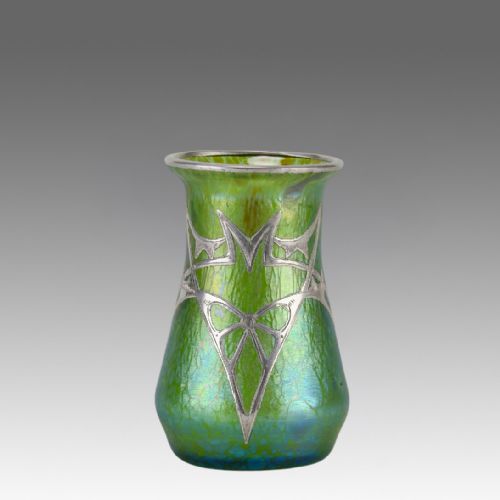
Forms range from simple conical vessels and floriform Jack in the Pulpit shapes to elaborate table centrepieces and epergnes. Many pieces integrate metalwork, appearing with sterling silver mounts, silver overlay, bronze supports, or pewter stands that complement their organic contours.
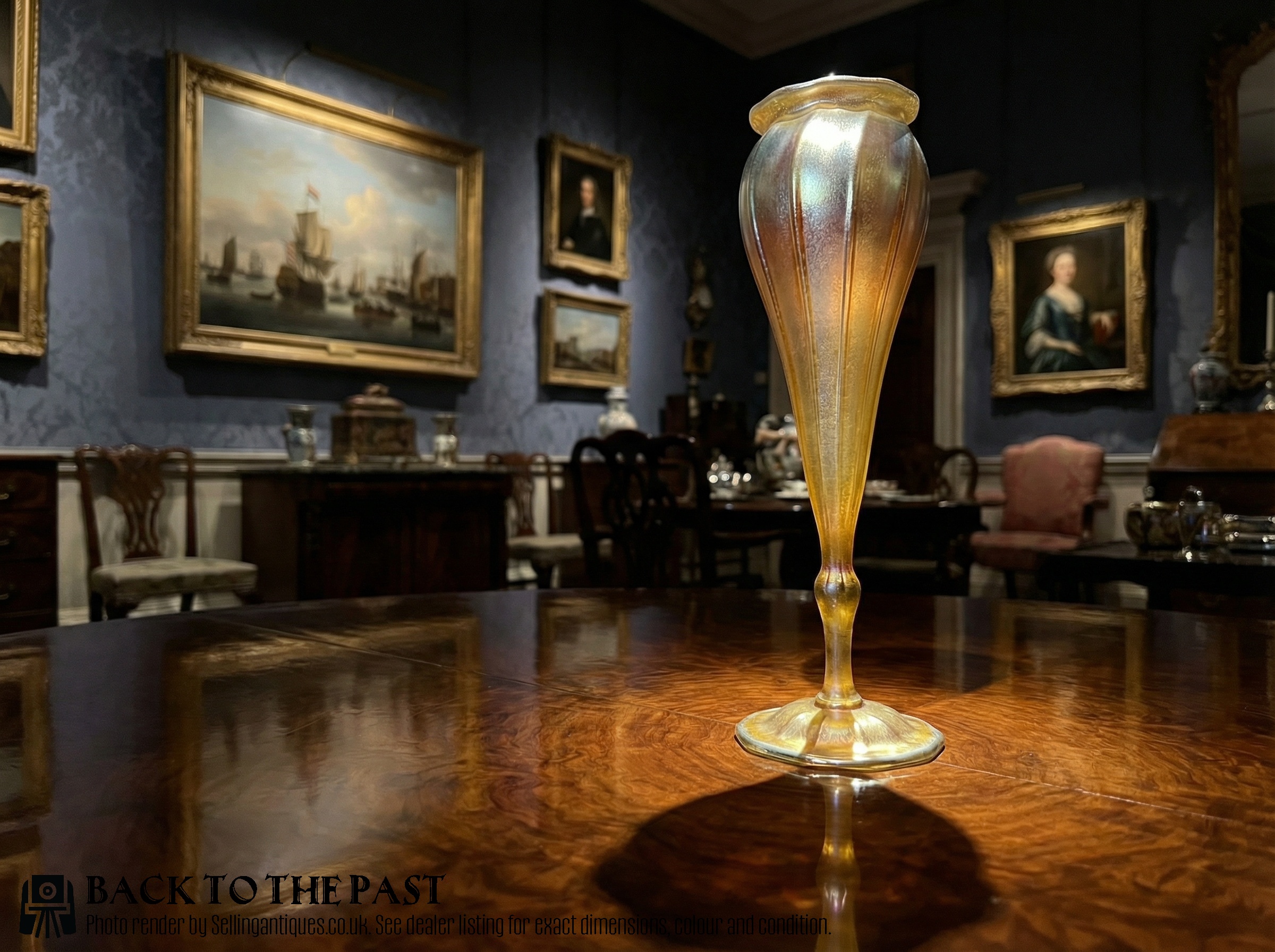
How they were made
Maker's workshops produced these pieces through hand-blown glass techniques, manipulating molten material while hot to create lobed, organic, or stretched profiles. Specific decors like Papillon, Phänomen, and Candia required specialised chemical treatments applied to the surface during blowing to achieve their characteristic shimmer.
Cooling and finishing often involved the addition of metal elements, combining blown glass with silver overlay, copper mounts, and applied cabochons. Workshops such as Loetz and Kralik utilised these intricate surface techniques to catch ambient light from every angle.
Iridescent Glass Vase Retail Price Guide 2026
Typical asking prices for iridescent glass vase among the pieces listed under this phrase on Sellingantiques today, from the lower quarter to the upper quarter. They describe what is for sale here now, not the wider market.
The site's listings show iridescent glass vases from the nineteenth century, 1900, 1910, 1920, and the Edwardian period.
What varies in quality
Quality rests upon the depth and complexity of the optical effects within the material itself. Superior examples display a rich, multi-layered iridescence that shifts cleanly across the contours of the glass, rather than resting as a flat surface sheen.
The refinement of the vessel's overall form and the integration of any accompanying metal mounts define the upper tier of the range. Balanced proportions, crisp execution of specific decors, and harmonious additions like pewter or silver overlay elevate a piece.
Loetz Witwe·Kralik Glass·Pallme Konig·LC Tiffany·Ferdinand von Poschinger
The Iridescent Glass Vase Glossary
- Papillon
- A speckled or mottled iridescent surface effect resembling butterfly wings, frequently seen on Austrian glass from the early twentieth century.
- Favrile
- A type of iridescent art glass developed by Louis Comfort Tiffany, characterised by embedded colours and a brilliant metallic lustre.
- Epergne
- A large table centrepiece featuring a central vase surrounded by smaller detachable matching vessels for fruit or flowers.
- Silver Overlay
- Decorative sterling silver applied directly to the exterior of a glass vessel, often in flowing floral or geometric motifs.
- Phänomen
- A complex Loetz glass decôr featuring combed iridescent threads melted into the surface during the blowing process.
Iridescent Glass Vase: Frequently Asked Questions
How were iridescent glass vases used?
Owners placed them on mantelpieces, side tables, and dining surfaces as decorative objects to catch and refract daylight.
Larger versions and epergnes functioned as centrepieces for holding cut flowers or displaying fruit during formal meals.
How do I live with antique art glass?
Position these pieces away from direct, harsh sunlight to protect the delicate chemical surface layers while ensuring they catch gentle ambient light.
Keep them out of high-traffic areas where accidental knocks might damage fragile glass rims or attached metal mounts.
How do I tell periods apart?
Victorian examples often lean towards heavier Victorian shapes and Victorian glass standards, sometimes incorporating applied glass trails or epergne frames.
Early twentieth-century pieces typically exhibit smoother Art Nouveau or Secessionist silhouettes with characteristic Papillon or Phänomen surface decors.