



Invalid Reading Table
An invalid reading table is a clever adjustable piece designed for bedside comfort and work.

Invalid Reading Table
An invalid reading table is a specialised piece intended for reading, writing, or dining from a bed or chair. These items span periods such as the Victorian, Edwardian, and Regency eras, with early twentieth-century examples also appearing regularly.
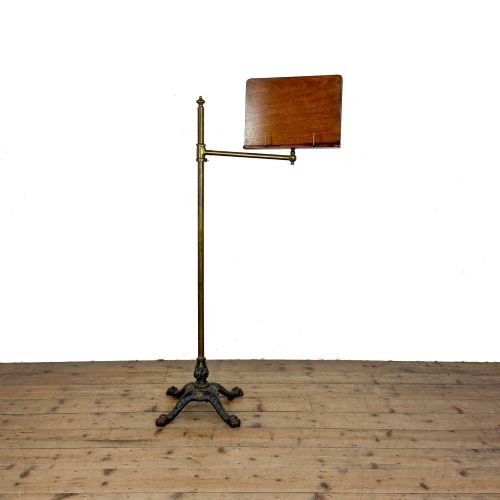
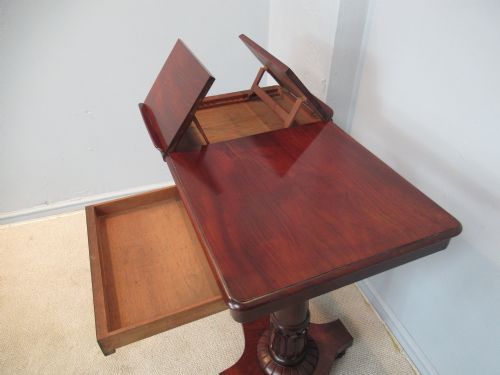
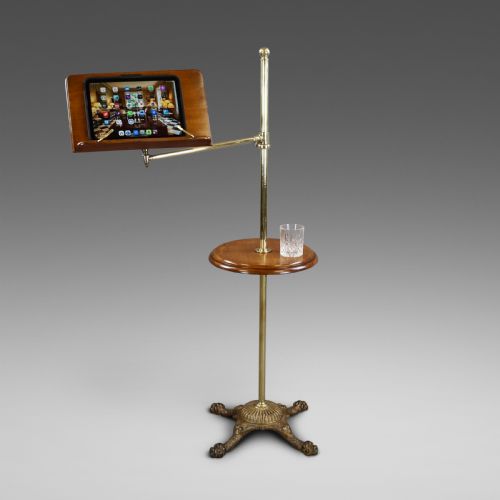
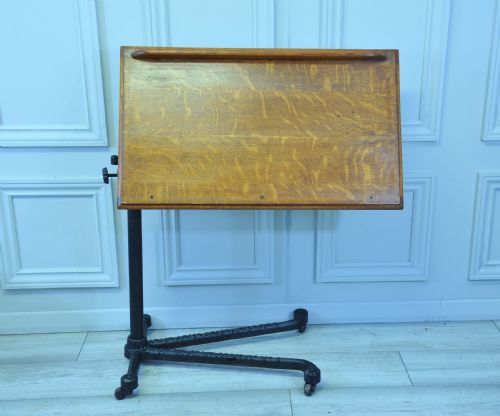
The forms on this page include reading stands, adjustable tables, lecterns, and over bed tables. Buyers frequently encounter adjustable mahogany and oak formats equipped with mechanical mechanisms.
Originating as mobility aids and functional furniture for the home, these pieces combine utility with period craftsmanship. Walnut, pine, brass, and cast iron supplement the primary timber structures.
How they were made
Makers utilised solid timbers like mahogany, oak, walnut, and pine for the main surfaces and frames. These woods provided the necessary durability for daily mechanical adjustment.
Metal components, including brass, cast iron, and chrome, formed the adjustable columns and ratchets. Such durable materials allowed the tops to tilt and alter in height securely.
Construction techniques focused on cantilever designs and extending mechanisms to position the table over a bed or chair. Patent designs by notable makers ensured smooth mobility and stable support.
Invalid Reading Table Retail Price Guide 2026
Typical asking prices for invalid reading table among the pieces listed under this phrase on Sellingantiques today, from the lower quarter to the upper quarter. They describe what is for sale here now, not the wider market.
Some nineteenth-century mobility aids even included clever cantilever frames to serve breakfast in bed.
What varies in quality
The sophistication of the mechanical adjustment mechanism dictates much of the quality. Patent designs by established makers offer smoother operation and greater stability than standard iterations.
Timber selection and secondary metalwork further separate superior examples from simpler ones. Richly figured mahogany or oak paired with robust cast iron or brass fittings represents the upper tier of production.
Carters Of London·Foot s
The Invalid Reading Table Glossary
- Cantilever
- A rigid structural member projecting from a support, used here to suspend the table top over a bed. This design allows the base to slide underneath furniture.
- Lectern
- A slanted support holding a book or document at an easy reading angle. These often feature adjustable heights and retaining ledges.
- Ratchet
- A mechanism consisting of a gear wheel and pawl that allows continuous motion in one direction only. It permits the reading surface to lock securely at various angles.
- Over bed table
- A freestanding furniture piece with a frame that spans across a bed. It provides a stable surface for meals or reading.
Invalid Reading Table: Frequently Asked Questions
What is an invalid reading table?
An invalid reading table is an adjustable piece of furniture designed to hold books, papers, or meals over a bed or chair.
These items historically served as mobility aids and functional bedroom furniture.
How do you adjust the height?
Most examples utilise a mechanical column featuring ratchets, screws, or sliding levers.
Users simply release the mechanism to raise or tilt the top before locking it securely into place.
What materials were used?
The primary structures utilise hardwoods and softwoods such as mahogany, oak, walnut, and pine.
Cast iron, brass, and chrome appear frequently in the bases, columns, and adjusting mechanisms.
How do I style one at home?
These pieces function well as side tables, desk surfaces, or display stands in living spaces and studies.
Their adjustable nature allows them to sit beside armchairs or sofas while retaining period character.