

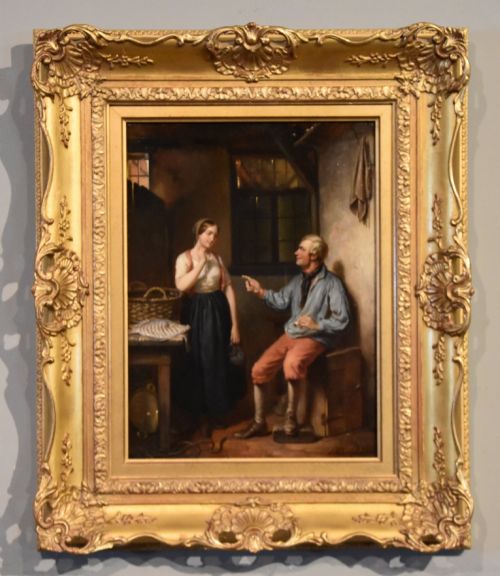
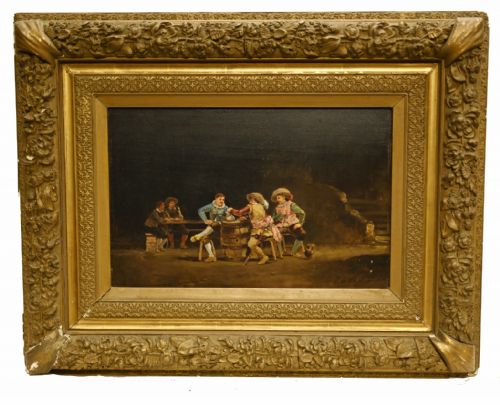
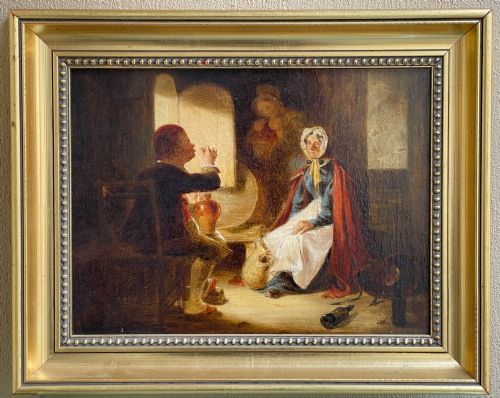
Interior Genre Oil Painting
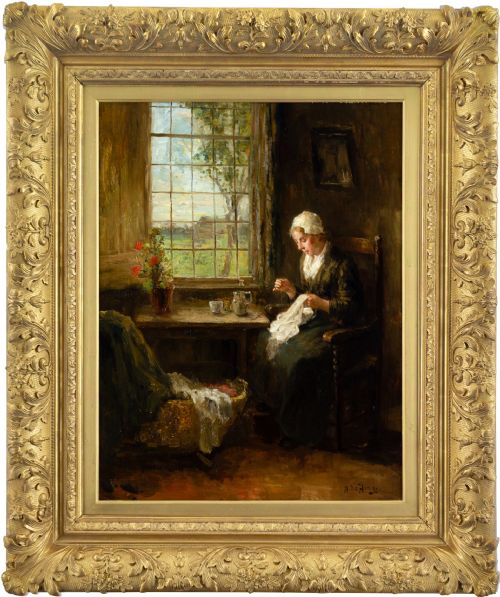
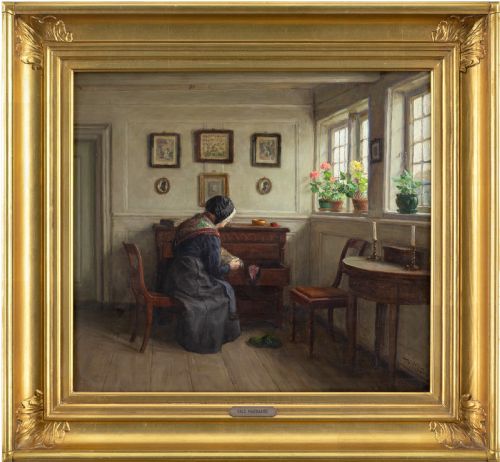
Interior genre oil painting captures domestic and social scenes on canvas, offering a window into past domestic lives that collectors prize for narrative depth.
Interior Genre Oil Painting
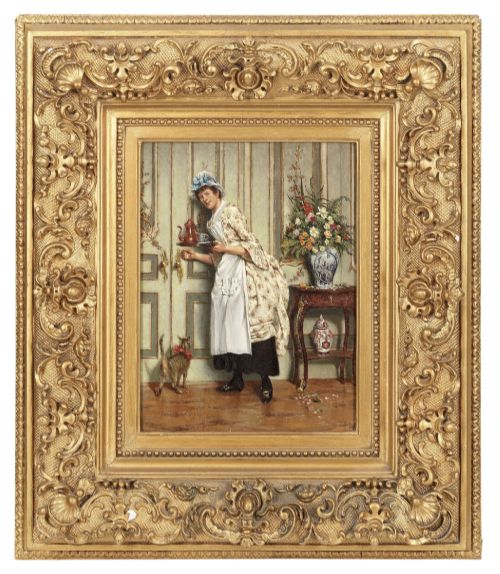
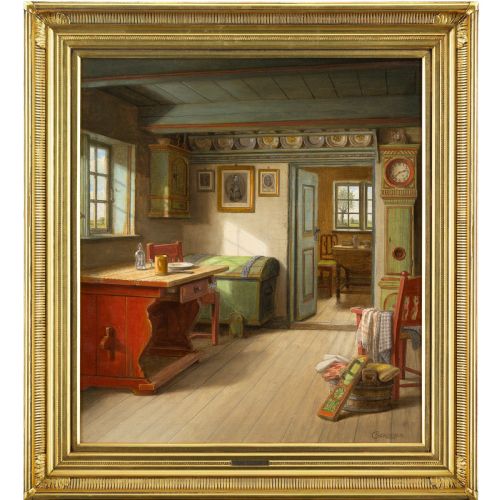
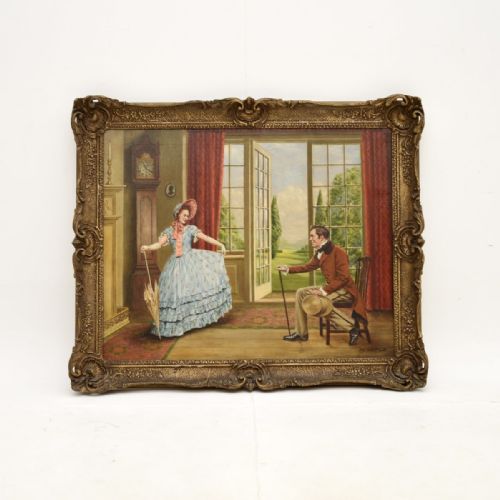
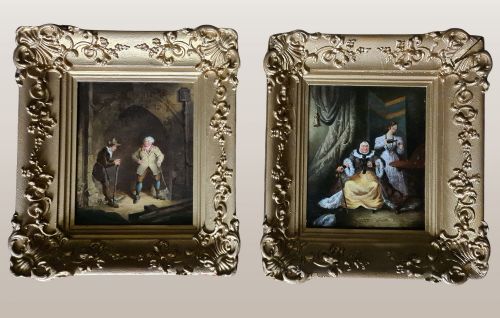
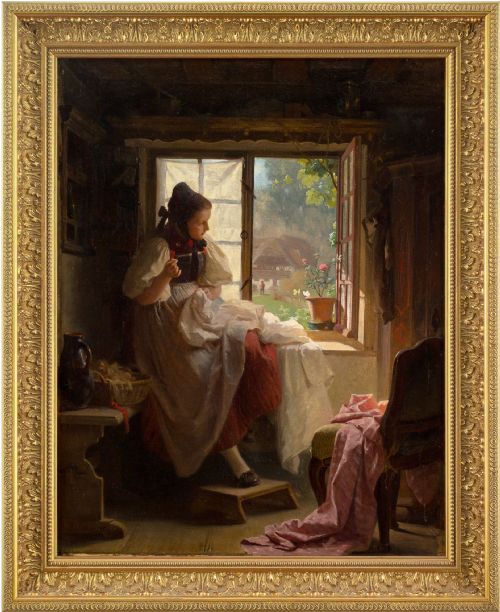
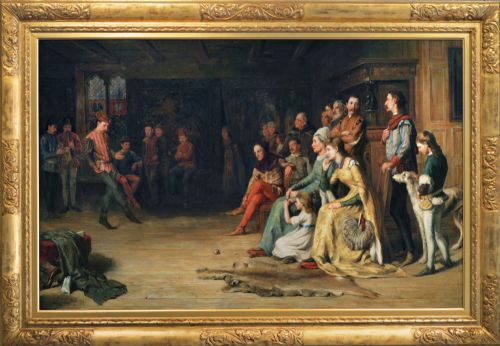
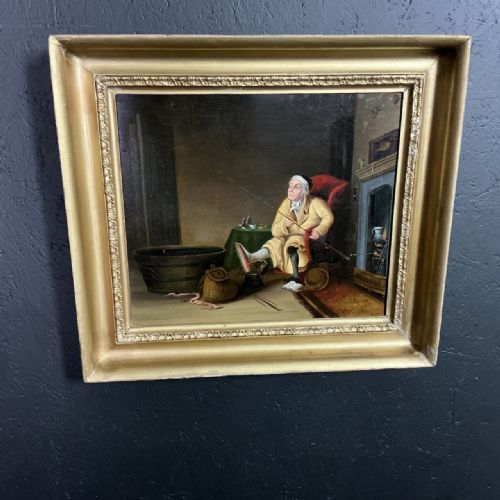
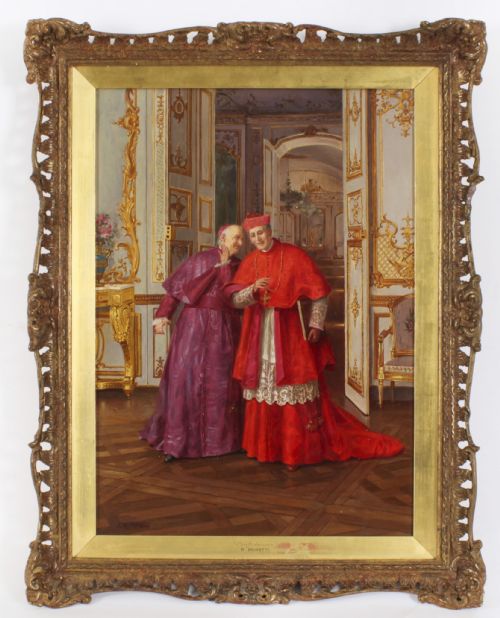
When you search for interior genre oil painting, you encounter framed works depicting everyday domestic scenes, tavern gatherings, and intimate household moments. These pieces span the nineteenth century and into the mid-twentieth century, featuring cottage interiors, country houses, and formal rooms.
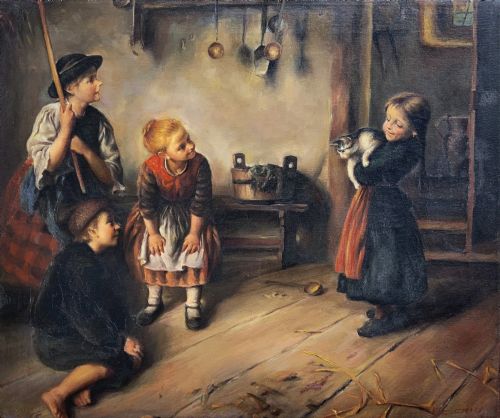
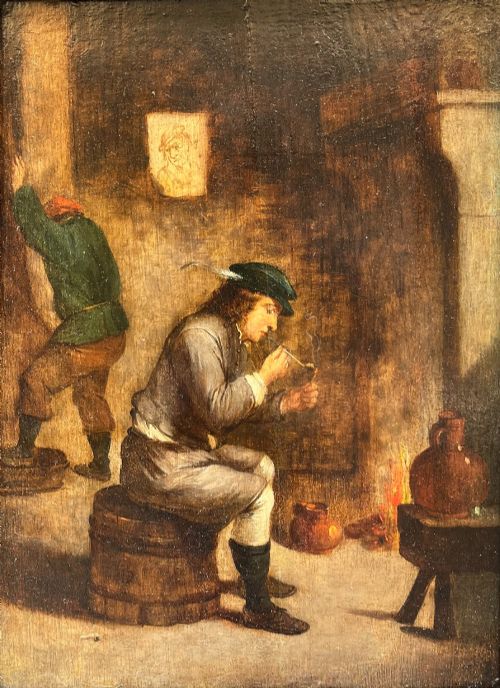
The selection ranges from quiet tea times and children playing to historical tavern scenes with musketeers and card players. You meet works executed by named artists and skilled painters working within the Victorian and Dutch traditions.
How They Were Made
These works are built with oil paint applied to woven canvas, wooden panels, or copper plates, often housed within gesso and giltwood frames enriched with gold leaf. Artists layered oil pigments to capture the play of light through windows, fabric textures, and interior shadows.
The physical support dictates the preservation of the surface, with canvas stretched over wooden frames and panels providing rigid foundations for detailed brushwork.
Several canvases record domestic cats observing tea time with quiet skepticism.
What Varies in Quality
Quality rests in the handling of narrative detail, facial expression, and the management of interior light sources like hearths and windows. Master painters render textiles, furnishings, and human interaction with psychological nuance and precise spatial depth.
The integrity of the original paint surface and the complementary nature of the period frame elevate certain examples above standard decorative productions.
Stephen Samuel Lewin·Alfred Lyndon Grace·Max Kaltenmoser·Bernard De Hoog·Valdemar Magaard·Renato Moretti·Jacob Akkersdijk·Harry Brooker·Johann Hamza·Byam Shaw·Alexander Rosell·Benjamin Eugene Fichel·John Arthur Lomax·John Watkins Chapman·Charles Haigh Wood·Frank Moss Bennett·Haynes King·James Kyd·Edwin Thomas Roberts·Robert Alexander Hillingford·George Smith·Edwin Hughes
The Interior Genre Oil Painting Glossary
- Genre painting
- Depiction of aspects of everyday life by portraying ordinary people engaged in common activities. These works focus on domestic interiors, taverns, and social gatherings rather than grand historical or mythological subjects.
- Chiaroscuro
- The use of strong contrasts between light and dark, usually bold contrasts affecting a whole composition. Painters utilise this technique to create dramatic atmosphere within enclosed rooms.
- Gesso
- A plaster mix used as a prepared surface for painting or applied to wooden frames before gilding. This mixture provides a smooth base for gold leaf application.
- Giltwood
- Wood that has been covered with a thin layer of gold leaf or gold paint. Frames finished in this manner frequently accompany nineteenth-century fine art.
- Oil on canvas
- Pigment suspended in a drying oil medium applied to stretched fabric. This combination remains the primary medium for these historical works.
Interior Genre Oil Painting: Frequently Asked Questions
What is an interior genre oil painting?
An interior genre oil painting is a framed artwork depicting daily life, domestic scenes, or social interactions inside homes and taverns. These pieces focus on human stories rather than landscape or portraiture alone.
Created across the nineteenth and twentieth centuries, they record historical interiors, clothing, and domestic routines through the medium of oil paint on canvas or panel.
How were these paintings displayed originally?
These works were framed in ornate giltwood and gesso surrounds to be hung in domestic parlours, drawing rooms, and country houses. Their primary purpose was to decorate private residences while displaying the refined taste of the owner.
Many were produced as pairs or matched sets to balance the wall arrangement of Victorian living spaces.
How do I date an interior genre oil painting?
Dating relies on stylistic evidence, artist signatures, costume details, and the physical materials of the canvas and frame. Nineteenth-century works often bear signatures, exhibition labels, or date inscriptions on the reverse.
Comparing the depicted furniture, hairstyles, and dress to known historical periods narrows down the decade of execution.
How do I care for an oil painting at home?
Maintain stable room temperatures away from direct sunlight, high humidity, and rapid environmental changes. These precautions protect the canvas, wooden stretcher bars, and giltwood frame from warping or cracking.
Dust the surface gently with a soft, dry brush and avoid using liquid cleaners on the painted canvas or the gilded frame.